The Impact of the Pandemic on Women Workers: A 2026 Perspective
Key Findings
-
41% of women workers have experienced some form of job interruption since early 2020.
-
14% of older women workers lost their jobs, while 13% reduced their hours, 9% were furloughed, 7% faced temporary layoffs, and 4% saw a reduction in their salary/hourly wage.
-
Job losses were disproportionately higher among African American and Hispanic women compared to White or Asian women.
-
Women workers face long-term unemployment: nearly 70% of women who remain unemployed have been out of work for six months or more.
-
Interruptions in employment lead to ongoing financial uncertainty.
-
25% of midcareer and older workers have reported a deterioration in their financial situation since the onset of the pandemic.
-
Concerns about the future and underemployment persist even among those who are employed.
-
About 1 in 5 (21%) working individuals are underemployed, meaning they are working fewer hours than they desire.
-
Higher rates of underemployment are observed among African American, Hispanic, and Asian women compared to their White counterparts.
-
Many women express concerns about involuntary job interruptions in the upcoming year, particularly among multicultural women.
-
Nearly 3 in 10 mid-career and older women reported caregiving responsibilities for children or grandchildren during the pandemic.
-
These caregiving duties affected work schedules, with 24% working only specific shifts/hours and 20% unable to work full-time.
-
Over half of women have sought new employment since turning 40, with nearly one-third (31%) citing age discrimination as a significant barrier to job acquisition, the most prevalent form of discrimination.
Loss of Job-Based Income During the Pandemic
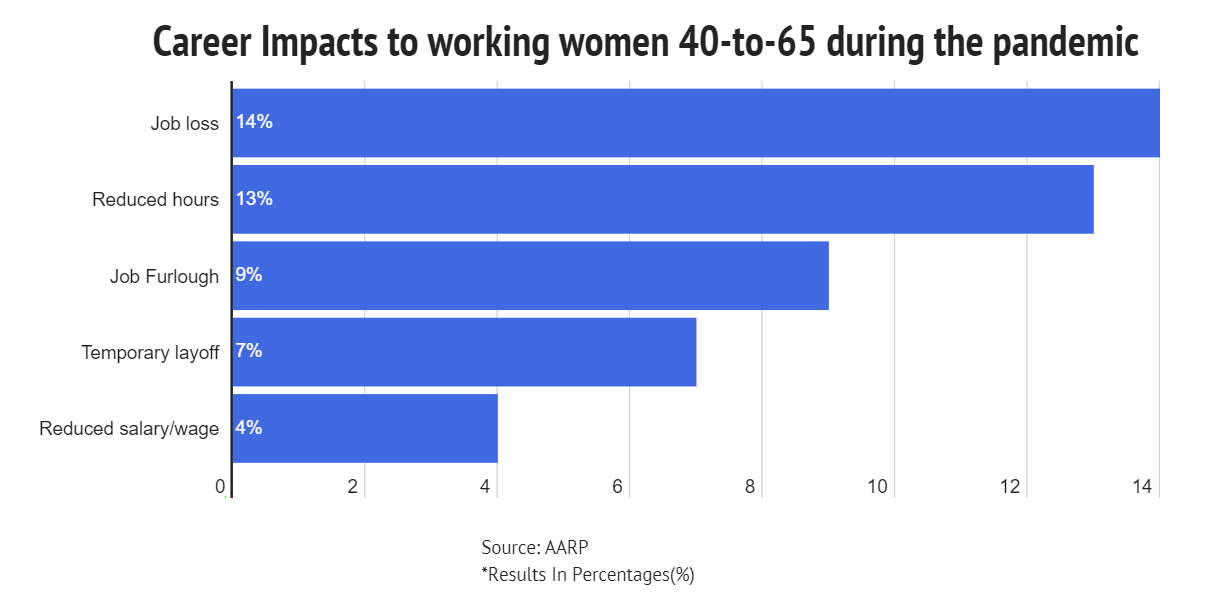
41% of women workers aged 40 to 65 experienced some form of job interruption since early 2020. The breakdown of job-related income loss includes job loss (14%), reduced hours (13%), job furlough (9%), temporary layoff (7%), and reduced salary/hourly wage (4%).
Unemployment for women peaked in April 2020 at 16.1% for all women, and 15.4% for women over 55, as reported by the BLS. Women were disproportionately affected during the pandemic due to job sectors facing shutdowns, childcare needs, and pre-existing financial vulnerabilities.
Job Loss Among Women Aged 40-65 by Ethnicity
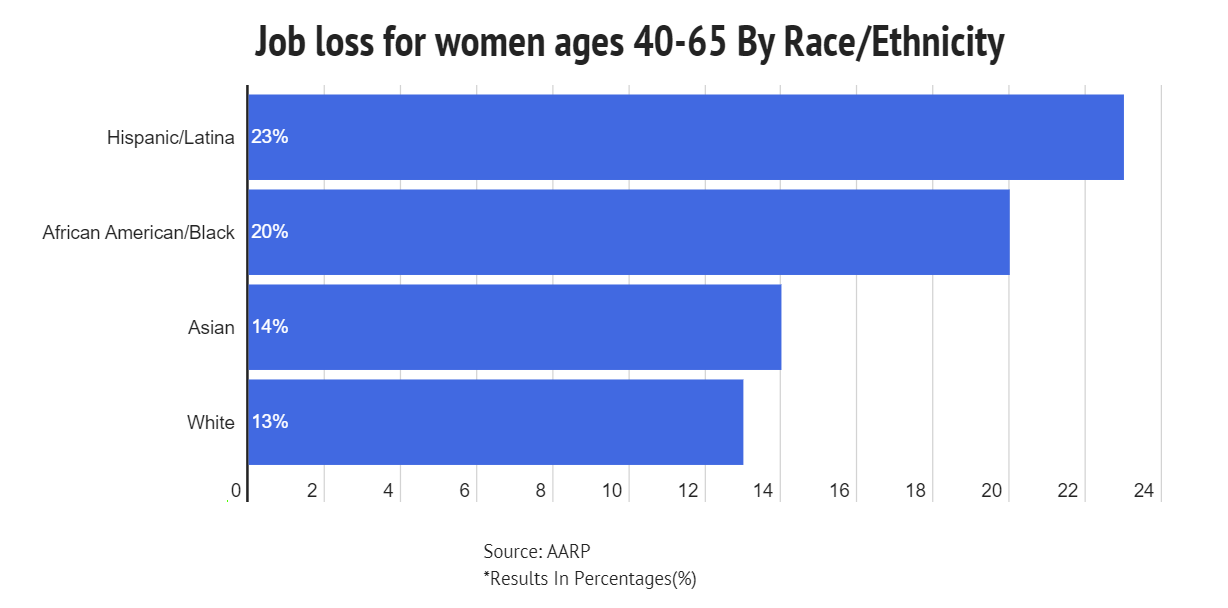
As observed in past economic downturns, women of color faced higher rates of job loss. Hispanic/Latina women experienced a job loss rate of 23%, which is 7% higher than the overall average for women. Meanwhile, 20% of African American women faced job loss due to the pandemic.
In contrast, only 13% of White women experienced job loss. Addressing the economic consequences of the pandemic necessitates a focus on the disparities affecting women overall, particularly women of color.
Long-Term Unemployment Among Women
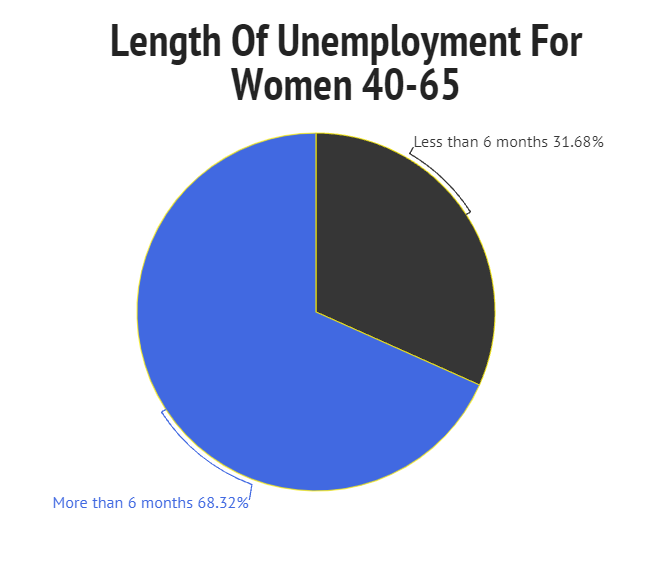
Although unemployment rates have decreased since the pandemic’s peak, a significant percentage of unemployed women have been out of work for six months or longer. Among the 9% of women workers over 40 who remained unemployed during this period, 69% had been without work for more than six months.
After six months, job seekers often face increased challenges in securing new employment. When they do find work, it is frequently in lower-level or lower-paying positions, negatively impacting their immediate financial stability and future earning potential, including retirement savings.
Job Loss Leads to Potential Long-Term Financial Consequences
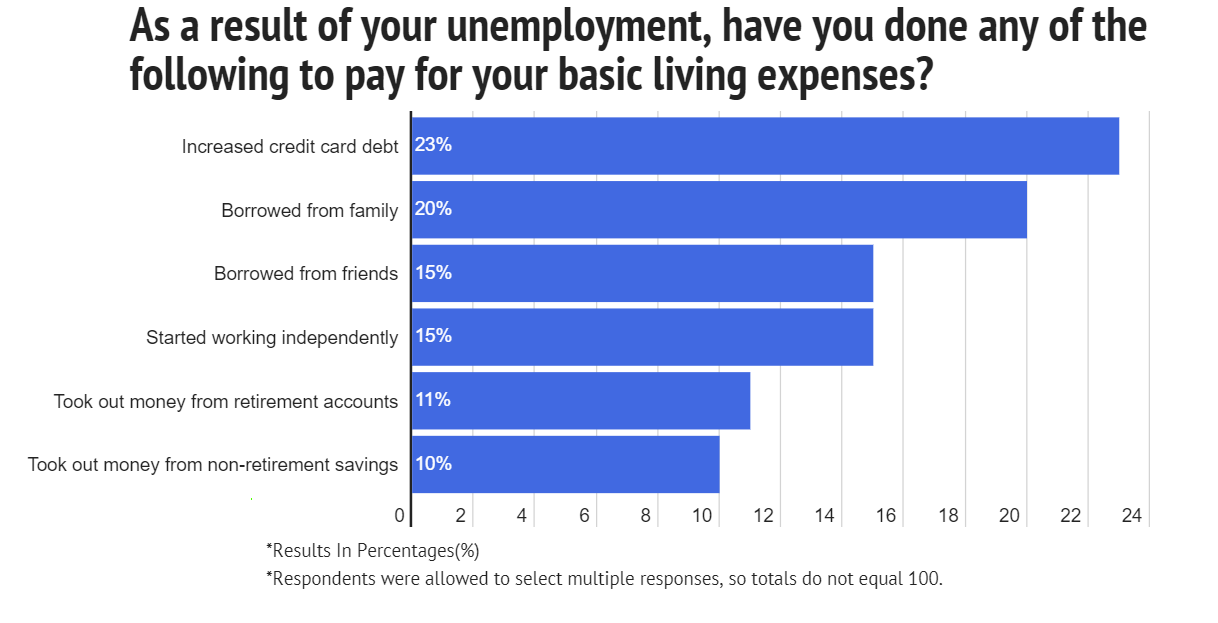
Loss of income understandably has a significant impact on financial well-being. Among older women who lost job income, 41% faced challenging financial decisions. While some had savings or family support to rely on, many were not as fortunate.
Among those who lost their jobs, nearly one-quarter (23%) increased their credit card debt, 20% borrowed from family, 15% turned to friends for loans, 15% sought independent work, and 11% withdrew money from retirement savings.
Methodology
AARP, the largest nonprofit organization in the U.S. focused on empowering individuals aged 50 and older, conducted an online survey through the NORC Amerispeak panel. This survey targeted women aged 40-65 who were either in the workforce or recently out of it. The study was conducted from June 3-24, 2021.
The survey, which took approximately five minutes to complete, aimed to shed light on how the pandemic impacted the careers of women aged 40-65, focusing on their experiences since 2020.
Zippia utilized the survey data to create this article and visualizations that highlight the main findings.
Implications
While the pandemic affected workers of all ages and genders, women workers experienced higher rates of job loss and unique challenges related to caregiving responsibilities, which disproportionately fell on them.
Notably, certain groups of women, particularly women of color, faced more severe consequences. Hispanic and African American women reported the highest rates of job loss. Additionally, older women were somewhat less likely to lose their jobs compared to younger women, but they encounter specific challenges in the job market.
Nearly one-third of older women workers highlighted age discrimination as a barrier to employment, contributing to the 69% of older, unemployed women who are now long-term unemployed.
The long-term unemployed often face difficult financial decisions, such as taking out loans or cashing in retirement accounts, which can have lasting adverse effects on their financial health.
Ultimately, genuine economic recovery must address these issues and provide support to those disproportionately affected—women, especially older women and women of color.

Author

Kathy is the head of content at Zippia with a knack for engaging audiences. Prior to joining Zippia, Kathy worked at Gateway Blend growing audiences across diverse brands. She graduated from Troy University with a degree in Social Science Education.