What does an associate systems analyst/systems analyst do?
An associate systems analyst/systems analyst works at a company's information technology department. They are responsible for conducting extensive research and analysis, gathering and analyzing data and consumer feedback, determining the ideal practices, and conducting risk assessments. Through the findings of their study, an associate systems analyst/systems analyst comes up with conclusions and recommendations that will help in making decisions, optimizing operations, and developing solutions against vulnerable areas. They may also participate in developing and implementing test structures, evaluating new and existing systems, and enhancing policies and standards as necessary.
Associate systems analyst/systems analyst responsibilities
Here are examples of responsibilities from real associate systems analyst/systems analyst resumes:
- Manage and implement VMware infrastructure.
- Administer daily backups to data warehouse for AS400, and tape backups' on UNIX daily, weekly, and monthly.
- Conduct patient interviews for patient registration and billings; process Medicare, Medicaid and commercial insurance and perform collections.
- Design, develop and implement interfaces between EHR applications and various outside systems via an interface engine and/or native point-to-point interfaces.
- Develop detailed functional requirements specifications, ensure all legacy systems functionality are captured for inclusion in the new DoD system.
Associate systems analyst/systems analyst skills and personality traits
We calculated that 7% of Associate Systems Analysts/Systems Analysts are proficient in Windows, Project Management, and Application Development. They’re also known for soft skills such as Analytical skills, Communication skills, and Creativity.
We break down the percentage of Associate Systems Analysts/Systems Analysts that have these skills listed on their resume here:
- Windows, 7%
Provided systems administration support for Windows systems, including server and workstation upgrades, user account setup, and security administration.
- Project Management, 7%
Served in a limited Project Management role on hardware deployment and software integration projects.
- Application Development, 7%
Gathered and translated business requirements into detailed and comprehensive system design specifications for new and improved application development.
- Data Analysis, 6%
Perform data analysis and document data relationships and finding correct data to fulfill reporting requirements and configuring streamlined and improved efficiency.
- Application Support, 5%
Performed hardware and application support duties on a wide variety of technologies serving a diverse population of staff and students
- Technical Support, 5%
Provided third level technical support for less complex problems in an operational environment.
Most associate systems analysts/systems analysts use their skills in "windows," "project management," and "application development" to do their jobs. You can find more detail on essential associate systems analyst/systems analyst responsibilities here:
Analytical skills. The most essential soft skill for an associate systems analyst/systems analyst to carry out their responsibilities is analytical skills. This skill is important for the role because "analysts must interpret complex information from various sources and decide the best way to move forward on a project." Additionally, an associate systems analyst/systems analyst resume shows how their duties depend on analytical skills: "provided user and customer support throughout the united states for the national data computer center. "
Communication skills. Another essential skill to perform associate systems analyst/systems analyst duties is communication skills. Associate systems analysts/systems analysts responsibilities require that "analysts work as a go-between with management and the it department and must explain complex issues in a way that both will understand." Associate systems analysts/systems analysts also use communication skills in their role according to a real resume snippet: "ensured reliable communication for field sales to corporate mainframe computers. "
Creativity. Another skill that relates to the job responsibilities of associate systems analysts/systems analysts is creativity. This skill is critical to many everyday associate systems analyst/systems analyst duties, as "because analysts are tasked with finding innovative solutions to computer problems, an ability to “think outside the box” is important." This example from a resume shows how this skill is used: "script development and implementation for inventory use on system configurations, ip, software applications, and performance throughout lan/wan. "
Most common associate systems analyst/systems analyst skills
The three companies that hire the most associate systems analyst/systems analysts are:
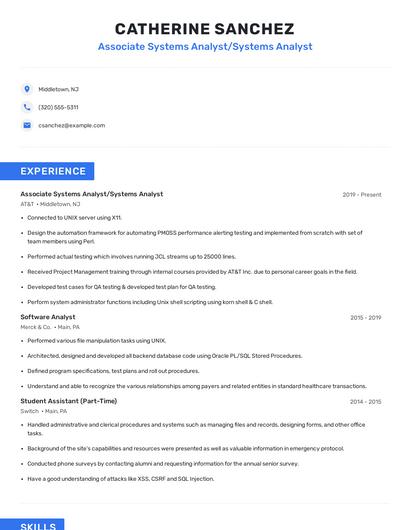
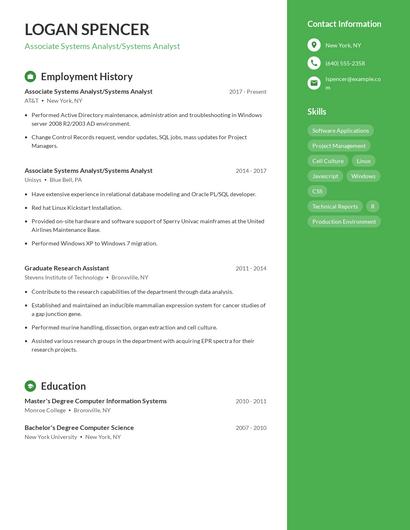
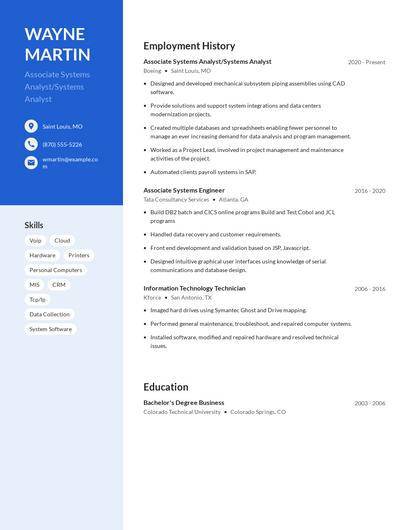
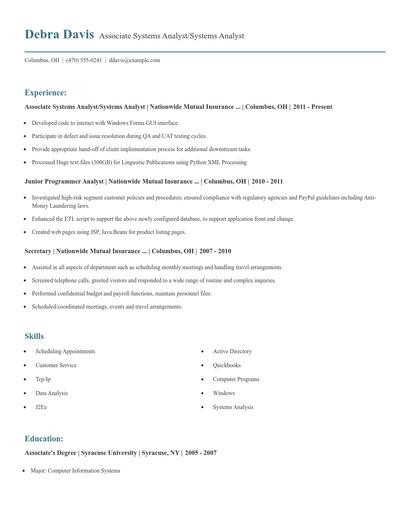
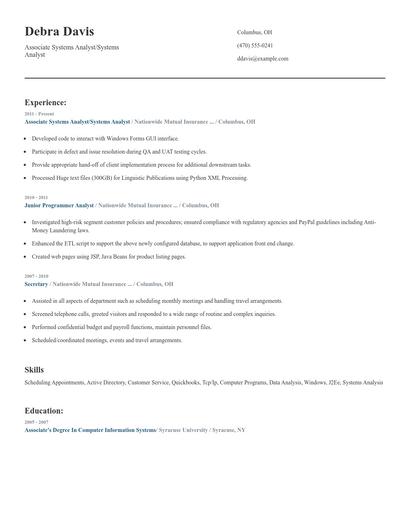
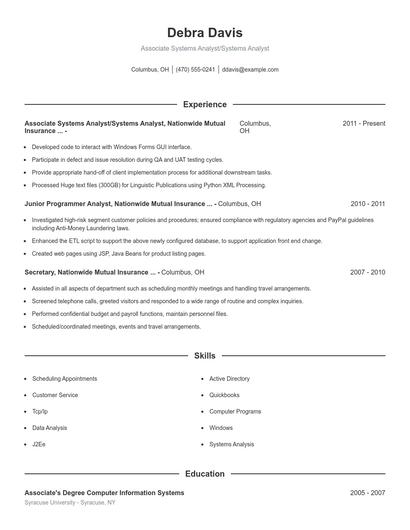
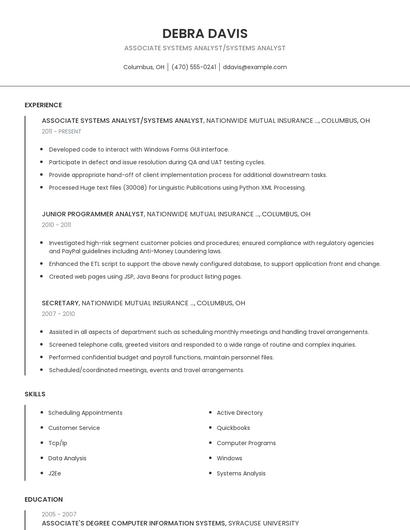
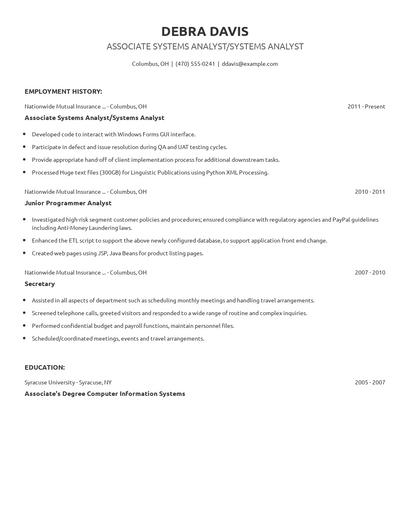
Choose from 10+ customizable associate systems analyst/systems analyst resume templates
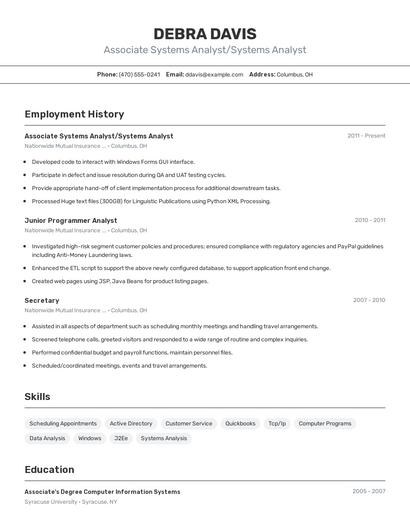
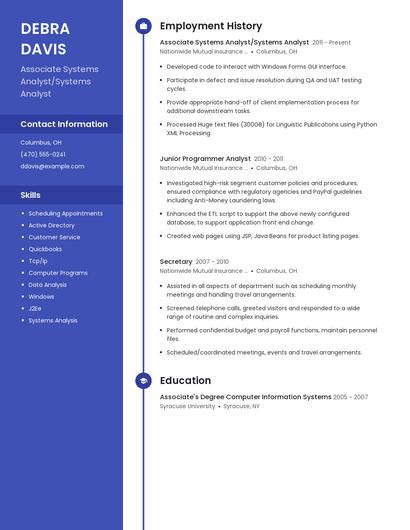
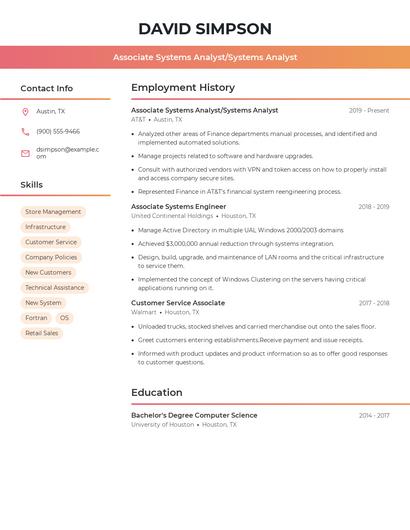
Build a professional associate systems analyst/systems analyst resume in minutes. Our AI resume writing assistant will guide you through every step of the process, and you can choose from 10+ resume templates to create your associate systems analyst/systems analyst resume.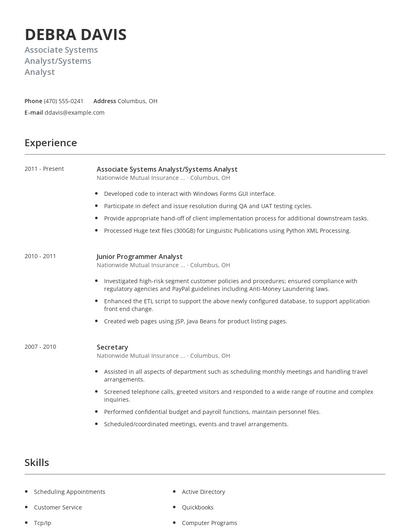
Compare different associate systems analysts/systems analysts
Associate systems analyst/systems analyst vs. Analyst
Analysts are employees or individual contributors with a vast experience in a particular field that help the organization address challenges. They help the organization improve processes, policies, and other operations protocol by studying the current processes in place and determining the effectiveness of those processes. They also research industry trends and data to make sound inferences and recommendations on what the company should do to improve their numbers. Analysts recommend business solutions and often help the organization roll out these solutions. They ensure that the proposed action plans are effective and produce the desired results.
There are some key differences in the responsibilities of each position. For example, associate systems analyst/systems analyst responsibilities require skills like "windows," "application development," "application support," and "technical support." Meanwhile a typical analyst has skills in areas such as "customer service," "troubleshoot," "strong analytical," and "digital transformation." This difference in skills reveals the differences in what each career does.
Analysts really shine in the technology industry with an average salary of $79,330. Comparatively, associate systems analysts/systems analysts tend to make the most money in the health care industry with an average salary of $70,704.On average, analysts reach similar levels of education than associate systems analysts/systems analysts. Analysts are 2.2% more likely to earn a Master's Degree and 1.0% more likely to graduate with a Doctoral Degree.Associate systems analyst/systems analyst vs. Analyst lead
The duties of an analyst lead depend on one's line of work or industry of employment. Typically, their responsibilities revolve around performing research and analysis, coordinating with different departments to gather leads and data, reviewing findings, and producing reports and presentations for the stakeholders and other higher-ranking officials. Through the results, an analyst lead can provide advice, devise strategies for business optimization, spearhead the development of processes, identify strengths and weaknesses, and offer recommendations on areas in need of improvement. All of this is done while in adherence to the company's vision and mission.
In addition to the difference in salary, there are some other key differences worth noting. For example, associate systems analyst/systems analyst responsibilities are more likely to require skills like "windows," "application development," "application support," and "technical support." Meanwhile, an analyst lead has duties that require skills in areas such as "analytics," "customer service," "excellent interpersonal," and "cloud security." These differences highlight just how different the day-to-day in each role looks.
Analyst leads may earn a higher salary than associate systems analysts/systems analysts, but analyst leads earn the most pay in the finance industry with an average salary of $110,488. On the other hand, associate systems analysts/systems analysts receive higher pay in the health care industry, where they earn an average salary of $70,704.Average education levels between the two professions vary. Analyst leads tend to reach higher levels of education than associate systems analysts/systems analysts. In fact, they're 7.5% more likely to graduate with a Master's Degree and 1.0% more likely to earn a Doctoral Degree.Associate systems analyst/systems analyst vs. Gis analyst
A GIS Analyst is responsible for the development and implementation of geographic information systems. They provide expertise, support, assistance, and guidance to various geographic variables in a specific area.
Some important key differences between the two careers include a few of the skills necessary to fulfill the responsibilities of each. Some examples from associate systems analyst/systems analyst resumes include skills like "application support," "java," "user training," and "dod," whereas a gis analyst is more likely to list skills in "gps," "spatial data," "esri arcgis," and "database design. "
Gis analysts earn the highest salary when working in the utilities industry, where they receive an average salary of $79,998. Comparatively, associate systems analysts/systems analysts have the highest earning potential in the health care industry, with an average salary of $70,704.When it comes to education, gis analysts tend to earn higher degree levels compared to associate systems analysts/systems analysts. In fact, they're 5.0% more likely to earn a Master's Degree, and 0.2% more likely to graduate with a Doctoral Degree.Associate systems analyst/systems analyst vs. Support analyst
The role of support analysts is to resolve problems with hardware, computer programs, and peripherals. They may focus on a particular aspect of the information technology (IT) department or give technical support to end-users. They mainly detect issues with IT equipment and software and devise solutions to resolve these issues. Also, they are responsible for answering queries from users, preparing service records, and handling escalations. Support analysts also support the company's IT operations and best practices by creating and distributing relevant IT documents.
Types of associate systems analyst/systems analyst
Updated January 8, 2025
