Explore jobs
Find specific jobs
Explore careers
Explore professions
Best companies
Explore companies
Job outlook for community service coordinators in the United States
Community service coordinator job growth summary. After extensive research, interviews, and analysis, Zippia's data science team found that:
The projected community service coordinator job growth rate is 12% from 2018-2028.
About 52,400 new jobs for community service coordinators are projected over the next decade.
Community service coordinator salaries have increased 13% for community service coordinators in the last 5 years.
There are over 15,759 community service coordinators currently employed in the United States.
There are 56,595 active community service coordinator job openings in the US.
The average community service coordinator salary is $40,227.
Are community service coordinator jobs in demand?
Community service coordinator job and salary trends over time
Community service coordinator jobs over time
Community service coordinator job growth rate over time
| Year | # of jobs | % of population |
|---|---|---|
| 2021 | 15,759 | 0.00% |
| 2020 | 15,819 | 0.00% |
| 2019 | 15,999 | 0.00% |
| 2018 | 15,518 | 0.00% |
| 2017 | 15,193 | 0.00% |
Average community service coordinator salary over time
Community service coordinator salary by year
| Year | Avg. salary | Hourly rate | % Change |
|---|---|---|---|
| 2026 | $40,227 | $19.34 | +2.6% |
| 2025 | $39,220 | $18.86 | +3.9% |
| 2024 | $37,754 | $18.15 | +1.9% |
| 2023 | $37,050 | $17.81 | +4.1% |
| 2022 | $35,584 | $17.11 | +3.2% |
Community service coordinator jobs by state
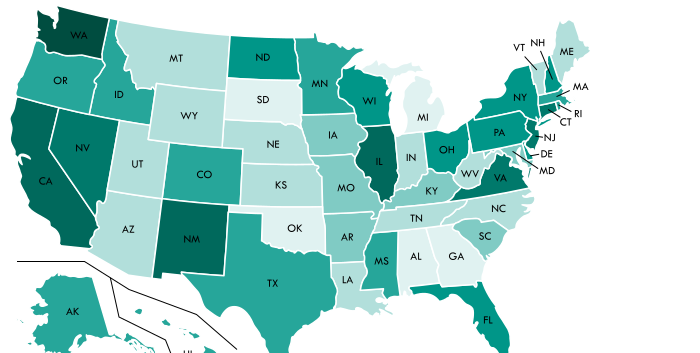
Most common states for community service coordinators
| Rank | State | Population | # of jobs | Employment/ 1000ppl |
|---|---|---|---|---|
| 1 | District of Columbia | 693,972 | 223 | 32% |
| 2 | Vermont | 623,657 | 166 | 27% |
| 3 | Delaware | 961,939 | 215 | 22% |
| 4 | Rhode Island | 1,059,639 | 216 | 20% |
| 5 | Wyoming | 579,315 | 116 | 20% |
| 6 | North Dakota | 755,393 | 141 | 19% |
| 7 | Maine | 1,335,907 | 245 | 18% |
| 8 | Alaska | 739,795 | 128 | 17% |
| 9 | New Mexico | 2,088,070 | 327 | 16% |
| 10 | West Virginia | 1,815,857 | 298 | 16% |
| 11 | Massachusetts | 6,859,819 | 1,044 | 15% |
| 12 | South Dakota | 869,666 | 132 | 15% |
| 13 | Alabama | 4,874,747 | 636 | 13% |
| 14 | Idaho | 1,716,943 | 215 | 13% |
| 15 | Maryland | 6,052,177 | 674 | 11% |
| 16 | Oklahoma | 3,930,864 | 452 | 11% |
| 17 | Minnesota | 5,576,606 | 556 | 10% |
| 18 | Connecticut | 3,588,184 | 353 | 10% |
| 19 | New Hampshire | 1,342,795 | 132 | 10% |
| 20 | Montana | 1,050,493 | 105 | 10% |
Most common cities for community service coordinators
| Rank | City | # of jobs | Employment/ 1000ppl | Avg. salary |
|---|---|---|---|---|
| 1 | North Andover | 1 | 4% | $41,195 |
| 2 | Dover | 1 | 3% | $42,836 |
| 3 | Hollister | 1 | 3% | $50,399 |
| 4 | Randolph | 1 | 3% | $41,999 |
| 5 | Gilroy | 1 | 2% | $50,460 |
| 6 | Malden | 1 | 2% | $41,605 |
| 7 | Middletown | 1 | 2% | $45,279 |
| 8 | Bloomington | 1 | 1% | $47,582 |
| 9 | Fort Lauderdale | 1 | 1% | $43,536 |
| 10 | Hollywood | 1 | 1% | $43,515 |
| 11 | Los Angeles | 2 | 0% | $48,540 |
| 12 | Atlanta | 1 | 0% | $31,923 |
| 13 | Baltimore | 1 | 0% | $38,932 |
| 14 | Chicago | 1 | 0% | $48,472 |
| 15 | Fresno | 1 | 0% | $49,837 |
| 16 | Oxnard | 1 | 0% | $48,793 |
| 17 | Philadelphia | 1 | 0% | $43,359 |
Community Service Coordinator job outlook: Expert opinions
Our panel of community service coordinator experts
University of South Florida
Seattle University

Pennsylvania State University
Louisiana State University at Shreveport
Elon University

Austin Community College
Connecticut College
Heidelberg University

Brigham Young University

Grace Christian University

Austin Community College
Wichita State University
Marshall University

Auburn University
University of Minnesota
Seattle University

East Tennessee State University

Committee on the Status of Women in Astronomy - CSWA

The USA Hockey Foundation
What general advice would you give to a Community Service Coordinator?
Maureen Chiodini-Rinaldo: God gave you two ears and one mouth. Listen twice as much as you talk. Remain open-minded and stay in touch with your mentors. We should always be learning. Find your path and your niche by doing what makes you happy. Don't chase the money. If you are happy and doing what you love and are passionate about, the money will come.
What will help Community Service Coordinators increase their earning potential?
Katherine Stavrianopoulos Ph.D.: Continued Learning and Development: Stay committed to lifelong learning by attending workshops, pursuing advanced certifications, and staying updated on the latest research and therapeutic techniques. Supervision and Mentorship: Seek out supervision and mentorship opportunities from experienced professionals in the field. Consider participating in a peer supervision group where you can support one another and be open to constructive criticism as part of your development. Engage in regular self-reflection for personal growth. Prioritize Self-Care: Establish healthy boundaries between work and personal life, engage in activities that recharge you and help prevent burn out. Cultural Competence and Diversity: Cultivate cultural humility and strive to understand the diverse backgrounds and perspectives of your clients. Continuously educate yourself on multiculturalism and antiracism to provide competent and inclusive counseling services. Ethical Practice: Adhere to ethical guidelines and professional standards in your practice. Strive to Build Strong Therapeutic Relationships: Establish rapport, demonstrate empathy, and create a safe and trusting environment where clients feel comfortable exploring their thoughts and feelings. Evidence-Based Practice: Stay informed about research findings and utilize interventions that have been empirically validated for specific client populations and presenting issues. Networking and Collaboration: Build professional connections within the counseling community. Attend conferences, join professional organizations, and participate in networking events to expand your professional network. Collaboration with colleagues can lead to referrals, consultation opportunities, and mutual support. Consider doing some pro bono work: Pro bono services help bridge the gap to access mental health services for individuals who cannot afford them.
Dr. Rashmi Chordiya Ph.D.
Assistant ProfessorSeattle University
Institute of Public Service
What soft skills should all Community Service Coordinators possess?
Dr. Rashmi Chordiya Ph.D.: Empathy, cultural intelligence, emotional intelligence, self-awareness, ability to practice calm and loving-kindness with clients.
What skills will help Community Service Coordinators earn the most?
Dr. Rashmi Chordiya Ph.D.: Skills to work with client groups of diverse backgrounds, having a deep understanding and practice of trauma-informed social work, and adaptive leadership skills to adapt to the needs of diverse clients and evolving social and organizational contexts.
Jessica Clontz
Assistant Teaching Professor, Human Development and Family Studies, Program Coordinator, HDFSPennsylvania State University
Human Development and Family Studies Department
What skills stand out on Community Service Coordinator resumes?
Jessica Clontz: The skills employers are looking for include teamwork, leadership, creativity, and flexibility. Although many agencies have moved to a remote service delivery model, professionals are still working as a team to meet client needs effectively. Employers want leaders who are not afraid to take on responsibility and communicate assertively. Working in human services requires you to think on your feet... a lot! Being creative will allow you to meet clients where they are instead of where you want them to be. The pandemic has made flexibility a necessary skill for all human service professionals. Schedules and activities can change at a moment's notice; therefore, you must be able to quickly adapt.
What skills will help Community Service Coordinators earn the most?
Jessica Clontz: The ones you continue to strengthen and grow.
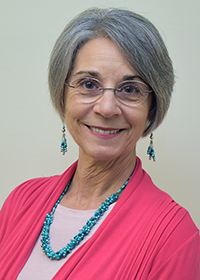
Kacie Blalock Ph.D.
Associate Professor; Director, Master of CounselingLouisiana State University at Shreveport
Department Of Psychology
What hard/technical skills are most important for Community Service Coordinators?
Kacie Blalock Ph.D.: It is important that counselors are able to effectively take notes and summarize progress, interpret assessments, memorize and recall information, and keep clear yet concise records.
What hard/technical skills are most important for Community Service Coordinators?
Monica Burney: Effective Human Service professionals have a working knowledge of case management principles and a good understanding of how to apply ecological systems theory to client situations. They also employ professional, effective, and concise documentation. One of the more critical responsibilities currently is to be able to participate in discussions around issues of equity and ethical responsibilities within the agency setting to effectively meet client needs.
What soft skills should all Community Service Coordinators possess?
Monica Burney: Skilled Human Services professionals demonstrate strong self-awareness and are quick to reflect on how their interactions affect others. They also establish rapport well, ask open-ended questions, and frame conversations with verbal and non-verbal techniques that make people feel comfortable in communication. They are often great collaborators who assess and navigate team dynamics well.
Michelle Kelley Shuler Ph.D.
Department Chair: Human ServicesAustin Community College
Human Services Department
What hard/technical skills are most important for Community Service Coordinators?
Michelle Kelley Shuler Ph.D.: a. Must have strong basic computer skills and knowledge of software such as excel spreadsheets, google docs, etc. Most, if not all, agencies use electronic health records and treatment planning, so it is necessary to be competent in this area.
b. A degree and additional certifications will assist you in seeking employment. It will also increase your level of competency and diversify the communities you serve. For example, at Austin Community College, we offer our students a chance to complete a certification in Mental Health First Aid Training. This increases their marketability and skill level.
What skills will help Community Service Coordinators earn the most?
Michelle Kelley Shuler Ph.D.: I would say much of the income level for human service professionals will be based on education. The higher level of education you have, the more you will earn. We encourage all of our students seeking an Associates in Human Services to consider completing at minimum a bachelor's degree.
What certifications/licenses/courses can have the biggest impact for Community Service Coordinators?
Julia Kushigian Ph.D.: A 4-year degree with a major in Hispanic Studies, a certificate from an International Studies Center (at Connecticut College the Center for International Studies in the Liberal Arts with an ACTFL ranking of Advanced, a local or global internship in the foreign language and/or foreign culture, nationally recognized ACTFL cerntification, translation licensing.
How have salaries changed over time for Community Service Coordinators?
Julia Kushigian Ph.D.: As demand has increased, salaries have risen tremendously to try and keep pace. In fields like education, business, health care, government, social services, service related employment, law, etc., salaries have improved year over year to stay competitive.
What are the biggest trends we'll see in the Community Service Coordinator job market given the pandemic?
Julia Kushigian Ph.D.: The exciting trends for students graduating in Hispanic Studies and for those already in the job market are the potential benefits of a remote learning anticipated years ago through pedagogical tools designed by those in language, literature and culture. The interactive formulas, ability to engage participants and broaden the definition of language learning to include cultural studies of a variety of professional fields were already in the works and Covid was the impetus to move even faster. We know from a variety of studies, including a major report by the American Council of Teachers of Foreign Languages, for example, that 9 out of 10 U.S. employers rely on employees with language skills other than English. Spanish being in high demand is the most sought after language. Of course, beyond the more obvious benefits of being bilingual ("Why Bilinguals are Smarter" NYT 2012) are the less obvious of being adept at solving certain mental problems, thriving in ambiguity, flexibility with unknowns and the potential to stave off dementia later in life.
Paige Atterholt
Adjunct ProfessorHeidelberg University
Will there be an enduring impact of the coronavirus pandemic on Community Service Coordinators?
Paige Atterholt: I think now, being in year 2 of the pandemic, I think if anything there will be more jobs for graduates. Just looking through the jobs online, there are many opportunities for graduates to get a job. I think the older community retired when things got bad, which opened the door for the younger generation.
What's a good job out of college for Community Service Coordinators?
Paige Atterholt: A good job out of college is a job that you feel passionate about because I believe your happiness comes first. Being in the world of education, a good job in my eyes is a job that you enjoy going to every day, want to make an impact, and enjoy the time you have with your students.
What will help Community Service Coordinators increase their earning potential?
Paige Atterholt: There are many ways a teacher can increase their earning potential. This can be done through continuing education, maybe looking at a Masters or more to move up on the pay scale. Teachers can advise student council, tutoring, or even look at coaching to earn more money. There's vast opportunities in the world of education! Schools always need teachers who are well-rounded.
How have salaries changed over time for Community Service Coordinators?
Dr. Stephen Duncan Ph.D.: The human sciences continue to be at the lower salary ranges of professional positions. Never will they rival our friends in engineering and other technical fields. Starting salaries at the bachelor's level are similar to elementary and secondary school teachers, and have followed their pattern over a number of years.
Scott Shaw Ph.D.
Dean / Professor of Human Services, School of Social Sciences and Human ServicesGrace Christian University
School of Social Sciences and Human Services
What are the biggest trends we'll see in the Community Service Coordinator job market given the pandemic?
Scott Shaw Ph.D.: The biggest trends in the current job market include both technical skills and people skills that can be adapted to multiple settings and with a high degree of cultural intelligence (CQ). Many services are adapting to an online, virtual, or personal-delivery format. This has impacted everything from higher education with virtual classes, and telehealth and virtual service delivery models in medical and mental health services, to products ordered online and being delivered to one's doorstep in lieu of large malls and physical stores. Current job applicants must be able to respectfully engage with people from diverse racial, ethnic and cultural backgrounds, as well as help meet the needs of their communities as a direct reflection of the companies and careers they represent.
I encourage my students to embrace 'comfort being uncomfortable' and always be learning. What appears to be a "hot market" or "best" career option today may not be the same answer next year. Being able to engage with all people respectfully, listen well, and provide innovative solutions in a sensitive way will go a long way in whatever developments come along in the current and future job market. I also encourage those looking for work to review their social media accounts - employers check social media accounts and one's digital footprint can make or break an interview based on what one posts, as well as reveal a great deal about one's character and values. Skills and technical abilities should be as diversified and multidisciplinary as possible; however, one's character and values should consistently tell a single story about the applicant as a person.
What certifications/licenses/courses can have the biggest impact for Community Service Coordinators?
Scott Shaw Ph.D.: There is a growing sentiment that generalist knowledge and interdisciplinary education is the way of the future. We are coming out of a "specialist" mindset that previously encouraged students to find their "one thing" or passion. Once the job market shifts (and it will), those with outdated skills find themselves struggling to find their next "one thing." In his New York Times Bestselling book, Range: Why Generalists Triumph in a Specialized World (2019), David Epstein makes a case for generalist knowledge and the importance of developing several interests in lieu of only having one major focus. I agree with Epstein's thesis and encourage students to consider studying social sciences and interdisciplinary studies, especially if they are unsure what path or major they are interested in. Having time and dedicated focus to explore interests, personal strengths, and areas of development can help university students experience multiple fields of inquiry that will help them in the current ever-changing job market. Having an ability to apply critical thinking and problem solving to finding creative solutions from different perspectives will advance one's career in almost any market.
I also encourage students to take every opportunity to understand other cultures and perspectives. If able to travel (post-pandemic) on a study abroad, live abroad, or take a short-term trip, then by all means do it. It will expand one's worldview and perspective, as well as one's ability to see the humanity in others from different backgrounds. Employers appreciate applicants who can relay experiences engaging people from different backgrounds and display evidence of emotional and cultural intelligence. If unable to travel internationally, then engage with diverse populations locally and learn from books, articles, documentaries and movies that add to one's cultural awareness and sensitivity. Additionally, having foundational knowledge in technology and statistical literacy can go a long way in almost any field. Current job applicants who display familiarity with MS Office, Google Suite or other common applications can apply this knowledge to most career paths. Many skills and certifications are generalizable to other fields and career paths, so it is important to take every opportunity to always be learning and developing one's understanding.
Will there be an enduring impact of the coronavirus pandemic on Community Service Coordinators?
Stuart Greenfield Ph.D.: According to the National Student Clearinghouse estimates for Fall 2018-Fall 2020, Nscresearchcenter, enrollment inf post-secondary institutions declined by 703.9K. Of this decline, 621.4K (88.3%) were attributed to Public 2-year institutions.
What certifications/licenses/courses can have the biggest impact for Community Service Coordinators?
Stuart Greenfield Ph.D.: According to the Bureau of Labor Statistics' Occupation Outlook, half the twenty fastest jobs, BLS, require only a high school diploma. The three fastest-growing jobs, Care Aides, Fast-food workers, and Cooks, only require a high school diploma.
The health care sector has been and will continue to be the fastest-growing sector in the economy. Many of these occupations require certifications. The health care sector's growth should provide community colleges an area for growth as they can provide health care training at an affordable cost.
The Philadelphia Fed has a tool, Philadelphiafed, that shows what training/skills are required for job seekers to improve their earnings.
What soft skills should all Community Service Coordinators possess?
Stuart Greenfield Ph.D.: Given the changing demographics that the country has experienced, the entire education continuum must change. According to the Brookings Institution, Brookings, the non-Hispanic White population in the under 18 cohort since 2000 has declined.
As you'll note from the occupations that are projected to increase the greatest, most require face-to-face contact, so that soft-skills will be necessary. I would also expect that critical thinking skills will be needed as more responsibility will be required of front-line workers.
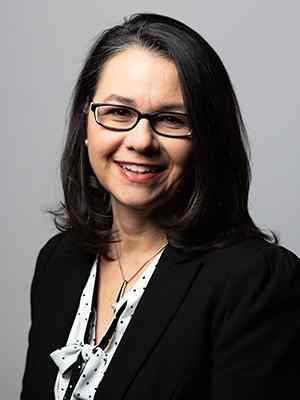
Sonja Armbruster
Health Sciences EducatorWichita State University
Department of Public Health Sciences
What's a day at work look like for a Community Service Coordinator?
Sonja Armbruster: The pandemic has re-defined what it even means to have a "day at work". I'm writing this response from my home office. Work in public health jobs can involve so many kinds of roles and responsibilities. The only thing I can guarantee is that the successful person seeking a career in public will be constantly curious and constantly learning. There are many public health jobs that are clearly defined with a set of protocols and software and office time that is scripted. Many more public health jobs require learning something new about community members, community partners, the system (including the department/organization one works for), the latest science and political realities that enable and constrain public health work. A day at work will involve continuously learning and seeking to understand new connections.
What technical skills for a Community Service Coordinator stand out to employers?
Sonja Armbruster: The technology of this moment may change in the next moment. The capacity to quickly learn new systems and processes is a critical skill. In large-part, this requires a willingness to say yes, and perhaps a willingness to make mistakes and try again. Successful new-graduates are coachable. None of us is as smart as all of us. New grads need to seek coaching and feedback from others. Older co-workers may have wisdom to share, or they may be missing a perspective or skill needed - and either way, new grads can learn so much by watching and paying attention. One of the most valuable skills one can hone is the approach to the work. New responsibilities are an opportunity to grow in the job, not a burden. While you likely won't see this on a normal "technical skills" list, stand-out employees have a healthy willingness to "go-figure-it-out" and then consult with one's supervisor or team rather than waiting to be told what to do or having a narrowly defined "job-jar". GFIO.
Will there be an enduring impact of the coronavirus pandemic on Community Service Coordinators?
Sonja Armbruster: Absolutely. For most of my 20-year career in public health, my colleagues and I have been frustrated by the fact that most people have no idea what public health is. At least now, most people have some understanding of some aspects of the field of public health. Particularly, people see that policy development, assessing community needs, community engagement and addressing equity are all core responsibilities of this field. After 9/11/2001 and the anthrax events, new preparedness dollars flowed into public health, and over times those funding streams slowly eroded again. Over the next few years, it is reasonable to expect increased funding to support public health. This article from The Nation's Health would be a good resource to learn more: www.thenationshealth.org
Dr. E.Del Chrol
Chair of Humanities, Professor of ClassicsMarshall University
Humanities Department
Will there be an enduring impact of the coronavirus pandemic on Community Service Coordinators?
Dr. E.Del Chrol: I have three big fears about potential impacts of the pandemic on grads, and one hopeful one. I'm a believer in the old saying that goes the true judge of one's character is what one does when nobody is watching. Since students aren't under the same scrutiny as they would in a class of students, I am worried about the reward system some may have developed. So, first, if a student cheated on exams because they took it by themselves, not only does that undermine their education but may encourage cheating to get ahead. Second, it's easy to lose focus in a Zoom or Teams meeting or class. I myself more often than I should check my phone when I should be listening to some administrator or other delivering projections. Attention and focus is a skill, and when there's no obvious penalty to checking Insta during a proof, the ability to do deep and rewarding work with true focus is further diminished. Third, I'm concerned that the pandemic is reinforcing the digital divide. A student who has to share a space or a computer or bandwidth is going to have a harder time performing as well as someone who doesn't. The one thing I hope will come out of this is more people able to do their work in a space and a time of their choosing, and that folks won't be compelled to go sit under fluorescent lights in a cubicle 5 days a week. Learning to work creatively and independently is a skill and one that is sometimes ground out of our students by 19th century work-spaces. Fingers crossed we can develop flexibility thanks to the necessity.
What certifications/licenses/courses can have the biggest impact for Community Service Coordinators?
Dr. E.Del Chrol: The courses that are most useful for employers are those that encourage writing, especially when it requires the student to conceive of and execute a large, complex project. If your major has a capstone project or Senior thesis option (and not just examination), take it. Secondarily, upper division courses that draw connections between the classical world and today are vital, especially with professors who aren't stupid. It's easy to say "Today is just like the fall of Rome!", you hear that all the time. But which fall of Rome? The one that created the long-enduring empire in 27 BCE? Or the final death in the West in 476CE (which doesn't include the Eastern empire in Constantinople)? Being able to recognize patterns as well as specificity of a historical moment is of vital importance to navigating our fraught times. That level of cultural awareness is infinitely adaptable to work that one does at a job, even a complex one. Finally, courses that tackle rhetoric are key, since, as Aristotle says, politics is the queen of disciplines. Everything is politics, and being able to navigate that is key.
Adam Greer
Career Services SpecialistAuburn University
Department of Human Development and Family Science
What are the biggest trends we'll see in the Community Service Coordinator job market given the pandemic?
Adam Greer: I think the biggest trend we will see are more people working from home/distance. Our HDFS students have quickly learned how to work from home and be as efficient, if not more efficient, than before the pandemic started.
What skills stand out on Community Service Coordinator resumes?
Adam Greer: Clearly, the distance/online working skills will stand out with our HDFS majors. Our students have a strong foundation in learning to work with people, and now they have a new way to work with people and remove barriers that might have previously prevented an in-person meeting.
Are there any particularly good places in the United States for Community Service Coordinators to find work opportunities?
Adam Greer: Our graduates are finding jobs largely in the government/non-profit/social service industries.
What are the biggest trends we'll see in the Community Service Coordinator job market given the pandemic?
Joyce Serido Ph.D.: The pandemic's economic disruption and the continuing uncertainty are likely to result in employers proceeding with caution, looking for ways to keep overhead as low as possible.
- Regarding where people work: More employers will seek out more flexible and hybrid strategies: Combining remote work and strategic use of in-person working groups
- Employers will be exploring alternative working agreements, limiting the number of full-time positions, expanding the use of contract services, contingent hiring, particularly for specific skills (e.g., technology, social media)
- Candidates who can adapt to changing demands, and have a more diverse skill-set, will be in greater demand
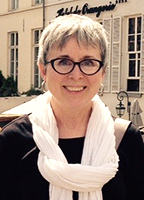
Theresa Earenfight Ph.D.
Professor of History, Director, Women, Gender, and Sexuality Studies ProgramSeattle University
History Department
Will there be an enduring impact of the coronavirus pandemic on Community Service Coordinators?
Theresa Earenfight Ph.D.: As a historian of the European Middle Ages, I'm struck by how students this past year have acquired something scarce: historical empathy. The past can seem so remote, so very different from our lived experiences today, and this can make history seem irrelevant. But this fall, I was teaching a section on the bubonic plague, which historians of medicine now know was a global pandemic, not just an epidemic in Europe. Usually, students are fascinated by the gruesome medical details, but not this group.
They did not need or want to look death in the eyes. They wanted to know how did people react? How did they get back to normal? When we ticked off the list of reactions--fear, distrust of science (such as it was in 1348), xenophobia, scapegoating, economic collapse, hoarding supplies, turn to religion, gallows humor about worms crawling about corpses--they got it. When we talked about the aftermath--eat, drink, be merry, and protest the inequality--they got it. That is historical empathy, and I'm sad that this was how it had to be learned, but it will give them broader compassion that can encompass people alive today.
What type of skills will young Community Service Coordinators need?
Theresa Earenfight Ph.D.: Science. They will need to learn and trust scientific knowledge-social work. We have a lot of work to do to repair the social fabric. Art. We need to know to express our pain in creative ways.
What experience really stands out on Community Service Coordinator resumes?
Theresa Earenfight Ph.D.: Altruism. Anyone who reaches out and does work that repairs the shredded world and does not ask for an avalanche of cash. And an understanding of how privilege works and a desire to work to rein in the harm of unchecked privilege.
Will there be an enduring impact of the coronavirus pandemic on Community Service Coordinators?
Dr. Frederick Gordon Ph.D.: Graduate students will need to refocus on the changing institutional role, being both remote and in-person, and impacting agency goals and performance.
What type of skills will young Community Service Coordinators need?
Dr. Frederick Gordon Ph.D.: Budgeting skills are essential, as well as apparent, logical written ability.
What experience really stands out on Community Service Coordinator resumes?
Dr. Frederick Gordon Ph.D.: Program concentration and meaningful internship experience.
Nicolle Zellner (on behalf of members of the CSWA)
ChairCommittee on the Status of Women in Astronomy - CSWA
What type of skills will young Community Service Coordinators need?
Nicolle Zellner (on behalf of members of the CSWA): I believe (hope) that the effects of the pandemic will be short-lived and that there will be a surge in job opportunities once a vaccine is available. Nevertheless, greater flexibility and versatility in skills are always useful. For example, astronomers who have analyzed large data sets or worked with machine learning algorithms will be in significant demand.
Interdisciplinary studies are also on the rise. New fields like astrobiology are rapidly growing, and there are ripe potentials for researchers with unique combinations of expertise or who can work with broad collaborations spanning disciplines.
With the growth of data, especially from large astronomical surveys, technical skills like computer programming and experience with data science tools and machine learning is increasingly useful. The ability to communicate complex ideas to a range of audiences is a necessity in most fields, and astronomers generally have great relevant experience with community outreach.
Are there any particularly good places in the United States for Community Service Coordinators to find work opportunities?
Nicolle Zellner (on behalf of members of the CSWA): I think that permanent and what might be considered more "traditional" astronomy research positions like tenured professorships are more difficult to attain, primarily because of a short supply in the availability of those positions compared to the number of qualified candidates. Looking more broadly, there's a wide range of relevant positions for which many astronomers have very useful and increasingly more recognized skillsets - outreach/education positions for a variety of age groups in STEM, technical program/project management, scientific writing, and data science in industry, as examples.
How do you envision technology impacting Community Service Coordinators in the next 5 years?
Nicolle Zellner (on behalf of members of the CSWA): Advances in optics technology (laser frequency combs, for example) have already impacted high precision radial velocity measurements that the exoplanet community has been using to search for Earth-sized exoplanets. In the next five years, this technology will continue to be developed and used by other sub-fields in astronomy, including cosmology and Galactic dynamicists.
In planetary science, there are a number of advances that are rapidly changing how we do an exploration of our solar system. For example, NASA is strongly pushing for commercial partnerships that may facilitate delivering scientific payloads to the Moon, and small satellites (e.g., CubeSats) are opening up a lot of new options for both scientists, technologists, and engineers to get more involved in solar system missions.
Computational and algorithmic advances make it easier to aggregate and analyze large datasets, especially with the increasing prevalence of astronomical sky surveys. The increasing popularity of open-source tools and cloud usage for sharing data, I think, is and will be pushing reproducibility of research to be a more heavily emphasized expectation of the standard research process and evaluation metric of a researcher's work.
What are the biggest trends we'll see in the Community Service Coordinator job market given the pandemic?
Tamara Tranter: Remote, remote, remote. I also believe we will see more people trying to enter different fields than the fields they were in pre-pandemic. Our norms have shifted, and almost everyone has had to pivot in some way to show their value. People with experience in different areas will be able to add more value to a company that has had to downsize.
What Community Service Coordinator skills would you recommend for someone trying to advance their career?
Tamara Tranter: Communication skills. Take a communications course. Read books on communication and leadership. You may not want to be the leader, but learning about leadership will help you understand what type of leader you want to work for and learn from. Pick up the phone and call people you think you want to work for or learn from, don't just email them; making cold calls teaches you character. Learn to stand out. What can you do during that year that will add value to your life and career buckets? Read and learn about emotional intelligence - understand who you are and how to best interact with others.
Companies who are hiring are going to want to know you were doing something to grow and learn during the year if you were not employed or going to class during that time. Don't fake it. Tell us that you were taking an online class in a different program you wanted to learn about or that you were a stay at home parent that had to help your child/children with remote learning. Talk about the things you were motivated to do each day and the things that challenged you. Tell us if you had a family member that was ill. We want to know that you did things to help you grow and add value to yourself - reading books, taking up running, helping out your neighbors. We know everyone faced some type of struggle during this, but how did you manage it?
What general advice would you give to a Community Service Coordinator?
Tamara Tranter: Take risks, go outside of your comfort zone, and don't go into interviews with big expectations. Many qualified people have been impacted and are going to get many of the jobs because they have past experience. So be realistic, be positive, and be a team player.