
Automatically apply for jobs with Zippia
Upload your resume to get started.
Diabetes educator skills for your resume and career

15 diabetes educator skills for your resume and career
1. Patients
- Provide diabetes education to 200+ patients newly diagnosed, having difficulty managing their diabetes or requiring modifications in medication administration.
- Provided diabetes self-management education to patients in support of the Outpatient Program Coordinator as well as educating hospitalized diabetes patients.
2. CDE
- Served as RN, CDE and certified SCII pump instructor for Endocrinology consult clinic, gestational program and referred individuals.
- Conducted weekly RD, CDE clinics with chief endocrinologist to primary care center indigent populations during the past 2 years.
3. Patient Care
Patient care entails the diagnosis, recovery, and control of sickness as well as the maintenance of physical and emotional well-being through the use of healthcare providers' services. Patient care is described as services provided to patients by health practitioners or non-professionals under guidance.
- Participated as multidisciplinary team member to enhance the delivery of diabetic patient care.
- Interact with interdisciplinary departments to coordinate patient care of diabetes management.
4. Diabetes Self-Management Education
- Developed nutrition, fitness, and stress management lifestyle curriculum to enhance patient coaching and meet ADA Diabetes Self-Management Education guidelines.
- Provided Diabetes Self-Management education to individuals and groups of all ages and abilities.
5. Patient Education
- Provided all aspects of inpatient and outpatient education including team development, recognition, and quality outcomes.
- Team rounding on nursing units; emphasis on patient education regarding newly prescribed medications.
6. RD
A registered dietitian (RD) work with people who are having trouble losing weight or maintaining a proper diet and weight for health related reasons. Each patient's dietary habits are unique and a registered dietitian will help craft a plan tailored to their needs.
- Identified the need of referral to RN, MD, RD, Exercise Specialist, Social Worker or Depression HealthEducator.
- Maintained patient records utilizing KaiZen RD electronic medical records software.
Choose from 10+ customizable diabetes educator resume templates
Build a professional diabetes educator resume in minutes. Our AI resume writing assistant will guide you through every step of the process, and you can choose from 10+ resume templates to create your diabetes educator resume.7. Blood Glucose
- Administer and regulate daily insulin injections, monitor daily blood glucose levels and nutritional intake and prescribe daily exercise regimens
- Conducted Diabetes intake assessments, blood glucose monitor teaching and self management instructions for Gestational diabetes
8. Health Education
Health education refers to education concerning healthcare.
- Developed and administered a home health education program for children newly diagnosed with diabetes
- Designed nutrition and health education program from a culturally sensitive perspective.
9. Medical Nutrition Therapy
- Provided individualized medical nutrition therapy and/or diabetes education incorporating cultural preferences, health beliefs and preferred learning style for all ages.
- Provide medical nutrition therapy and diabetes education to adult population.
10. Educational Materials
Educational materials are items and accessories that are used to enhance learning in any given educational setting. They vary per setting and may include audio or visual aids, textbooks, tools, devices, machinery, gadgets, and virtually ant media that can improve the learning process of any individual at the primary or advanced educational level.
- Assisted Medical Management Team with development of forms and selection of educational materials.
- Researched, developed, and revised educational material to enhance education of participant.
11. Community Health
Community health is a category of medical speciality that places its attention on the well being of people. The main focus is mental and physical well-being of these people located in a specific region geographically. It seeks to help community people maintain and enhance their health in order to prevent disease spread.
- Trained and supervised dietetic interns and community health workers.
- Teach nutrition classes and participate in various outreach events to promote community health and wellness.
12. Gestational Diabetes
- Instructed diabetes self-management skills to women with gestational diabetes.
- Implemented gestational diabetes program through collaboration with OB practice.
13. Healthcare Professionals
- Make high-level clinical presentations to managed care organizations and high value healthcare professionals.
- Provide accurate information to physicians and other healthcare professionals.
14. Community Resources
Community resources are a set of resources that are used in the day to day life of people which improves their lifestyle in some way. People, sites or houses, and population assistance can come under the services offered by community resources.
- Provide community resources for the continual self-management and empowerment of the individual with diabetes.
- Attended regular educational courses on topics including Cancer Metastasis and Staging, Medical Terminology, and Community Resources.
15. Diabetes Care
- Work with interdisciplinary diabetes care team to tailor interventions to individual patient needs.
- Established South Sacramento Kaiser Diabetes Care Management Program working closely with Endocrinologist.
5 Diabetes Educator resume examples
Build a professional diabetes educator resume in minutes. Browse through our resume examples to identify the best way to word your resume. Then choose from 5+ resume templates to create your diabetes educator resume.

What skills help Diabetes Educators find jobs?
Tell us what job you are looking for, we’ll show you what skills employers want.
What diabetes educator skills would you recommend for someone trying to advance their career?
Ted Eaves
Associate teaching professor, Wake Forest University
What hard/technical skills are most important for diabetes educators?
Corey Hannah
Program Director, Master of Science in Athletic Training, University of Wisconsin - Eau Claire
List of diabetes educator skills to add to your resume
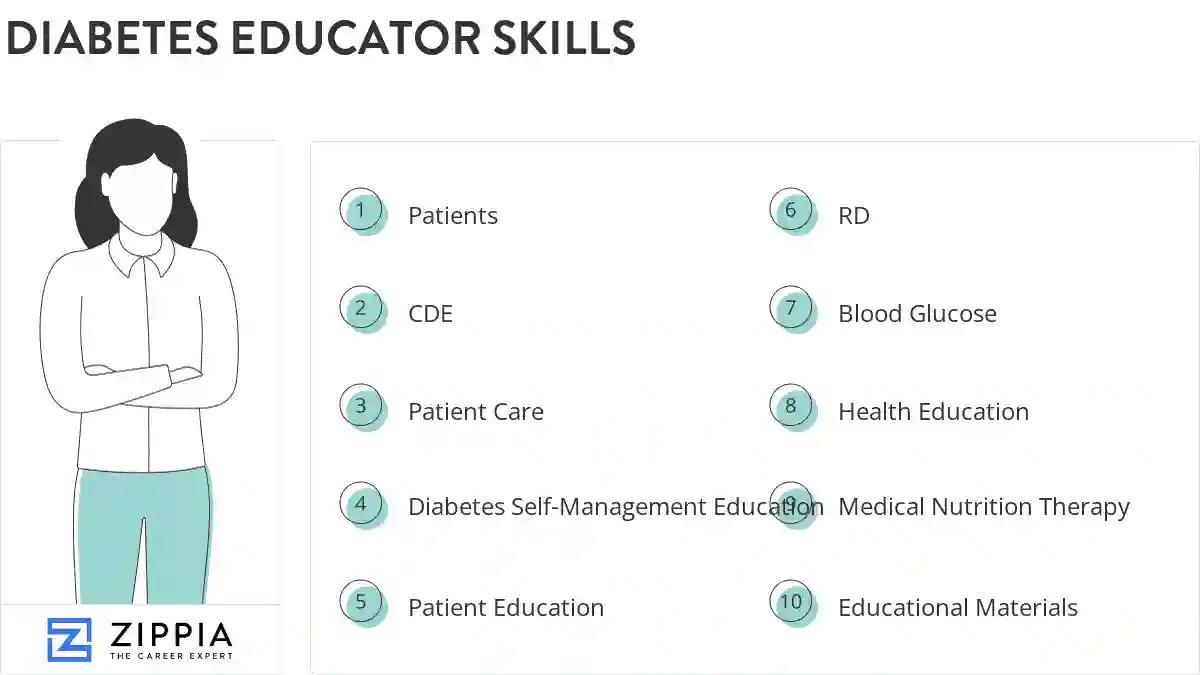
The most important skills for a diabetes educator resume and required skills for a diabetes educator to have include:
- Patients
- CDE
- Patient Care
- Diabetes Self-Management Education
- Patient Education
- RD
- Blood Glucose
- Health Education
- Medical Nutrition Therapy
- Educational Materials
- Community Health
- Gestational Diabetes
- Healthcare Professionals
- Community Resources
- Diabetes Care
- Staff Education
- Blood Sugars
- Nutrition Education
- Self-Management
- Home Health
- Continuous Glucose
- Dsme
- Community Events
- Meal Planning
- Diabetes Education
- Group Classes
- Medication Management
- American Association
- Aade
- Disease Process
- Weight Loss
- Group Education
- Health Fairs
- Lifestyle Changes
- A1C
- Glucometers
- Foot Care
- Weight Management
- OB
- Advisory Boards
- Stress Management
- Insulin Pump Therapy
- Insulin Administration
- Blood Pressure
- Hypertension
Updated January 8, 2025
