
Automatically apply for jobs with Zippia
Upload your resume to get started.
Disability advocate skills for your resume and career
15 disability advocate skills for your resume and career
2. Outbound Calls
An outbound call is made by the call center representative to the customers on behalf of the company. Such calls help increase sales and generate revenue for the organization.
- Received Inbound and Outbound calls to selected health plan members who might qualify for Social Security Benefits.
- Monitored heavy phone system and handled inbound & outbound calls.
3. Ssdi
- Help patient apply for Medicaid, SSI, and SSDI, Crime Victims.
- Offered advisement on DSS, SSI and SSDI.
4. Government Agencies
- Be a Liaison between claimant's medical providers and government agencies.
- Communicate daily with various community sponsored agencies, government agencies, charities, medical providers and DME companies.
5. Mental Health
Mental health is the state of wellbeing in which an individual can cope with the regular stresses and tensions of life, and can work productively without having any emotional or psychological breakdown. Mental health is essential for a person of any age and helps them make the right decisions in their life.
- Provided support to individuals seeking assistance in circumnavigating the various requirements of entities providing mental health and developmental disability services
- Maintained a caseload of approximately 90 participants who were diagnosed with a developmental disability and/or mental health diagnosis.
6. Advocacy Services
- Provide advocacy services for families with immediate crisis, while monitoring measurable goals described in the treatment plan
- Provided psychological and legal advocacy services to victims of domestic violence utilizing individual, group, crisis-line and walk-in counseling.
7. Appeals
- Attend hearings with the Office of Appeals to prove up client's disability and entitlement claims.
- Filed all necessary appeals, sent in completed paperwork and followed up with case managers.
8. Administrative Law
- Represented claimants before Administrative Law Judges in administrative hearings in efforts to award social security benefits for the claimant/consumer.
- Conducted approximately 20-25 hearings before Administrative Law Judges monthly.
9. Independent Living
- Sandwich, IL Teaching and coaching and modeling to promote developmentally disabled individuals from assisted living situations to independent living.
- Worked with developmentally disabled adults teaching them independent living and social skills
10. Medicaid
- Researched Medicaid in Colorado in or order to make more information available to those affected by disability in Colorado.
- Assisted clients with applying for disability and/or Medicaid benefits.
11. Technical Assistance
Technical assistance is the non-financial assistance provided by local or international specialists. The purpose of technical assistance is to maximize the project's implementation and quality of the final product. Technical assistance consists of sharing information, the transmission of working knowledge, and other transfer of technical data which would aid the administration, management team and help build the project. The technical assistance focuses on particular needs identified by the beneficiary country and is delivered in the form of missions.
- Provided training and technical assistance to victim advocates, law enforcement, prosecutors and other criminal justice related entities.
- Provide technical assistance regarding ADA and IAC.
12. Physical Disabilities
- Represented people with mental and physical disabilities seeking Social Security benefits.
- Provided care and assistance to persons with mental and physical disabilities in residential assisted living.
13. Developmental Disabilities
- Counseled persons with developmental disabilities concerning their rights under state and federal law.
- Serve adults with developmental disabilities, assisting them with socialization, daily living skills and goal planning.
14. Disability Claims
- Prepare records and Veteran's Administration disability claims for Service Members facing medical separation from military service.
- Specialized in recruiting and retaining clients for a law office focusing on Social Security Disability claims.
15. Veterans
- Recruit new clients at Veterans' Career Fairs and Stand downs.
- Conduct interviews with veterans and process claims accordingly.

What skills help Disability Advocates find jobs?
Tell us what job you are looking for, we’ll show you what skills employers want.
List of disability advocate skills to add to your resume
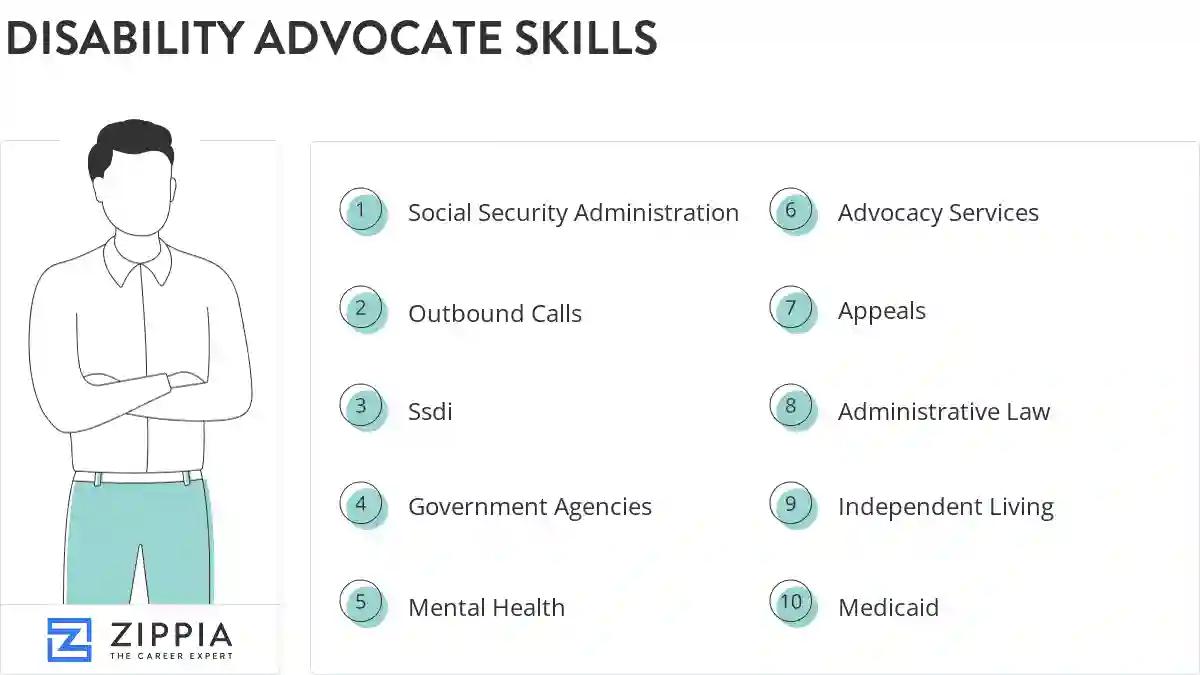
The most important skills for a disability advocate resume and required skills for a disability advocate to have include:
- Social Security Administration
- Outbound Calls
- Ssdi
- Government Agencies
- Mental Health
- Advocacy Services
- Appeals
- Administrative Law
- Independent Living
- Medicaid
- Technical Assistance
- Physical Disabilities
- Developmental Disabilities
- Disability Claims
- Veterans
- Referral Services
- Mental Illness
- Legal Research
- Rights Issues
- Supplemental Security Income
- DDS
- Legal Rights
- IEP
- Health Screenings
- Community Resources
- Community Organizations
- Vocational Rehabilitation
- Medical Care
- HIPAA
- Community Outreach
- Medical Evidence
- Medical Appointments
- Claims Process
- Medical Professionals
- Social Security Benefits
- Financial Assistance
- Brief Writing
- Odar
Updated January 8, 2025

1. Social Security Administration