
Automatically apply for jobs with Zippia
Upload your resume to get started.
Family protection specialist skills for your resume and career
15 family protection specialist skills for your resume and career
2. Child Abuse
When a child who is under 18 is mistreated by an adult, it is considered child abuse. There are many forms of intentional harm and mistreatment for example physical abuse, sexual abuse, emotional abuse, medical abuse, and neglect in providing adequate basic life necessities.
- Conduct investigations regarding allegations of child abuse/neglect.
- Educate schools and community organizations how and when to report child abuse and neglect.
3. Foster Children
- Make monthly contact visits with foster children/parents, non-custody children/custodians/parents on a monthly basis.
- Supervised family visits of foster children with their biological families if necessary.
4. Vulnerable Adults
- Investigate reports of neglect, abuse or exploitation of children and/or vulnerable adults and implement a permanent plan.
- Provide protection and care for children and/or vulnerable adults in need of supplementary or substitute care.
5. Risk Assessments
The process of analyzing and identifying the acts or events that have the potential to negatively affect an individual, asset, or business is called risk assessment. Risk assessments are important because they form an integral part of an organization as well as occupational safety plans
- Do intakes and risk assessments.
- Provided thorough and timely safety and risk assessments to families referred for child maltreatment allegations.
6. Foster Care
- Advocated at the state and local levels for children in foster care and prevented others from being placed into foster care.
- Prepare and present cases for Foster Care Review and Permanency Hearings/Round Table Meetings required through the agency.
Choose from 10+ customizable family protection specialist resume templates
Build a professional family protection specialist resume in minutes. Our AI resume writing assistant will guide you through every step of the process, and you can choose from 10+ resume templates to create your family protection specialist resume.7. Law Enforcement
Law enforcement is the task of certain members of the community who work together to uphold the law by identifying, preventing, rehabilitating, or prosecuting others who break society's laws and norms. The phrase refers to the police, the judiciary, and the correctional system.
- Collaborate with local as well as other state's agency (law enforcement, child protection services, court etc.)
- Networked with law enforcement, community resources and other helping facilities as needed.
9. Family Problems
- Assessed family problems and worked with clients to develop coping skills for those problems.
- Evaluate the social needs of adults/children * Develop a plan directed toward the solution of individual & family problems.
10. DHS
DHS (Department of Homeland Security) refers to the department that handles the USA's immigration enforcement.
- Developed and maintained good working relationships with several DHS Child Welfare Caseworkers and community providers.
- Organized and conducted workshops for monthly youth support groups and prepared and completed DHS state reports and records for annual audits.
11. Administrative Procedures
- Established and oversee administrative procedures to meet objectives set by board of directors or senior management.
12. Supportive Services
Supportive services are provided to enhance the way of life for residents in order to achieve self-sufficiency. Services include transportation, childcare, food pantries, etc.
- Provided supportive services and counseling to children/families where the children were in danger of becoming abused.
- Provided supportive services to children and families where the child is in danger of becoming abused.
13. Child Care
Child care means the care, supervision, or guidance of a child by a person other than the child's parent, guardian, or custodian for periods of less than 24 hours. Childcare could be either center-based such as a daycare or a nursery or home-based care such as nannies or family daycare.
- Assessed and determined parent/provider eligibility and authorize payments for child care.
- Facilitated and coordinated consistent collaborative meetings with child care providers.
14. Family Services
Family services often refers to a division of family support that helps a family better understand how to be successful. This may include recommendations for self-care, such as physical or emotional health, or other financial support systems for families in poorer households, which may include a welfare plan or other form of government assistance.
- Develop Family Service Plans (FSP) to set goals for families and helping them to achieve the goals.
- complete family service plans, complete monthly reports and case plans.
15. Child Welfare
- Enter and maintain accurate and timely computerized records of all case information into the Mississippi Automated Child Welfare Information System.
- Provided family and child welfare services to meet special needs relating to education and homemaking.
5 Family Protection Specialist resume examples
Build a professional family protection specialist resume in minutes. Browse through our resume examples to identify the best way to word your resume. Then choose from 5+ resume templates to create your family protection specialist resume.

What skills help Family Protection Specialists find jobs?
Tell us what job you are looking for, we’ll show you what skills employers want.
What soft skills should all family protection specialists possess?
Dr. Tami James Moore
Professor of Family Science, University of Nebraska at Kearney
List of family protection specialist skills to add to your resume
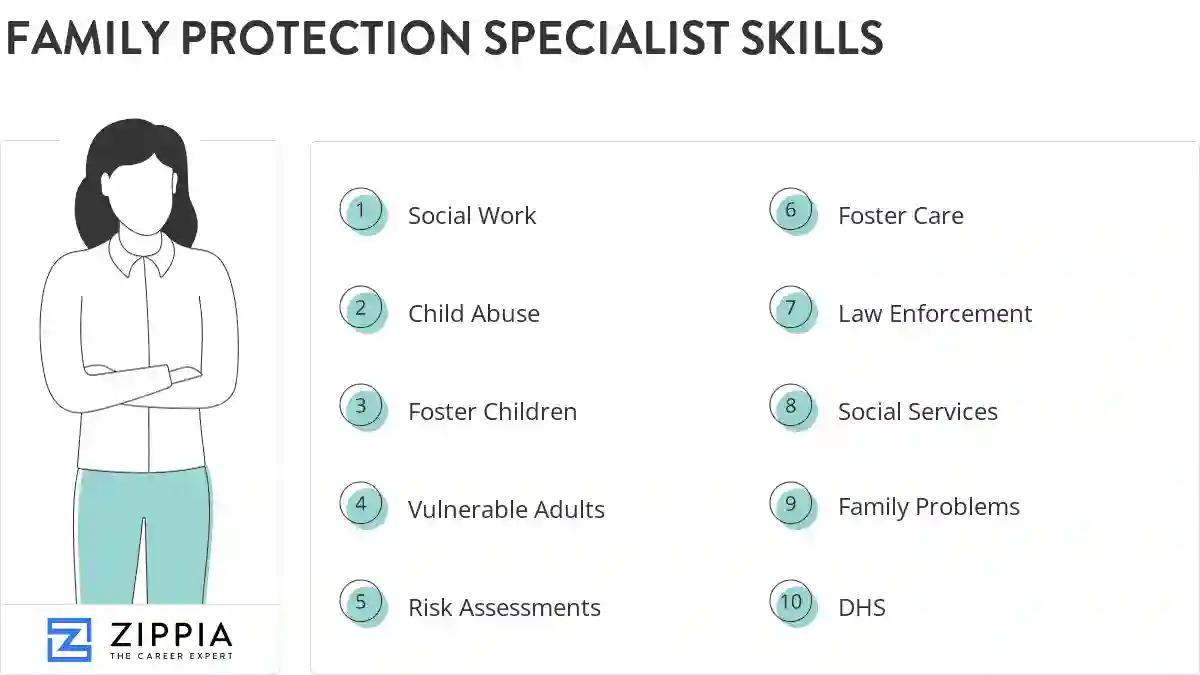
The most important skills for a family protection specialist resume and required skills for a family protection specialist to have include:
- Social Work
- Child Abuse
- Foster Children
- Vulnerable Adults
- Risk Assessments
- Foster Care
- Law Enforcement
- Social Services
- Family Problems
- DHS
- Administrative Procedures
- Supportive Services
- Child Care
- Family Services
- Child Welfare
- Court Hearings
- Substance Abuse
- Substitute Care
- Home Management
- Court Reports
- Client Transportation
- Service Agreements
- Protective Services
- Community Resources
- Agency Resources
- Public Assistance
- Medical Care
- Community Services
- Physical Abuse
- Family Court
- Financial Assistance
- Family Planning
Updated January 8, 2025

1. Social Work