
Automatically apply for jobs with Zippia
Upload your resume to get started.
Hearing specialist skills for your resume and career
15 hearing specialist skills for your resume and career
1. Patients
- Refer patients to additional medical or educational services if needed.
- Handled follow up exams to fine tune hearing aids and any other issues with patients.
2. Appeals
- Managed a large caseload of Social Security Disability Appeals, pending adjudication before an Administrative Law Judge.
- Reviewed provider and Medicare member appeals documentation.
3. Hearing Process
- Applied knowledge of BAA policies and procedures, statutes, rules and judgment to assist taxpayers with the hearing process.
- Interact with co-workers during the hearing process to assure timely and accurate completion of the formal and informal hearings.
4. IEP
- Communicated with parents and attended IEP meetings about the needs of their hearing- impaired child.
- Write goals and present IEP's.
5. Medi-Cal
- Review cases, locate patient that were denied for medi-cal and/or SSI benefits.
- Screen for Medi-cal and/or SSI Eligibility.
6. Hearing Loss
Ranging from mild to profound, hearing loss is the loss of hearing in one or both ears. This condition can affect a person of any age, and it has many causes, but it mainly affects individuals older than 60.
- Perform hearing tests and explain hearing loss.
- Provided educational information and literature regarding the importance of early intervention and prevention of hearing loss to the parent or guardian.
Choose from 10+ customizable hearing specialist resume templates
Build a professional hearing specialist resume in minutes. Our AI resume writing assistant will guide you through every step of the process, and you can choose from 10+ resume templates to create your hearing specialist resume.7. Administrative Hearings
Administrative hearings are like trial proceedings done before an administrative agency or court judge. They are however shorter than regular trials but the evidence is provided and testimonies entertained just like fair hearings. However, administrative hearings are hearings that involve disputes under government agencies and are more informal in nature. The hearings are characterized by facts obtained and leads to the resolution of cases under the authority of government agencies.
- Attended administrative hearings and conducted trial preparation of witnesses throughout New York State.
8. Fair Hearings
- Scheduled various types of fair hearings for the Fair Hearing officers.
- Attend Fair Hearings on behalf of CTDHP.
10. Administrative Law
- Prepare cases and defend the agency's actions in front of an administrative law judge.
- Presented the County's position in administrative Law Hearings for the state of California.
11. Scheduling Appointments
Scheduling appointments is the practice of finding a free slot with the person(s) you want to meet. The process of scheduling appointments involves finding mutually free time, negotiating follow-ups, sending reminders, and creating new appointments. Scheduling appointments is important to ensure that the timings of consecutive meetings do not clash with each other.
- Facilitated orientation group and assisted potential consumers, both children and adults with completing intake paperwork and scheduling appointments.
- Document independently using an electronic medical record for scheduling appointments and documenting services provided on CPRS and Vista.
12. Test Results
- Test results will determine recommending the suitable hearing instruments or a physician referral.
- Documented test results electronically on Quantitative Sentinel.
13. Audiometric
- Provided patient assessment and audiometric evaluations; technology recommendations and hearing instrument fitting.
14. Listening Devices
- Promote, demonstrate and sell Assisted Listening Devices, batteries and other special products.
- Dispensed, fit, and programmed hearing aids and assistive listening devices.
15. Schedule Hearings
- Faxed and/or mailed hearing packets to hearing officers for scheduling, received phone calls from hearing officers to schedule hearings.
- Complied with County requirements and contacted the Judicial Assistance to schedule hearings.
5 Hearing Specialist resume examples
Build a professional hearing specialist resume in minutes. Browse through our resume examples to identify the best way to word your resume. Then choose from 5+ resume templates to create your hearing specialist resume.

What skills help Hearing Specialists find jobs?
Tell us what job you are looking for, we’ll show you what skills employers want.
What type of skills will young hearing specialists need?
Elisha Blankson
Program Director NCCU, Assistant Professor, North Carolina Central University
List of hearing specialist skills to add to your resume
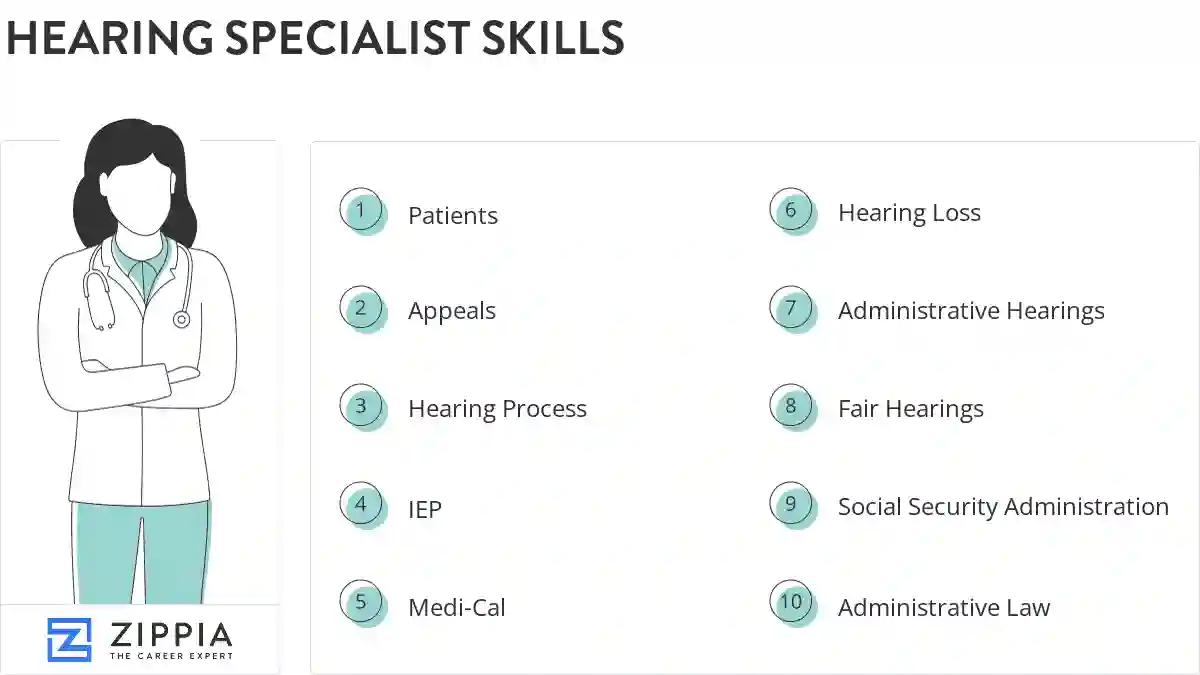
The most important skills for a hearing specialist resume and required skills for a hearing specialist to have include:
- Patients
- Appeals
- Hearing Process
- IEP
- Medi-Cal
- Hearing Loss
- Administrative Hearings
- Fair Hearings
- Social Security Administration
- Administrative Law
- Scheduling Appointments
- Test Results
- Audiometric
- Listening Devices
- Schedule Hearings
- Hearing Instruments
- CMS
- Medical Evidence
Updated January 8, 2025

9. Social Security Administration