
Automatically apply for jobs with Zippia
Upload your resume to get started.
Life skills trainer skills for your resume and career
15 life skills trainer skills for your resume and career
1. Medication Administration
- Administer medications as they are assigned and document appropriately, complete training updates on medication administration as needed and available.
- Performed medication administration and documentation as well as glucose monitoring, insulin therapy, proper diabetic nutrition and diabetes management.
2. Therapeutic Recreation
- Provided assistance in therapeutic recreation activities.
- Provided training, assistance, and supervision to patients with brain injuries in the areas of living skills and therapeutic recreation.
3. Medical Appointments
A medical appointment is a scheduled / specific day and time for a person to be examined or treated by a physician, nurse, or other licensed healthcare professional. The aim of the medical appointment is for the physician to be able to identify health problems or illnesses at an early stage.
- Provided case management to assist clients with upcoming medical appointments and other consultative services.
- Assisted clients who has traumatic brain injuries (TBI) with ADL's, medication, and medical appointments.
4. Direct Support
Direct support is a one-on-one service that helps with daily life skills and tasks that strengthen one's independence. A direct support professional is responsible for a variety of tasks related to the general care of people with physical, cognitive, or developmental disabilities. The goal is to assist people to reach their full potential and to integrate and get engaged in their community.
- Direct support professional providing supported living services and community based services for adults with brain injuries and other neurological challenges.
- Hired, trained, and supervised a staff of up to 25 direct support professionals at a 24 hour facility.
5. Rehabilitation
- Skilled in the development of individualized service plans and implementation of vocational rehabilitation services, case documentation, employment services.
- Cultivated a culture of community by providing community integration at a residential rehabilitation facility for persons with severe brain injuries.
6. CPR
Cardiopulmonary resuscitation or CPR is a medical procedure that involves chest compression to help a patient breathe. This artificial ventilation helps in keeping the brain function in place and regulates blood throughout the body. CPR is a lifesaving procedure that is used in emergencies.
- Attained CPR Certification and necessary re-certifications * Certified for Non-Violent Crisis Intervention * Crisis team member for alternative school.
- Assist Adolescents with Disabilities Certified Medication Handler/Passer CPR Certified Environmental Safety Software installation and upgrading
Choose from 10+ customizable life skills trainer resume templates
Build a professional life skills trainer resume in minutes. Our AI resume writing assistant will guide you through every step of the process, and you can choose from 10+ resume templates to create your life skills trainer resume.7. Supported Living
- Provide Supported Living programs and community-based services for adults with brain injury and other neurological challenges.
- Assisted clients with traumatic brain injuries in a supported living program with daily activities.
9. Developmental Disabilities
- Facilitated one-on-one behavioral work with individuals with intellectual and developmental disabilities, leads groups, lessons and outings.
- Provided people with developmental disabilities with resources and opportunities to function as an independent member of society.
10. Direct Care
Direct care is the act of identifying people with special needs and offering the necessary care for them.
- Direct care provider responsible for delivering support to individuals as they overcome challenges arising after brain injuries.
- Provide direct care services to individuals with acquired brain injury in a residential environment.
11. Behavioral Issues
Behavioral issues are the tendencies of individuals displaying unpleasant behavior as a result of sickness or addiction.
- Conducted weekly meetings with boys, girls and mixed groups on topics covering social skills, academic and behavioral issues.
- Worked with individual to establish goals in an effort to correct behavioral issues, and set daily routine.
12. Medical Supervision
- Assisted with medical supervision and facilitated working relationships between community employers and patients and their families.
- Assist with Medical supervision and provide transportation.
13. Mental Health
Mental health is the state of wellbeing in which an individual can cope with the regular stresses and tensions of life, and can work productively without having any emotional or psychological breakdown. Mental health is essential for a person of any age and helps them make the right decisions in their life.
- Communicate regularly with persons in recovery mental health programs regarding appointments, medications, and treatment planning.
- Provide appropriate medical attention and dispense medication as prescribed by physicians and mental health providers.
14. Community Resources
Community resources are a set of resources that are used in the day to day life of people which improves their lifestyle in some way. People, sites or houses, and population assistance can come under the services offered by community resources.
- Coordinated and escorted students on tours bringing awareness and access to community resources available.
- Assisted clients in accessing community resources and provided information regarding housing and vocational programming.
15. ISP
- Maintain all assigned documentation and data regarding participant including ISP's, quarterly and annual evaluations, and ID/case notes.
- Provided 1:1 assessment, training/follow up in the consumer's home and community as identified in their ISP.
5 Life Skills Trainer resume examples
Build a professional life skills trainer resume in minutes. Browse through our resume examples to identify the best way to word your resume. Then choose from 5+ resume templates to create your life skills trainer resume.

What skills help Life Skills Trainers find jobs?
Tell us what job you are looking for, we’ll show you what skills employers want.
What life skills trainer skills would you recommend for someone trying to advance their career?
Dr. Todd Astorino Ph.D FACSM
Professor, California State University - San Marcos
What type of skills will young life skills trainers need?
Michelle Robinson
Director of Early Talent & Frontline, Sodexo North America
List of life skills trainer skills to add to your resume
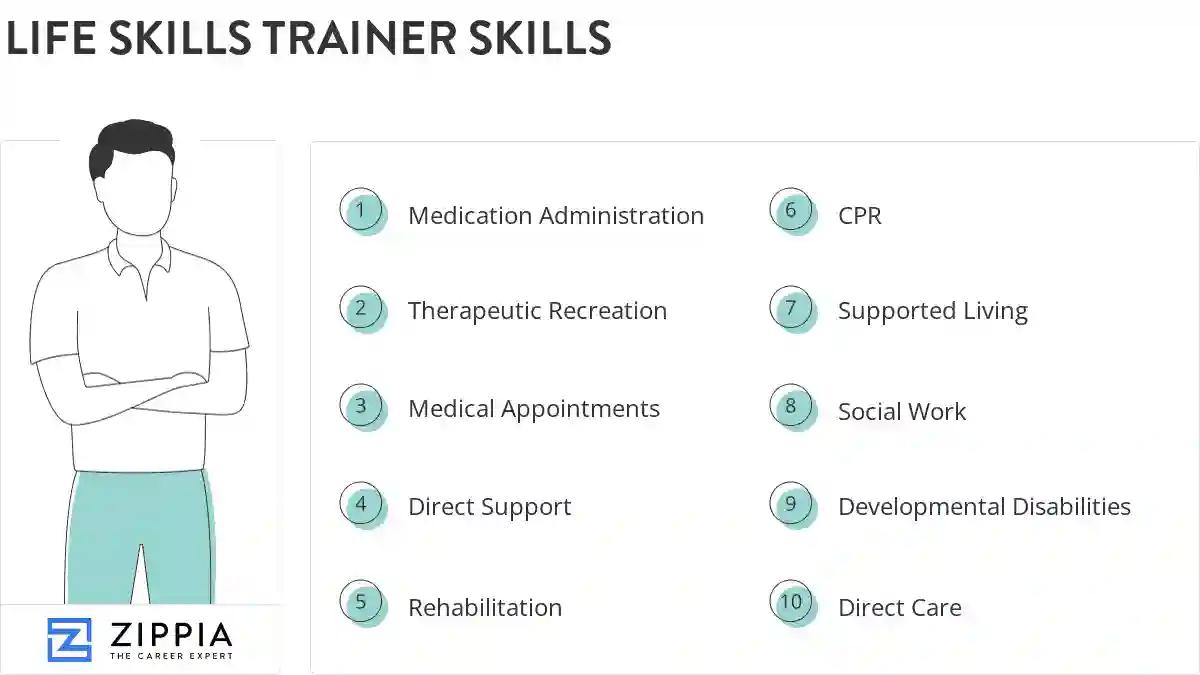
The most important skills for a life skills trainer resume and required skills for a life skills trainer to have include:
- Medication Administration
- Therapeutic Recreation
- Medical Appointments
- Direct Support
- Rehabilitation
- CPR
- Supported Living
- Social Work
- Developmental Disabilities
- Direct Care
- Behavioral Issues
- Medical Supervision
- Mental Health
- Community Resources
- ISP
- Crisis Intervention
- Independent Living
- Community Employers
- Spinal Cord Injury
- Community Integration
- Incident Reports
- Traumatic Brain Injuries
- Physical Disabilities
- Life Training
- Meal Planning
- Medication Management
- ADL
- Intellectual Disabilities
- Vital Signs
- Meal Prep
- Conflict Resolution
- Community Outings
- Physical Therapy
- Social Interaction
- Emotional Support
- Patient Care
- CPI
- Anger Management
- Foster Children
- Home-Like Environment
- Mental Disabilities
- Doctor Appointments
- IEP
- Public Transportation
Updated January 8, 2025

8. Social Work