
Automatically apply for jobs with Zippia
Upload your resume to get started.
Material processor skills for your resume and career
15 material processor skills for your resume and career
1. Aerospace
Aerospace refers to the physical science focusing on designing and developing, testing, and producing systems that aid in navigation to space or traverse through the earth's atmospheric zone.
- Processed and categorized all classes of military aerospace parts according to their handling specifications.
2. CNC
CNC stands for Computer Numerical Control. It is a subtractive manufacturing technique that usually uses computerized controls and machine tools to strip layers of material from a stock piece.
- Operated a Linde CM 100 CNC cutting machine with 1 Plasma and 2 Oxy fuel torches.
- Moved parts from CNC operators to stock area or to assemblers directly.
3. Hand Tools
- Use high powered tools and regular hand tools to process lumber 4.
- Used various powered and non-powered hand tools open boxes or crates.
4. Computer System
- Created schedule status, Recorded and updated logbooks for serialized parts, inputted into computer systems as required.
- Entered phone data into their computer system.
5. Inventory Control
- Lead person on the floor responsible for training people in all functions of shipping, receiving, and inventory control.
- Inventory control, picked parts, counts, and moved hardware to proper location.
6. Lean Manufacturing
- Employed lean manufacturing techniques in repairing and production restoration.
- Understand the concept of working to ISO 9001, Lean Manufacturing and Lean Six Sigma requirements.
Choose from 10+ customizable material processor resume templates
Build a professional material processor resume in minutes. Our AI resume writing assistant will guide you through every step of the process, and you can choose from 10+ resume templates to create your material processor resume.7. Safety Procedures
Safety procedures are a set of standardized procedures, that ensures minimal to no risk to people, resources, and the work environment. A company follows the step-by-step safety procedures as it they not only keep the customers and the employees safe, but also help in avoiding legal claims.
- Know & use proper safety procedures & equipment.
- Separated packages by service type and destination in accordance with established procedures and ensured use of safety procedures in handling packages.
8. Quality Checks
Quality checks are a component of quality control aimed at ensuring that quality requirements are met. Internally, quality checks provide assurance to managers, and externally, it provides assurance to clients, federal departments, authorities, and certifiers.
- Document daily quality checks on part specifications and performed minor mold maintenance and equipment maintenance.
- Perform quality check to ensure package contents fulfill customer order documentation.
9. Windows
Windows is a chain of operating systems that controls a computer and is developed by Microsoft. Every version of Windows consists of GUI (graphical user interface), with a desktop that allows the user to open their files.
- Used Windows 7 and 8.
- Constructed, prepped processes, and sealed windows, frames for various buildings along with loading and securing merchandise for shipment.
10. Material Processing
- Progressed in material processing was rewarded for accomplishment.
- Trained in material processing and candy cook stand of product, these jobs were 2/3 of the operations of production.
11. Label Products
- Identify and label product packaging for processing into inventory.
- Label products, assemble products, check "fit functions", box & ship products.
12. Customer Specifications
A Customer Specification is a document that describes the general requirement of an expected service from a contractor. It outlines the key requirements of the customer. Customer specifications should be written in simple and general language so that the contractor clearly understands the expectations of the customer. It is also known as a User Specification.
- Process bare wafers through AMAT "Centura 5200" Reactor to achieve required Epi thickness and resistivity per customer specifications.
- Used SOPs and SPC to operate manufacturing equipment in compliance with customer specifications.
13. Hazardous Materials
Any substance or good that is harmful to human health as well as the environment are called hazardous materials. Such materials must be handled carefully to avoid any mishaps. Harmful gases. chemicals, strong medicines or drugs, radioactive elements required for radiation purposes, a human blood sample that carries germs, all of these are considered hazardous materials.
- Reviewed Engineering design changes for Hazardous Materials and provided technical support while interfacing with FAA Authorized Representatives and subject matter experts.
- Handled and disposed of hazardous materials using personal protective equipment, as required.
14. Shipping Receiving
- Contributed input into the content development of certification test/observation for shipping receiving, and stockroom operations.
- Inventory Control/ Shipping Receiving Clerk/ Material Handler.
15. Safety Standards
- Served as safety observer and improved safety standards, resulting in facility awarded with VPP OSHA standard.
- Charged with the responsibility of ensuring that other employees maintained safety standards and adhered to Good Manufacturing Practices.
5 Material Processor resume examples
Build a professional material processor resume in minutes. Browse through our resume examples to identify the best way to word your resume. Then choose from 5+ resume templates to create your material processor resume.

What skills help Material Processors find jobs?
Tell us what job you are looking for, we’ll show you what skills employers want.
List of material processor skills to add to your resume
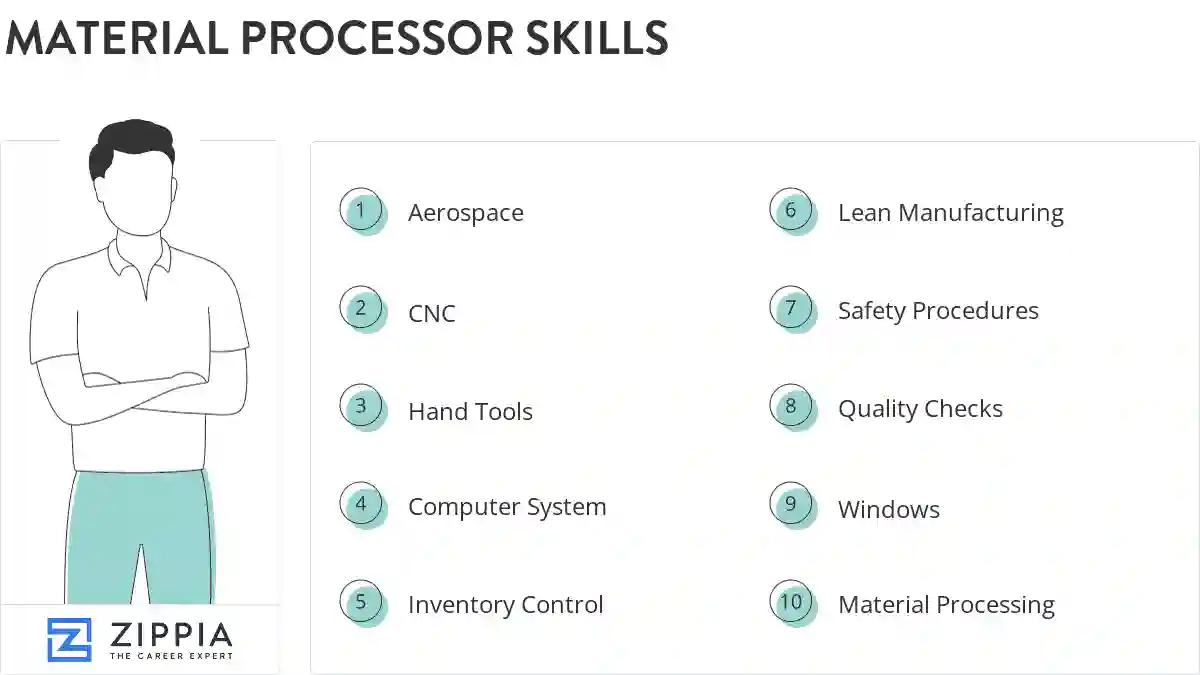
The most important skills for a material processor resume and required skills for a material processor to have include:
- Aerospace
- CNC
- Hand Tools
- Computer System
- Inventory Control
- Lean Manufacturing
- Safety Procedures
- Quality Checks
- Windows
- Material Processing
- Label Products
- Customer Specifications
- Hazardous Materials
- Shipping Receiving
- Safety Standards
- RF
- Cell Phones
- Warehouse Environment
- Power Saws
- SPC
- Inventory System
- Production Process
- ISO
- Cycle Counts
- FAA
- Quality Standards
- Management System
- Hazardous Chemicals
- Production Sheets
- Part Numbers
- Hoists
- DHL
- Sales Floor
- Library Materials
- Process Improvement
- ERP
- Sales Orders
Updated January 8, 2025
