
Automatically apply for jobs with Zippia
Upload your resume to get started.
Operational risk analyst skills for your resume and career
15 operational risk analyst skills for your resume and career
1. Risk Management
Risk management is the method of recognizing, evaluating, and managing risks to an organization's resources and profits. Financial insecurity, regulatory liability, strategic management mistakes, incidents, and natural hazards are just some of the challenges or dangers that could arise. For digitalized businesses, IT security vulnerabilities and data-related threats, as well as risk management techniques to mitigate them, have become top priorities.
- Provide operational risk management coverage for Capital Markets, Investment Banking, Institutional Asset Management, and Enterprise Commercial Payments Division.
- Participated in Enterprise/Operational Risk Management Risk Control Self Assessment and Scenario Analysis to identify significant key risks influencing economic capital calculation.
2. Operational Risk
Operational risk stands for the risk of loss that occurs as a result of failed or ineffective internal processes, systems, and people, which can obstruct the flow of business activities.
- Provided education and support to internal and external risk areas to meet requirements of the operational risk framework and regulatory requirements.
- Produce recurring reports for internal and external stakeholders including Federal Regulators to keep them abreast of the company s operational risk.
3. Risk Assessments
The process of analyzing and identifying the acts or events that have the potential to negatively affect an individual, asset, or business is called risk assessment. Risk assessments are important because they form an integral part of an organization as well as occupational safety plans
- Represented the multifamily division on a working committee to develop guidance for business process risk assessments.
- Conducted risk assessments for technology assets to identify potential control gaps and weaknesses.
4. Strong Analytical
- Demonstrated strong analytical skills identifying areas of improvement in coding guidelines which helped increase and protect business unit assets.
- Utilized strong analytical, organizational and time management skills to research and resolve complex issues.
5. Internal Audit
Internal audit is an evaluation process that ensures that a company's risk management, governing body, and other internal processes are running effectively. People who perform internal audits must be highly qualified, have experience, and knowledge to work accordingly with the international standards and the code of ethics.
- Developed responses and benchmarks to regulatory and/or internal audit issues by working with internal customers and external auditors.
- Participate in the coordination/preparation of data and activities required for regulatory examinations, and internal audits/tests.
6. Internal Controls
- Assess adequacy of internal controls, documentation process and procedures intended to ensure compliant operations.
- Maintained adequate internal controls for financial reporting and assessment.
Choose from 10+ customizable operational risk analyst resume templates
Build a professional operational risk analyst resume in minutes. Our AI resume writing assistant will guide you through every step of the process, and you can choose from 10+ resume templates to create your operational risk analyst resume.7. SQL
- Prepared management high volume data reporting through Navicat SQL for daily transactions, chargeback, account reconciliations and high-risk transactions.
- Collaborated with customers to create or modify complex customized Crystal Reports and SQL queries for rapid distribution to individual customer locations.
8. Fraudulent Transactions
- Used advanced judgment and analytic capability to review and/or investigate fraudulent transactions and customer relationships.
- Monitor debit card activities for suspicious and fraudulent transactions to minimize financial losses.
9. AML
AML refers to the rules and systems set up by governments, financial institutions, or organizations to prevent fraudulent economic activities.
- Delegated any Fraud activities to the Superiors and reported AML remediation and international payments.
- Maintained all recommended training relevant to AML industry regulations and requirements.
10. Good Judgment
- Work under minimal supervision and demonstrate good judgment capability to review and/or investigate routine risk transactions or reports.
- Approached problems logically and with good judgment to ensure customer satisfaction.
11. Regulatory Risk
- Research and analyze a wide variety of regulatory risks topics and issues as needed.
- Facilitated risk identification and response exercises for capital projects, regulatory risks, and corporate strategy.
12. Process Improvement
- Lead department process improvement auditing initiate that resulted in improved task description documentation and more consistent process compliance.
- Participated in strategic planning meetings and work flow mapping sessions by identifying and communicating opportunities for process improvement.
13. Mitigate Risk
- Designate the appropriate prioritization to mitigate risk.
- Develop Corrective Action Plans to eliminate control gaps and mitigate risks, manage issue resolution phases in Phoenix tracking tool.
14. Sarbanes-Oxley
The Sarbanes-Oxley Act (or SOX Act) is a U.S. government law that expects to secure financial backers by making corporate divulgences more solid and transparent. The Act was created as a result of bookkeeping errors.
- Provided and implemented process-based solutions for complying with Public Reporting requirements of the Sarbanes-Oxley Act.
- Maintained compliance with Sarbanes-Oxley requirements.
15. Business Processes
- Support projects related to operations change initiatives impacting multiple business units, product lines and/or business processes.
- Reviewed and created business requirements and business processes for technical staff.
5 Operational Risk Analyst resume examples
Build a professional operational risk analyst resume in minutes. Browse through our resume examples to identify the best way to word your resume. Then choose from 5+ resume templates to create your operational risk analyst resume.

What skills help Operational Risk Analysts find jobs?
Tell us what job you are looking for, we’ll show you what skills employers want.
List of operational risk analyst skills to add to your resume
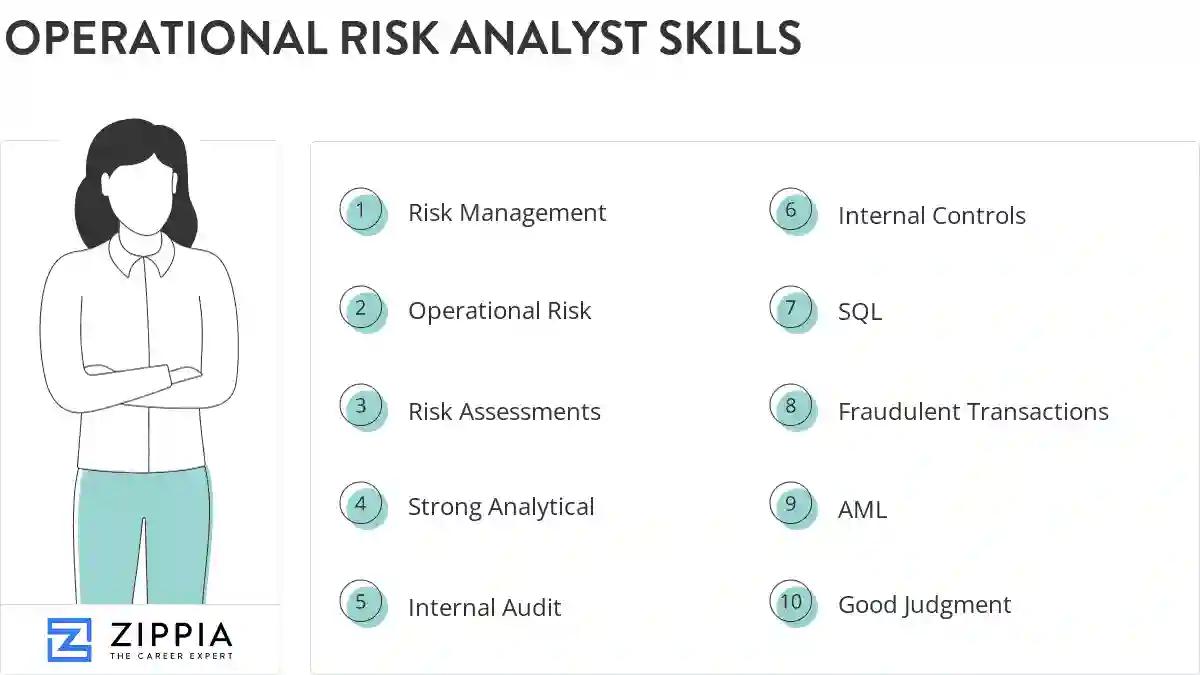
The most important skills for an operational risk analyst resume and required skills for an operational risk analyst to have include:
- Risk Management
- Operational Risk
- Risk Assessments
- Strong Analytical
- Internal Audit
- Internal Controls
- SQL
- Fraudulent Transactions
- AML
- Good Judgment
- Regulatory Risk
- Process Improvement
- Mitigate Risk
- Sarbanes-Oxley
- Business Processes
- Due Diligence
- SOX
- Financial Institutions
- SharePoint
- BSA
- Customer Accounts
- Enterprise Risk Management
- Securities
- RCSA
- Analyze Data
- Secrecy
- Bank Secrecy Act
- Debit Cards
- Treasury
- Risk Monitoring
- Anti-Money Laundering
- Fraud Trends
- OFAC
- ACH
- KYC
- Federal Regulations
- Loss Exposure
- UAT
- Executive Management
- Internal Systems
- Inbound Calls
- Debit
- Outbound Calls
- Loss Cases
- Commercial Banking
Updated January 8, 2025
