
Automatically apply for jobs with Zippia
Upload your resume to get started.
Radio dispatcher skills for your resume and career
15 radio dispatcher skills for your resume and career
1. Computer Aided Dispatch
- Input data and information into a computer aided dispatching system (WildCAD) to manually track resources.
- Respond to emergency and non-emergency calls including public commercial property damage via telephone and radio systems and computer aided dispatch systems.
2. Patrol
- Utilize internal and external databases to acquire information for criminal investigations and traffic incidents for State Highway Patrol employees.
- Dispatch emergency and non emergency calls to patrol officers Indigent receipts Booking and release of arrests
3. Emergency Situations
- Maintain and monitor emergency situations and individuals involved, including public and officers dispatched to those emergencies.
- Work under stress and exercise sound judgment in emergency situations.
4. CAD
- Operated the CAD (computed aided dispatch system).
- Fire and Medical Emergencies Input information into a central computerized CAD system Broadcast Emergency information and standardized radio codes
5. Telephone Calls
Telephone calls are a communication means through which a caller is connected to the called party. The call is done through a telecommunications device called a telephone. The caller can use a landline, mobile phone, or satellite phone to make the call.
- Received telephone calls and assisted subscribers, service installers, and contractors experiencing technical problems with their security equipment and systems.
- Monitored and directed emergency and non-emergency telephone calls from individuals who needed assistance from Firefighters, Police and Emergency Medical services.
6. Non-Emergency Calls
Non-emergency calls are calls that do not require immediate attention or intervention. They are simply a request for police, fire or rescue service that does not present a life or death situation. In this case, the local non-emergency number should be used if immediate dispatch of the police is not required.
- Answered and dispatched all emergency and non-emergency calls.
- Handled all emergency and non-emergency calls for the Metro Atlanta Area and surrounding counties
Choose from 10+ customizable radio dispatcher resume templates
Build a professional radio dispatcher resume in minutes. Our AI resume writing assistant will guide you through every step of the process, and you can choose from 10+ resume templates to create your radio dispatcher resume.7. Two-Way Radio
- Monitor, dispatch, and control two-way radio traffic providing interconnections between the various communications systems used on the Thruway.
- Operate two-way radio equipment for direct communication with law enforcement officers, including emergency transmissions; respond with voice clarity.
8. Law Enforcement Agencies
- Maintain good radio communication with multi law enforcement agencies for coordination in response activities.
- Distribute police-related information to other law enforcement agencies via telephone, fax, radio and/or computer communications systems when necessary.
9. Radio Traffic
- Maintained records on radio traffic and location and status of mobile units.
- Dispatch calls to officers and observe and answer all radio traffic.
10. EMS
Emergency Medical Services, also known as EMS, is an emergency medical response system that provides stabilization and urgent preclinical and on-site treatment for serious illness and injury, as well as the transportation of patients who are unable to transport themselves to a definite health care center. The main objective of EMS is to provide emergency medical treatment to those who need urgent medical attention and to properly treat the patient's condition and transport them to a suitable health center or medical facility.
- Dispatched calls to police, fire, or EMS via radio in compliance with Center Standard Operating Procedures.
- Dispatch police, fire, and EMS along the NY State Thruway in response to requests for service.
11. Radio Communications
- Acquired working knowledge of technical advantages and limitations of radio communications.
- Coordinated drivers' service though radio communications.
12. Computer System
- Enter and assigned case numbers in house computer system that assigns tracking numbers to monitor officer and fire personal activity.
- Determine types of emergencies, gather detailed information, prioritize calls, log calls and relate information into computer systems.
13. NCIC
- Performed booking procedures which consist of fingerprinting, checking NCIC computer for further charges or warrants.
- Entered, cleared and updated records NCIC system.
14. Radio Systems
- Dispatch public safety personnel and equipment using radio systems and peripheral equipment.
- Utilized Motorola Radio system to communicate with personnel.
15. Radio Transmissions
- Respond to radio transmissions in an efficient and courteous manner.
- Determine and dispatches field response units adequately and provides specific information via radio transmissions to insure effective and timely service.
5 Radio Dispatcher resume examples
Build a professional radio dispatcher resume in minutes. Browse through our resume examples to identify the best way to word your resume. Then choose from 5+ resume templates to create your radio dispatcher resume.

What skills help Radio Dispatchers find jobs?
Tell us what job you are looking for, we’ll show you what skills employers want.
List of radio dispatcher skills to add to your resume
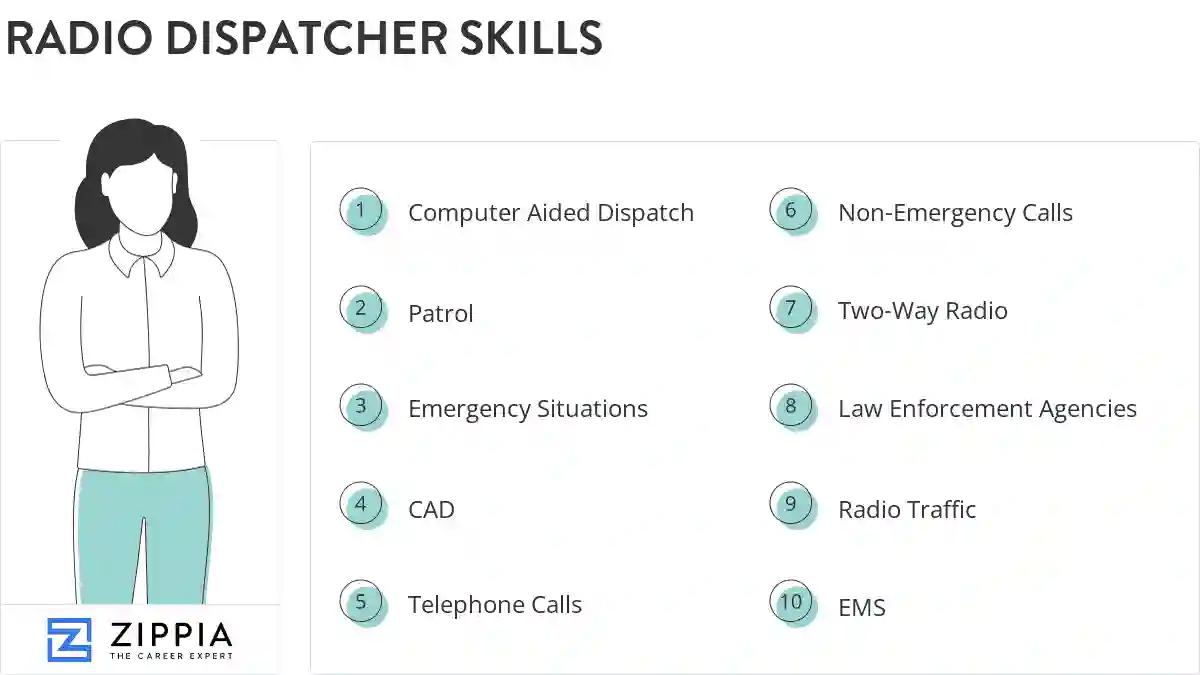
The most important skills for a radio dispatcher resume and required skills for a radio dispatcher to have include:
- Computer Aided Dispatch
- Patrol
- Emergency Situations
- CAD
- Telephone Calls
- Non-Emergency Calls
- Two-Way Radio
- Law Enforcement Agencies
- Radio Traffic
- EMS
- Radio Communications
- Computer System
- NCIC
- Radio Systems
- Radio Transmissions
- AAA
- Emergency Services
- Communications Equipment
- FCC
- Radio Equipment
- Telephone Traffic
- Traffic Problems
- Police Radio
- Outbound Calls
- Incident Reports
- Accident Reports
- Multi-Line Telephone System
- Customer Accounts
Updated January 8, 2025
