
Automatically apply for jobs with Zippia
Upload your resume to get started.
Renal social worker skills for your resume and career
15 renal social worker skills for your resume and career
1. Patients
- Completed quarterly notes, attended monthly inter-disciplinary meetings, assisted patients with Medicaid benefits and other renal programs.
- Provided psycho-social assessments to all patients treated by the facility including in-center and home dialysis patients.
4. Interdisciplinary
- Facilitated transplant referral process in collaboration with patient, their families and the interdisciplinary team.
- Participate as part of an interdisciplinary team.
5. MSW
- Function as Field Instructor for MSW students placed at the dialysis center through California State University Long Beach.
- Provided supervision for MSW candidate interns as official field instructor and task supervisor Social Work Internship Experience
6. Patient Education
- Provided patient education - Performed patient assessment/care planning/counseling - Facilitated patient admissions - Served as a member of the multidisciplinary team
- Provide patient education on the benefits of compliance with treatment and its effects on overall quality of life.
Choose from 10+ customizable renal social worker resume templates
Build a professional renal social worker resume in minutes. Our AI resume writing assistant will guide you through every step of the process, and you can choose from 10+ resume templates to create your renal social worker resume.7. Facilitate Referrals
- Provide information and facilitate referrals to transplant programs.
- Analyze information, facilitate referrals to community, private, state and federal agencies to meet the needs of the patient.
8. Home Health
- Assist patients with Durable Medical Equipment, Home Health, and Nursing Home or Assisted Living placement.
- Assisted with referrals for transportation and home health.
9. Treatment Options
Treatment options are the different medical treatments doctors choose from to give to a sick person or animal. Treatment options depend highly on how ill a patient is and what drugs they can't without using.
- Educated patient as to treatment options, facility policies, patient rights and responsibilities.
- Educate patients and family members about kidney disease and treatment options.
10. Patient Care
Patient care entails the diagnosis, recovery, and control of sickness as well as the maintenance of physical and emotional well-being through the use of healthcare providers' services. Patient care is described as services provided to patients by health practitioners or non-professionals under guidance.
- Interviewed patients, provided counseling, coordinated insurance/benefits, and identified resources to ensure continuity of patient care.
- Worked closely with multidisciplinary treatment team in planning patient care.
11. Rehabilitation
- Provide psycho-educational counseling aimed at improving areas of need, treatment adherence, vocational/educational rehabilitation and/or quality of life.
- Promoted patient quality of life through transplant education and referrals for vocational/physical rehabilitation.
12. Mental Health
Mental health is the state of wellbeing in which an individual can cope with the regular stresses and tensions of life, and can work productively without having any emotional or psychological breakdown. Mental health is essential for a person of any age and helps them make the right decisions in their life.
- Provide supportive counseling and mental health intervention.
- Collaborate with community agencies to ensure that emotional, spiritual, financial and mental health needs are met.
13. Treatment Modalities
- Educated patients and family members of all treatment modalities and ensure understanding of options available to promote improved quality of life.
- Educated a caseload of approximately 115 patients regarding various treatment modalities, disease adjustment and progression, and transplant.
15. Medicare
Medicare is a federal government insurance program that offers health care coverage to people who are 65 and above. In some cases, younger people with disabilities whose status is identified by the SSA can also avail the insurance program. Medicare covers the health expenses of people who are not able to afford it plus it protects the payee from rising health care costs.
- Assisted with patients receiving referrals from Social Security Administration and Texas Kidney Health for Medicare financial benefits.
- Experience with Social Security, Medicare, Medicaid and managed products, and commercial/cobra/private insurance.
5 Renal Social Worker resume examples
Build a professional renal social worker resume in minutes. Browse through our resume examples to identify the best way to word your resume. Then choose from 5+ resume templates to create your renal social worker resume.

What skills help Renal Social Workers find jobs?
Tell us what job you are looking for, we’ll show you what skills employers want.
What skills stand out on renal social worker resumes?
Dr. Dianna Cooper
Associate Professor, Campbellsville University
What soft skills should all renal social workers possess?
Dr. Dianna Cooper
Associate Professor, Campbellsville University
What hard/technical skills are most important for renal social workers?
Dr. Dianna Cooper
Associate Professor, Campbellsville University
What renal social worker skills would you recommend for someone trying to advance their career?
Lillian Wichinsky Ph.D.
Associate Dean, University of Nevada - Reno
What type of skills will young renal social workers need?
Samantha Fletcher Ph.D.
Executive Director, National Association of Social Workers, New York State
List of renal social worker skills to add to your resume
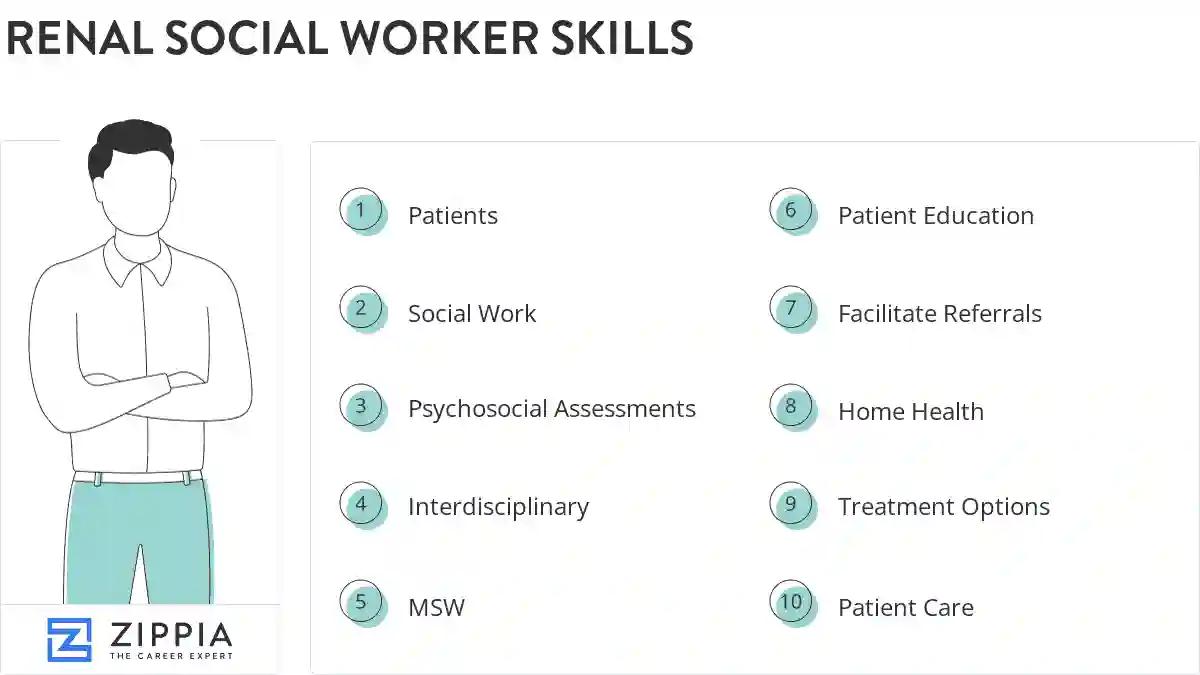
The most important skills for a renal social worker resume and required skills for a renal social worker to have include:
- Patients
- Social Work
- Psychosocial Assessments
- Interdisciplinary
- MSW
- Patient Education
- Facilitate Referrals
- Home Health
- Treatment Options
- Patient Care
- Rehabilitation
- Mental Health
- Treatment Modalities
- Psychosocial Issues
- Medicare
- Medicaid
- Renal Disease
- Insurance Coverage
- Discharge Planning
- Social Services
- CMS
- Health Insurance
- PD
- Care Plan
- Community Agencies
- ESRD
- IDT
- Kidney Transplant
- Federal Agencies
- Initial Assessment
- Social Security
- Insurance Issues
- Substance Abuse
- Emotional Support
- Chronic Kidney Disease
- Effective Interventions
- Community Resources
- Continuous Quality
- Chronic Illness
- Hemodialysis
- Financial Resources
- Advocacy Services
Updated January 8, 2025

2. Social Work