Explore jobs
Find specific jobs
Explore careers
Explore professions
Best companies
Explore companies
Job outlook for special education itinerant teachers in the United States
Are special education itinerant teacher jobs in demand?
Special education itinerant teacher job and salary trends over time
Special education itinerant teacher jobs over time
Special education itinerant teacher job growth rate over time
| Year | # of jobs | % of population |
|---|---|---|
| 2021 | 3,005 | 0.00% |
| 2020 | 3,070 | 0.00% |
| 2019 | 3,113 | 0.00% |
| 2018 | 2,974 | 0.00% |
| 2017 | 2,970 | 0.00% |
Average special education itinerant teacher salary over time
Special education itinerant teacher salary by year
| Year | Avg. salary | Hourly rate | % Change |
|---|---|---|---|
| 2026 | $74,109 | $35.63 | +0.3% |
| 2025 | $73,914 | $35.54 | +1.8% |
| 2024 | $72,606 | $34.91 | +1.3% |
| 2023 | $71,640 | $34.44 | +2.7% |
| 2022 | $69,733 | $33.53 | +2.2% |
Special education itinerant teacher jobs by state
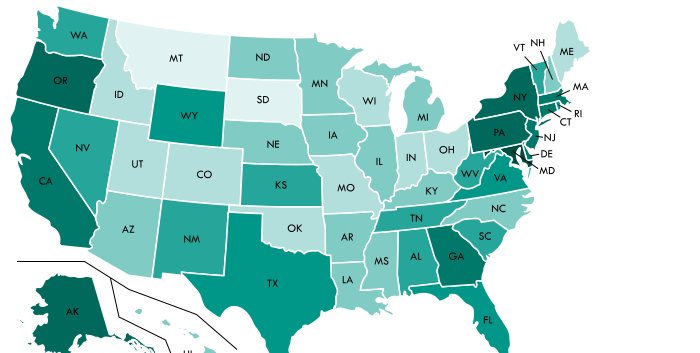
Most common states for special education itinerant teachers
| Rank | State | Population | # of jobs | Employment/ 1000ppl |
|---|---|---|---|---|
| 1 | District of Columbia | 693,972 | 236 | 34% |
| 2 | New Hampshire | 1,342,795 | 346 | 26% |
| 3 | Delaware | 961,939 | 248 | 26% |
| 4 | Vermont | 623,657 | 159 | 25% |
| 5 | Nebraska | 1,920,076 | 457 | 24% |
| 6 | Montana | 1,050,493 | 243 | 23% |
| 7 | Wyoming | 579,315 | 133 | 23% |
| 8 | Nevada | 2,998,039 | 623 | 21% |
| 9 | Maryland | 6,052,177 | 1,135 | 19% |
| 10 | Arizona | 7,016,270 | 1,247 | 18% |
| 11 | Colorado | 5,607,154 | 998 | 18% |
| 12 | Connecticut | 3,588,184 | 645 | 18% |
| 13 | New Mexico | 2,088,070 | 379 | 18% |
| 14 | Minnesota | 5,576,606 | 947 | 17% |
| 15 | Illinois | 12,802,023 | 2,098 | 16% |
| 16 | New Jersey | 9,005,644 | 1,405 | 16% |
| 17 | Missouri | 6,113,532 | 1,003 | 16% |
| 18 | Kentucky | 4,454,189 | 729 | 16% |
| 19 | Pennsylvania | 12,805,537 | 1,894 | 15% |
| 20 | Alaska | 739,795 | 114 | 15% |
Special Education Itinerant Teacher job outlook: Expert opinions
Our panel of special education itinerant teacher experts
California State University - Fullerton
Alverno College
University of Alaska Anchorage
University of Minnesota - Twin Cities
University of Utah
Saint Xavier University
Adelphi University
Michigan State University
Fort Hays State University
Slippery Rock University
Howard University
Texas A & M University, Kingsville

Mary Baldwin University
Auburn University-Montgomery
Dr. Pamela Brillante
ProfessorWhat will help Special Education Itinerant Teachers increase their earning potential?
Dr. Pamela Brillante: View the profession as a puzzle you need to take time to solve. Never give up on a child. Given time and “outside of the box thinking” you will find what works. Understanding how someone learns is not black or white / right or wrong. We all do learn differently and it is our job as special educators to find that path for that specific child.
Tiffany Row Ph.D.
Program Coordinator, MMSN and ESNCalifornia State University - Fullerton
Special Education And Teaching
What Special Education Itinerant Teacher skills would you recommend for someone trying to advance their career?
Tiffany Row Ph.D.: There has been an increasing focus on social emotional learning in schools, and these skills are just as important for teachers to grow within themselves so they can best support and guide students in learning to regulate their emotions and navigate social relationships. And of course it's always crucial for teachers to have strong skills in literacy instruction.
Thor Stolen PhD
Associate Professor & program director of Special EducationAlverno College
Special Education And Teaching
What general advice would you give to a Special Education Itinerant Teacher?
Thor Stolen PhD: Know that being a special education is difficult and can be stressful, but it can be extremely rewarding. If you are able to make a connection and reach one student, it is worth it. Take pride in small achievements and smiles you get from your students. Growth and change can be slow but with persistence, you can make a difference. Make sure to take time to enjoy your students, classroom, co-workers and school. Use your creativity/passions to create meaningful learning experiences that give access to education to non-traditional students. Take teaching as an opportunity to make meaningful connections to people and make huge contributions to students' educational experiences.
What general advice would you give to a Special Education Itinerant Teacher?
Dr. Melissa Tapp PhD: First, I like to tell future special education teachers that teaching is a tough job, but, they are ready for it! Beginning teachers need to use the knowledge they've learned in their program and apply it in their future classrooms. The best advice I can give is to prepare, prepare, prepare! Be intentional about all aspects of the day, from classroom management to academic instruction and try to be proactive and set up systems for students to be successful.
Krista James Ph.D.
Program Lead & Assistant Professor of Special EducationUniversity of Alaska Anchorage
Special Education And Teaching
What general advice would you give to a Special Education Itinerant Teacher?
Krista James Ph.D.: Shop around to various school districts. Look at their salary scale but also at any signing bonuses they might offer.
What general advice would you give to a Special Education Itinerant Teacher?
Amy Kunkel Ph.D.: The need for good special education teachers is greater than ever before, thus graduates with a special education teaching license can often find teaching positions within their own communities. Take your time to look around at your options, ask questions about your caseload, and try to gauge the support provided by administration and the special education team you will be joining. Oftentimes our student teachers have multiple job offers prior to finishing up their student teaching semester. You want to choose an environment that feels welcoming and supportive.
One piece of advice that all new teachers should remember is the importance of self-care. Teaching is not an easy profession, and teachers teach because they love working with children and young adults. Special education teachers have a very unique passion, and it's helpful to always remember your reason for teaching. The kids will help you with this! I recommend new teachers keep a journal of their thoughts, keep their evenings and weekends work-free, and find time to nourish their hobbies and skills outside the classroom.
What general advice would you give to a Special Education Itinerant Teacher?
Donna Jurich Ph.D.: The “hard” skills that elementary teachers need to have for the next 3-5 years: Knowledge of the academic (content) standards for the state where they are teaching Technological competence – an ease across platforms using academic apps in new ways and gaming and social networking apps in academics; understanding of the ethical use of technology for teachers and students; staying current with technology Lesson planning that is student-centered, engaging, creates opportunities for students to develop problem-solving and critical thinking skills – while addressing state academic (content) standards A repertoire of strategies to strengthen young children’s executive functioning and social-emotional development. The “soft” skills that elementary teachers need to have for the next 3-5 years: Clear and compassionate communication, more often in-person Resiliency to adapt and address the changing student population and the increased pressures and demands from district, state and federal agencies Inclusivity and compassion for multiple perspectives
What will help Special Education Itinerant Teachers increase their earning potential?
Donna Jurich Ph.D.: When looking for a job, do your homework – Yes, homework continues after you graduate from college! Investigate multiple school districts. While you may “know” the school district where you want to work, you want to find out what other districts offer. You want to be smart to ensure that the school district is a good match for you and to have questions to ask the district about opportunities and options that other districts may offer. We continue to face a shortage of elementary school teachers across the country. Finding an elementary teaching position is not a problem; finding the right elementary teaching position for you is more complex. I think it is important that a school district provide a mentor – preferably at your school site – with whom you can build a relationship. The first years of teaching elementary school always contain a lot of surprises. Having a mentor – an education professional - helps you process the surprises and turn the surprises from feeling like disasters to feeling like professional learning experiences. Being an elementary school teacher involves a myriad of daily communications with individual students, groups of students, the whole class, colleagues, building administrators, volunteers, paraprofessionals, and students’ family members – just to name a few. Elementary teachers have to take care of others, so it is critical to have good self-care practices in place before the school year begins. Just like the instructions given when flying: Put your oxygen mask on first before helping others. If you run out of oxygen, you can’t help others. Self-care sounds simple. It is simple to forget. Intentionally plan to get 7-8 hours of sleep; eat three healthy meals (Pack your lunch the night before. Cook a week’s worth of dinners on the weekend.); and have personal time – for example exercising or crafting.
What general advice would you give to a Special Education Itinerant Teacher?
Breda O’Keeffe Ph.D.: Create connections; special education can feel isolating. You may be the only special education teacher in your building or in your content department, but you share students with virtually every teacher in the building, so move beyond your immediate team and connect with teachers in general education. It’s easier to ask a teacher to participate in a meeting when you already have that connection. Seek mentoring and ask for help from professionals in your building and beyond. Be persistent and get yourself organized. Continue to seek professional learning to grow as a teacher, but you will also find yourself as the resident expert in special education, specially designed instruction, behavior supports, assessment, and problem solving.
What general advice would you give to a Special Education Itinerant Teacher?
LaSheba Hilliard Ed.D.: Pursue advanced certifications and degrees: Obtaining additional certifications or advanced degrees in special education or related fields can enhance your qualifications and increase your earning potential.
Seek out high-demand areas: Consider specializing in high-demand areas within special education, such as autism spectrum disorders, behavioral disorders, or early intervention, which may offer higher salaries and more opportunities for advancement.
Gain experience and expertise: Invest in gaining practical experience and developing expertise in specific areas of special education through field experiences in classrooms, volunteer work, or specialized training programs, which can make you more competitive in the job market.
Negotiate salary and benefits: Research salary benchmarks for special education positions in your region and negotiate salary and benefits packages with potential employers based on your qualifications, experience, and the demand for special education professionals in the area.
What will help Special Education Itinerant Teachers increase their earning potential?
LaSheba Hilliard Ed.D.: Technological proficiency: As technology plays a significant role in education, proficiency in educational software, assistive technologies, and adaptive learning platforms will be increasingly valuable.
Cultural competence and diversity awareness: With an increasingly diverse student population, educators need to be culturally competent and able to address the unique needs and backgrounds of their students.
Data analysis and evidence-based practices: Utilizing data to inform instructional decisions and implementing evidence-based practices will be essential for optimizing student outcomes and meeting accountability standards.
Collaboration and teamwork: Effective collaboration with multidisciplinary teams, including other educators, therapists, and specialists, will become more critical for creating comprehensive support systems for students with special needs.
Margaret Carroll
Coordinator for Special Education ProgramsSaint Xavier University
Special Education And Teaching
What general advice would you give to a Special Education Itinerant Teacher?
Margaret Carroll: Special educators must be ready to collaborate. They collaborate with parents and other professionals when they develop an Individualized Education Program (IEP) for each of the students they serve. They collaborate with general education teachers by co-teaching with them and supporting students with IEPs in the general education classroom.
What Special Education Itinerant Teacher skills would you recommend for someone trying to advance their career?
Margaret Carroll: Take the time to invest in your students and develop an effective repertory of instructional strategies, assessment tools, and classroom management strategies. I tell new teachers not to do anything drastic during their first year of teaching: don't move, marry, have a child, divorce, or continue your education during your first year. The first year of teaching is very demanding.
What will help Special Education Itinerant Teachers increase their earning potential?
Margaret Carroll: Most schools pay more for each year of experience and for additional professional education. While an increasing salary is desirable, I encourage new teachers to wait at least until they complete their first year of teaching before they begin to pursue an additional teaching credential or degree.
What general advice would you give to a Special Education Itinerant Teacher?
Dr. Stephen Shore Ed.D.: On a day to day basis a special education teacher assures that all students under their care receive appropriate adjustments to the delivery of curriculum, different opportunities for processing information received, and options for the student to demonstrate mastery of material according to their abilities. Sometimes adjustments to the curriculum itself will be made. A person entering the field as a special educator does the very same thing, under the guidance of a mentor teacher who shares their educational experiences.
What Special Education Itinerant Teacher skills would you recommend for someone trying to advance their career?
Dr. Stephen Shore Ed.D.: With increasing recognition of the wide diversity of how people think, increasing numbers of students are being identified as having special needs. An additional bonus is that the instructor becomes a better teacher overall since adjustments made on their students' behalf are actually just extensions of good teaching practice.
What will help Special Education Itinerant Teachers increase their earning potential?
Dr. Stephen Shore Ed.D.: My sense is that special education teachers value their capacity to make real and meaningful positive changes in the lives of students they support. The most common dislike I hear from special education students include the mountains of paperwork and frustration when they are not provided sufficient support from their school systems to do their jobs effectively.
Dr. PJ Sedillo
Associate ProfessorWhat general advice would you give to a Special Education Itinerant Teacher?
Dr. PJ Sedillo: Between lesson planning, IEPs, meetings with parents, and getting to know your students, your first year as a special education teacher can be overwhelming. Knowing how to manage it by planning ahead can help you have a successful first year. Special education students require much more documentation than other students. By keeping track of each little success and setback, the teacher will quickly see the trends that help create a positive learning environment for each student. Sharing the progress with the students is another form of positive feedback.
What Special Education Itinerant Teacher skills would you recommend for someone trying to advance their career?
Dr. PJ Sedillo: Patience
Creativity
Communication
Organization
Advocacy
What will help Special Education Itinerant Teachers increase their earning potential?
Dr. PJ Sedillo: Between lesson planning, IEPs, meetings with parents, and getting to know your students, your first year as a special education teacher can be overwhelming. Knowing how to manage it by planning ahead can help you have a successful first year. Special education students require much more documentation than other students. By keeping track of each little success and setback, the teacher will quickly see the trends that help create a positive learning environment for each student. Sharing the progress with the students is another form of positive feedback.
What general advice would you give to a Special Education Itinerant Teacher?
Troy Mariage: There has been a chronic shortage of special education teachers in nearly all 50 states for decades. Special education is an equity pedagogy: The definition of special education is to provide individualized and specialized instruction to support a learner where they are. This can often be provided in general education, but may also require more specialized settings for small periods of time. Special education teachers often see themselves playing multiple roles, including academic interventionist, behavior interventionist, and inclusion specialist. Special education teachers today can provide direct service to students with IEP who might require specialized instruction, but also can provide support for IEP students as partners with general education teachers to support students in these inclusive classrooms.
What Special Education Itinerant Teacher skills would you recommend for someone trying to advance their career?
Troy Mariage: Special education teachers are responsible for coordinating and providing direct services to students with Individualized Education Plans. They work with students with various disabilities such as Learning Disabilities, Autism, Speech and Language Disorders, and more. Special education teachers may provide early interventions, extra reading supports, access to the general education curriculum, transition services, direct instruction, co-teaching, consultation with general education teachers, and more.
What will help Special Education Itinerant Teachers increase their earning potential?
Troy Mariage: While special education teachers often find great joy in providing individualized and specialized instruction, whether that is in a special classroom or within the general education classroom, they almost always have their eye on helping promote equity and inclusion for all students in society. Special education teachers work against ableism and towards valuing all students. Special education teachers have their eye on using data to inform their teaching and are always looking to help move their students forward in their development. More recently, special education teachers are viewed as playing crucial roles in a building's larger goals of creating Multi-Tiered Systems of Support (MTSS), including helping to establish schoolwide Positive Behavioral Intervention and Support (PBIS) and Response to Intervention (RTI) supports.
Commonly noted challenges for special education teachers are the amount of paperwork required for designing individualized education plans, coordinating individual services for each student, time for co-planning with general education teachers to support access to curriculum in their classrooms, and lack of administrative support.
Jerrie Brooks Ed.D.
Assistant Professor, Program Coordinator for Special Education High Incidence ProgramFort Hays State University
Special Education And Teaching
What Special Education Itinerant Teacher skills would you recommend for someone trying to advance their career?
Jerrie Brooks Ed.D.: During the Covid-19 pandemic when schools closed, P-12 education was changed to include online instruction. I think virtual education in some form will continue. Teachers need the skills and instructional strategies to engage students, whether in the face-to-face classroom or a virtual environment.
What general advice would you give to a Special Education Itinerant Teacher?
Jerrie Brooks Ed.D.: Teaching salaries are generally dependent on years of experience and the level of education attained. Continue to work towards additional degrees that will move you over on the salary schedule.
What will help Special Education Itinerant Teachers increase their earning potential?
Jerrie Brooks Ed.D.: Special education is a very hard job, but you don't have to know all the answers to be a great teacher. Every year you teach, you acquire more skills to use with students.
Do rely on evidenced-based instructional strategies for your teaching.
Most importantly, always remember each day is a new day to make a change in a student's life. Never give up on your students.
Work to build relationships with your students and their families. Those relationships are the basis of communication and collaboration.
What will help Special Education Itinerant Teachers increase their earning potential?
Jennifer Kurth: Being a special education teacher is a wonderful career - it offers lasting opportunities to make a difference and change lives. With this opportunity comes needs to build relationships with students and families to work towards effective collaboration and support. Special education is a team approach, and collaborating with others lets teachers leverage the skills and expertise of others as the team works towards the common goal of supporting the student in pursuing their goals. I would also recommend new teachers stay organized - special education involves a lot of important paperwork, so developing a system to keep track of this, without letting it feel like overwhelming, is essential. I recommend that teachers seek strengths in themselves but especially in their students. Identifying those strengths lets us leverage them in ways that enable students to thrive - so always find those unique skills and interests to build upon. Finally, take care of yourself. Teaching can be demanding, especially in special education. Jake sure to prioritize your self-care and maintain a healthy and sustainable work-life balance. You'll be better able to support your students when you are well rested and emotionally grounded - these will also be traits that facilitate your longevity in this great field!
What general advice would you give to a Special Education Itinerant Teacher?
Jennifer Kurth: Being a special education teacher is a wonderful career - it offers lasting opportunities to make a difference and change lives. With this opportunity comes needs to build relationships with students and families to work towards effective collaboration and support. Special education is a team approach, and collaborating with others lets teachers leverage the skills and expertise of others as the team works towards the common goal of supporting the student in pursuing their goals. I would also recommend new teachers stay organized - special education involves a lot of important paperwork, so developing a system to keep track of this, without letting it feel like overwhelming, is essential. I recommend that teachers seek strengths in themselves but especially in their students. Identifying those strengths lets us leverage them in ways that enable students to thrive - so always find those unique skills and interests to build upon. Finally, take care of yourself. Teaching can be demanding, especially in special education. Jake sure to prioritize your self-care and maintain a healthy and sustainable work-life balance. You'll be better able to support your students when you are well rested and emotionally grounded - these will also be traits that facilitate your longevity in this great field!
Dr. Matthew Erickson
Chairman and Associate Professor of Special EducationSlippery Rock University
Special Education Department
What soft skills should all Special Education Itinerant Teachers possess?
Dr. Matthew Erickson: Communication and customer service are very important. Special educators must problem solve situations and communicate with diverse groups, and explain the special education process. This takes time and practice, as well as a strong familiarity with procedures and regulations. Teamwork is also crucial; everything in special education and in the school setting is based on being part of a team. Flexibility and rolling with things are also great characteristics to have in this role.
What hard/technical skills are most important for Special Education Itinerant Teachers?
Dr. Matthew Erickson: Technical skills to navigate programs such as IEP Writer or Student Information Systems are great to have as well. Special Educators should be strong writers to construct IEPs and other documents that map out a child's program. Language skills and presentation skills are also critical.
What skills will help Special Education Itinerant Teachers earn the most?
Dr. Matthew Erickson: Ultimately be a good person and work with faculty, staff, students, and their family to put children first. You cannot teach heart, and that is what it takes to be an excellent teacher.
James Thomas Jackson Ph.D.
Professor of Special EducationHoward University
Department of Curriculum and Instruction
What skills stand out on Special Education Itinerant Teacher resumes?
James Thomas Jackson Ph.D.: These skills tend to vary, depending on the needs of a particular district or school. However, in general, potential employers would be looking for someone who has a teaching certification in special education, has experience teaching and working with a diverse student population, is proficient with technology, and has a content area focus (i.e., mathematics, social studies, language arts, etc.).
What soft skills should all Special Education Itinerant Teachers possess?
James Thomas Jackson Ph.D.: These skills would be many, but I tend to think the following are necessary for good special educators:
-a love for the act of teaching
-emotional and mental stability
-patience
-ability to be flexible
-good interpersonal and intrapersonal skills
-a good relationship builder
-confidence
What hard/technical skills are most important for Special Education Itinerant Teachers?
James Thomas Jackson Ph.D.: The hard/technical skills that I believe are the most important for special educators are:
-ability to communicate effectively in both written and verbal form
-strong content knowledge base
-demonstrate effective methods of teaching and instruction
-strong knowledge of technology
-ability to be an advocate
-ability to work with a team
What skills will help Special Education Itinerant Teachers earn the most?
James Thomas Jackson Ph.D.: The skills that will help you earn the most is an interesting question as most school budgets depend heavily on local property taxes. Because of this, salaries will vary depending on where one seeks employment. However, the skills that generally will lead to the most money are the following:
the possession of a graduate degree and maybe years of experience,
Dr. Patricia Huskin Ph.D.
Associate Professor, Special Education Undergraduate & Graduate Program CoordinatorTexas A & M University, Kingsville
Department of Teacher & Bilingual Education
What skills stand out on Special Education Itinerant Teacher resumes?
Dr. Patricia Huskin Ph.D.: Since the demand for qualified special education teachers exceeds supply in all 50 states across the US, I think candidates with advanced degrees on their resumes stand out. A graduate degree in Special Education prepares educators for advanced expertise in culturally and linguistically responsive special education services to students with both high-incidence and low-incidence disabilities. They are skilled in theory and pedagogy, assessment, and classroom management. They are prepared to become instructional leaders on their campuses.
What soft skills should all Special Education Itinerant Teachers possess?
Dr. Patricia Huskin Ph.D.: I think that "soft skills" are at the heart of successful special educators. Skills such as adaptability, communication, collaboration, and compassion. Additionally, successful special education teachers have an abundance of patience, problem-solving skills, creativity, organization, attention to detail, and of course, a sense of humor.
What hard/technical skills are most important for Special Education Itinerant Teachers?
Dr. Patricia Huskin Ph.D.: The technical or "Hard Skills" are the core of effective and successful special educators. These skills are:
-Critical Knowledge of theory and practice in special education instructional strategies, accommodations, modifications, and differentiation strategies.
-Assessment knowledge and data collection skills; ability to use assessment data to inform instructional decision making for continuous student improvement and success.
-Critical knowledge of behavior principles and classroom management skills for a safe and positive learning climate.
-Critical knowledge of special education law and advocacy. A special education teacher must adhere to special education law, assure the rights of their students are upheld, and advocate for their students on a daily basis.
What skills will help Special Education Itinerant Teachers earn the most?
Dr. Patricia Huskin Ph.D.: Back to the advanced degree. Special education teachers with graduate degrees earn significantly more annually than teachers with bachelor's degrees. Additional certifications enhance earning potential and job security as well.
Dr. Rachel Potter
Director of Applied Behavior Analysis & Autism Studies, Associate Professor of EducationMary Baldwin University
Applied Behavior Analysis & Autism Studies
What soft skills should all Special Education Itinerant Teachers possess?
Dr. Rachel Potter: In any teaching position, whether special education or otherwise, it is perhaps the soft skills that are the greatest indicators of professional aptitude and success. In my years as a principal, we used to call this "teacher mojo," and it was an aura that is easier to glean in an interview than on a resume but centers around those personal traits that the person brings with them to the table beyond their content and pedagogical knowledge and expertise. A hiring administrator wants to know that the candidate is collaborative; special education teachers are expected to partner with their general education colleagues and related service providers and serve as case managers of interdisciplinary teams. They need to have excellent listening and facilitation skills, demonstrated through approachability, patience, flexibility, cultural competence, and the ability to lead sometimes difficult conversations. Special educators need to have impeccable time management skills and be reliable when meeting deadlines, as timelines are set by federal legislation and state regulation, not simply the whim of a school administrator. Additionally, they need to model inclusivity and kindness; they are often the voices in their buildings for the excluded students. They should be confident enough to say, for example, "have we thought about accessibility concerns for the upcoming field trip?" and be willing to kindly remind their colleagues of equal access and inclusivity when someone suggests "leaving those kids behind just this one time."
What hard/technical skills are most important for Special Education Itinerant Teachers?
Dr. Rachel Potter: It would be important for a special education teacher applicant to have experience administering standardized assessments and to be able to list specific examples of names of those assessments. These could include state assessments administered for NCLB purposes or norm-referenced assessments administered to students who are undergoing the child study or eligibility (or re-evaluation) process. Additionally, successful candidates can articulate not only standard classroom technology hardware and software systems in which they may be proficient but can also specifically name examples of adaptive and assistive technology equipment and programs they have used with students for IEP accommodations. Finally, special education teachers must also have skills in data collection and analysis, as they are responsible for setting measurable individualized targets for student performance, gathering regular data to assess growth toward those targets as skills are taught, and then analyzing those data to make instructional decisions. They also need to be able to use and interpret these data and other assessment data for stakeholders (such as parents) and work with the IEP team to plan appropriate services, accommodations, and placements for students based on measurable outcomes.
What skills will help Special Education Itinerant Teachers earn the most?
Dr. Rachel Potter: Public school teachers, including special educators, are typically compensated based on non-negotiable pay scales set by local school boards, with specific salaries determined on a published table or grid based on educational level and years of experience. The rigidity of these scales allows little to no room for any flexibility. However, special education teachers with additional leadership or specialization experience may be afforded additional work opportunities to supplement their income through stipends and/or additional hourly pay. For example, an experienced special education teacher might be called upon (and compensated) to lead their school's child study (eligibility team). A teacher who has demonstrated particular skills with home-school collaboration and working independently might be asked if they want to pick up extra hours in the summer for a student who might need home-based intervention services through Extended School Year. A teacher fluent in a foreign language or ASL might be offered hourly contract opportunities to provide interpretation assistance for school-related meetings or document translation support for the district. While the rigidity of public school pay scales can limit earning potential in the broadest of terms, special education teachers can also consider furthering their education to seek credentials in school and division-wide administration if that is an area of interest.
Kate Simmons Ph.D.
Professor of Special EducationAuburn University-Montgomery
Counselor, Leadership, and Special Education (CLSE)
What are the biggest trends we'll see in the Special Education Itinerant Teacher job market given the pandemic?
Kate Simmons Ph.D.: The biggest trends in the field of special education have probably increased during the pandemic. The country and the state of Alabama are in a teacher shortage crisis. I think we may see a pattern of older teachers retiring early because of the stress the pandemic may have placed on them. The state is in desperate need of good STEM teachers.
What soft skills should all Special Education Itinerant Teachers possess?
Kate Simmons Ph.D.: Graduates should possess the soft skills of being able to address an unfamiliar person and be able to hold a conversation. For special education teachers they need a wider range of soft skills to be affective. They should have excellent problem-solving skills and negotiating skills, whether were there there working with students or parents. They should also be trained and have the ability to explain special education services to someone who might not be educated.
Most people don't realize that special education teachers wear many hats. They are the teacher first but also play the role of parent, guardian, friend, advocate, judge and jury to just name a few. It requires a lot of skills beyond teaching to be an effective special education teacher!
How have salaries changed over time for Special Education Itinerant Teachers?
Kate Simmons Ph.D.: Over time, the salaries for a special education teacher have increased with some stagnant years in between. And I think that is safe to say for all teaching positions. Teachers are being asked to do with more and more with very little compensation and very little resources. It would be interesting to know how much a teacher spends out-of-pocket on materials and needs for their individual classrooms. I think people would be surprised at how generous and committed teachers are to their profession.