
Automatically apply for jobs with Zippia
Upload your resume to get started.
Tool and die designer skills for your resume and career
15 tool and die designer skills for your resume and career
1. Jigs
- Designed riveting and sheet metal welding fixtures, drill jigs, offset and hardware inserting tools, using Solid Works 2006-2009.
- Designed Progressive, Prototype, Compound and Transfer Dies, Jigs and Fixtures and Special Machinery using AutoCAD 10
2. Machine Tools
- Program computers and electronic instruments such as numerically controlled machine tools.
- General electrical maintenance and troubleshooting on machine tools and the facility.
3. Hand Tools
- Repair or replace machine parts, using hand tools, or notify engineering personnel when corrective action is required.
- Mount and position tools in machine chucks, spindles, or other tool holding devices, using hand tools.
4. CNC
CNC stands for Computer Numerical Control. It is a subtractive manufacturing technique that usually uses computerized controls and machine tools to strip layers of material from a stock piece.
- Operated drill press, CNC, metal saws, grinding wheels and learned many valuable shop skills.
- Operated CNC turret press which involved extensive training in order to operate efficiently and safely.
5. Solidworks
- Utilized Solidworks for prototype development, parts and manufacturing.
- Designed surface, solid model with Solidworks, UG NX.
6. Grinders
- Experienced with engine lathes, mills, drill presses, surface grinders and breaching.
- Used drill press, surface grinders, vertical mills, lathes, & NC controlled mills.
Choose from 10+ customizable tool and die designer resume templates
Build a professional tool and die designer resume in minutes. Our AI resume writing assistant will guide you through every step of the process, and you can choose from 10+ resume templates to create your tool and die designer resume.7. Stamping Dies
- Designed high speed stamping dies to produce electronic contacts and terminals for the automotive industries.
- Designed progressive and short run metal stamping dies.
8. Machine Shop
- Assist in machine shop and help with employee training.
- Machine Shop & Die Shop Supervisor (In charge of 14 Machinists).
9. Auto CAD
- Designed several dies for custom projects using Auto Cad.
- Job Shop) Designing using Drafting table, started Auto Cad and started using Pro/Engineering in eng.
10. Prototype
A prototype is a model or sample of a product, created prior to its release with the goal of testing the product and observing its behavior and effectiveness in use. The results of this testing are then used to further alter and improve the product in question, often redesigning it, fixing any issues which may have come up, and otherwise upgrading the already existing design.
- Designed prototype tooling and fixtures & developed processes for battery components.
- Assisted in planning the prototype tools for the V-22, Osprey VTOL original windshield titanium frame.
11. Assembly Fixtures
- Experience includes - All tool and die designs for over 30 various C.N.C Machines and product assembly fixtures.
- Repaired custom production machining and assembly fixtures and performed troubleshooting of new fixtures in assembly and production precision machining environment.
12. Drill Press
A drill press refers to a device used to produce holes in hard substances. When drilling the holes, you need to clamp the workpiece on a table and hold the drill in a rotating spindle and feed it into the workpiece.
- Utilized the Manual Bridgeport mill, manual engine lathe, surface grinder, vertical drill press, and turret engine lathe.
- Operated a wide range of equipment including mill, lathe, drill press, and bridge ports.
13. Engineering Changes
- Mapped tooling components to provide data for engineering changes and drawings, reversed engineered components when necessary.
- Implement engineering changes as necessary.
14. Assembly Drawings
- Used AUTOCAD to produce part, detail and assembly drawings.
- Supervised Designers responsible for the detailing of assembly drawings.
15. Aluminum
Aluminum is the most common nonferrous metal and the most prevalent metallic material in the Earth's crust. Aluminum is never found in its metallic form in nature, but its compounds can be found in varying degrees in nearly all minerals, vegetation, and animals. Cans, foils, cooking utensils, door frames, kegs, and aeroplane pieces are all made of aluminum.
- Worked with sheet material; draw quality steel, HSLA, aluminum, stainless, from 25 gage to .
- Developed weld parameters for aluminum and steel using Miller AUTO-INVISION computerized welders.
5 Tool And Die Designer resume examples
Build a professional tool and die designer resume in minutes. Browse through our resume examples to identify the best way to word your resume. Then choose from 5+ resume templates to create your tool and die designer resume.

What skills help Tool And Die Designers find jobs?
Tell us what job you are looking for, we’ll show you what skills employers want.
List of tool and die designer skills to add to your resume
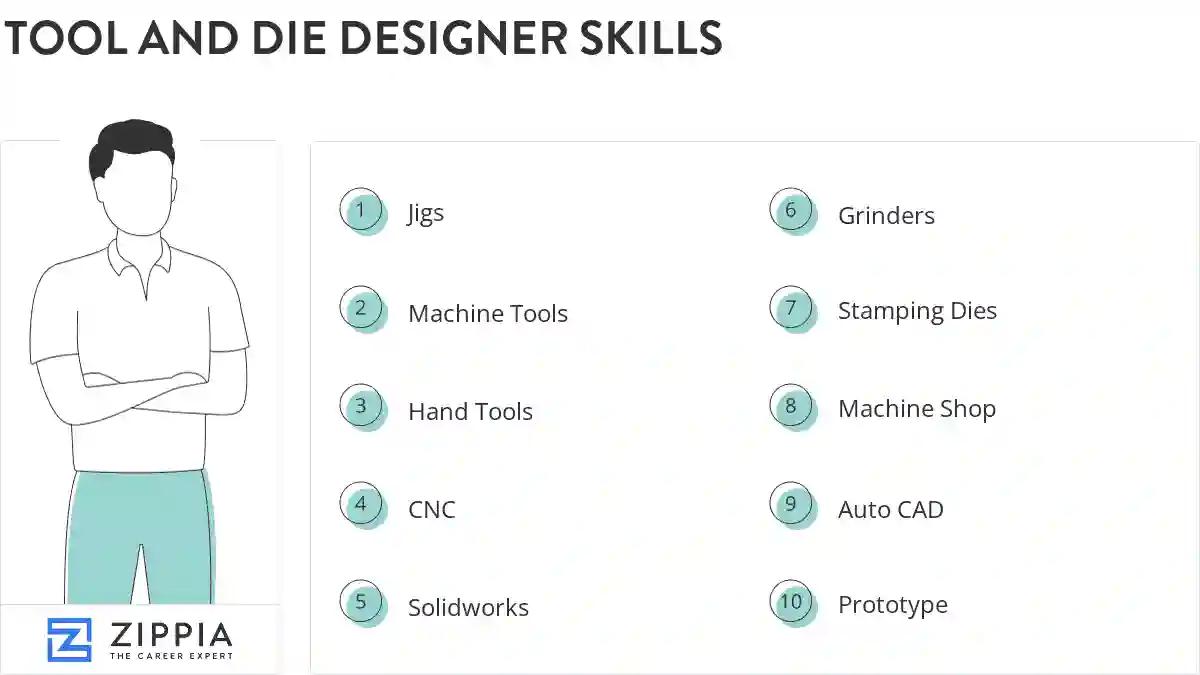
The most important skills for a tool and die designer resume and required skills for a tool and die designer to have include:
- Jigs
- Machine Tools
- Hand Tools
- CNC
- Solidworks
- Grinders
- Stamping Dies
- Machine Shop
- Auto CAD
- Prototype
- Assembly Fixtures
- Drill Press
- Engineering Changes
- Assembly Drawings
- Aluminum
- MIG
- Robotic
- FANUC
- Extrusion
- EDM
- BOM
- TIG
- Mastercam
- Customer Specifications
- Product Development
- Tig Welding
Updated January 8, 2025
