
Automatically apply for jobs with Zippia
Upload your resume to get started.
Training facilitator skills for your resume and career

15 training facilitator skills for your resume and career
1. Training Programs
- Facilitated a low turnover rate for training programs by streamlining operations and maximizing teachable moments/opportunities through development of new training curriculum.
- Enhanced business and customer service operations by leveraging previous experience in call center management to develop and lead comprehensive training programs.
2. PowerPoint
- Facilitated private instruction on Microsoft Office programs, Word, Excel, PowerPoint, Access, Publisher, Outlook.
- Experienced using AS400/ BPCS, Microsoft Office, Excel, PowerPoint and Lotus 123.
3. Training Classes
A training class is a series of classes/lessons designed to impart skills and knowledge for a specific job or activity or to develop skills and knowledge or fitness to specific useful skills in oneself or others. There are a variety of benefits for the trainee, including improved self-esteem, motivation, and confidence, acquiring a new skill or qualification, updating skills, and keeping in touch with new developments in the field.
- Facilitated training of approximately 400 tellers in preparation of bank merger including scheduling of all necessary training classes.
- Propelled successful organizational development and process improvements / re-engineering strategies through consulting, coaching and training classes.
4. Training Materials
- Perform a completed overhaul of the training materials provided to develop streamlined training presentations in accordance with the orientation framework.
- Prepared training materials, administer evaluation instruments, prepare certificates of completion and transcripts.
5. Professional Development
Professional development means to have the essential training certification or education with the purpose of earning and having a successful career. Every job requires a different set of skills. However, new skills may be needed in the future. Professional development, in this regard, helps people to develop and polish the skills and become efficient workers.
- Created opportunity for in house position (previously outsourced) made possible by my own professional development certifications.
- Core Values & Positive Behavior Facilitator Foundations School Mentor Trainer Behavior Management Professional Development Facilitator Community Service & Initiatives
6. Training Curriculum
- Reviewed and updated training curriculum and documentation to ensure material was relevant and current with Standard Operating Procedures and government regulations.
- Develop the training curriculum for domestic violence and human trafficking awareness classes.
Choose from 10+ customizable training facilitator resume templates
Build a professional training facilitator resume in minutes. Our AI resume writing assistant will guide you through every step of the process, and you can choose from 10+ resume templates to create your training facilitator resume.7. Training Sessions
- Facilitated training sessions to individuals regarding self esteem, parenting and chemical dependency needs.
- Provided post go-live private personalized individual (1-1) training sessions for non-technological physicians.
8. Customer Service
Customer service is the process of offering assistance to all the current and potential customers -- answering questions, fixing problems, and providing excellent service. The main goal of customer service is to build a strong relationship with the customers so that they keep coming back for more business.
- Measure and monitor customer satisfaction reports and developing leadership assessments to focus on opportunities to strengthen customer service/loyalty.
- Delivered technical and non-technical material to senior leadership group, managers, supervisors and customer service agents.
9. Presentation
- Demonstrated effective communication, presentation, media applications, questioning, conflict resolution, and employee management skills.
- Developed and revised presentation materials to increase awareness of HIV vaccine and clinical trial information.
10. Subject Matter Experts
- Worked with field inspectors, regulatory authorities, subject matter experts (SME) and business stakeholders.
- Provided follow-on work to train subject matter experts as trainers through on-the-job training.
11. Course Materials
- Developed curriculum and created course materials.
- Manage the learning environment for classroom setup, systems setup, course materials, media, and on-line learning.
12. Instructional Techniques
- Modify the general education curriculum for special-needs employees based upon a variety of instructional techniques and technology.
- Utilized high quality instructional techniques to instill firefighting knowledge in recruits.
13. Management System
A management system is a set of policies, processes, and procedures taken by an organization or a business to ensure it can fulfill its tasks and achieve its objectives. A management system makes sure that the company excels financially and improves the user experience. The management system also takes care of the worker's and employees' needs and manages their workload and oversees their performance. Apart from interior matters of the company, a management system also deals with exterior matters like legislations, tax matters, and law issues.
- Lead the department in researching, selecting and implementing authoring tools, online recognition programs, and learning management system.
- Collaborated on the selection, implementation, and roll out of learning management systems (LMS).
14. LMS
- Mastered LMS and IT Training.
- Develop and maintain a training library, knowledge base, and 2 LMS Programs: Moodle & Pelesys.
15. Technical Training
Technical Training refers to the act of teaching individuals the technical skills needed for various positions. This training may be on a form of software (though this doesn't include any coding technology), how to repair a piece of machinery, or how to operate a piece of machinery.
- Facilitate ongoing technical training and personal development classes for staff members.
- Facilitate technical training regarding retirement laws to various clients
5 Training Facilitator resume examples
Build a professional training facilitator resume in minutes. Browse through our resume examples to identify the best way to word your resume. Then choose from 5+ resume templates to create your training facilitator resume.

What skills help Training Facilitators find jobs?
Tell us what job you are looking for, we’ll show you what skills employers want.
What technical skills for a training facilitator stand out to employers?
Maria Salazar Ph.D.
Professor, University of Denver
It is important to foster a growth-mindset in oneself, and also in one's school community. Employers are also looking for a commitment to educational equity. With emerging consciousness of racial inequality and the need for systems that promote racial justice, employers want to hire people who are culturally competent and can move beyond statements of the value of diversity, to the enactment of educational environments that promote equity for those who are marginalized. This skill set includes: cross-cultural communication, culturally responsive teaching, and strength-based practices.
What soft skills should all training facilitators possess?
Dr. E.Del Chrol
Chair of Humanities, Professor of Classics, Marshall University
List of training facilitator skills to add to your resume
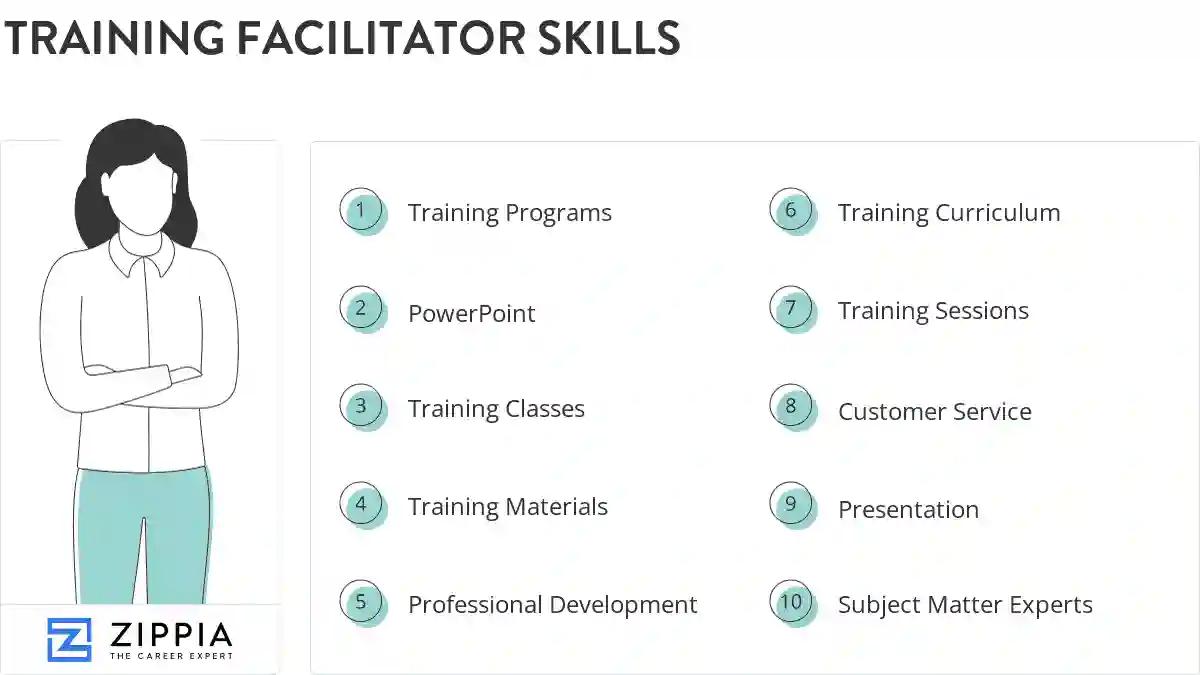
The most important skills for a training facilitator resume and required skills for a training facilitator to have include:
- Training Programs
- PowerPoint
- Training Classes
- Training Materials
- Professional Development
- Training Curriculum
- Training Sessions
- Customer Service
- Presentation
- Subject Matter Experts
- Course Materials
- Instructional Techniques
- Management System
- LMS
- Technical Training
- Process Improvement
- SME
- Training Events
- Curriculum Development
- ISO
- Led Training
- Course Content
- Social Justice
- DOD
- Group Discussions
- Training Courses
- Public Speaking
- Leadership Development
- Conflict Resolution
- Human Resources
- Development Programs
- Needs Assessment
- Various Training
- Blended Learning
- Continuous Improvement
- Leadership Training
- Management Training
- ELearning
- On-The-Job Training
- Training Manuals
- Training Modules
- Leadership
- Training Workshops
- Sigma
- Stress Management
Updated January 8, 2025
