
Automatically apply for jobs with Zippia
Upload your resume to get started.
Wilderness guide skills for your resume and career
15 wilderness guide skills for your resume and career
1. CPR
Cardiopulmonary resuscitation or CPR is a medical procedure that involves chest compression to help a patient breathe. This artificial ventilation helps in keeping the brain function in place and regulates blood throughout the body. CPR is a lifesaving procedure that is used in emergencies.
- Trained in Wilderness First Aid, CPR, and Lifeguarding.
- Certified in Positive Control Systems, CPR and First Aido I am knowledgeable on health issues related to acclimation and hypo/hyperthermia.
2. Responder
- Acquired optional Wilderness First Responder medical certification on my own dime to ensure I could always keep my team safe.
- Received Wilderness First Responder license.
3. Canoe
- Worked as a wilderness canoe guide and trip leader for youth in the Boundary Waters Canoe Area Wilderness, MN.
- Planned and lead wilderness canoe trips ranging from 6-45 days in the Boundary Waters, Ontario and the Northwest Territories.
4. Alaskan
- Resided on-site in remote Alaskan wilderness setting.
5. Substance Abuse
- Managed emotional and physical wellness of teenage girls & boys with histories of substance abuse and documented mental illnesses.
6. Trip Planning
- Conducted thorough logistical pre-trip planning for each trip led.
Choose from 10+ customizable wilderness guide resume templates
Build a professional wilderness guide resume in minutes. Our AI resume writing assistant will guide you through every step of the process, and you can choose from 10+ resume templates to create your wilderness guide resume.7. at-Risk Youth
A child who is unlikely to transition successfully into adulthood is considered an at-risk youth. Success can mean job readiness, academic success, or competence to be financially independent. It may also refer to the ability to avoid a life of crime by becoming a positive representative of society. At-risk students may show/have to show indifference for academics, low educational performance, absenteeism, disconnect from the school, emotional, and behavioral problems.
- Guide for at-risk youth in residential therapy program.
- Supervised and engaged with at-risk youth.
8. Risk Management
Risk management is the method of recognizing, evaluating, and managing risks to an organization's resources and profits. Financial insecurity, regulatory liability, strategic management mistakes, incidents, and natural hazards are just some of the challenges or dangers that could arise. For digitalized businesses, IT security vulnerabilities and data-related threats, as well as risk management techniques to mitigate them, have become top priorities.
- Co-coordinated wilderness adventure expeditions, focusing on risk management and effective programming according to the needs and abilities of program participants.
- Provide engaging experiences that follow program curriculum policies, procedures and risk management plans.
9. Mental Health
Mental health is the state of wellbeing in which an individual can cope with the regular stresses and tensions of life, and can work productively without having any emotional or psychological breakdown. Mental health is essential for a person of any age and helps them make the right decisions in their life.
- Hiked, camped and lived outdoors with a population that struggled with mental health disorders.
10. Conflict Resolution
Conflict resolution is an often necessary skill in business, employed for processes such as contract negotiations, legal matters, and even personal, emotional situations and conflicts. It is the ability to find and create an appropriate and peaceful solution to some sort of dilemma or argument in which two or more parties are involved. The resolution itself must benefit and satisfy all parties and this is what makes it so difficult to reach a peaceful point sometimes.
- Maintain a healthy group dynamic by promoting inclusivity, communication, and conflict resolution.
11. Leadership
- Ensured participant's safety and well-being, practicing responsibility and leadership.
- Facilitated daily leadership lessons and debriefings.
12. Therapeutic Interventions
- Facilitated high adventure wilderness experiences with therapeutic interventions for youth and adult ages 13-24.
- Performed therapeutic intervention, taught anger and life management skills.
13. Outdoor Education
- Teach workshops on tuning and outdoor education like avalanche awareness and restoration.
- Provide outdoor education to school groups while teaching mountain biking, x-country skiing, snowshoeing, and hiking skills.
14. Back Country
- Performed EMT skills on Teens while in the back country setting, responsible for their health.
- Planned logistics and lead back country expeditions.
15. Life Training
- Administered life skills training with goals of clients becoming successful in daily life independence.
5 Wilderness Guide resume examples
Build a professional wilderness guide resume in minutes. Browse through our resume examples to identify the best way to word your resume. Then choose from 5+ resume templates to create your wilderness guide resume.

What skills help Wilderness Guides find jobs?
Tell us what job you are looking for, we’ll show you what skills employers want.
List of wilderness guide skills to add to your resume
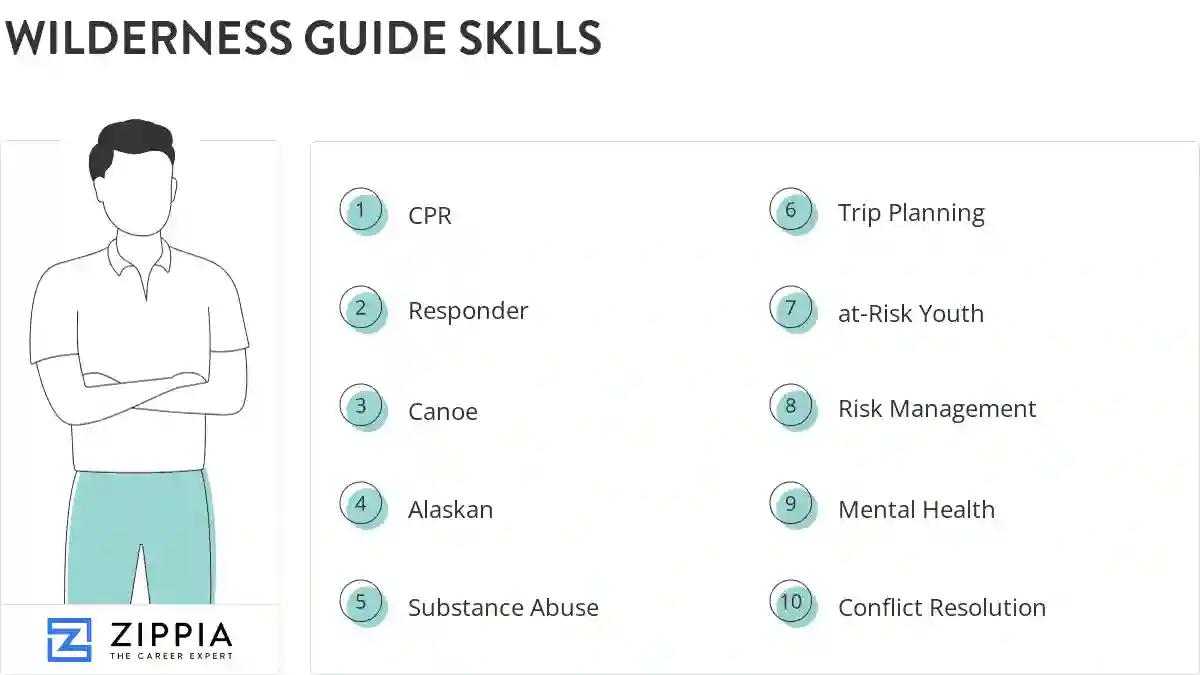
The most important skills for a wilderness guide resume and required skills for a wilderness guide to have include:
- CPR
- Responder
- Canoe
- Alaskan
- Substance Abuse
- Trip Planning
- at-Risk Youth
- Risk Management
- Mental Health
- Conflict Resolution
- Leadership
- Therapeutic Interventions
- Outdoor Education
- Back Country
- Life Training
- GPS
- Therapeutic Environment
- Group Safety
Updated January 8, 2025
