- Hard Skills
- What Are Hard Skills?
- What Are Technical Skills?
- What Are What Are Life Skills?
- What Are Social Media Skills Resume?
- What Are Administrative Skills?
- What Are Analytical Skills?
- What Are Research Skills?
- What Are Transferable Skills?
- What Are Microsoft Office Skills?
- What Are Clerical Skills?
- What Are Computer Skills?
- What Are Core Competencies?
- What Are Collaboration Skills?
- What Are Conflict Resolution Skills?
- What Are Mathematical Skills?
- How To Delegate
Find a Job You Really Want In
Hard skills are quantifiable competencies acquired through formal education, training, or hands-on experience. These skills are typically focused on specific processes or tasks that require proficiency with tools or software.
If you want to effectively showcase your qualifications on your cover letter and during interviews, it’s essential to focus on hard skills. Recent studies indicate that 84% of hiring managers regard hard skills as equally or more important than soft skills, with over one-third of resumes being dismissed for lacking these key competencies.
In this article, we will define hard skills, provide an extensive list of examples, and offer practical tips for incorporating hard skills into your job applications.
Key Takeaways:
-
Hard skills are essential for performing job-specific tasks and responsibilities.
-
These skills can be developed through education, training, or practical experience, while soft skills refer to interpersonal skills that affect collaboration and teamwork.
-
To enhance your hard skills, consider enrolling in courses or pursuing further education.
What are Hard Skills?
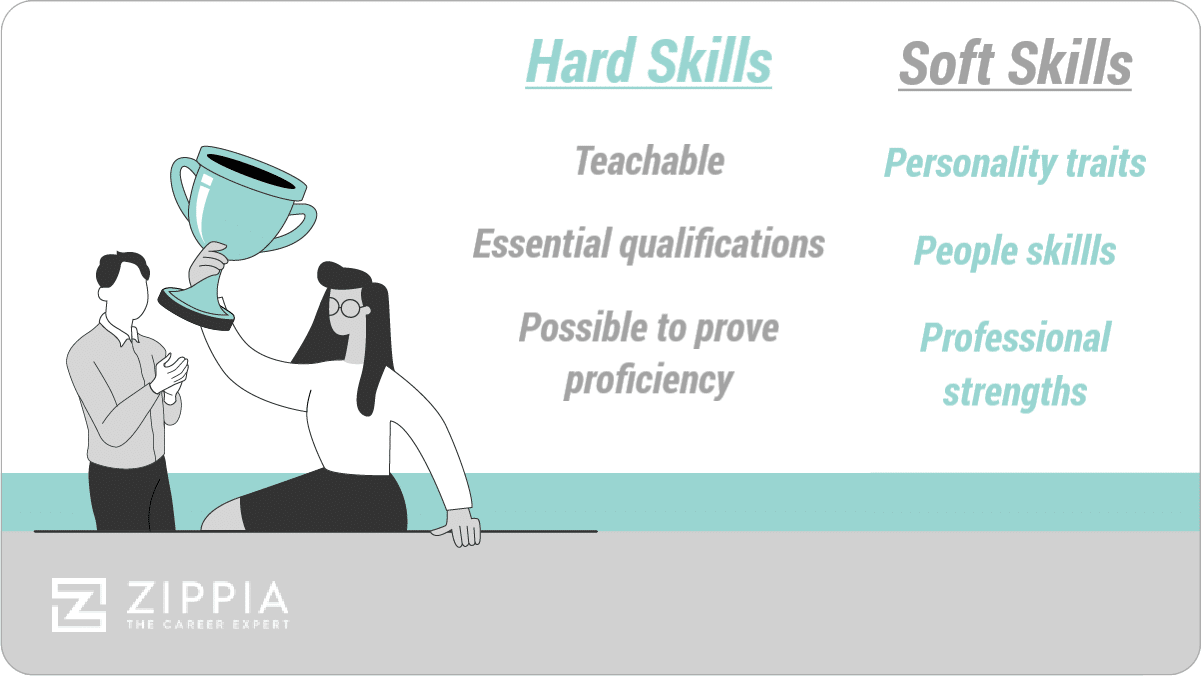
Hard skills are specific abilities that enable you to execute job-related tasks effectively. These skills can be acquired through formal education, apprenticeships, internships, certification programs, and on-the-job training. Hard skills often focus on particular processes and involve the use of specialized tools or software.
They may also reflect broad expertise in a subject, such as “Data Analysis.” Typically, you can find the required hard skills listed in the “Requirements” or “Qualifications” sections of job descriptions.
Examples of hard skills include:
-
Foreign language proficiency
-
Expertise in specific software or programming languages
-
Industry-specific technical skills
What Are Soft Skills?
Soft skills encompass your interpersonal abilities and intrinsic qualities that enhance your effectiveness in the workplace.
Common soft skills include:
-
Effective communication
-
Leadership capabilities
-
Creativity and problem-solving
Unlike hard skills, which can be quantified, soft skills are more subjective and often become apparent only in an interview or work environment. While they can be included in your resume, soft skills typically shine through in your cover letter.
Examples of Hard Skills
Having a clear understanding of hard skills is crucial, especially when crafting your resume. In today’s competitive job market, showcasing a diverse range of hard skills can significantly enhance your employability.
To help you identify your hard skills, we’ve compiled a comprehensive list of examples:
-
Computer Skills. Proficiency in computer operations is fundamental, but the depth of your expertise matters. Can you code, manage databases, or utilize specialized software that employers seek? Key computer skills include:
-
Word Processing
-
Microsoft Office Suite
-
Spreadsheets
-
Bookkeeping
-
Automated Billing Systems
-
Database Management
-
Graphics Design Software
-
Social Media Management Tools
-
-
Technical Skills. Technical skills elevate your IT knowledge and are critical for roles in engineering and sciences. These skills require specialized training:
-
Blockchain Technology
-
Cloud Computing
-
HTML, CSS, JavaScript, and other programming languages
-
Artificial Intelligence
-
Python Programming
-
Data Analysis Tools
-
CRM Software
-
-
Management Skills. Strong management skills are essential in leadership roles. While interpersonal skills matter, possessing these hard skills can enhance your employability:
-
Project Management
-
Business Analysis
-
Sales Strategies
-
Human Resources Management
-
Financial Management
-
Office Administration
-
Logistics Coordination
-
Agile Methodologies
-
-
Marketing Skills. The marketing landscape has evolved significantly, especially with the rise of digital platforms. Matching your skills to the job requirements is crucial:
-
SEO and SEM Strategies
-
Google Analytics
-
Advertising Platforms (AdWords, Facebook Ads)
-
Content Management Systems
-
Email Marketing and Automation
-
-
Analytical Skills. Strong analytical skills are increasingly essential as data-driven decision-making becomes the norm. Highlight your proficiency in:
-
Data Analysis
-
Data Visualization
-
Statistical Software
-
Research Methodologies
-
-
Writing Skills. Effective writing is a necessity across various professions. Regardless of your field, strong writing skills can set you apart:
-
Technical Writing
-
Proposal Writing
-
Editing and Proofreading
-
Content Creation
-
-
Design Skills. Basic design skills can enhance your candidacy in many fields. For those pursuing a design career, proficiency in design software is crucial:
-
Adobe Creative Suite (Photoshop, Illustrator, InDesign)
-
User Experience (UX) Design
-
Video Production and Editing
-
-
Accounting Skills. Many professions require foundational accounting or financial skills:
-
Account Management
-
Financial Analysis
-
Tax Preparation
-
Accounting Software Proficiency (e.g., QuickBooks)
-
-
Career-Specific Skills. Different careers have unique skill sets that may vary by industry. For example, if you are an electrician, specific certifications may be required. Other careers include:
This list merely scratches the surface of specific career paths that necessitate particular hard skills. If you’re aiming for one of these fields, be sure to emphasize your relevant experience and qualifications.
Each industry has its own set of in-demand hard skills. Take time to research the most valued hard skills in your profession to enhance your career prospects.
How to Include Hard Skills in Your Resume
Highlighting hard skills is essential for standing out as a candidate. Reflect on your resume: does it merely list your previous jobs and responsibilities, or does it showcase your hard skills effectively?
Revamp your resume to emphasize your hard skills. Instead of generic job descriptions, illustrate how your skills contributed to your success. Here are some tips:
-
Read Job Descriptions Closely. Focus on the “Requirements” or “Qualifications” sections, which usually contain the hard skills deemed essential by hiring managers. If you meet more than half of the listed skills, apply and consider taking courses for any skills you lack.
-
Create a Master List of Hard Skills. Document all the hard skills you possess, even if they don’t seem directly relevant to the position. This list will help you select the most pertinent skills for each application.
-
Match Your Skills to Job Requirements. Align your hard skills with those in the job description. If you have experience with similar tools, mention those even if they are not identical. For example, if you have used Salesforce but the job requires Zoho, you can still mention your CRM experience.
-
Collect Certifications. Maintain digital copies of your certifications to attach to your resume or application, making it easy for employers to verify your skills.
-
Include a Skills Section. Your resume should feature a dedicated skills section. For a chronological resume, list 4-10 hard skills after your education section. For a functional resume, provide more detail on 4-6 relevant skills.
-
Provide Concrete Examples. In addition to listing your skills, illustrate them with achievements in your work experience section. For example, “Utilized Excel to develop a financial tracking spreadsheet, reducing processing time by 20%.”
-
Understand ATS Keywords. Many companies use applicant tracking systems to filter resumes. Ensure that relevant keywords from the job description are included in your resume to pass the initial screening.
Remember, while it’s important to be honest about your skills, don’t hesitate to showcase your strengths. Highlighting your hard skills effectively can significantly increase your chances of getting noticed by employers.
How to Improve Your Hard Skills
Improving your hard skills is always possible with commitment and effort.
-
Take Online Courses. The availability of online courses makes it easy to learn new hard skills. Opt for courses that offer certifications to enhance your resume, though free options are also available.
-
Consider Going Back to School. If pursuing a degree will deepen your knowledge or increase your earning potential, research the value of that degree in your field. Look for programs that provide hands-on experience to maximize your learning.
-
Find a Mentor. Mentors can provide invaluable insights and guidance as you develop your hard skills. Seek feedback and embrace constructive criticism to improve your abilities more effectively.
-
Practice Regularly. Apply what you learn in real-world scenarios as often as possible. For instance, if you are learning Python, look for opportunities to implement your newfound knowledge at work or on projects.
Hard Skills FAQ
-
Yes, you can improve your hard skills. The most effective methods include enrolling in classes or online courses on the relevant topics, which can help you earn certifications. Additionally, practice your skills whenever possible.
-
Why Are Hard Skills Important?
Hard skills are crucial because they enable both employees and employers to perform jobs more effectively. Hiring managers seek candidates who excel in specific hard skills to drive company success.
-
How Are Soft Skills and Hard Skills Different?
Soft skills and hard skills differ in that hard skills are quantifiable and easily measurable, while soft skills are often subjective and harder to assess. Soft skills typically include communication and leadership abilities, while hard skills are learnable competencies often required for specific jobs.
-
What Is Another Term for Hard Skills?
Another term for hard skills is technical skills. These are specific competencies required to succeed in particular tasks or professions.
Final Thoughts
Here are the key takeaways regarding hard skills:
-
Hard skills encompass any teachable abilities, including technical writing, software proficiency, and more.
-
Incorporating relevant hard skills in your resume is crucial; studies show that 35% of hiring managers will dismiss a resume lacking hard skills.
-
Enhancing your hard skills is one of the most effective strategies to advance your career.
References
- Hard Skills
- What Are Hard Skills?
- What Are Technical Skills?
- What Are What Are Life Skills?
- What Are Social Media Skills Resume?
- What Are Administrative Skills?
- What Are Analytical Skills?
- What Are Research Skills?
- What Are Transferable Skills?
- What Are Microsoft Office Skills?
- What Are Clerical Skills?
- What Are Computer Skills?
- What Are Core Competencies?
- What Are Collaboration Skills?
- What Are Conflict Resolution Skills?
- What Are Mathematical Skills?
- How To Delegate

Author

Kristin Kizer is an award-winning writer, television and documentary producer, and content specialist who has worked on a wide variety of written, broadcast, and electronic publications. A former writer/producer for The Discovery Channel, she is now a freelance writer and delighted to be sharing her talents and time with the wonderful Zippia audience.