- Business Statistics
- Startup Statistics
- Cloud Adoption Statistics
- Customer Loyalty Statistics
- Nonprofit Statistics
- Affiliate Marketing Statistics
- Cart Abandonment Rate Statistics
- Ridesharing Statistics
- Call Center Statistics
- eLearning statistics
- Customer Service Statistics
- Customer Experience statistics
- Entrepreneur Statistics
- Outsourcing Statistics
- Gross Revenue for Marketing and Advertising
- Sales Statistics
- MBA Statistics
- Average Small Business Revenue + Profit Margin
- How Much Do Employee Benefits Cost?
Research Summary. You don’t need to create a groundbreaking product to become a successful entrepreneur. Affiliate marketing provides an opportunity to earn income by promoting products and services from other businesses. This mutually beneficial relationship between brands and marketers has seen a significant rise in popularity:
-
81% of brands globally now operate affiliate programs.
-
16% of global eCommerce sales originate from affiliate marketing.
-
A substantial 81% of advertisers and 84% of publishers engage in affiliate marketing.
-
15% of total revenue in digital media is generated through affiliate marketing initiatives.
-
Advertisers attribute between 15%-30% of their sales to affiliate marketing efforts.
-
U.S. affiliate marketing expenditure is projected to reach $8.2 billion by the end of 2026.
-
38% of marketers rank affiliate marketing as their primary marketing channel.
For further insights, we have categorized the data as follows:
Top Methods | Trends and Projections | Marketer Opinions | Affiliate Opinions | Consumer Behavior
General Affiliate Marketing Statistics
The rise of gig work and entrepreneurship has fueled the popularity of affiliate marketing. As of 2026, many businesses rely on it to connect with customers. Here are key facts about affiliate marketing in the U.S. and globally:
-
The global affiliate marketing industry is valued at approximately $12 billion.
The U.S. commands a significant share at $4.5 billion (39% of the total market). The UK follows with 15%, and Germany with 11%, collectively accounting for 65% of the industry.
-
As of 2026, affiliate marketing generates up to 25% of online sales for major brands.
This means that for a business with $5,000 in monthly sales, up to $1,250 could be attributed to affiliate marketing.
-
There are approximately 11,400 affiliate programs in the U.S.
Among these, ShareASale stands out as one of the largest networks, offering 5,594 programs, which represents 49% of the total U.S. affiliate programs.

Affiliate Marketing Statistics By Top Methods
Not all methods of affiliate marketing yield equal results. To leverage the industry effectively, businesses must differentiate themselves. Our research indicates that:
-
64.48% of affiliate marketers drive traffic through blogging.
Social media is utilized by 67.32% of affiliate marketers, making blogging a crucial traffic source alongside it.
-
75% of affiliate marketers acknowledge social media as their primary traffic driver.
SEO ranks second, with 70% of marketers citing it as their top source. Blogging and email marketing follow closely behind.
-
79% of marketers leverage affiliate marketing to engage existing customers.
This approach emphasizes the importance of retaining previous customers as much as acquiring new ones.
-
Blogs account for 40% of affiliate publisher commissions in the U.S.
While blogging may not always be seen as the top tactic, it remains a significant source of commissions for skilled marketers.
-
94% of publishers engage with multiple affiliate programs.
This strategy allows marketers to diversify their efforts and maximize returns.
-
39.42% of the affiliate marketing market is driven by Amazon.
With 53% of all Amazon sales coming from affiliate marketing, the platform offers a lucrative program for affiliates. Other prominent programs include ShareASale, Awin, CJ Affiliate, Rakuten Marketing, and ClickBank.
Affiliate Marketing Trends and Projections
The growth of affiliate marketing is closely tied to advancements in technology, particularly in online shopping. With platforms like Amazon and eBay reshaping retail, what does the future hold for affiliate marketing? Our findings suggest:
-
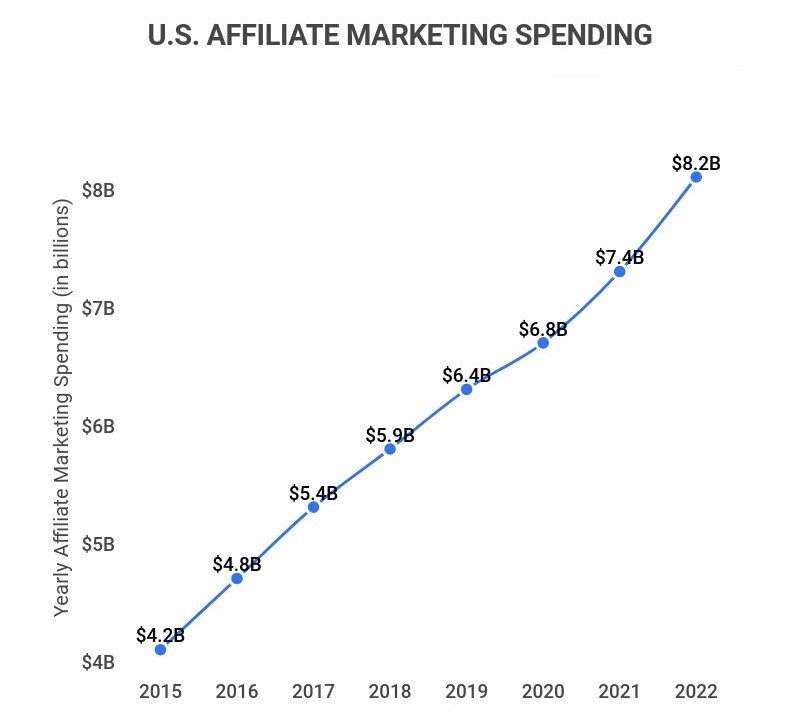
From 2015 to 2022, affiliate marketing revenue surged from $4.5 billion to $8.2 billion.
This represents an impressive growth rate of 83% over seven years, driven by the increasing adoption of affiliate marketing by online businesses.
-
SEO-related searches for “affiliate marketing” grew by 200% from 2015 to 2020.
This indicates a growing interest in affiliate marketing as a viable revenue stream, with searches reflecting a doubling in interest.
-
From 2015 through 2026, the affiliate marketing sector is anticipated to maintain a 10% annual growth rate.
This is notable compared to the overall U.S. advertising industry, which is expected to grow at just 4.4%.
-
Fashion comprises 23.27% of the affiliate marketing sector.
Following fashion, the largest niches include Sports & Outdoors (18.16%), Health/Wellness & Beauty (13.81%), Travel (10.74%), and Home & Garden (8.7%).
-
Affiliate marketing spending has doubled between 2015 and 2022.
In 2015, $4.2 billion was allocated to affiliate marketing, which has increased to $8.2 billion today.
Affiliate Marketing Statistics By Marketer Opinions
Marketers’ insights into affiliate marketing provide valuable perspectives on its effectiveness. Here are some statistics reflecting their views:
-
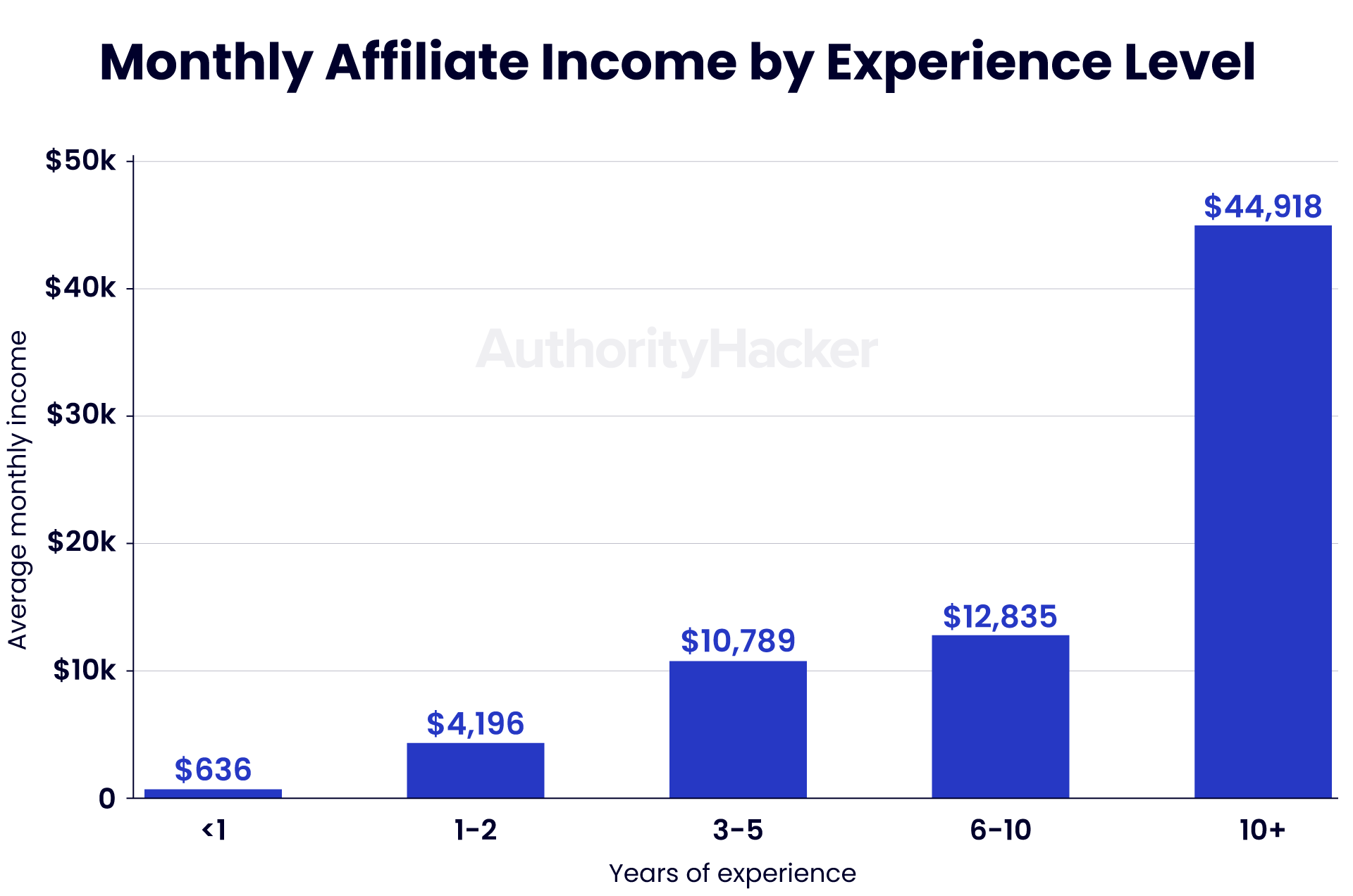
The average affiliate marketer earns $8,038 monthly.
However, this varies significantly with experience: novices earn under $1,000 a month, while seasoned marketers with over a decade of experience can make upwards of $44,918 monthly.
-
40% of marketers believe affiliate marketing is an essential skill.
This is due to the flexibility and opportunities it presents, allowing marketers to thrive through commission-based earnings.
-
67.32% of affiliate marketers utilize social media for promotion.
Popular platforms include Facebook, Instagram, and Twitter, with usage expected to rise as social media continues to grow.
-
83% of affiliate marketers leverage affiliate marketing to enhance brand awareness.
Additionally, 79% use it to drive conversions, increase sales, and foster customer engagement.
Affiliate Marketing Statistics By Affiliate Opinions
While affiliate marketing benefits businesses, how do the marketers themselves perceive it? Here are insights into their opinions:
-
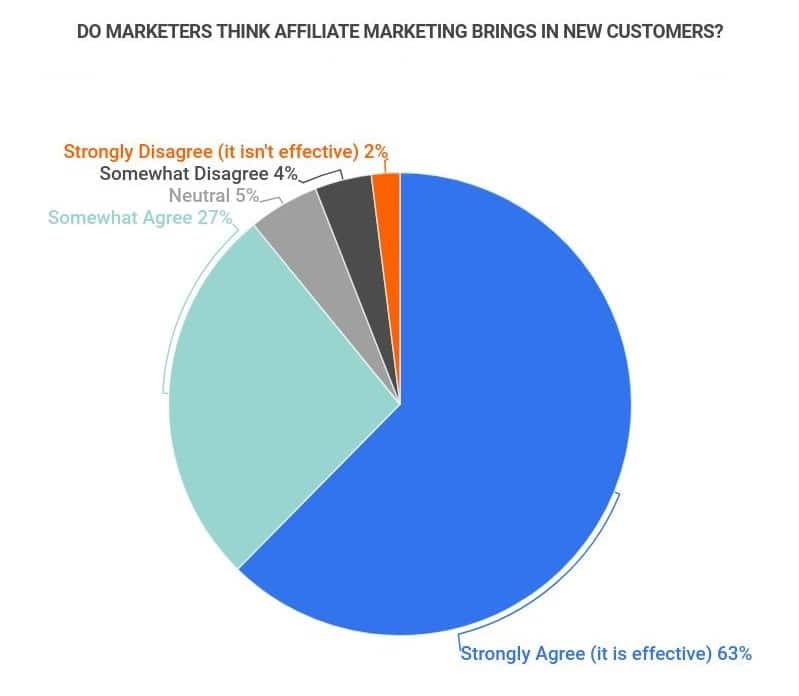
63% of affiliate marketers “strongly agree” that affiliate marketing is effective for attracting new customers.
An additional 27% agree, albeit less emphatically, demonstrating strong overall support for the effectiveness of affiliate marketing.
-
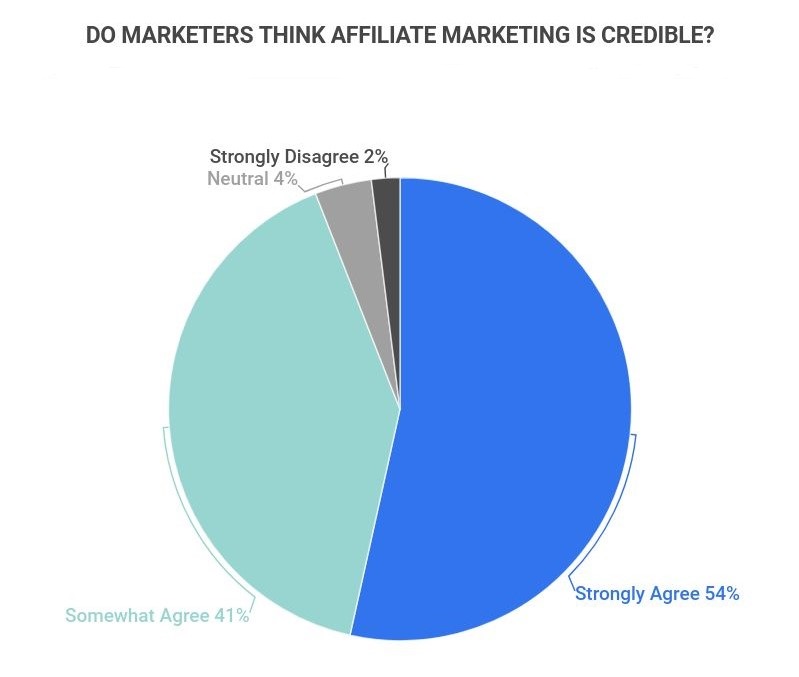
54% of marketers “strongly agree” that affiliate marketing is credible.
Another 41% agree to a lesser extent, with only 2% disputing its credibility.
-
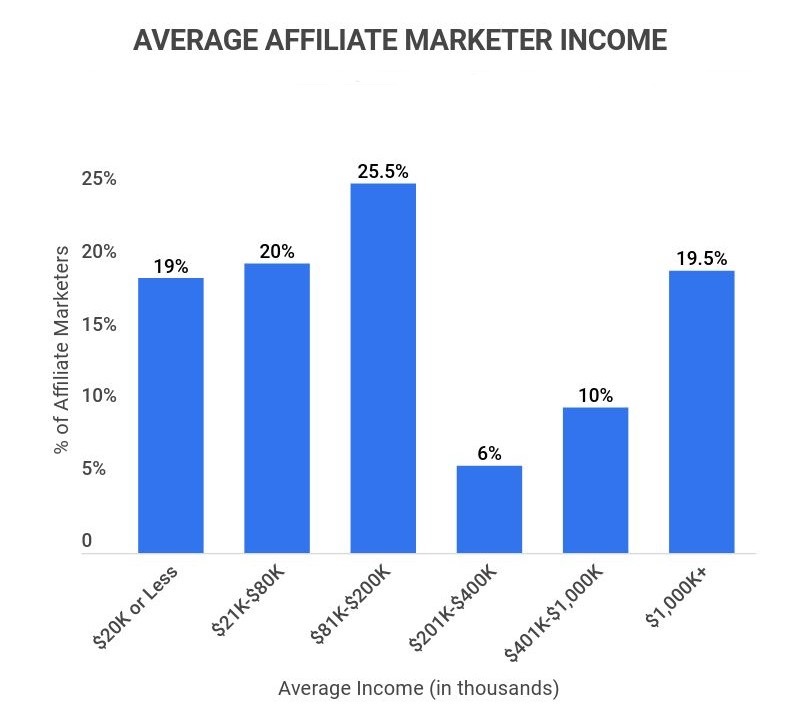
20% of affiliates earn between $21,000-$80,000 annually.
Conversely, about 19% earn under $20,000, while a notable 19.5% exceed $1 million in earnings.
Affiliate Marketing Statistics By Consumer Behavior
Consumer behavior significantly influences affiliate marketing strategies. Here are some insights into how it impacts the industry:
-
87% of U.S. consumers initiate their shopping journeys online with product searches.
A staggering 74% of these searches start on Amazon, illustrating its dominance in the shopping landscape.
-
81% of customers conduct online research before making a purchase.
In fact, 70% of consumers use three or more channels when deciding on a product, while 86% utilize at least two different channels.
-
Affiliate marketing links receive over 5 billion clicks annually.
This leads to more than 170 million transactions, translating to a conversion rate of 3.40%, outperforming the average of 1-2%.
Affiliate Marketing Statistics FAQ
-
How big is the affiliate marketing industry?
The affiliate marketing industry is significant. As of 2026, the industry is valued at approximately $12 billion, with the U.S. accounting for a notable portion of this market share ($4.5 billion, 39% of the total). The UK and Germany together hold 65% of the market.
Additionally, the prevalence of affiliate marketing is increasing, with 81% of advertisers and 84% of publishers utilizing it.
-
Affiliates can receive payment through various methods, depending on the company. Common payment options include PayPal, prepaid debit cards, gift cards, checks, or direct deposits via electronic ACH bank transfers.
Typically, affiliates earn more when they generate higher leads or sales through their marketing efforts.
-
What percentage do affiliates earn?
Several factors determine affiliate earnings. Generally, affiliate marketers can earn between 5% to 30% on commissions. For example, if an affiliate generates $5,000 in sales, they could earn between $250 and $3,000.
This variability often depends on the company’s size, the affiliate’s experience, and the type of product being marketed.
-
Affiliate marketing isn’t easy, but it can be rewarding. Like any commission-based role, success in affiliate marketing relies on individual experience and determination. Marketers must focus on building relationships, refining their niche, and developing effective systems that resonate with customers.
If you enjoy working independently and are willing to invest time and effort, you can achieve success as an affiliate marketer.
-
Who can become an affiliate marketer?
Anyone can enter the world of affiliate marketing, although access to products may vary by brand. Some brands welcome anyone with an online presence, while others may have specific traffic or audience requirements.
In general, a larger audience increases the likelihood of securing affiliate marketing opportunities from brands.
Conclusion
As of 2026, over 80% of advertisers and publishers utilize affiliate marketing, underscoring its importance in the digital marketing landscape. Companies like Amazon and eBay heavily depend on affiliate marketing, with 53% of Amazon’s sales attributed to this approach.
Affiliate marketing is recognized as an effective advertising strategy, generating over 5 billion clicks per year, leading to 170 million purchases. Additionally, 63% of affiliate marketers affirm that it effectively attracts new customers.
Given these insights, affiliate marketing is poised to remain a vital component of online commerce in the coming years.
References
-
BigCommerce. “Affiliate Marketing: What It Is and How You Can Get Started.” Accessed on March 5th, 2022.
-
Statista. “Affiliate marketing spending in the United States from 2010 to 2022.” Accessed on March 5th, 2022.
-
SaaS Scout. “Affiliate Marketing Statistics & Trends Globally (2021).” Accessed on March 7th, 2022.
-
Google Books. “Kick Start Your Own Affiliate Marketing Business.” Accessed on March 7th, 2022.
-
PageWiz. “Getting Started With Affiliate Marketing.” Accessed on March 7th, 2022.
-
Awin. “Awin Report.” Accessed on March 7th, 2022.
-
BloggingWizard. “10 Best Affiliate Platforms And Networks Compared (2022).” Accessed on March 7th, 2022.
-
eMarketer. “Affiliate Marketing Is Highly Measurable, Scales Easily.” Accessed on March 7th, 2022.
-
Markup Hero. “10 SaaS Affiliate Programs in 2021 That Are Easy to Sell and Have the Biggest Payouts.” Accessed on March 7th, 2022.
-
AM Navigator. “Analysis of 550 Best Affiliate Programs Reveals Top 20 Niches.” Accessed on March 7th, 2022.
-
Shane Baker. “6 Awesome Affiliate Marketing Strategies to Drive More Sales in 2022.” Accessed on March 7th, 2022.
-
Referral Rock. “Is Affiliate Marketing Good or Bad? 56 Marketers Share Their Opinions.” Accessed on March 8th, 2022.
-
AuthorityHacker. “How Much Can You Make From Affiliate Marketing?” Accessed on March 8th, 2022.
-
AuthorityHacker. “Affiliate Marketing Statistics” Accessed on September 11th, 2023.
-
CSA. “Study: Most product searches begin on Amazon.” Accessed on March 8th, 2022.
- Business Statistics
- Startup Statistics
- Cloud Adoption Statistics
- Customer Loyalty Statistics
- Nonprofit Statistics
- Affiliate Marketing Statistics
- Cart Abandonment Rate Statistics
- Ridesharing Statistics
- Call Center Statistics
- eLearning statistics
- Customer Service Statistics
- Customer Experience statistics
- Entrepreneur Statistics
- Outsourcing Statistics
- Gross Revenue for Marketing and Advertising
- Sales Statistics
- MBA Statistics
- Average Small Business Revenue + Profit Margin
- How Much Do Employee Benefits Cost?

Author

Jack Flynn is a writer for Zippia. In his professional career he’s written over 100 research papers, articles and blog posts. Some of his most popular published works include his writing about economic terms and research into job classifications. Jack received his BS from Hampshire College.