Find a Job You Really Want In
The impact of the ongoing economic landscape in 2026 has brought significant challenges for working women, revealing deep-rooted disparities in financial stability and work-life balance. As we navigate this new normal, it’s crucial to understand how these challenges continue to affect women disproportionately.
Women consistently earn less than men across all educational levels, with recent figures showing women make approximately 82 cents for every dollar earned by men. As the labor market evolves, many Americans still grapple with job insecurity, particularly among low-income earners who have limited financial buffers.
Beyond wage disparities, women shoulder a heavier load of unpaid labor compared to their male counterparts. Research indicates that women engage in an average of two hours more daily in housework and childcare. With ongoing changes in childcare accessibility, how are women managing these increased responsibilities?
We surveyed 100 women to shed light on the continuing impact of economic challenges on women in the workforce.
Summary Of Findings
- 35% of women would face severe financial difficulties within two weeks of missing a paycheck, with 13% unable to afford even a single missed paycheck.
- Half of the women surveyed are currently working remotely, while the other half is divided between essential and non-essential roles.
- 14% more women report taking on the majority of childcare responsibilities compared to those sharing equally with a partner.
- 42% of mothers surveyed claim that school and daycare closures are negatively impacting their work performance.
Below, we delve deeper into our findings and share firsthand experiences from women navigating these challenges.
How Are Women Working in 2026?
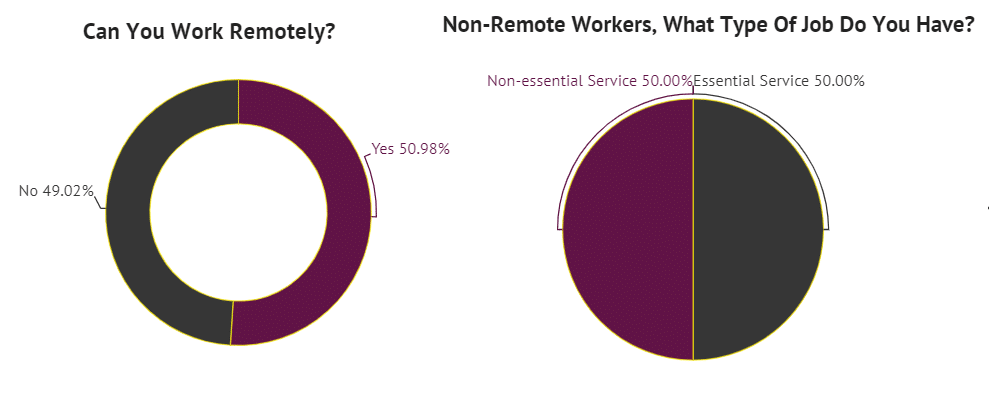
Just over half of the women surveyed are able to work remotely, while the remainder is evenly split between those in essential and non-essential roles. What types of jobs are women primarily engaged in during this economic shift?
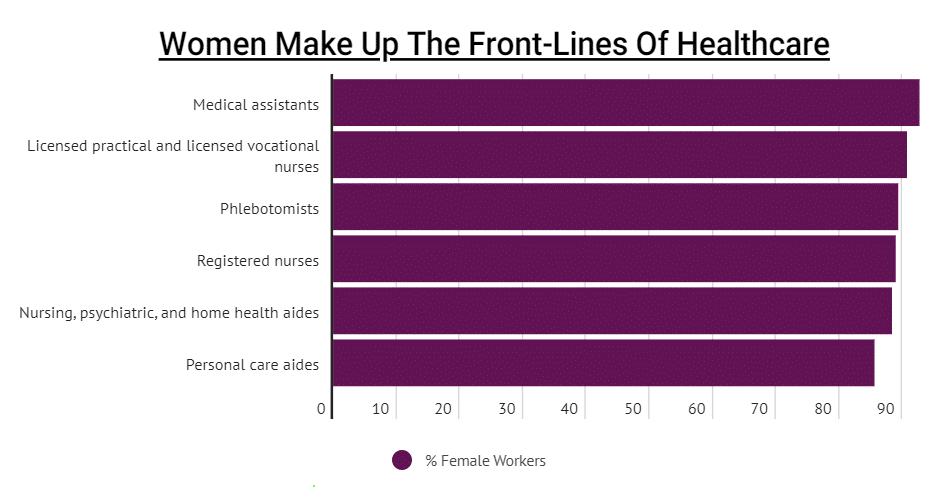
According to data from the BLS, women hold many healthcare positions that remain vital in today’s economy. While these roles may offer more job security, they also involve daily exposure to health risks.
One participant shared her perspective, stating, “It makes me anxious since I’m on immune suppression for rheumatoid arthritis. As a pharmacist, I don’t have the option to stay home.” Another noted, “My workload has increased tremendously—I’m exhausted and worried we might get sick and spread it to our families.”
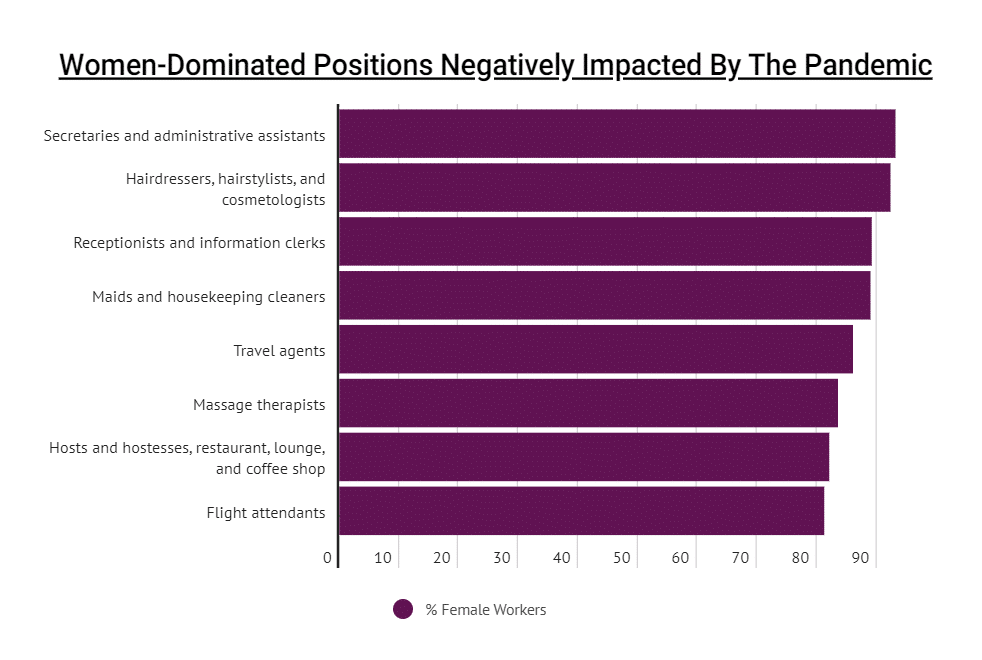
Conversely, many women also occupy positions classified as non-essential, which have seen significant layoffs and prolonged unemployment. The majority of servers and tipped workers are women, making them particularly vulnerable to economic downturns, as their income relies heavily on daily cash tips. One woman expressed the challenge of not being able to afford basic necessities without working.
How prepared are women financially to manage without a paycheck?
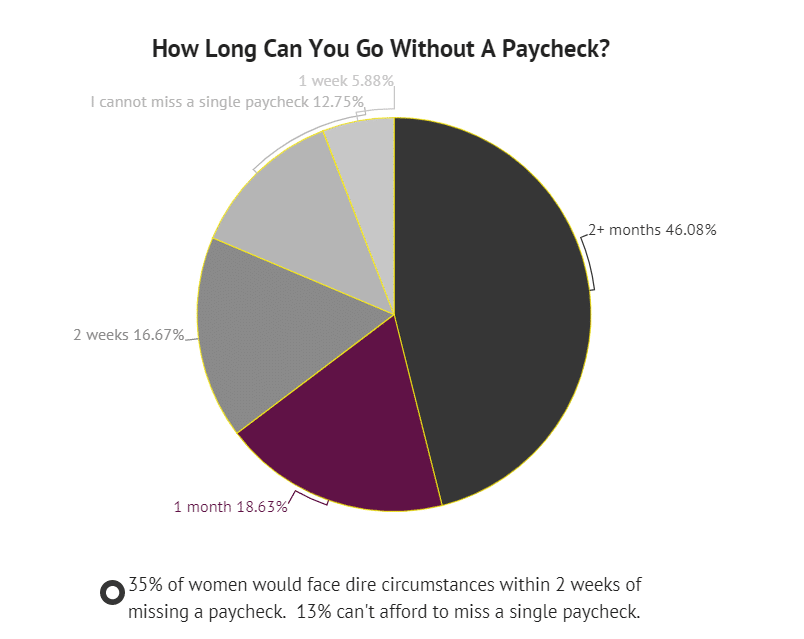
While 46% of women could manage for two months or longer without a paycheck, 54% can only sustain themselves for one month or less. Alarmingly, 13% of women reported they cannot afford to miss even a single paycheck without facing severe consequences. Many have already experienced financial setbacks.
As various states continue to enforce varying levels of restrictions, the majority of our survey respondents are not financially equipped to endure prolonged periods without work.
How Are Working Mothers Affected by School and Daycare Closures?
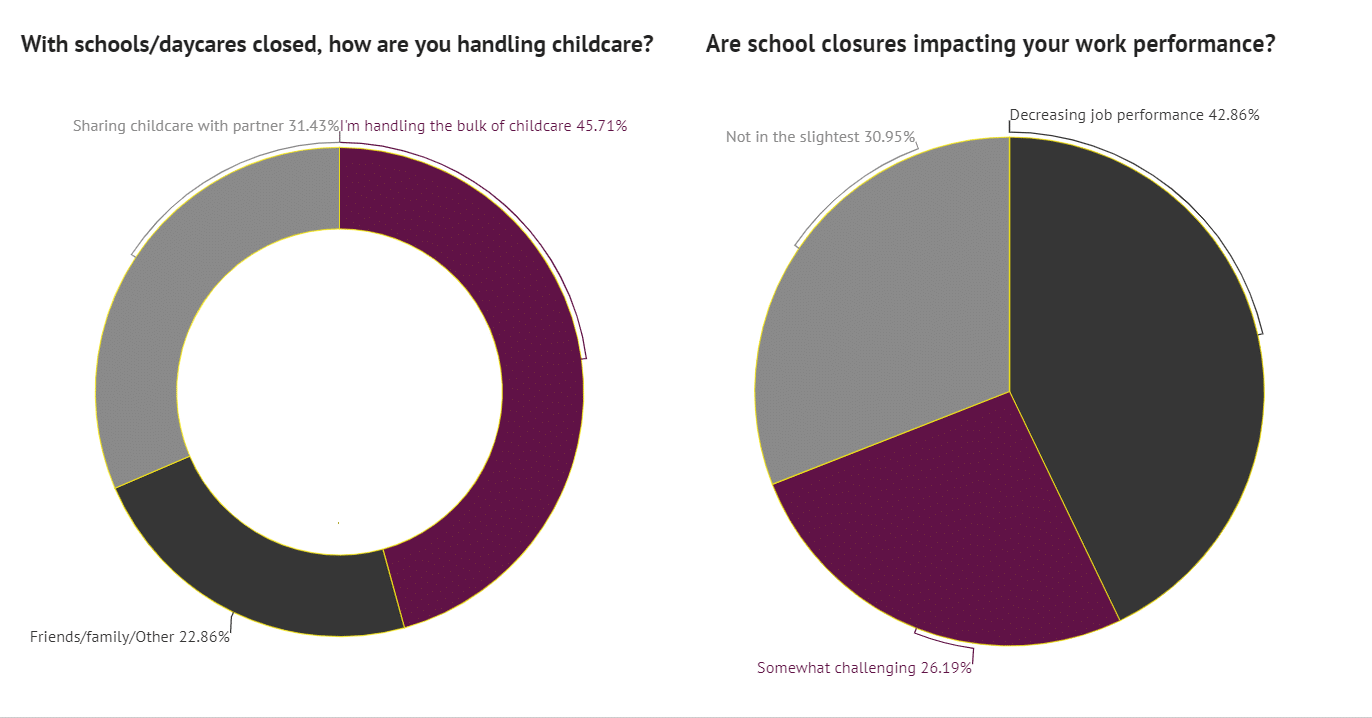
As many women face unexpected job losses, a significant number of working mothers struggle to balance work responsibilities and find new childcare arrangements due to ongoing school and daycare closures. More women report they are handling the majority of childcare duties compared to those sharing responsibilities with a partner. Furthermore, 42% of women indicate that childcare challenges are affecting their job performance.
One freelance worker shared her experience, stating, “I can hardly work. While my husband is in his home office, I’m trying to keep the kids occupied. By the time he’s done, I’m too worn out to focus on my creative tasks.”
It appears that the burden of childcare continues to fall disproportionately on women.
Summary of the Impact on Working Women
The ongoing economic landscape continues to affect communities everywhere, and while hardships are shared, women face unique challenges rooted in existing societal inequalities. The nature of the jobs women hold, the persistent wage gap, and the heavier burden of unpaid labor shape their experiences in today’s economy.
Many women have voiced their worries about family health and financial security, with those in vulnerable situations, such as pregnancy or separation from loved ones, feeling particularly anxious. The most pressing concern remains financial stability. One participant succinctly stated, “As long as we can keep working, we will be okay.” Another reflected on the uncertainty of the job market, saying, “I simply can’t afford to not work.”
For anyone navigating the current job market, explore Zippia’s Guide to Finding Work in 2026.

Author

Kathy is the head of content at Zippia with a knack for engaging audiences. Prior to joining Zippia, Kathy worked at Gateway Blend growing audiences across diverse brands. She graduated from Troy University with a degree in Social Science Education.