- Tech Industry Statistics
- MFA Statistics
- Streaming Services Statistics
- Mobile Vs. Desktop Usage Statistics
- AI Statistics
- Live Streaming Statistics
- Zoom Meeting Statistics
- Cord Cutting Statistics
- Digital Transformation Statistics
- Virtual Reality Statistics
- How Fast Is Technology Advancing
- Mobile Commerce Statistics
- SaaS Statistics
- Machine Learning Statistics
- Diversity In High Tech
- Cyber Security Statistics
- Ecommerce Statistics
- Tech Industry
- Gaming Industry
- Renewable Energy Job Creation
- Smartphone Industry
- Cybercrime Statistics
- Amazon Statistics
- Personalization Statistics
Research Summary: In 2026, technology continues to weave into the fabric of daily life, advancing at an unprecedented pace. Here are key statistics that highlight the speed of technological progress:
-
As of 2026, there are approximately 5.07 billion internet users globally.
-
There are about 7.7 billion mobile phone users worldwide.
-
Forecasts suggest there will be 50 billion IoT-connected devices globally by 2030.
-
Currently, there are 1.5 million tech startups around the world.
-
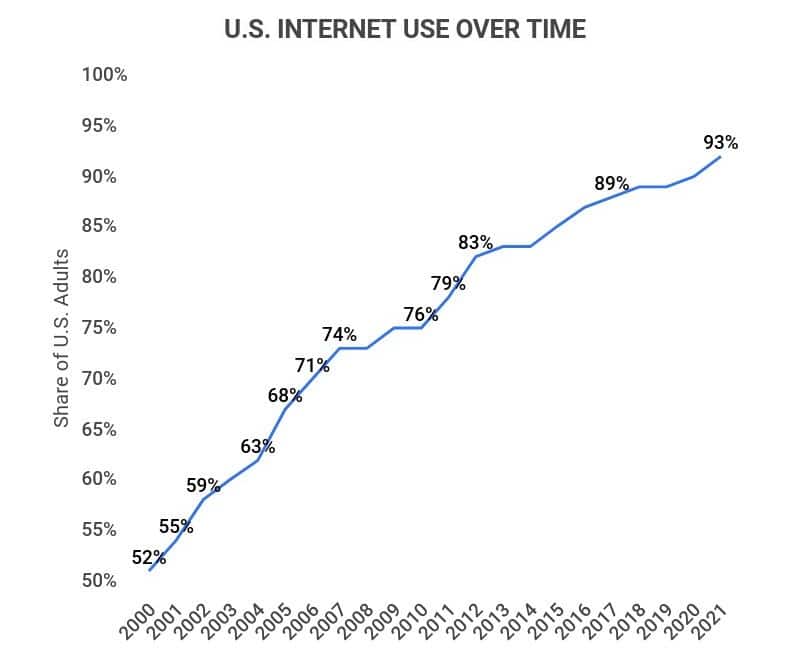
94% of U.S. adults are internet users.
-
It is estimated that 90% of the world’s data has been created in the last two years.
For deeper insights, we analyze the data in the following categories:
Mobile and Smart Device Growth | Investment | Data Growth | Trends and Predictions
How Fast Is Technology Advancing: Internet Adoption Statistics
-
On average, over 600,000 new internet users are added each day.
-
The annual growth rate of new internet users worldwide is around 5.1%.
-
Every second, an estimated 130 new devices connect to the internet globally.
-
94% of U.S. adults are internet users, a significant increase from 52% in 2020.
-
Internet adoption rates remain highest among 18- to 29-year-olds, with a 99% adoption rate as of 2020.
-
Approximately 98% of Northern Europe’s population has internet access, the highest penetration rate in the world.
-
The average global internet penetration rate stands at 65%.
How Fast Is Technology Advancing: Mobile and Smart Device Growth Statistics
-
Over 60% of the global population owns a cell phone.
Of those, nearly 84% are smartphones.
-
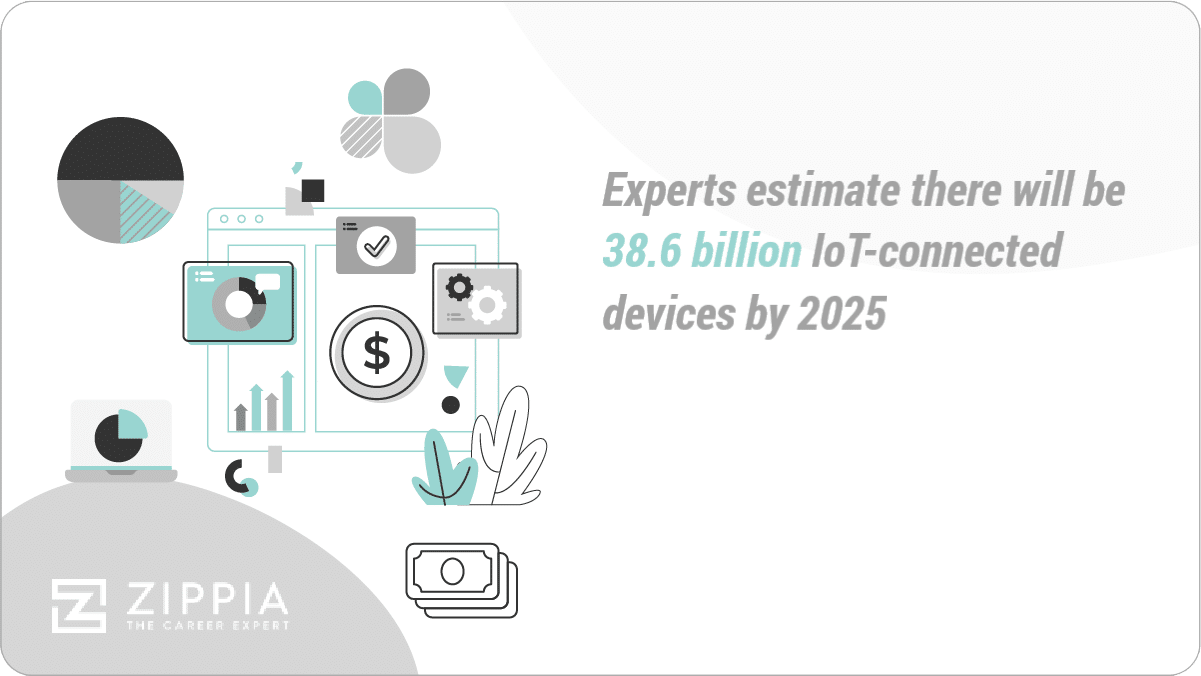
As of 2026, the number of IoT devices worldwide is estimated to exceed 38 billion.
The Internet of Things (IoT) encompasses devices like smartphones, smart appliances, and connected vehicles, and is expanding to include city infrastructure such as smart traffic signals.
By 2030, the number of IoT devices is expected to reach 50 billion.
-
Approximately 97% of U.S. adults own a cellphone.
The trend in cellphone ownership from 2010 to 2026 is as follows:
Year % of U.S. Adults Who Own a Cellphone 2021 97% 2020 N/A 2019 96% 2018 95% 2017 N/A 2016 95% 2015 91% 2014 89% 2013 92% 2012 88% 2011 87% 2010 81% -
85% of U.S. adults own a smartphone.
The trend in smartphone ownership from 2011 to 2021 is as follows:
Year % of U.S. Adults Who Own a Smartphone 2021 85% 2020 N/A 2019 81% 2018 77% 2017 N/A 2016 77% 2015 69% 2014 59% 2013 58% 2012 45% 2011 35%
How Fast Is Technology Advancing: Investment Statistics
-
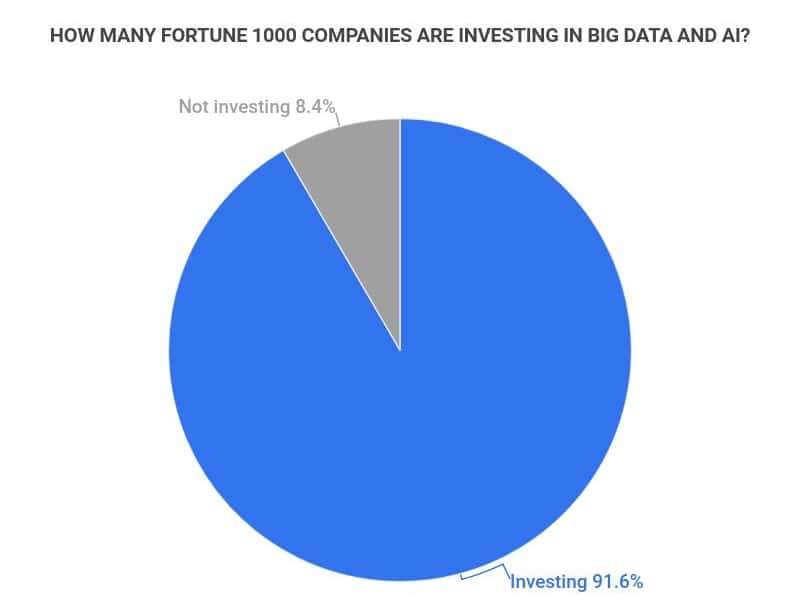
91.6% of Fortune 1000 companies are increasing their investments in Big Data and AI.
These companies believe that both Big Data and AI are crucial for maintaining competitiveness in a fast-evolving market.
-
The U.S. has seen its technology patents increase from 47.82 million in 2017 to 56 million in 2026.
This reflects a steady growth trend in innovation and technology development.
-
Globally, there are approximately 1.5 million tech startups.
This is a significant portion of the 350 million startups across all sectors.
How Fast Is Technology Advancing: Data Growth Statistics
-
About 2.5 quintillion bytes of data are generated each day.
This staggering amount is a result of the explosion of digital content and activity across all platforms.
As of 2023, it was estimated that 1.7 MB of data is created for every person globally every second.
-
As of 2024, it is estimated that 90% of the world’s data was created in the last two years.
This trend continues with the growing use of digital platforms across social media, e-commerce, and IoT devices.
-
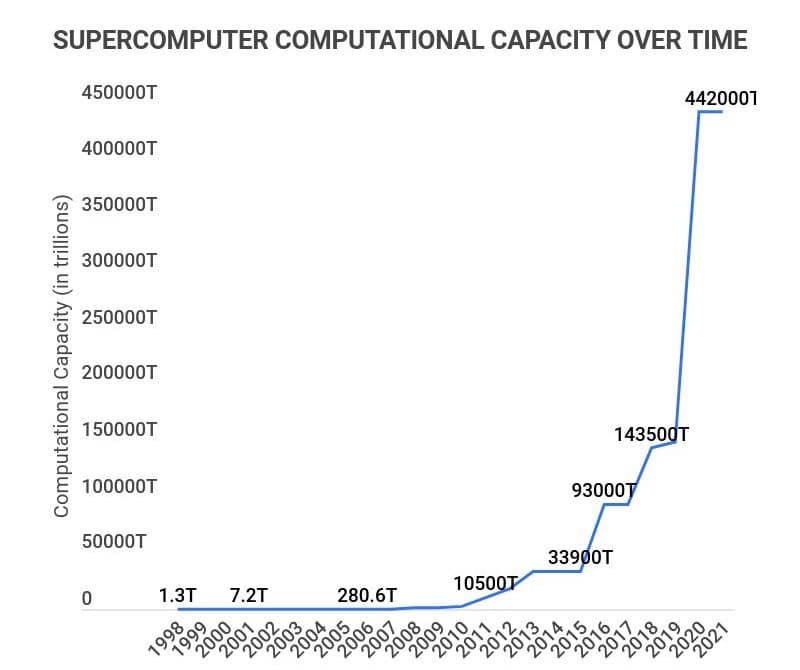
Over 19.2 billion transistors can fit on a microprocessor.
This remarkable increase from just over 2,300 transistors in 1971 exemplifies the ongoing relevance of Moore’s Law.
How Fast Is Technology Advancing: Trends and Predictions
-
The global wearable AI market is expected to reach $69.51 billion by 2026.
This is a significant increase from a value of $10.63 billion in 2019, indicating a CAGR of 26.5% over this period.
-
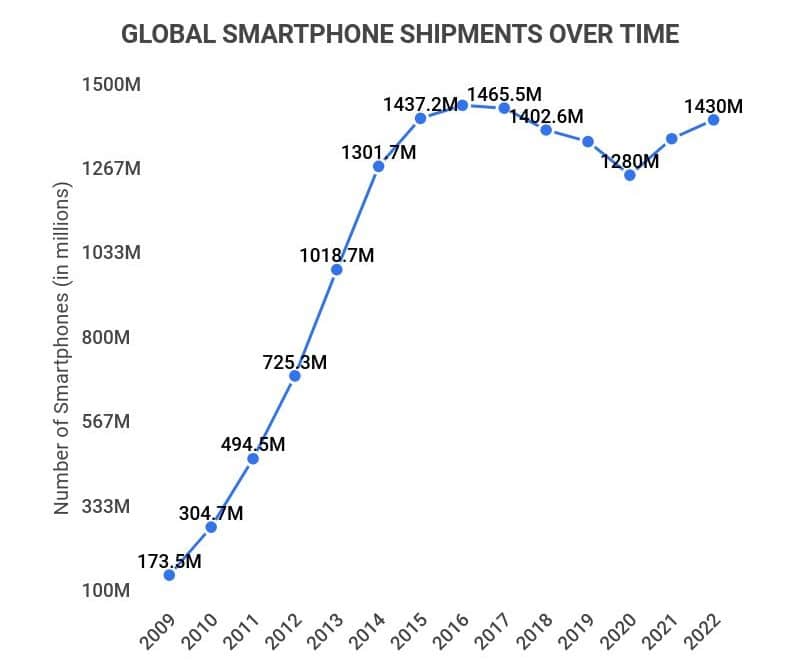
As of 2020, there were 1.28 billion smartphones shipped globally.
This number is projected to grow to 1.5 billion by 2026.
In 2009, only 173.5 million smartphones were shipped, showcasing the rapid growth of this market.
-
Internet user penetration in the U.S. is expected to reach 94.2% by 2025.
This is an increase from 90.8% in 2021, reflecting the continuous growth of internet access.
-
The Republic of the Congo has been one of the fastest-growing online populations globally, with significant year-on-year growth rates.
This trend highlights the increasing connectivity of underrepresented regions.
How Fast Is Technology Advancing FAQ
-
What is Moore’s law?
Moore’s law states that the number of transistors on integrated circuits (or microchips) will double approximately every two years.
This principle was first articulated by Gordon E. Moore, a co-founder of Intel, in 1965. It has remained largely accurate for decades.
-
Is technology growing exponentially?
Yes, technology is exhibiting exponential growth. The speed and power of computers have consistently doubled every one and a half to two years since the late 20th century. This trend is currently ongoing, although some experts question its long-term sustainability.
Other fields, including digital imaging and human genome sequencing, have also demonstrated similar exponential growth patterns.
-
How fast is the artificial intelligence industry growing?
The artificial intelligence industry is currently growing at an estimated rate of 16.4% year-over-year. This figure indicates a robust growth trajectory for AI technologies.
Projections suggest the industry will have a five-year CAGR of around 17.5%, potentially reaching a market value of $500 billion by 2024.
-
Why is technology increasing so fast?
The rapid pace of technological advancement is driven by the cumulative effect of previous innovations, which create new possibilities while often reducing costs.
These lower costs enhance accessibility, allowing technology to permeate more areas of life and fostering further innovations that accelerate progress.
Conclusion
Since the advent of computers, technology has been rapidly evolving. Each technological leap paves the way for new innovations, contributing to exponential growth in this sector. Today, technology is integrated into daily life for most of the global population through the internet, smartphones, and various smart devices.
Currently, there are about 5.07 billion internet users worldwide, with an average of 600,000 new users being added each day. However, as of now, only 65% of the global population has access to the internet.
Smartphone technology has also proliferated, with over 60% of the population owning mobile devices, and 84% of these being smartphones. These devices contribute to the Internet of Things, which includes 38 billion other connected devices, all sharing data and functionality.
The network of smart devices, including automobiles, security systems, and public infrastructure, is expected to encompass 50 billion devices by 2030, reflecting a future of heightened connectivity and innovation.
References
-
Data Reportal. “Digital Around the World.” Accessed on January 26, 2022.
-
McKinsey & Company. “What’s New with the Internet of Things?” Accessed on January 26, 2022.
-
Pew Research Center. “Internet/Broadband Fact Sheet.” Accessed on January 26, 2022.
-
Statista. “Fastest Growing Online Populations Based on Relative Year-on-Year User Growth as of January 2020.” Accessed on January 26, 2022.
-
Statista. “Number of Internet of Things (IoT) Connected Devices Worldwide in 2018, 2025, and 2030.” Accessed on January 26, 2022.
-
Pew Research Center. “Mobile Fact Sheet.” Accessed on January 26, 2022.
-
ZDNet. “Fortune 1000 to ‘Urgently’ Invest in Big Data, AI in 2019 in Fear of Digital Rivals.” Accessed on January 26, 2022.
-
OECD.Stat. “Patents by Technology.” Accessed on January 26, 2022.
-
Get2Growth. “How Many Startups Are There?” Accessed on January 26, 2022.
-
Domo. “Everyone on the Same Page, All the Time.” Accessed on January 26, 2022.
-
Big Data Made Simple. “Exciting Facts and Findings About Big Data You Should Know.” Accessed on January 26, 2022.
-
Our World in Data. “Technological Progress.” Accessed on January 26, 2022.
-
Allied Market Research. “Wearable AI Market by Type (Smart Watch, Smart Glasses, Smart Earwear, Smart Glove, and Others), and Application (Consumer Electronics, Healthcare, Automotive, Military and Defense, Media and Entertainment, and Others): Global Opportunity Analysis and Industry Forecast, 2019–2026.” Accessed on January 26, 2022.
-
Statista. “Global Smartphone Shipments Forecast From 2010 to 2022.” Accessed on January 26, 2022.
-
Statista. “Internet User Penetration in the United States From 2017 to 2025.” Accessed on January 26, 2022.
-
IDC. “IDC Forecasts Improved Growth for Global AI Market in 2021.” Accessed on January 26, 2022.
- Tech Industry Statistics
- MFA Statistics
- Streaming Services Statistics
- Mobile Vs. Desktop Usage Statistics
- AI Statistics
- Live Streaming Statistics
- Zoom Meeting Statistics
- Cord Cutting Statistics
- Digital Transformation Statistics
- Virtual Reality Statistics
- How Fast Is Technology Advancing
- Mobile Commerce Statistics
- SaaS Statistics
- Machine Learning Statistics
- Diversity In High Tech
- Cyber Security Statistics
- Ecommerce Statistics
- Tech Industry
- Gaming Industry
- Renewable Energy Job Creation
- Smartphone Industry
- Cybercrime Statistics
- Amazon Statistics
- Personalization Statistics

Author

Abby is a writer who is passionate about the power of story. Whether it’s communicating complicated topics in a clear way or helping readers connect with another person or place from the comfort of their couch. Abby attended Oral Roberts University in Tulsa, Oklahoma, where she earned a degree in writing with concentrations in journalism and business.