- Tech Industry Statistics
- MFA Statistics
- Streaming Services Statistics
- Mobile Vs. Desktop Usage Statistics
- AI Statistics
- Live Streaming Statistics
- Zoom Meeting Statistics
- Cord Cutting Statistics
- Digital Transformation Statistics
- Virtual Reality Statistics
- How Fast Is Technology Advancing
- Mobile Commerce Statistics
- SaaS Statistics
- Machine Learning Statistics
- Diversity In High Tech
- Cyber Security Statistics
- Ecommerce Statistics
- Tech Industry
- Gaming Industry
- Renewable Energy Job Creation
- Smartphone Industry
- Cybercrime Statistics
- Amazon Statistics
- Personalization Statistics
25+ Incredible Machine Learning Statistics [2026]: Key Facts About The Future Of Technology
Research Summary. Machine learning and artificial intelligence continue to revolutionize technology across industries, shaping business practices and personal experiences. Here are key statistics on machine learning in business for 2026:
-
82% of companies require employees with machine learning skills.
-
73% of business leaders anticipate that machine learning will double productivity among employees.
-
The global machine learning market is expected to grow at a CAGR of 38.8% from 2022 to 2029.
-
Global employment for machine learning engineers is projected to expand by 22% from 2020 to 2030.
-
56.4% of mobile users utilize AI-powered voice assistants.
-
61% of marketers view machine learning and AI as their top priority for data strategies.
For a deeper analysis, we’ve categorized the data as follows:
Adoption | Benefits | Trends and Projections | Customer Experience
Machine Learning Industry Statistics
-
In 2018, the U.S. machine learning market was valued at approximately $100 million.
-
As of 2022, estimates suggest the global machine learning industry was worth $21.17 billion.
-
The global CAGR for the machine learning industry is projected at 38.8%, with its value expected to approach $209.91 billion by 2029.
-
91.5% of organizations are consistently investing in AI technologies.
Machine Learning Adoption Statistics
-
76% of companies prioritize AI and machine learning initiatives over other IT projects.
Many organizations have recognized the importance of these technologies, with 43% stating that AI initiatives are more crucial than previously assumed.
-
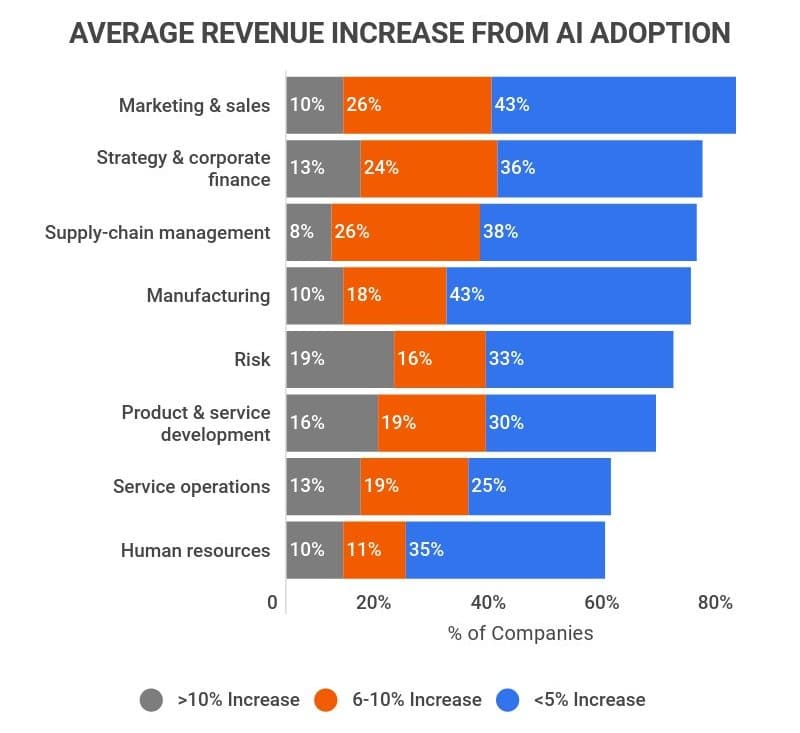
50% of companies currently employ AI in at least one functional area.
Common applications include product development (45%) and service operations (43%).
-
Marketing and sales
-
Risk management
-
Manufacturing
-
Supply chain management
-
Corporate finance and strategy
-
-
Enhancing customer experience and process automation are the primary uses of AI and machine learning.
Additionally, generating customer insights and financial intelligence are also prevalent applications.
-
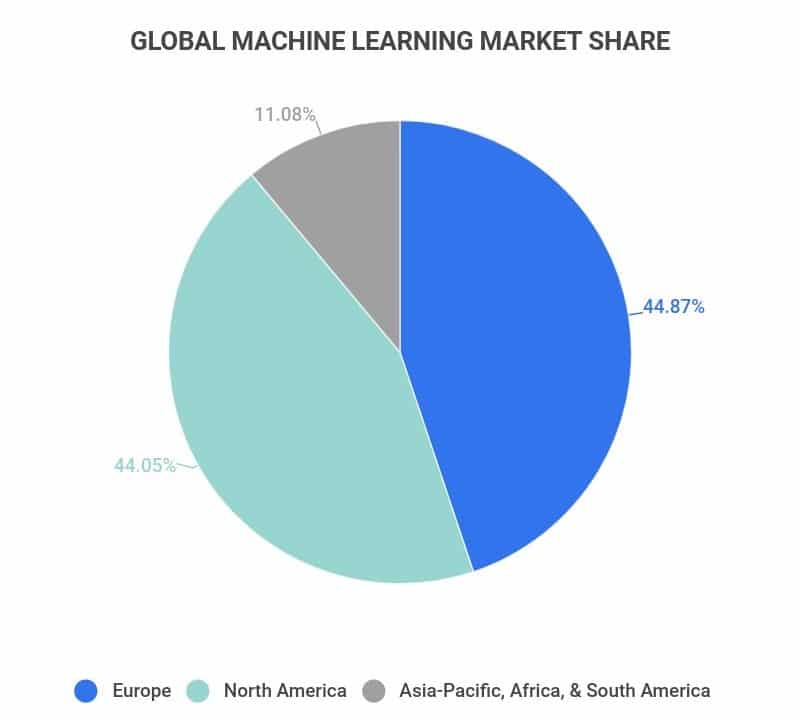
Europe commands 44.87% of the global machine learning market share.
North America follows closely at 44.05%, while the Asia-Pacific, Africa, and South America regions collectively account for 11.08%.
Machine Learning Benefits
-
Companies report a reduction in sales call times by 60-70% due to AI and machine learning.
These companies have also noted cost reductions of 40-60% and an increase of over 50% in leads and appointments.
-
74% of company leaders believe their organizations could achieve better results with increased investment in machine learning and automation.
85% agree that these technologies confer a competitive advantage.
-
Firms implementing AI in any business function observed an average revenue increase of 66% in those areas.
Marketing and sales experienced the highest revenue growth at 79%, followed by strategy and corporate finance at 73%.
-
89% of business leaders expect AI to boost employee performance and productivity by 2035.
However, only 55% of employees agree with this perspective.
Machine Learning Trends and Projections
-
The U.S. machine learning market is expected to grow from $100 million in 2018 to $935 million by 2025.
-
Demand for professionals with AI and machine learning skills is projected to grow at a CAGR of 71% between 2020 and 2025.
-
AI startups attracted $18.5 billion in venture capital in 2019, with total investments in the sector expected to reach $100 billion by 2023.
-
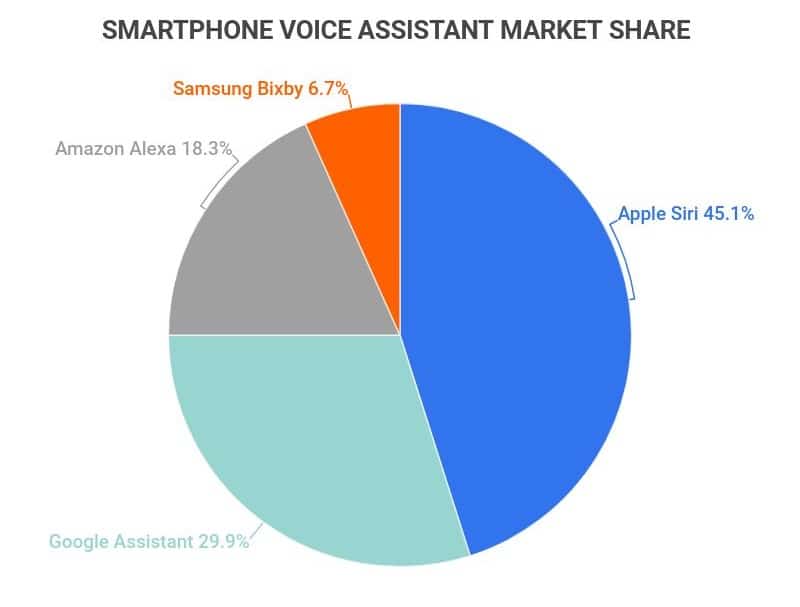
Daily use of AI-powered voice assistants among smartphone owners increased by 23% from 2018 to 2020.
Machine Learning and Customer Experience
-
About 85% of customer interactions with companies occur without human involvement.
AI technologies are increasingly being deployed to assist customers and streamline processes.
-
43% of millennials are willing to pay for a hybrid customer service model.
This preference indicates a desire for a balance between AI efficiency and human interaction.
-
50% of AI users are unaware they are interacting with AI.
This highlights the seamless integration of AI into everyday experiences.
Machine Learning FAQ
-
What is machine learning used for?
Machine learning is applied to a variety of digital tasks, including:
-
Email filters
-
Search engines
-
Personalized advertisements
-
Voice recognition
-
Voice assistants
-
Banking alert systems
-
-
What is the difference between AI and machine learning?
Machine learning is a subset of AI. AI encompasses technologies that mimic human intelligence, while machine learning is focused on algorithms that learn from data independently.
-
Will machine learning replace statistics?
No, machine learning will not replace statistics. Both fields utilize data but serve different purposes—statistics focuses on data analysis, while machine learning aims to make predictions based on that data.
-
What are examples of machine learning?
Machine learning is integrated into our daily lives in numerous ways:
-
Image Recognition. Social media platforms use machine learning to identify users in photos.
-
Speech Recognition. Virtual assistants like Amazon Alexa or Apple Siri utilize machine learning to improve their understanding of user commands.
-
Medical Diagnosis. AI systems can recognize symptom patterns and assist in diagnosing health conditions.
-
Data Extraction. Machine learning can convert unstructured data into useful information.
-
-
What programming languages are used for machine learning?
Several programming languages are widely used in machine learning:
-
Python. The most popular language for machine learning due to its extensive libraries and ease of use.
-
R. Known for its statistical capabilities, R is favored for data analysis and visualization.
-
Java and JavaScript. Both languages are beneficial for those familiar with programming and are often used in web-based applications.
-
Julia. A newer language known for its high performance in numerical analysis.
-
LISP. Valued for its efficiency, particularly in specific applications.
-
-
Is machine learning hard?
Machine learning can be complex, especially for beginners. A solid understanding of programming is essential, along with creativity and problem-solving skills.
-
Why is machine learning the future?
Machine learning is poised to shape the future across various sectors. Its applications range from enhancing user experiences to redefining job markets.
Conclusion
The influence of “artificial intelligence” and “machine learning” continues to expand in both personal and professional contexts.
As of 2026, 50% of organizations have integrated AI into at least one function, with many prioritizing machine learning in their strategic plans. Companies are experiencing significant benefits, including reduced sales call times (by 60-70%), cost savings (by 40-60%), and revenue increases (averaging 66%).
Despite the rapid adoption, only half of consumers report being aware of their interactions with AI. This highlights the seamless integration of these technologies into everyday business operations, with 85% of customer interactions occurring without human contact.
The growth trajectory of machine learning and AI is further reflected in the anticipated increase of the U.S. machine learning market from $100 million to $935 million by 2025.
References
-
Teks Mobile. “Machine Learning in 2019: Tracing the Artificial Intelligence Growth Path.” Accessed on November 19, 2021.
-
Business Wire. “NewVantage Partners Releases 2020 Big Data and AI Executive Survey.” Accessed on November 19, 2021.
-
Forbes. “76% of Enterprises Prioritize AI Machine Learning in 2021 IT Budgets.” Accessed on November 19, 2021.
-
McKinsey Company. “The State of AI in 2020.” Accessed on November 29, 2021.
-
Market Research Future. “Global Machine Learning Market.” Accessed on November 19, 2021.
-
Harvard Business Review. “Why Salespeople Need to Develop ‘Machine Intelligence.’” Accessed on November 19, 2021.
-
Think with Google. “Take the Lead: New Research Shows Top Marketers Use Machine Learning to Drive Growth.” Accessed on November 19, 2021.
-
Forbes. “Executives Say Artificial Intelligence Will Boost Productivity, But Their Employees Aren’t So Sure.” Accessed on November 19, 2021.
-
Forbes. “AI’s Effect on Productivity Now and in the Future.” Accessed on November 19, 2021.
-
Voicebot.AI. “Voice Assistant Use on Smartphones Rise, Siri Maintains Top Spot for Total Users in the U.S.” Accessed on November 19, 2021.
-
PwC. “Bot.Me: A Revolutionary Partnership.” Accessed on November 19, 2021.
-
Forbes. “Half of People Who Encounter Artificial Intelligence Don’t Even Realize It.” Accessed on November 19, 2021.
-
The Royal Society. “What is Machine Learning?” Accessed on November 19, 2021.
-
Java T Point. “Difference Between Artificial Intelligence and Machine Learning.” Accessed on November 19, 2021.
-
Silicon Valley Data Science. “Machine Learning vs. Statistics.” Accessed on November 19, 2021.
- Tech Industry Statistics
- MFA Statistics
- Streaming Services Statistics
- Mobile Vs. Desktop Usage Statistics
- AI Statistics
- Live Streaming Statistics
- Zoom Meeting Statistics
- Cord Cutting Statistics
- Digital Transformation Statistics
- Virtual Reality Statistics
- How Fast Is Technology Advancing
- Mobile Commerce Statistics
- SaaS Statistics
- Machine Learning Statistics
- Diversity In High Tech
- Cyber Security Statistics
- Ecommerce Statistics
- Tech Industry
- Gaming Industry
- Renewable Energy Job Creation
- Smartphone Industry
- Cybercrime Statistics
- Amazon Statistics
- Personalization Statistics

Author

Abby is a writer who is passionate about the power of story. Whether it’s communicating complicated topics in a clear way or helping readers connect with another person or place from the comfort of their couch. Abby attended Oral Roberts University in Tulsa, Oklahoma, where she earned a degree in writing with concentrations in journalism and business.