Explore jobs
Find specific jobs
Explore careers
Explore professions
Best companies
Explore companies
Job outlook for engineering program managers in the United States
Engineering program manager job growth summary. After extensive research, interviews, and analysis, Zippia's data science team found that:
The projected engineering program manager job growth rate is 2% from 2018-2028.
About 4,400 new jobs for engineering program managers are projected over the next decade.
Engineering program manager salaries have increased 11% for engineering program managers in the last 5 years.
There are over 42,634 engineering program managers currently employed in the United States.
There are 148,543 active engineering program manager job openings in the US.
The average engineering program manager salary is $122,604.
Are engineering program manager jobs in demand?
Engineering program manager job and salary trends over time
Engineering program manager jobs over time
Engineering program manager job growth rate over time
| Year | # of jobs | % of population |
|---|---|---|
| 2021 | 42,634 | 0.01% |
| 2020 | 44,582 | 0.01% |
| 2019 | 44,232 | 0.01% |
| 2018 | 42,880 | 0.01% |
| 2017 | 40,985 | 0.01% |
Average engineering program manager salary over time
Engineering program manager salary by year
| Year | Avg. salary | Hourly rate | % Change |
|---|---|---|---|
| 2026 | $122,604 | $58.94 | +3.2% |
| 2025 | $118,750 | $57.09 | +2.9% |
| 2024 | $115,413 | $55.49 | +2.2% |
| 2023 | $112,920 | $54.29 | +2.2% |
| 2022 | $110,469 | $53.11 | +1.5% |
Engineering program manager jobs by state

Most common states for engineering program managers
| Rank | State | Population | # of jobs | Employment/ 1000ppl |
|---|---|---|---|---|
| 1 | District of Columbia | 693,972 | 700 | 101% |
| 2 | Washington | 7,405,743 | 4,057 | 55% |
| 3 | North Dakota | 755,393 | 319 | 42% |
| 4 | Rhode Island | 1,059,639 | 396 | 37% |
| 5 | Delaware | 961,939 | 355 | 37% |
| 6 | Massachusetts | 6,859,819 | 2,362 | 34% |
| 7 | New Hampshire | 1,342,795 | 456 | 34% |
| 8 | Virginia | 8,470,020 | 2,742 | 32% |
| 9 | Utah | 3,101,833 | 996 | 32% |
| 10 | Montana | 1,050,493 | 325 | 31% |
| 11 | Colorado | 5,607,154 | 1,584 | 28% |
| 12 | Minnesota | 5,576,606 | 1,499 | 27% |
| 13 | Connecticut | 3,588,184 | 953 | 27% |
| 14 | Idaho | 1,716,943 | 457 | 27% |
| 15 | Oregon | 4,142,776 | 1,042 | 25% |
| 16 | Nebraska | 1,920,076 | 487 | 25% |
| 17 | South Dakota | 869,666 | 216 | 25% |
| 18 | Maryland | 6,052,177 | 1,481 | 24% |
| 19 | Maine | 1,335,907 | 311 | 23% |
| 20 | Alaska | 739,795 | 166 | 22% |
Most common cities for engineering program managers
| Rank | City | # of jobs | Employment/ 1000ppl | Avg. salary |
|---|---|---|---|---|
| 1 | Cupertino | 50 | 82% | $141,563 |
| 2 | Frankfort | 3 | 11% | $112,817 |
| 3 | Annapolis | 3 | 8% | $125,659 |
| 4 | Dover | 3 | 8% | $108,829 |
| 5 | Mountain View | 5 | 6% | $141,636 |
| 6 | Santa Clara | 6 | 5% | $141,541 |
| 7 | Lansing | 4 | 3% | $109,664 |
| 8 | Hartford | 3 | 2% | $117,209 |
| 9 | San Diego | 14 | 1% | $132,326 |
| 10 | Boston | 5 | 1% | $118,559 |
| 11 | Washington | 5 | 1% | $114,203 |
| 12 | Saint Paul | 4 | 1% | $116,040 |
| 13 | Atlanta | 3 | 1% | $108,285 |
| 14 | Baton Rouge | 3 | 1% | $117,155 |
| 15 | Des Moines | 3 | 1% | $103,177 |
| 16 | Fremont | 3 | 1% | $141,607 |
| 17 | Phoenix | 5 | 0% | $117,807 |
| 18 | Denver | 3 | 0% | $110,365 |
Engineering Program Manager job outlook: Expert opinions
Our panel of engineering program manager experts
Pennsylvania State University - Abington

University of Iowa

University of Maryland - College Park

San Jose State University
Chapman University

Clemson University

Ohio University
York College of Pennsylvania

Kettering University

University of New Mexico (UNM)
Freed-Hardeman University

Oklahoma Baptist University
University of Tennessee
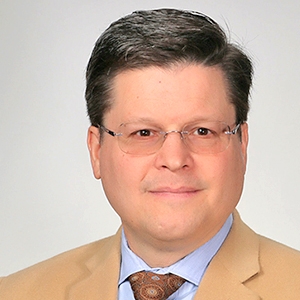
Union College

University of Utah

Swarthmore College

Auburn University at Montgomery
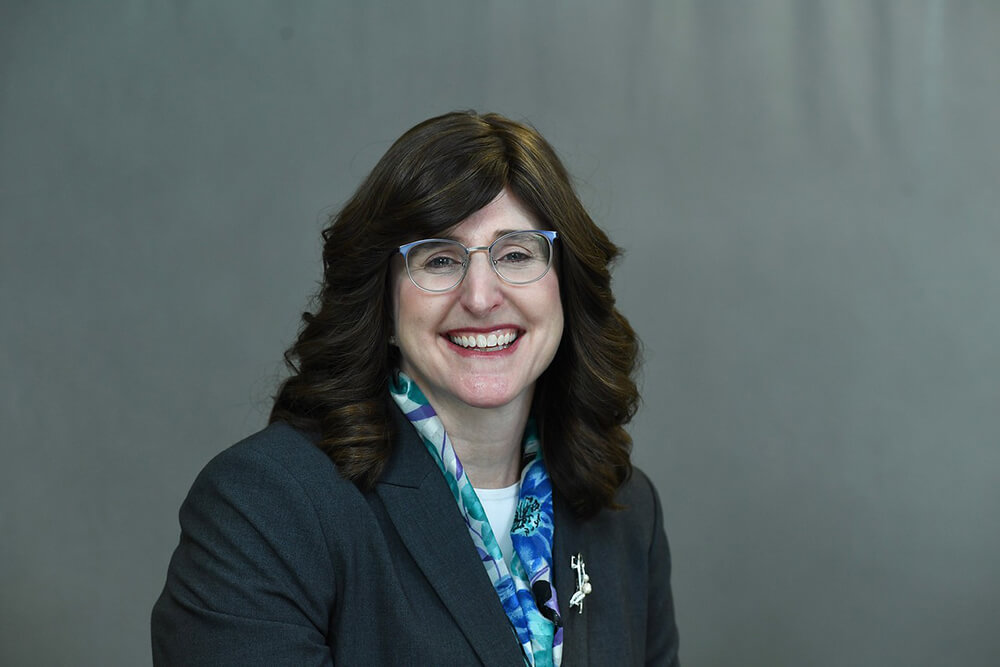
The Touro College
California State University - Sacramento

Western Carolina University
What will help Engineering Program Managers increase their earning potential?
Yi Yang PhD: First of all, be really good at what you do. Always negotiate for a higher salary based on your qualifications and market value. Additionally, consider exploring opportunities in management and actively contribute to strategic decision-making. Taking calculated risks, such as joining a startup, can also lead to valuable experiences and skill development that can enhance your earning potential in the long run.
What general advice would you give to an Engineering Program Manager?
Yi Yang PhD: For new graduates beginning their careers in engineering, I would advise them to consider the broader impact of their work and look for opportunities to expand their management potential. While engineering is a highly technical field, it's important to recognize the value of leadership roles in preserving a culture of innovation. By taking on these positions, you can help ensure that companies prioritize long-term innovation over short-term gains (cutting R&D to boost the balance sheet), thus preserving the engineering culture that drives meaningful progress.
What Engineering Program Manager skills would you recommend for someone trying to advance their career?
Yi Yang PhD: In the next 3-5 years, I believe management skills will become increasingly important. Engineers who can bridge the gap between technical complexity and business strategy, driving innovation and growth in their organizations will be very valuable.
What skills stand out on Engineering Program Manager resumes?
Casey DeRoo Ph.D.: Rather than a concrete skill, previous experience in managing teams to accomplish engineering-related tasks is sure to make you a standout. Showcasing familiarity with work management software (e.g., Jira) or budget/total effort tracking systems is important. Find out what software the company you're seeking employment with uses, and be sure to highlight this if you're familiar with it.
What soft skills should all Engineering Program Managers possess?
Casey DeRoo Ph.D.: The ability to understand the people on your team and allocate project work accordingly is important. In this role, you may find that you "step back" from the day-to-day of engineering and coordinate work on a project across multiple individuals with unique outlooks and skillsets. Recognize that "one size doesn't fit all" when it comes to management. Harnessing the make-up or the desired professional goals of your team to accomplish your assigned projects leads to better outcomes and productivity. Many skilled engineers lack leadership skills, so highlight these on your resume or during your interview if you have applicable experience.
Donald Yeung
Professor and Associate Chair for Undergraduate Education, Affiliate Professor, Computer Science DepartmentUniversity of Maryland - College Park
Department of Electrical and Computer Engineering
What soft skills should all Engineering Program Managers possess?
Donald Yeung: In terms of soft skills, communication is by far the most important, I would think. This could be ascertained during the interview process. Also, being able to work in a team is a plus, too. This might be demonstrable from large project experiences. For example, our students participate in teaming projects outside of the ECE program like Terp Racing, Hyperloop project, etc. This could demonstrate a student's exposure to working on large teams.
What skills stand out on Engineering Program Manager resumes?
Donald Yeung: A degree at a highly rated engineering school is always a plus. For example, the ECE dept at UMD has a good reputation among local employers as well as employers elsewhere, such as Silicon Valley. Many of our students go to companies in these areas, and so we have a reputation based on the quality of students that go out. I think employers know what they're getting. Beyond the school from which you receive your degree, your GPA is also important. How well you do in the program you come from is important, too, obviously. And employers also know about grade inflation or deflation at different schools, so they can calibrate any student's GPA against what experience they've had with previous students' records. Besides that, employers also look for experience outside of the degree program, so internships, research experiences, any significant project experience, etc., are also a real plus.
What hard/technical skills are most important for Engineering Program Managers?
Donald Yeung: In terms of hard technical skills, I believe the courses students take along with their GPA in these courses is one level of demonstration. (As I mentioned above, employers know about our program probably down to specific courses, and so if someone gets an A+ in some notoriously challenging course, that's probably known and appreciated). Some employers will give technical interviews and require students to solve problems on their feet. But I think most employers will judge this based on a student's transcript.
What skills will help Engineering Program Managers earn the most?
Donald Yeung: Finally, in terms of compensation, I believe the Computer Engineering degree in our department garners the highest average starting salary across the entire UMD campus. The Electrical Engineering degree is not far behind. I don't know if specific skills within ECE garner more pay. But I can say that these days, Data Science (i.e., Machine Learning and Artificial Intelligence) is the fastest-growing field, probably bar none. The US Bureau of Labor Statistics, I think, puts the growth in this field at around 30% from now until 2026. I would expect the starting salaries in these jobs to be the very highest. So, perhaps having a background in Data Science and Machine Learning might get you a higher-paying job. But I also think it's dangerous for students to look at such statistics to guide what courses they take today (elective courses, that is). What's hot today may not be tomorrow. A career is 40 years, not the next 5 or 10 years.
Yasser Dessouky
Professor and ChairSan Jose State University
Industrial and Systems Engineering
What skills stand out on Engineering Program Manager resumes?
Yasser Dessouky: Besides being very comfortable with various professional social-media platforms, the new engineering students must embrace developing their skills in artificial intelligence and data science techniques. Besides being an excellent team member, today's remote world requires engineers to have independent problem-solving skills for a career to thrive.
What skills stand out on Engineering Program Manager resumes?
Tom Springer Ph.D.: -Classroom or work-related experience with electrical circuit design and electrical schematic analysis
-Exposure to control system design and theory, communications systems principles
-Lab experience with power/analog electronics testing or test methodology
-Understanding of digital design using hardware verification languages: System Verilog
-Experience leading engineering projects
What soft skills should all Engineering Program Managers possess?
Tom Springer Ph.D.: -Good communication skills
-Ability to exercise critical thinking and innovative problem solving
-Able to work under supervision and mentoring
-Works well in a team-oriented environment
What hard/technical skills are most important for Engineering Program Managers?
Tom Springer Ph.D.: -Experience/exposure to Automated Test Equipment (ATE) -Setup/Programming
-Understanding of basic software architectures and general syntax of coding languages such as C/C++
-Knowledge using Linux or Unix terminal commands
-Experience using Revision Control Systems: Subversion (SVN), CVS, Git.
-Exposure to System on Chip (SoC) hardware/software
-Experience with Robot Operating System (ROS) or equivalent is a bonus
What skills will help Engineering Program Managers earn the most?
Tom Springer Ph.D.: Skill sets that span domain disciplines are very much in demand. Such as a computer architect or electrical engineer with a strong background in software development
Dr. John Ballato
J. E. Sirrine Endowed Chair and ProfessorClemson University
Department of Materials Science and Engineering
What skills stand out on Engineering Program Manager resumes?
Dr. John Ballato: The phrase "well rounded" may be getting old, but it's still true. We like to see graduates who didn't just go to class but worked in a laboratory or did a co-op/internship and had various extra-curricular activities, both personal and professional. Remember that materials science and engineering are leveraging computer science more and more, whether through atomistic or microstructural modeling or newer technologies such as machine learning (ML) and artificial intelligence (AI). So having some familiarity with those and how they complement experimental/hands-on studies are helpful.
Another point about skills that stand out is a simple one - do your homework. There are few things more irritating than receiving a resume or email asking for a job, and the student clearly didn't care enough to look up what we do. The resume is a copy and paste and isn't personalized to the specific position, Group, or company. That stands out like a sore thumb.
What soft skills should all Engineering Program Managers possess?
Dr. John Ballato: To me, the most important soft skill has always been communication. And, due to the pandemic where people have had to isolate and possibly quarantine, effective communications are even that much more critical. We're spending less face-to-face time and more screen-to-screen time, which gets boring quickly. So, paying attention, being clear and concise in your communications since you don't have the opportunities as often now to simply walk into someone's lab or office and talk through ideas and next steps. Effective communications are also especially important in materials science and engineering because our field is innately interdisciplinary. This means that you might be the only materials scientist on a team that includes marketing, sales, manufacturing, etc. Knowing your audience, including your project team, and learning how to communicate with them is critical.
What hard/technical skills are most important for Engineering Program Managers?
Dr. John Ballato: Important hard/technical skills really depend on the nature of the job/position and the organization. This really relates back to the What Skills Stand Out question. Employers want to know that employees have the requisite "toolbox" of basic skills and a willingness and aptitude to learn on the job. No person comes out of school with all the skills and experiences needed for a given job, so organizations inevitably continue to provide training on product-specific skills. Knowing how to learn, wanting to learn, and admitting what you don't know are as important, if not more so, than any hard/technical skills one gains during their education.
What skills will help Engineering Program Managers earn the most?
Dr. John Ballato: Here, too, the answer depends on the field, job position (and location), and organization. MSE graduates generally are well compensated compared to other engineering fields. The most important thing is that you wake up every morning and are excited about the work you're doing. There's no substitute for enjoying your work, regardless of how much you are paid.
What technical skills for an Engineering Program Manager stand out to employers?
Robert Williams Ph.D.: Modeling, simulation, CAD software; problem solving; design based on analysis and experiment; computer skills; the ability to learn new software.
Tristan Ericson Ph.D.
Associate ProfessorYork College of Pennsylvania
Civil and Mechanical Engineering
What soft skills should all Engineering Program Managers possess?
Tristan Ericson Ph.D.: We follow engineering students on co-ops and ask employers about what skills graduates must have. Communication skills are consistently cited. This will be even more necessary going forward as more communication is conducted electronically. I always tell students that you could be the best engineering in the world, but it will be no value to you or anyone else if you can't articulate and advocate for your ideas.
How have salaries changed over time for Engineering Program Managers?
Tristan Ericson Ph.D.: There has been gradual growth over time for engineering salaries. In certain industry sectors the pandemic has stalled that growth with some employees getting no increases or taking pay cuts over the past year. I expect that, emerging from the pandemic, engineers will see growth in earning opportunities, especially in new development sectors.
What are the biggest trends we'll see in the Engineering Program Manager job market given the pandemic?
Tristan Ericson Ph.D.: Engineering jobs will still be available. Some companies are struggling in the pandemic, but some are thriving. Our students are still able to find co-ops, and our graduates are still finding jobs. The market has slowed a bit, but not as much as I expected. Rather, we see a shift in job availability as the need for different technologies changes. Most of our summer 2020 graduating seniors found jobs. It took more time for some of them to secure employment than typical, but their ultimate success rate was higher than I would have anticipated in such an uncertain time. Going forward, I think the need for engineering jobs will gradually increase to levels higher than pre-pandemic. Consider the Biden administration's ambitious infrastructure goals. These alone will place increased demand on engineering, but they are also a broader indicator of society's increased need for innovation and product development. The push for vehicle electrification will provide many new job opportunities in that staple industry.
What technical skills for an Engineering Program Manager stand out to employers?
Patrick Atkinson: Broadly speaking, employers are looking for employees who can jump in, take on a project and move things forward. Since engineers are data-driven, knowing how to read and interpret findings from a variety of sources is key. This can be very challenging if the data conflicts between sources or the data is unclear. Whether the data is from a mathematical model, a physical test laboratory, or from the field, learning how to synthesize the findings and balance the strengths/weaknesses of a given data source are key. At the end of the day, every project needs a way forward and it is the engineer's job to optimize a design to meet the objectives for the product.
What are the biggest trends we'll see in the Engineering Program Manager job market given the pandemic?
Patrick Atkinson: In the new normal, it seems that companies are looking for employees who are adaptable. Working remotely, amidst the home environment is different from the traditional office environment, but humans are elastic, and we find ways to carry on. Personally, I like the flexibility it provides and I am also up for a challenge. The pandemic has been a disruptor, but it is up to the optimist in all of us to look at this disruption as an opportunity to hit the refresh button. One key area that was unexpected to me was that the attendance for meetings has approached 100%. People are communicating more than ever. As such, employees who can listen and contribute in a constructive fashion are valuable members of the team. That doesn't mean that everyone in a team has to have the same skills, but it would be a good idea to have a few people in each group who work well in an online discussion.
What are the biggest trends we'll see in the Engineering Program Manager job market given the pandemic?
Elsa Maria Castillo: The pandemic has definitely impacted the job market, and although we still get requests for candidates for internship opportunities or jobs from our various partners, during the pandemic there has been an increase of requests in the following areas: Cybersecurity, Weapons Development and Testing, Aerospace, Quality Control Engineers, design and development of Prosthetics, Optics, Solar and alternative Energy systems, and Telecommunications. A slight shift into the development of medical technologies, data analysis, coding, artificial intelligence, robotics, and virtual reality is evident.
What certifications/licenses/courses can have the biggest impact for Engineering Program Managers?
Elsa Maria Castillo: In addition to the standard engineering coursework, it is important that students invest some time in the development of tech skills and digital skills that go beyond coursework such as conducting undergraduate research and receiving training in project management, additional programming languages, internet of things, machine learning, finite element analysis as well as the development of soft skills that could make a bigger impact on the job prospects. This is why at UNM Engineering we have partnered with alumni from various industries to offer some additional engineering skills workshops to help enhance our students learning experience and better prepare them to enter the workforce. Students should also aim to participate in internship opportunities or seek out and connect with professional mentors who could give students an insight into career opportunities and take advantage of networking opportunities offered through their school. We also recommend our students to create professional online profiles in apps such as LinkedIn and the schools' Office of Career Services digital platforms.
What's a good job out of college for Engineering Program Managers?
Elsa Maria Castillo: It all depends on the level of education, training and experience attained by the student during their college years. For instance, what I would consider a good job for someone with Bachelor's degree in Engineering would be a position conducting research and development in the respective engineering field either at a multinational corporation or at a national lab with six figures and that offers additional educational benefits for the individuals to continue advancing in their careers. For example, a few years ago I had a student who graduated with a Bachelor's in Chemical Engineering, who conducted a lot of research as an undergraduate student and participated in various internships. He wanted to go directly into the workforce before attempting graduate school. His training and experience allowed him to get a job at a multi-national corporation that offered him a starting salary of $105,000 plus financial support to continue with graduate school. That for me is a great job out of college and the student does not aim to pursue a graduate degree right away.
Will there be an enduring impact of the coronavirus pandemic on Engineering Program Managers?
Kristen Roberson: The workplace will forever be altered due to the pandemic, and the effects of those in career transitions, not just those graduating now, will be impacted for some time. It will take some time for the new normal to be normal.
What's a day at work look like for an Engineering Program Manager?
Kristen Roberson: That depends on the role they are in, but the big hurdle is going to be landing that first role. They need to be willing to shift their plans, be ready to try contract or project-based work. No matter where they land, the ability to self-manage will be more critical than before 2020 since more work will be remote and much more video conferences, and a lot less travel.
What will help Engineering Program Managers increase their earning potential?
Kristen Roberson: Beyond internships paid or unpaid, my recommendation is that recent marketing students need to spend time obtaining digital certifications that universities usually don't provide. Being able to put these on a resume could be the reason they get that Zoom interview over a similar degree student.
Dr. Daryl Green
Associate Professor of BusinessOklahoma Baptist University
College of Business
What are the biggest trends we'll see in the Engineering Program Manager job market given the pandemic?
Dr. Daryl Green: I have been researching emerging employment trends for several years. While working for the Department of Energy as a senior engineer, I have served as a college recruiter. There were gaps in the students' skill sets compared to employers' needs. I later co-authored a book called Job Strategies for the 21st Century to provide students with the necessary tools for future employment. 2021 will be very difficult due to the pandemic. From my research, here are 2021 employment trends to consider:
-Global Market - We are connected! Since employers can tap into human resources across the world, students will compete against others across the globe.
-Students who understand this employment reality will be better prepared.
-AI and Automation - Artificial intelligence is disruptive technology. Companies can avoid the high expense of labor through automation. According to 2013 Oxford University study, nearly half of American jobs are at risk of being taken over by computers by 2033. Students need to understand AI technologies.
-New Work Model - 2020 brought in the explosion of working from home due to Covid-19. Employees already wanted to have more flexibility in life. They got it from employers. Companies responded by offering 70% of full-time workers the ability to work from home!
-Freelancing - Freelancing is part of the gig economy. It goes much further than Airbnb and Uber. In the gig economy, businesses hire independent contractors to perform individual jobs, called "gigs." The total freelancing income is almost $1 trillion. Therefore, students who have an entrepreneurial mindset will fare better.
-Digital & Ecommerce - Covid-19 ushered the digital economy. If companies did not have a digital platform in 2020 with the lockdowns, they did not exist. According to the Internet World Stats, there are currently 4,208,571, 287 internet users. Therefore, students cannot afford to miss this continuing trend of digital platforms.
What soft skills should all Engineering Program Managers possess?
Dr. Daryl Green: The National Association of Colleges and Employers (NACE) has identified eight competencies associated with career readiness. These soft skills include career management, communication, critical thinking, cultural intelligence, digital literacy, leadership, professionalism, and teamwork. Sadly, most students are not aware of employers' expectation of career readiness competencies. College students who develop these career readiness competencies will be better prepared to compete for future job opportunities.
What's a day at work look like for an Engineering Program Manager?
Dr. Daryl Green: Given the on-going threats of Covid-19, recent graduates can expect varying work days. Some students are working remotely (instead of an office space). Therefore, some recent graduates may still be living with their parents. We are still adjusting to 'The New Normal.' Given this reality, students need to be flexible and adaptable to their employment situation.
Scott Gilpatric
Professor and Department HeadUniversity of Tennessee
Department of Economics, Haslam College of Business
Will there be an enduring impact of the coronavirus pandemic on Engineering Program Managers?
Scott Gilpatric: Certainly some individuals will have an enduring impact if the pandemic really disrupted their life. For example, if they are a parent got very sick and the student became unable to continue in college, or their performance really suffered. But more broadly, I actually think we will come out the pandemic this summer with a strong economy-possibly even the strongest economic boom since the late nineties. So I think for many it will be a very good time to be starting a career.
What's a good job out of college for Engineering Program Managers?
Scott Gilpatric: That really depends on the individual. The most important factor in a first job coming out of college might be the opportunity to learn about yourself, learn what you are good at, and find a good direction for furthering your own growth in skills and understanding what you want your career to be. Obviously compensation matters, but often the work environment will impact job satisfaction more than money. Finding a place where you look forward to working with your colleagues most days is incredibly valuable, and a lot of compensation is required to offset the unpleasantness if you dread going to work every morning.
What will help Engineering Program Managers increase their earning potential?
Scott Gilpatric: The easy answer is being really proficient with handling data, including being comfortable with learning to code in whatever manner might be needed. There's no question those skills are likely to open doors. But in a very different way, one thing that really matters is being able to talk comfortably about ideas and developments in economics, business, or policy areas, signaling a strong base of knowledge. Towards that end, reading deeply, not just the headlines but long-form analysis in places like The Economist and other high-quality publications can be really beneficial.
Ronald Bucinell Ph.D.
Associate Professor of Mechanical Engineering, Fellow of the American Society of Mechanical EngineersUnion College
Department of Mechanical Engineering
What soft skills should all Engineering Program Managers possess?
Ronald Bucinell Ph.D.: To be a good designer you need to have a human center perspective. What I mean is that you need to understand problems beyond the technical specifications. Being a human-centered engineer requires breath in education, a strong liberal arts component to an engineer's education. Engineering professionals are constantly selling their ideas to clients, employers, and colleagues, written and oral communication are critical to a successful career as an engineer.
What certifications/licenses/courses can have the biggest impact for Engineering Program Managers?
Bruce Gale Ph.D.: Any engineering degree is a good one. Adding certifications related to software is a big plus. A systems certificate is important to large government contractors.
What's a good job out of college for Engineering Program Managers?
Bruce Gale Ph.D.: Some of the ideal jobs are "training" programs that some large companies are now running where engineers are exposed to a wide range of company activities over a few years to prepare them for leadership in the company. These jobs provide direct leadership and promotion directions. Otherwise, a good job really depends on where the student wants to end up. If they are interested in Systems Engineering, they need to develop their own expertise in their field, and then get some experience in other engineering disciplines. They can then add a Systems Engineering credential to their experience and they are ready to be a great benefit in the field. Thus, they need a place where they can build a depth of knowledge, but also interact with other engineering disciplines regularly.
Will there be an enduring impact of the coronavirus pandemic on Engineering Program Managers?
Stephen O'Connell: Recessions are a tough time to enter the job market and we're in the worst recession since the Great Depression. It remains to be seen whether the labor market will bounce back strongly, but it certainly won't bounce back in time to ease the situation of the class of '21 very much. Be ready to be persistent and resilient in your job search.
On the positive side for public policy work, the Trump Administration and the pandemic have left us with immense challenges of resuming normal, evidence-based policymaking and managing recovery from the pandemic. So public policy analysis may be a more robust area of the job market.
What's a good job out of college for Engineering Program Managers?
Stephen O'Connell: Work that uses your skills and builds new ones. There is a premium on your own flexibility over the couple of years, with a lot of job-market volatility due to uncertain structural impacts of the pandemic.
What technical skills for an Engineering Program Manager stand out to employers?
Stephen O'Connell: The organization, presentation and interpretation of data are probably particularly valued. Comfort with all kinds of online productivity tools. As always, capacity for critical thinking. For now especially, ability to work independently within a team that meets only remotely.
Brett Lehman Ph.D.
ProfessorAuburn University at Montgomery
Department of Sociology, Anthropology, and Social Work
What are the biggest trends we'll see in the Engineering Program Manager job market given the pandemic?
Brett Lehman Ph.D.: It might be a surprise to say that some things will remain steady during the pandemic. The job market will still require candidates with critical thinking skills, problem solving skills, oral and written communication skills, and project management skills. With so many aspects of the workplace changing rapidly, such as how we communicate with each other and unforeseen problems adding up, these skills may be more important than ever. The ability to continue projects, collaborate, and lead a group effort during these trying times will look impressive.
What certifications/licenses/courses can have the biggest impact for Engineering Program Managers?
Brett Lehman Ph.D.: Sociology students with research and public speaking experience will have improved job prospects. This could be developed in many courses, though some core areas for us are Research Methods and Statistics. Most employers collect and analyze data of some kind. Then they have to organize the results properly and present the findings to a variety of audiences. Any course that require students to do their own projects, make difficult decisions, justify those decisions, and then explain the results give students a leg up in critical thinking skills and much more. Students might also have similar experiences through community service, independent/supervised research projects, or an internship.
What's a good job out of college for Engineering Program Managers?
Brett Lehman Ph.D.: There is a business side and a human side to this answer. On the business side, I hope graduates are provided benefits like health insurance, a gainful salary, and opportunities for advancement. The way to hit a home-run is to get a job where those needs are taken care of and you still get to use your skills for something you feel is important. Most sociology students get into the subject because they care about the human side, want to help people, and see opportunity for creating positive social change. You'll get motivated sociology graduates when you show them a path towards achievement on the human side; then when we there's less worry about the business side, some impressive results could follow!
What are the biggest trends we'll see in the Engineering Program Manager job market given the pandemic?
Jodi Smolen: Given the pandemic, new employees must be very proactive. They may be working from home--so they need to speak up, ask for advice and make sure they are delivering what is needed. They are missing out on those chance meetings in the hallway--so they may have to schedule Zoom sessions with peers or supervisors to touch base more often.
Students in marketing need to be savvy with social media. They need to be comfortable posting and following on Twitter, Instagram, Facebook and LinkedIn. Companies are looking for ways to meet their clients in comfortable spaces.
Given the pandemic, I think job trends are subject to change. Companies are still figuring out when/if they will be able to return to the office. Some firms are fully in-person while others are rotating staff in and out of the office, so they are not at full capacity. As business picks up for companies, I see they will be able and willing to hire more employees to handle the influx. At Touro College, our students receive a superior education. As marketing students, they should compile a portfolio of class projects as they move through their classes and add anything they create on their own time as well.
What certifications/licenses/courses can have the biggest impact for Engineering Program Managers?
Jodi Smolen: I think this depends on the industry. Finance students give themselves an advantage by taking the Securities Industry Essential (SIE) exam during college. The exam does not require employer sponsorship and it is good for 4 years. If students want to become a securities trader, investment banker, or financial advisor, the SIE exam is a necessary step before they take the Series 6 and 7 exams after graduation. It shows a prospective employer that the student is serious about a career in the financial services industry.
In addition, finance students should hone their advanced Excel skills. Whether they do this in college, or on their own time, knowing Pivot Tables and VLOOKUP will set them apart from other candidates.
Computer science students should know that Python is in strong demand. If they know the basics of this language, they will have more job opportunities in different industries. Similarly, many data science jobs require Python, SQL or R programming languages. Candidates who pick up programming languages easily can learn on the job, but it is always more desirable to walk into the job knowing the language they want to use.
What are the biggest trends we'll see in the Engineering Program Manager job market given the pandemic?
Steven Fernandez: No sure, with respect to mechanical engineering there is so many variables as to what new trends ME grads can experience. One of the greatest challenges Mechanical Engineering students face is the broadness of the field of study they have chosen. Surprisingly, many ME grads find themselves at a bit of a loss as to what carrier path to choose when they finally get their degree. As a mechanical engineer you can be designing anything from a supersonic missile, to a food processing line, in multiple functions. Mechanical engineers can be project engineers, design engineers, operation engineers, or manufacturing engineers with all options in just one industrial field. Each industrial field is affected differently by the pandemic. Take Space X, Google, Amazon, and Raytheon which are all industries ME's work in. These company seem to be doing the same if not better during the pandemic. How about the bicycle industry? With more families at home looking for activities there is a backlog of bicycles as the manufacturers cannot keep up with the orders. Try and order a NordicTrack treadmill, or a concept-2 rowing machine and you will be put on a waiting list due to the shortage of supply. Mechanical engineers work in all these industries. On the flip side look at some industries tied to travel and vacation. Yes, Boeing took a hit because of their 737 planes being grounded, but also because of the massive decrease in flight travel. So, all that said, I would say the pandemic trend for now would follow the course as such; industries which are negatively affected due to the loss of public activities will continue to struggle or have slow growth, while other industries where the mass public has been redirected will flourish and grow.
What soft skills should all Engineering Program Managers possess?
Steven Fernandez: As we all know the greatest effect the pandemic has had on industry is the need for distance communication. Companies still need ME's and will in the future, but emphasis will be especially placed on communication skills, especially if a ME grad is interviewing for a position which will require distance communication. Employers are discovering that remote work can be a viable business model saving overhead costs, while complying with county, state, and federal regulations. Once a in-person interview process, in many situations, now ME grads are facing the challenge of selling their skills over a Zoom or skype session. Presentation skills will be key in landing a job when going thru a distance interview.
What's a day at work look like for an Engineering Program Manager?
Steven Fernandez: This is a very general question, and I am not sure what you are really looking for. As I have mentioned there are so many situations, I can't really speak to a global general question such as this.
Will there be an enduring impact of the coronavirus pandemic on Engineering Program Managers?
Angela Sebby Ph.D.: While jobs may be slower to return to the capacity pre-Covid, the industry and tourism employment will rebound as people still want to travel and explore diverse foods, cultures, and experiences. However, the enduring impact will be the rapid onset of technology that allowed for limited contact with employees and others has become the new norm. Although human interaction is an important aspect of service in the tourism industry, employers have found that they can reduce the number of personal interactions but still deliver an acceptable level of quality service. What would have taken years to adopt, COVID created an amplified adoption.
What's a good job out of college for Engineering Program Managers?
Angela Sebby Ph.D.: It depends on which area of tourism one would like to go into (hotels, country clubs, event planning, attractions, etc.) and how quickly that industry will bounce back after the vaccines are administered. Therefore, all students should make sure that they pay attention to the diverse sectors, look for trends and adaptations in the industry, gather experience while going to college, network with those in the industry, consider appropriate certifications, and be willing to relocate. So, although the initial job out of college might not be the "dream" job, it is important for graduates to create a personal strategic plan to acquire the knowledge, skills, and abilities necessary for the dream job. I would suggest investing time and attention to jobs that offer exceptional customer service, concentrate on training and development, and are aligned with the graduate's core values.
What technical skills for an Engineering Program Manager stand out to employers?
Angela Sebby Ph.D.: Business, creative, and organizational skills - I would recommend that upcoming graduates are proficient in Word, Excel (highly used), Powerpoint, Outlook (especially how to send meeting requests and calendar organization), TEAMS, Gantt charts for team management, Mindmapping for creativity, and design software. Additionally, I would recommend that they learn how to properly utilize social media for marketing and PR, not just personal posting. Finally, email etiquette would be essential.