
Automatically apply for jobs with Zippia
Upload your resume to get started.
Psychiatric assistant skills for your resume and career
15 psychiatric assistant skills for your resume and career
1. Patients
- Provide mentally impaired or emotionally disturbed patients with emotional or psychological care under the direction of nursing and medical staff.
- Provided routine resident care and programming for mentally impaired or emotionally disturbed patients.
2. Vital Signs
Vital signs are a set of values indicating different body systems' performance. They are measurements of the body's most basic functions. The four major vital signs used in medicine to assess a patient are body temperature, pulse rate, respiration rate, and blood pressure.
- Job duties include ADL's finger sticks, vital signs, documentation and reporting of patient's symptoms or ills.
- Worked with the 45 clients in their activities of daily living additionally taking their daily vital signs and weights.
3. Mental Health
Mental health is the state of wellbeing in which an individual can cope with the regular stresses and tensions of life, and can work productively without having any emotional or psychological breakdown. Mental health is essential for a person of any age and helps them make the right decisions in their life.
- Work as part of a team that includes psychiatrists, psychologists, nurses, teachers, and mental health counselors.
- Specialized in a mental health area such as childhood depression, abuse or ADHD.
4. Therapeutic Environment
- Intervene In crisis situation to decrease panic and maintain a safe, therapeutic environment; supervised and trained new personnel.
- Helped maintain a safe and therapeutic environment on the Adult and Child/Adolescent Inpatient Units through the following:.
5. Direct Patient Care
- Direct patient care and hospital computer database experience.
- Provided direct patient care, performed delegated data collecting, treatment and procedures in accordance with standards.
6. CPR
Cardiopulmonary resuscitation or CPR is a medical procedure that involves chest compression to help a patient breathe. This artificial ventilation helps in keeping the brain function in place and regulates blood throughout the body. CPR is a lifesaving procedure that is used in emergencies.
- Maintain certifications for CPR, First Aide, and AED.
- Trained in restraints and CPR certified.
Choose from 10+ customizable psychiatric assistant resume templates
Build a professional psychiatric assistant resume in minutes. Our AI resume writing assistant will guide you through every step of the process, and you can choose from 10+ resume templates to create your psychiatric assistant resume.7. Patient Behavior
Patient behavior is frequently described as disturbing behavior as they have an altered mental stage. They might live in a conceived state of fear and anxiety and have modification of lifestyle if suffering from a chronic illness.
- Monitor and chart patient behavior using specific and descriptive terms accurately.
- Monitored and charted patient behavior.
8. Medication Management
- Conducted psychiatric evaluations and executed medication management for both inpatient and outpatient facilities.
- Maintained clients' progress reports and clinical documentation, and performed medication management.
9. Mental Illness
- Provided basic nursing care in a private-run behavioral locked facility to individuals with mental illness, from school-aged children to adults.
- Experience working with adults and adolescents with a variety of mental illnesses, substance abuse issues, and behavioral disorders.
10. Patient Safety
- Maintained patient safety and confidentiality.
- Monitored patient safety in 30 minute intervals to ensure a safe and protective patient environment to promote involvement.
11. Behavior Problems
- Help children who have mental and behavior problems live a more safe and productive life.
12. Patient Treatment
- Participated in patient treatment planning and implementation under the direction of nursing staff and other professional staff involved in patient care.
13. Crisis Situations
- Help Manage crisis situations effectively using positive approaches.
- Provided emotional support, coaching and mentored others through crisis situations.
14. Substance Abuse
- Provided Psych-Social groups such as relapse prevention, anger management and substance abuse.
- Counseled youths, aged 5-17 and provide services to mentally ill, substance abuse, and HIV population.
15. Medical Charts
- Make necessary documentation in the medical chart during the shift and prepare professional monthly report on a monthly basis.
- Make necessary documentation in the medical chart.
5 Psychiatric Assistant resume examples
Build a professional psychiatric assistant resume in minutes. Browse through our resume examples to identify the best way to word your resume. Then choose from 5+ resume templates to create your psychiatric assistant resume.

What skills help Psychiatric Assistants find jobs?
Tell us what job you are looking for, we’ll show you what skills employers want.
What psychiatric assistant skills would you recommend for someone trying to advance their career?
Sepideh Soheilian Ph.D.
Assistant Professor, University of Baltimore
List of psychiatric assistant skills to add to your resume
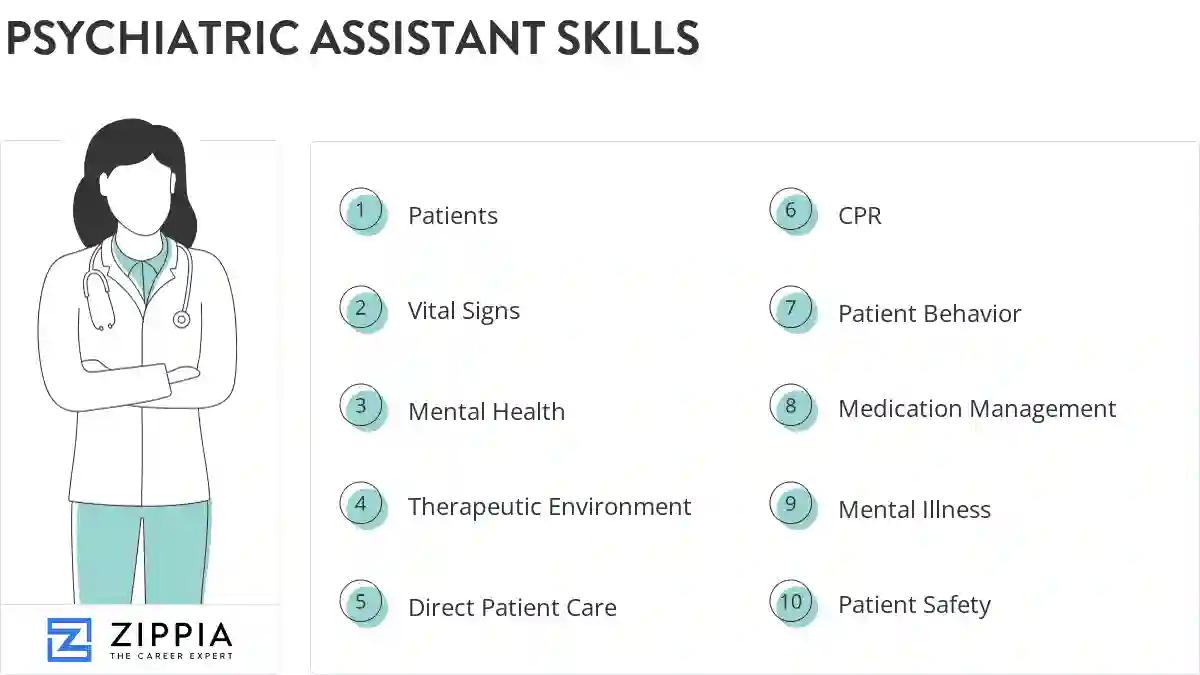
The most important skills for a psychiatric assistant resume and required skills for a psychiatric assistant to have include:
- Patients
- Vital Signs
- Mental Health
- Therapeutic Environment
- Direct Patient Care
- CPR
- Patient Behavior
- Medication Management
- Mental Illness
- Patient Safety
- Behavior Problems
- Patient Treatment
- Crisis Situations
- Substance Abuse
- Medical Charts
- ADL
- Treatment Programs
- Eating Disorders
- Group Therapy Sessions
- Patient Participation
- Behavior Modification Programs
- Blood Pressure
- Behavioral Issues
- EKG
- Therapeutic Crisis Intervention
- Hippa
- Hospital Policies
- Direct Supervision
- Emotional Support
- Patient Charts
- Administrative Tasks
- Patient Care
- Physical Checks
- Inappropriate Behavior
- Physical Means
- Behavior Changes
- Mental Disabilities
Updated January 8, 2025
