What The Cost Difference Looks Like Over The Course Of A Year
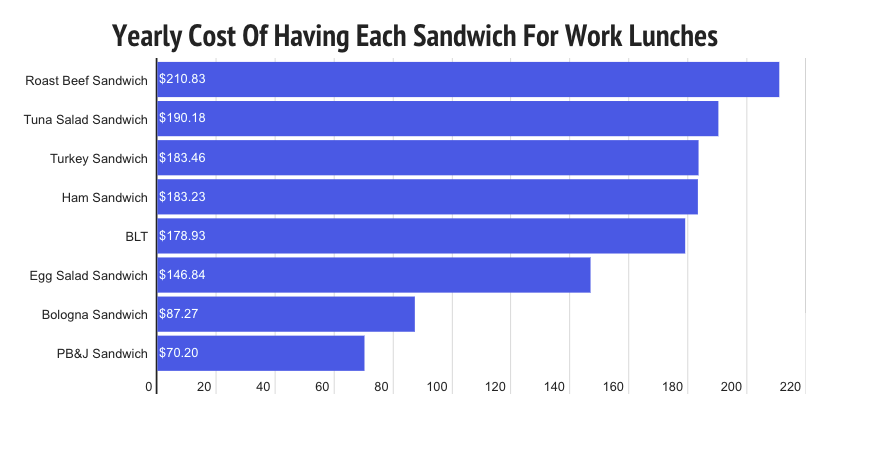
A survey by Accounting Principals found that 66% of American workers buy lunch instead of packing, averaging $37 a week. That adds up to nearly $2,000 a year.
Roast beef is the most expensive sandwich choice. More affordable options include bologna and pb&J, both under half the cost of the pricey roast beef.
How We Determined This
To determine the price of basic sandwich ingredients, we went virtual shopping at Wal-Mart. In general, Wal-Marts are fairly prevalent and represent some of the cheapest grocery options available.
We opted for the cheapest ingredients possible, usually the chain’s Great Value brand. Of course, this means your artisan cheeses and deluxe bread may bring your sandwich costs up. Ditto if you’re shopping at Whole Foods or another more premium grocer.
For each sandwich, we used the generally accepted amount of ingredients per sandwich (for example, 2 pieces of bacon per BLT) and read recipes to make sure our formulas were reasonable.
Prices may vary in your area. Similarly, we did not account for spoilage, so if you spend more time staring at your lettuce then eating it, your costs will be higher.
It’s hard to beat PB&J
Ultimately, if you’re trying to fuel your body but not empty your wallet, peanut butter and jelly is your friend. A pb&j made with store brand ingredients will only cost you around .28 cents.
Throw in some affordable, filling sides, and you’ll be saving nearly $2k in takeout costs.
You can use some of that money for a hobby you enjoy more than a mediocre salad from the mediocre restaurant that just happens to be next to your work.