
Automatically apply for jobs with Zippia
Upload your resume to get started.
Residential program worker skills for your resume and career

15 residential program worker skills for your resume and career
1. Developmental Disabilities
- Assisted with everyday living, direct care, administered medication, documentation, and transportation for people with developmental disabilities.
- Assist in client care management of individuals with intellectual and developmental disabilities in a residential group home setting.
2. Patients
- Provided mentally impaired and/or emotionally disturbed patients with routine physical, emotional, psychological and rehabilitation care.
- Provided appropriate written documentation concerning delivery of services to patients and their progress towards treatment goals.
3. Motor Vehicle
A motor vehicle is a mode of transportation such as a car, truck or bus.
- Transport clients to locations outside the home, such as to physicians' offices on outings, using a motor vehicle.
- Operated a motor vehicle to transport individuals to on-grounds & off-grounds activities.
4. Mental Health
Mental health is the state of wellbeing in which an individual can cope with the regular stresses and tensions of life, and can work productively without having any emotional or psychological breakdown. Mental health is essential for a person of any age and helps them make the right decisions in their life.
- Managed patient behavior across Axis I and Axis II mental health diagnoses on inpatient unit.
- Provided assistance in daily living tasks, personal care and support of mental health consumers.
5. Direct Care
Direct care is the act of identifying people with special needs and offering the necessary care for them.
- Worked with ADL skills alongside consumers* Provided direct care for developmentally challenged adults* Conducted community inclusion activities
- Provided direct care to individuals with Intellectual and Developmental Disorders in a residential setting.
6. Adaptive
- Promoted community awareness and utilized adaptive equipment.
- Provide therapeutic interaction with residents to facilitate adaptive coping and life skills development via treatment plan implementation.
Choose from 10+ customizable residential program worker resume templates
Build a professional residential program worker resume in minutes. Our AI resume writing assistant will guide you through every step of the process, and you can choose from 10+ resume templates to create your residential program worker resume.7. Money Management
- Assist with their daily living skills, money management skills, help to ensure their success in the community.
- Assist clients with activities of daily living, medication management, money management, and provide transportation.
8. CPR
Cardiopulmonary resuscitation or CPR is a medical procedure that involves chest compression to help a patient breathe. This artificial ventilation helps in keeping the brain function in place and regulates blood throughout the body. CPR is a lifesaving procedure that is used in emergencies.
- Gained CPR and Fire Safety certification requirements.
- Trained in First Aid, CPR, signs of abuse, fire safety, and the RIGHT technique for physical restraints.
9. Crisis Intervention
- Based upon established department standards of care, provided therapeutic crisis intervention.
- Provide therapeutic crisis intervention & trained in emergency hospital codes.
10. Medication Administration
- State tested in Medication Administration including controlled substances.
- Helped clients with ADL's, showering/bathing, eating, cooking/cleaning, medication administration, lifting and outings.
11. Behavioral Problems
- Group therapy for run-away teenagers, family groups using social learning theory Loss therapy for elementary school children with behavioral problems
- Provided counseling for adolescents with severe behavioral problems.
12. Mental Illness
- Lead 12-Step program related to drugs and alcohol, Educating clients regarding disease concepts of chemical dependency issues and mental illness.
- Provide one-to-one support with clients struggling with grief, depression, mental illness and drug addiction.
13. Independent Living
- Facilitated independent living in a residential setting and assisted the developmentally disabled with daily living skills.
- Provide instruction pertaining to acquisition of personal living skills requisite for independent living.
14. ADL
ADL is a clinical shorthand for "activities of daily living." It includes tasks such as feeding, dressing, bathing, and caring for one's self and personal hygiene.
- Provide assistance with ADL's, escort on medical appointments, goal training, community activity planning,
- Assist individuals with completing their daily ADL (Activities of Daily Living) skills.
15. Vital Signs
Vital signs are a set of values indicating different body systems' performance. They are measurements of the body's most basic functions. The four major vital signs used in medicine to assess a patient are body temperature, pulse rate, respiration rate, and blood pressure.
- Assisted nursing staff in providing nursing care such as checking and documenting vital signs, observing and reporting intake and output.
- Record and maintain resident information, such as vital signs, eating habits, behavior, progress notes and behavior plans.
5 Residential Program Worker resume examples
Build a professional residential program worker resume in minutes. Browse through our resume examples to identify the best way to word your resume. Then choose from 5+ resume templates to create your residential program worker resume.

What skills help Residential Program Workers find jobs?
Tell us what job you are looking for, we’ll show you what skills employers want.
What skills stand out on residential program worker resumes?
Joel Hektner Ph.D.
Professor and Department Head, North Dakota State University
What soft skills should all residential program workers possess?
Joel Hektner Ph.D.
Professor and Department Head, North Dakota State University
What hard/technical skills are most important for residential program workers?
Joel Hektner Ph.D.
Professor and Department Head, North Dakota State University
List of residential program worker skills to add to your resume
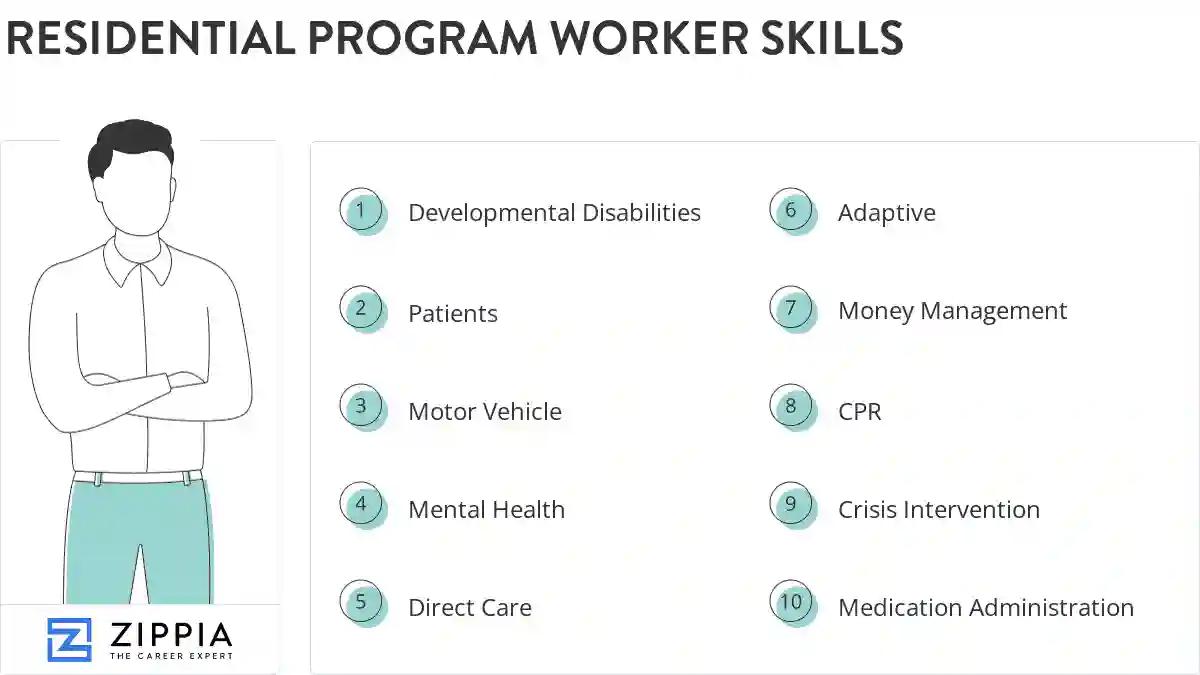
The most important skills for a residential program worker resume and required skills for a residential program worker to have include:
- Developmental Disabilities
- Patients
- Motor Vehicle
- Mental Health
- Direct Care
- Adaptive
- Money Management
- CPR
- Crisis Intervention
- Medication Administration
- Behavioral Problems
- Mental Illness
- Independent Living
- ADL
- Vital Signs
- Medical Appointments
- Transport Individuals
- Community Resources
- Incident Reports
- Intellectual Disabilities
- Hippa
- Oral Hygiene
- Meal Prep
- Community Outings
- Fire Safety
- Patient Care
- Physical Disabilities
- Various Training
- Behavior Management
- Therapeutic Environment
- Community Trips
- Group Homes
- Doctor Appointments
- Behavioral Issues
- Crisis Situations
- Mrdd
- ISP
- Emotional Support
- Mental Disabilities
- Staff Development Workshops
- Household Chores
- Menu Planning
- Mental Retardation
Updated January 8, 2025
