
Automatically apply for jobs with Zippia
Upload your resume to get started.
Residential supervisor skills for your resume and career
15 residential supervisor skills for your resume and career
1. Developmental Disabilities
- Monitor and ensure that active treatment is provided to individuals with developmental disabilities ensuring consumer safety and respect of consumer rights.
- Served as supervisor for residential facility which provides treatment and support services to individuals diagnosed with intellectual and developmental disabilities.
2. Mental Health
Mental health is the state of wellbeing in which an individual can cope with the regular stresses and tensions of life, and can work productively without having any emotional or psychological breakdown. Mental health is essential for a person of any age and helps them make the right decisions in their life.
- Supervised fourteen mental health clients and five staff members in a residential facility that was associated with a psycho-social rehabilitation program.
- Provided supervision and oversight to a therapeutic residential treatment program for adolescents referred through the local mental health entities.
4. Crisis Intervention
- Provided behavior modification, counseling and, crisis intervention services to adults with chronic mental illness in a residential facility.
- Exhibited paramount efforts in delivering crisis interventions and positive reinforcement with regard to the residents' behavior.
5. Rehabilitation
- Worked to ensure resident safety, rehabilitation and reintegration into the community by enforcing resident accountability.
- Provide client training as specified in the Individual Service Plan/Individual Rehabilitation Plan and provide documentation.
6. Money Management
- Advise clients regarding food stamps, child care, food, money management, sanitation, & housekeeping.
- Implemented service plan goals, responsible for all grocery shopping and money management for each consumer.
Choose from 10+ customizable residential supervisor resume templates
Build a professional residential supervisor resume in minutes. Our AI resume writing assistant will guide you through every step of the process, and you can choose from 10+ resume templates to create your residential supervisor resume.7. Staff Schedules
- Established staff schedules and assignments based on facility and available equipment.
- Assist in the ISP meeting, do the staff schedules, do and schedule medical appointment for the individuals we serve.
8. CPR
Cardiopulmonary resuscitation or CPR is a medical procedure that involves chest compression to help a patient breathe. This artificial ventilation helps in keeping the brain function in place and regulates blood throughout the body. CPR is a lifesaving procedure that is used in emergencies.
- Certified in First Aid, as well as CPR for adults, children, and infants.
- Serve as a PMAB and CPR instructor and conduct drill when instructed by the training department
9. Direct Supervision
Direct supervision is a term used to indicate that a person is supervising a certain task or a certain person while being physically present or in close proximity. It refers to the presence of a person and the availability of their supervision in something if it is needed.
- Provide direct supervision of Residential Counselors through case consultations regarding case specific decisions, questions, and time management.
- Provide security, care, and direct supervision to juvenile inmates during all activities within the correctional facility
10. Residential Program
- Conducted the financial activity of the residential unit in accordance with guidelines established by the Residential ProgramManager and the Director.
- Provided treatment for Hispanic and Native American cultures in a detoxification unit and 28-day residential program for substance abuse/dependence.
11. Direct Support
Direct support is a one-on-one service that helps with daily life skills and tasks that strengthen one's independence. A direct support professional is responsible for a variety of tasks related to the general care of people with physical, cognitive, or developmental disabilities. The goal is to assist people to reach their full potential and to integrate and get engaged in their community.
- Direct Support Professional/Residential Services Supervisor.
- Trained and managed employees as a direct support professional achieving significant improvements in their productivity.
12. Behavior Management
- Assisted in the development and implementation of behavior management plans.
- Implemented resident behavior management system.
13. Substance Abuse
- Shared supervision duties with the Residential Supervisor in a level 3.5 residential substance abuse facility.
- Oversee the safety and appropriate operation of substance abuse residential facility.
14. Medical Appointments
A medical appointment is a scheduled / specific day and time for a person to be examined or treated by a physician, nurse, or other licensed healthcare professional. The aim of the medical appointment is for the physician to be able to identify health problems or illnesses at an early stage.
- Advocated for individuals' needs during medical appointments, interdisciplinary team meetings, and community outings in addition to fostering self-advocacy.
- Assist in medical emergencies to include coordination of transportation/staffing for medical appointments and accompanying clients on medical appointments.
15. Behavioral Issues
Behavioral issues are the tendencies of individuals displaying unpleasant behavior as a result of sickness or addiction.
- Acted as therapeutic agent, using counseling & parenting skills for at risk youth with behavioral issues.
- Assist with the daily living of children ages 5 to 21 years old with behavioral issues.
5 Residential Supervisor resume examples
Build a professional residential supervisor resume in minutes. Browse through our resume examples to identify the best way to word your resume. Then choose from 5+ resume templates to create your residential supervisor resume.

What skills help Residential Supervisors find jobs?
Tell us what job you are looking for, we’ll show you what skills employers want.
List of residential supervisor skills to add to your resume
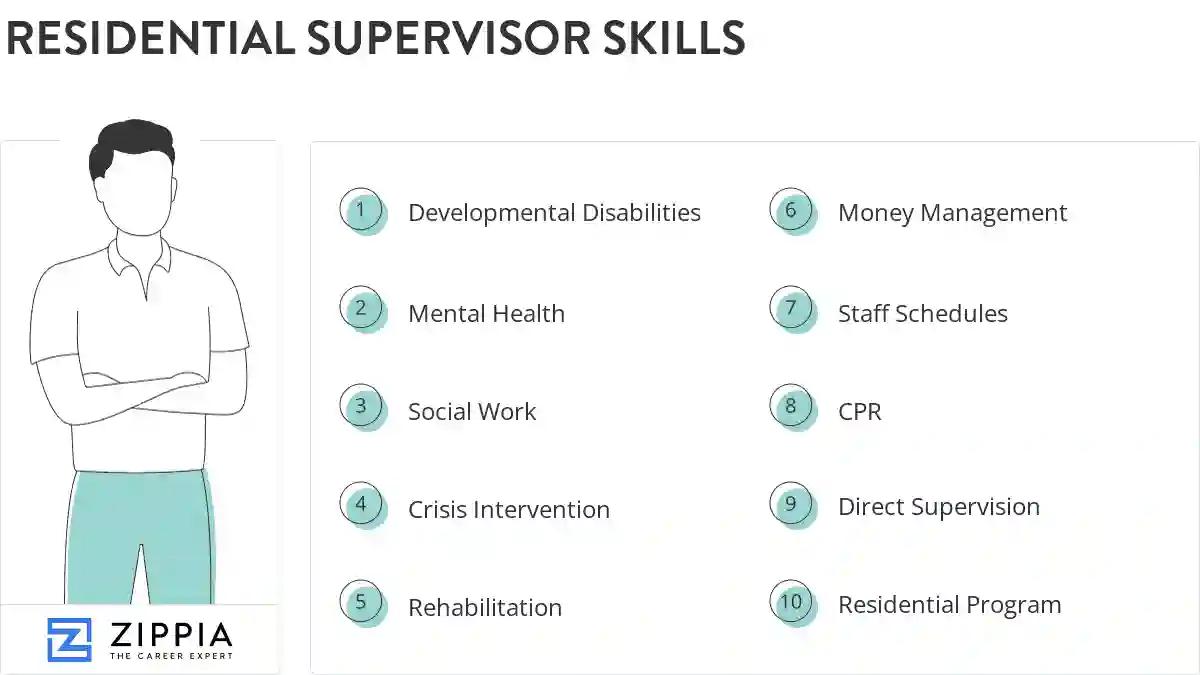
The most important skills for a residential supervisor resume and required skills for a residential supervisor to have include:
- Developmental Disabilities
- Mental Health
- Social Work
- Crisis Intervention
- Rehabilitation
- Money Management
- Staff Schedules
- CPR
- Direct Supervision
- Residential Program
- Direct Support
- Behavior Management
- Substance Abuse
- Medical Appointments
- Behavioral Issues
- Intellectual Disabilities
- Emergency Situations
- Medication Administration
- Mental Illness
- Residential Treatment Facility
- Residential Service
- Incident Reports
- Group Homes
- DDS
- Medication Management
- Community Integration
- Eating Disorders
- Staff Performance
- Group Therapy
- ISP
- Role Model
- Independent Living
- Performance Evaluations
- Conflict Resolution
- Petty Cash
- Therapeutic Environment
- State Regulations
- CPI
- Disciplinary Actions
- Community Outings
- CARF
- ADL
- Supported Living
- Crisis Situations
- Residential Homes
- Staff Evaluations
- Doctor Appointments
Updated January 8, 2025

3. Social Work