- Workplace Statistics
- Time Management Statistics
- Employee Wellness Statistics
- Employment Discrimination Statistics
- Employee Recognition Statistics
- Employee Referral Statistics
- Workplace Violence Statistics
- Gamification Statistics
- Employee Feedback Statistics
- Agile Statistics
- Productivity Statistics
- Meeting Statistics
- Cell Phones At Work Statistics
- Social Media At Work Statistics
- Workplace Injury Statistics
- Workplace Stress Statistics
- Leadership Statistics
- Workplace Collaboration Statistics
- Job Satisfaction Statistics
- Paid Holiday Statistics
- Communication In The Workplace Statistics
- Wasting Time At Work Statistics
- 4-day Workweek Statistics
Research Summary: Effective communication remains a crucial pillar in the workplace landscape of 2026. In today’s hybrid and remote work environments, the ability to communicate clearly and effectively can significantly influence team dynamics, project success, and overall company performance.
To uncover the latest insights, we have explored essential statistics related to communication in the workplace. Our findings reveal:
-
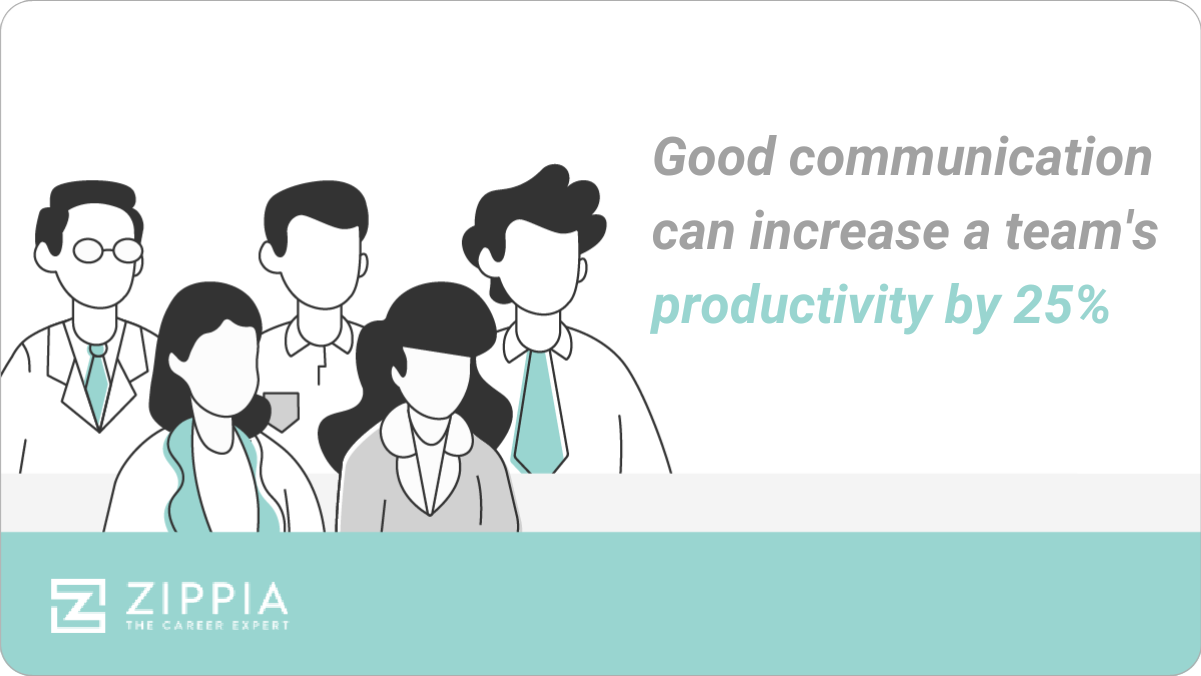
Teams that prioritize effective communication experience a productivity boost of up to 25%.
-
86% of employees attribute poor communication as the leading cause of workplace failures.
-
Only 7% of U.S. workers feel that workplace communication is accurate, open, and timely.
-
Up to 95% of employees are unclear about their company’s strategic direction.
-
28% of employees cite poor communication as the reason for missed deadlines.
For a deeper analysis, we’ve categorized the data into the following sections:
Employee Workplace | Cost of Bad | Policy | Improving Communication
Benefits of Good Communication in the Workplace
Understanding the benefits of effective communication is essential for fostering a positive work environment. Here are the key advantages:
-
Teams with established communication strategies are 3.5 times more likely to exceed performance benchmarks.
-
Organizations with robust communication frameworks improve employee retention rates by 4.5 times.
-
Informed employees outperform their peers by 77%.
-
Employees are 3 times more likely to engage in their work when receiving regular feedback from management.
-
70% of the workforce feels they could be more productive with enhanced communication.
Employee Workplace Communication Opinions
Gathering employee perspectives on communication is vital for identifying areas for improvement. Our research highlights the following opinions:
-
97% of employees believe that communication impacts their daily task effectiveness.
Consider the difference between receiving clear instructions versus navigating tasks independently—most prefer structured guidance.
-
57% of employees feel they lack clear direction from their supervisors.
This issue is reciprocal, as 69% of managers report discomfort in communicating with their teams, contributing to ineffective meetings and unclear objectives.
-
74% of employees believe they miss important company news and updates.
This widespread sentiment underscores significant communication gaps that can affect employee engagement.
-
At least 20% of workers access their company’s internet daily.
Moreover, with 77% of employees using social media during work hours, distractions are a common issue.
-
26% of workers indicate that managerial feedback positively impacts their performance.
While feedback alone is not always sufficient, it is a powerful tool when delivered constructively, guiding employees toward improvement.
Cost of Bad Communication in the Workplace
The repercussions of poor communication can have significant financial implications. Here are some key insights:
-
Large companies (100,000+ employees) lose approximately $62.4 million annually due to miscommunication.
On average, organizations can incur losses of up to $11,000 per employee each year due to miscommunication.
-
Small companies (around 100 employees) can lose as much as $420,000 annually due to communication failures.
Such losses can jeopardize the financial stability of small businesses.
-
46% of businesses report losing clients due to ineffective communication.
This highlights the impact of poor customer service, which can lead to an estimated $75 billion loss annually across industries.
-
Employees spend up to 17 hours per week clarifying unclear communications.
This miscommunication notably detracts from overall productivity.
Company Communication Policy Statistics
Organizations often implement policies to enhance communication. Here are key statistics regarding these efforts:
-
64% of companies prioritize communicating their strategies to employees.
Given that 95% of employees remain unclear about their company’s strategic direction, this priority is crucial.
-
60% of companies lack a long-term communication plan.
This deficiency contributes to employee confusion regarding company goals and their daily tasks.
-
69% of managers feel uncomfortable communicating with their staff.
Effective leadership requires strong communication skills, yet many managers struggle in this area.
Improving Communication in the Workplace
Given these insights, companies are likely seeking ways to boost communication effectiveness. Here are some strategies to consider:
-
86% of business leaders have allocated budgets specifically for improving communication tools.
Recognizing the importance of communication, many organizations are investing in resources to enhance their communication capabilities.
-
61% of workers have adopted new communication tools in the past year.
The shift towards hybrid and remote work has underscored the necessity of effective communication tools.
-
85% of employees report feeling more motivated when management shares updates on company news.
Enhanced awareness not only improves communication but also boosts overall productivity.
-
55% of a message’s effectiveness relies on non-verbal cues.
Factors such as body language and facial expressions are critical to conveying meaning, with only 7% of a message’s meaning deriving from spoken words.
Communication In The Workplace FAQ
-
What percent of the time is spent on communication in the workplace?
Workers spend approximately 29% of their time on communication in the workplace. This equates to nearly two and a half hours of communication during an eight-hour workday.
This statistic emphasizes the significant costs associated with poor communication, as employees can spend up to 17 hours weekly clarifying misunderstandings.
-
How effective is communication in the workplace?
Effective communication is paramount for enhancing workplace productivity and organization. For instance, well-informed employees outperform their peers by 77%, and 70% of the workforce would benefit from improved communication.
-
How does communication improve productivity?
Communication can enhance productivity by as much as 25%. Informed employees are more likely to grasp tasks quickly and execute them efficiently. Additionally, understanding a company’s goals allows employees to align their efforts effectively.
-
How important is communication in the workplace?
Communication should be a top priority for managers. Currently, 69% of managers express discomfort in communicating with their teams.
Nonetheless, effective communication can yield numerous benefits, such as:
-
Enhanced morale
-
Greater engagement
-
Boosted productivity
-
Increased employee satisfaction
-
Conclusion
In 2026, whether you hold a managerial role or not, effective communication is essential for fostering a safe, productive workplace. Employees dedicate approximately 29% of their workday to communication activities.
Despite this, many organizations still grapple with communication challenges. Alarmingly, 95% of employees do not fully comprehend their company’s mission, even when employers assert they have a communication strategy in place.
Fortunately, companies can take proactive steps to enhance communication through budget allocations, the adoption of innovative tools, and improved non-verbal communication. By doing so, they can cultivate better morale, increased engagement, heightened productivity, and greater employee satisfaction.
References
-
Entrepreneur. “How Effective Employee Communication Boosts Productivity.” Accessed on August 30th, 2026.
-
Press Release. “86 Percent of Employees Cite Lack of Collaboration for Workplace Failures.” Accessed on August 30th, 2026.
-
Workplace. “Communicate Better With Employees, Regardless of Where They Work.” Accessed on August 30th, 2026.
-
CMSWire. “4 Trends in Workplace Communication [Infographic].” Accessed on August 30th, 2026.
-
Chron. “Importance of Communication in the Work Place.” Accessed on August 30th, 2026.
-
Tribal Impact. “4 Tips to Improve Employee Communication in the Workplace.” Accessed on August 30th, 2026.
-
SHRM. “The Cost of Poor Communications.” Accessed on September 1st, 2026.
-
Forbes. “Businesses Lose $75 Billion Due To Poor Customer Service.” Accessed on September 1st, 2026.
-
Forbes. “Workplace communication: It’s now more important than ever.” Accessed on September 1st, 2026.
-
Workforce. “Poor Internal Communication Can Be a Costly Mistake for Businesses.” Accessed on September 1st, 2026.
-
Ladders. “Survey: Majority of managers are uncomfortable giving feedback.” Accessed on September 1st, 2026.
-
Grammarly. “The State of Business Communication.” Accessed on September 1st, 2026.
-
Trade Press Services. “Using Internal Communications to Enhance Business Growth.” Accessed on September 1st, 2026.
-
Businesstopia. “Verbal versus Non-verbal Communication.” Accessed on September 1st, 2026.
- Workplace Statistics
- Time Management Statistics
- Employee Wellness Statistics
- Employment Discrimination Statistics
- Employee Recognition Statistics
- Employee Referral Statistics
- Workplace Violence Statistics
- Gamification Statistics
- Employee Feedback Statistics
- Agile Statistics
- Productivity Statistics
- Meeting Statistics
- Cell Phones At Work Statistics
- Social Media At Work Statistics
- Workplace Injury Statistics
- Workplace Stress Statistics
- Leadership Statistics
- Workplace Collaboration Statistics
- Job Satisfaction Statistics
- Paid Holiday Statistics
- Communication In The Workplace Statistics
- Wasting Time At Work Statistics
- 4-day Workweek Statistics

Author

Jack Flynn is a writer for Zippia. In his professional career he’s written over 100 research papers, articles and blog posts. Some of his most popular published works include his writing about economic terms and research into job classifications. Jack received his BS from Hampshire College.