- Cover Letter Format
Find a Job You Really Want In
Cover letters are your first opportunity to introduce yourself as a candidate. While resumes summarize your work history and skills, the cover letter provides context on why you are uniquely qualified for a specific role. It’s your chance to demonstrate your writing abilities, express your enthusiasm for the position, and highlight your relevant qualifications.
If you’re preparing to write a cover letter for a job application or want to ensure your existing letter meets the current standards, this guide will assist you. Although a hiring manager may not base their entire decision on your cover letter, a polished and tailored letter can significantly enhance your candidacy.
Key Takeaways
-
Your cover letter should include:
-
Your contact information and the date
-
The employer’s contact information
-
A greeting
-
Body paragraphs
-
A closing paragraph
-
A sign-off
-
-
Customize your cover letter for each position you apply for.
-
Emphasize how your skills can benefit the company in your cover letter.
-
Incorporate keywords from the job description into your cover letter.
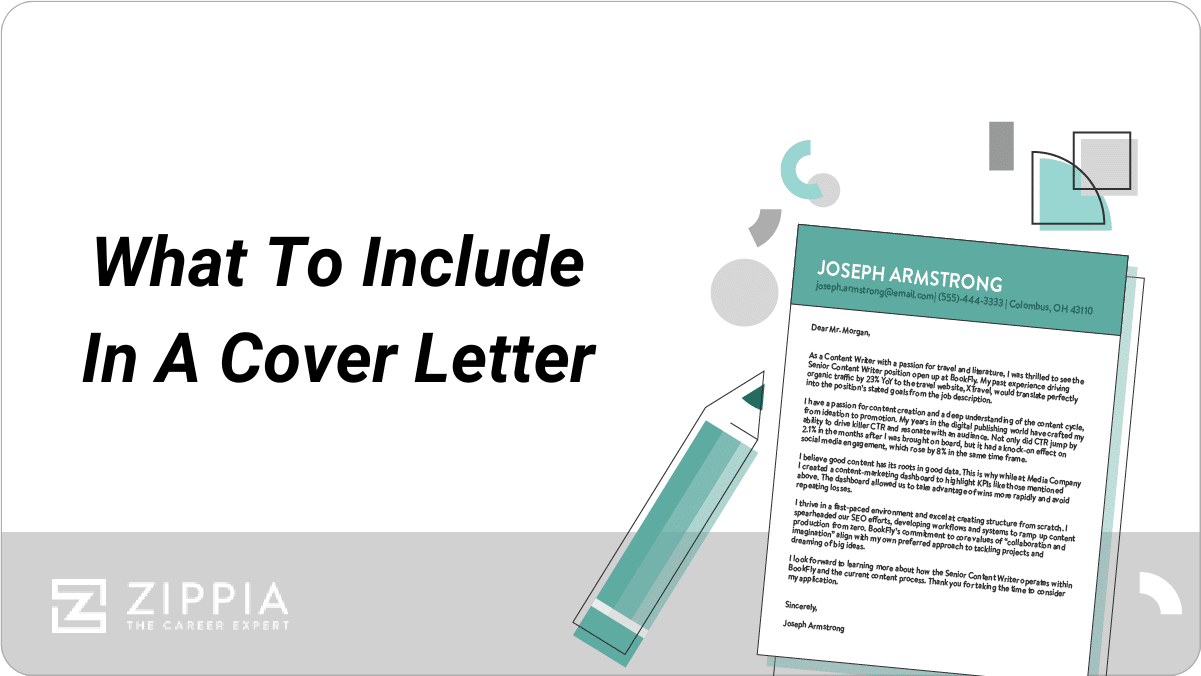
What to Include in a Cover Letter
Cover letters adhere to specific conventions, and it’s important to follow these guidelines. They should be concise, confident, and relevant to the job at hand. The format of a cover letter dictates the organization of its content, allowing you to focus on crafting a compelling message.
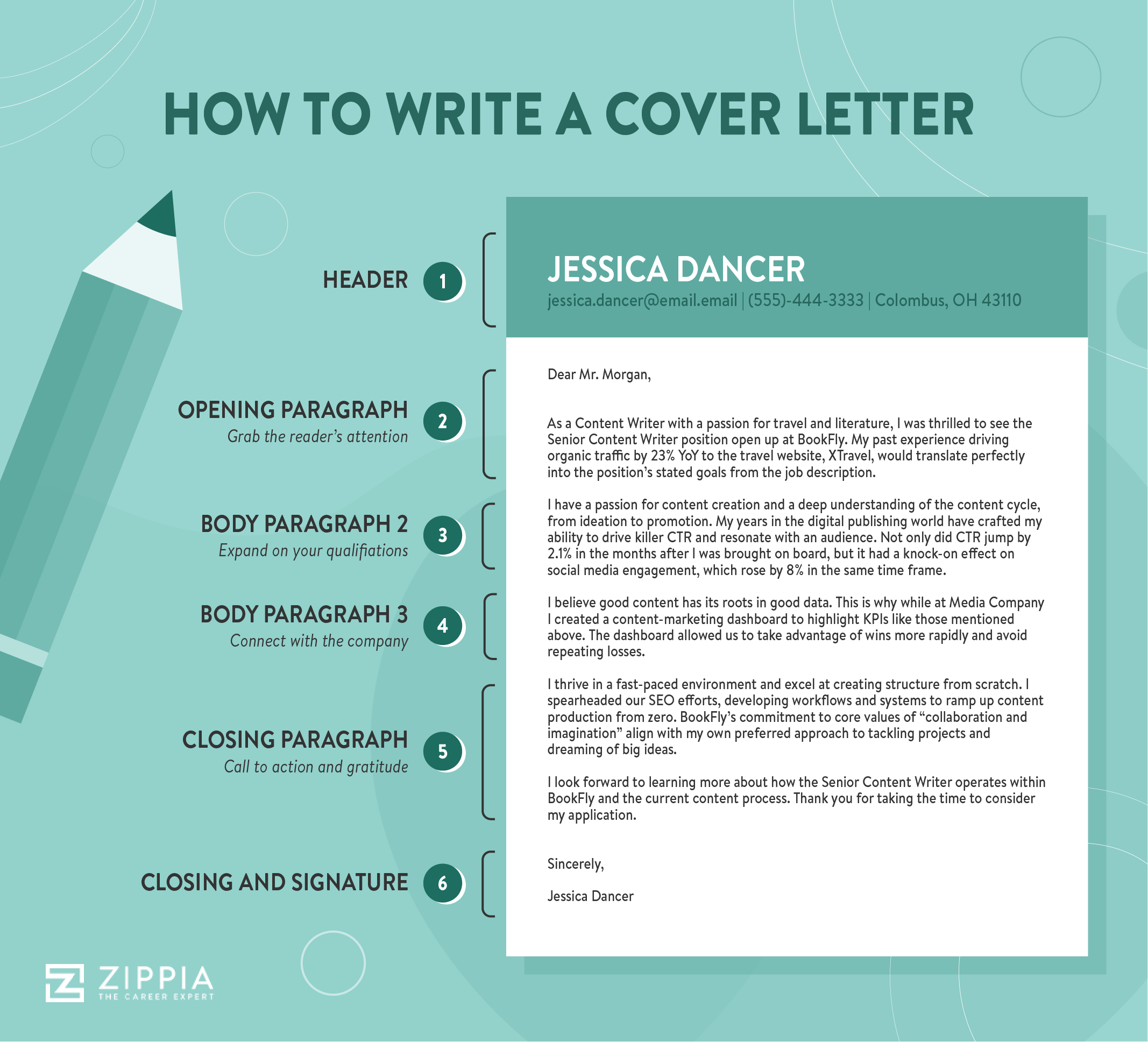
Here’s a detailed breakdown of what to include in each section of your cover letter:
-
Your Contact Information and the Date
Your cover letter should begin with a header that includes your name, address, phone number, and email address. You may also want to add your LinkedIn profile or link to your online portfolio.
Ensure your email address is professional—ideally formatted as FirstNameLastName@email.com. This helps create a positive first impression.
Lulu Paige
333 First Street
Los Angeles, CA, 90001
(000) 111-2222
lulupaige@address.comJanuary 1, 2026
-
Employer’s Contact Information
Even in an era dominated by online submissions, it’s prudent to include the company’s contact information. You can easily look up the company to find their physical address, which should be placed below your own contact details.
If you’re unable to obtain the company’s address, it’s acceptable to omit it, but including it can reflect your diligence.
Adam Smith
Recruiter
TopNotch Company
111 West Street
Los Angeles, CA 90001 -
Greeting
How you address your cover letter is crucial. Avoid outdated greetings like “To Whom It May Concern” or “Dear Sir or Madam.” These can come off as impersonal.
Hiring managers appreciate the effort to find the appropriate name to address. Do some research by checking the company’s website or calling the front office for the hiring manager’s name.
Acceptable greetings include:
-
Dear Chris Rogers,
-
Dear Mr. Rogers,
-
Dear Mr. Chris Rogers,
-
Dear Hiring Manager,
-
Dear Human Resources Manager,
While using a title (like “Mr.”) may seem polite, be cautious about assuming gender. If their title is Dr., it’s safe to use, but otherwise, it’s advisable to use their full name.
-
-
Body Paragraphs
The body of your cover letter is the most critical section. It informs the employer about the position you seek, why they should consider you for an interview, and how you’ll follow up.
-
First paragraph. Begin with a strong introduction that captures attention. Clearly state the position you’re applying for and relate it to your background, demonstrating your enthusiasm for the opportunity.
I am writing to express my interest in your Social Media Manager position advertised on Zippia. With my experience driving growth in social media engagement for my previous employer, I am eager to embrace new challenges with a company that values leadership and innovation.
-
Second paragraph. Use this paragraph to showcase your qualifications. Provide examples from your work experience and quantify any achievements.
My proven leadership skills, dedication to enhancing social media presence, and adaptability to various projects would enable me to contribute significantly to TopNotch Company. I look forward to discussing how my qualifications can support your company’s ongoing success.
Tip: Elaborate on your relevant qualifications without duplicating your resume. Highlight the most compelling reasons why you are the ideal candidate.
-
Third paragraph. Share what you admire about the company. This is your opportunity to show your research and express how you align with their mission.
TopNotch’s commitment to sustainability resonates with my personal values of environmental stewardship. As a digital marketer, I successfully reduced our office’s carbon emissions by 11%, and I would be excited to work for a company that prioritizes such initiatives.
Feel free to mention current events, the company’s history, core values, or mission statements.
-
-
Closing Line
In the final paragraph, summarize what you can offer and express your desire for an interview or a follow-up call.
Thank you for considering my application. I look forward to the opportunity to discuss my qualifications with you in greater detail.
-
Sign-off
Choosing the right sign-off is essential for maintaining professionalism. Here are some effective sign-offs:
-
Best regards
-
Respectfully
-
Sincerely
-
Thanks in advance
Avoid casual sign-offs such as:
-
Best wishes
-
Cheers
-
Affectionately
-
XOXO
-
Love
-
Bye
-
Sent from my iPhone
Select an appropriate closing, sign your name, and you have a completed cover letter!
-
Example Cover Letter
Lulu Paige
333 First Street
Los Angeles, CA, 90001
(000) 111-2222
Youremail@address.comJanuary 1, 2026
Adam Smith
Recruiter
TopNotch Company
111 West Street
Los Angeles, CA 90001Dear Mr. Smith,
I am writing to express my interest in your Social Media Manager position that I saw advertised on Zippia.com. With my experience driving growth in social media engagement for my previous employer, I am eager to embrace new challenges with a company that values leadership and innovation.As noted in my enclosed resume, during my tenure as a Social Media Intern, I managed onboarding new hires while handling content scheduling effectively. This experience solidified my aspiration to advance into a management role.
My proven leadership skills, dedication to enhancing social media presence, and adaptability to various projects would enable me to contribute significantly to TopNotch Company. I look forward to discussing how my qualifications can support your company’s ongoing success.
Thank you for considering my application. I look forward to the opportunity to discuss my qualifications with you in greater detail.
Sincerely,
Lulu Paige
Cover Letter Tips
Understanding the components of a cover letter is crucial, but enhancing its effectiveness requires additional effort. Here are some strategies to help your cover letter stand out:
-
Customize Each Cover Letter. Tailor each cover letter and resume to the specific job you are applying for. Your resume customization may only require minor keyword adjustments, but your cover letter should be more detailed. Highlight why you’re specifically interested in the company and the unique value you offer.
-
Find the Hiring Manager. Personalizing your greeting shows effort. Check the job posting for contact info, explore the company’s website, and use LinkedIn to locate the hiring manager’s name. If needed, “Dear Hiring Manager” is an acceptable alternative.
-
Avoid Repeating Your Resume. Rather than duplicating your resume, emphasize a couple of key points. Discuss your accomplishments and explain how you achieved them, providing insight into your career motivations.
-
Focus on the Company. Use your cover letter as a platform to highlight how your skills can benefit the company, rather than merely promoting yourself.
-
Incorporate Keywords from the Job Description. Infuse keywords from the job description into your cover letter and resume so that hiring managers can easily see how your qualifications meet their needs.
-
Match the Company Culture. Research the organization to align your tone with their communications. Presenting yourself as a good cultural fit can enhance your candidacy.
-
Let Your Personality Shine. Unlike resumes, cover letters allow you to express your personality. Maintain a professional tone but feel free to be relatable, especially if the company culture is casual.
-
Open and Close Strong. Capture attention with a compelling opening and conclude with a confident statement that reiterates your enthusiasm for the role.
-
Keep It Concise. Aim for a cover letter length of 200-300 words, as recruiters typically skim these documents.
-
Proofread and Edit. Always review your cover letter for errors before submission. Utilize spellcheck tools and, if possible, have someone else read it for additional feedback.
-
Email Cover Letters Properly. If emailing your cover letter, include a clear subject line. Often, job postings will specify how to format your email, so adhere to those guidelines. When emailing, your contact information should appear after your signature, and you can omit the company’s contact info.
What Not to Put in a Cover Letter
Understanding what to leave out of your cover letter is just as vital as knowing what to include. Here are items to avoid:
-
Untruths (even minor exaggerations).
-
Salary discussions.
-
Negative comments about your current or past jobs.
-
Personal information that doesn’t pertain to the job.
-
Long-winded or overly complex paragraphs.
-
Irrelevant details.
-
Grammatical mistakes.
-
Misspellings (especially names).
-
Unprofessional email addresses or file names.
-
Puns or jokes.
-
Polarizing or controversial opinions.
Final Thoughts
Cover letters are invaluable tools in your job application arsenal. They allow you to elaborate on your qualifications, demonstrate your communication skills, and express genuine interest in a specific company.
When crafting your cover letter, ensure you include your professional contact details, provide relevant examples of your skills, and convey your motivation to contribute to the company’s success. Show the hiring manager why you are the ideal candidate, and you will be well on your way to landing your dream job.
Cover Letter FAQ
-
Do you need a cover letter?
The necessity of a cover letter often hinges on the application requirements, but they are highly recommended. Unless explicitly stated otherwise, including a cover letter is advisable.
Cover letters offer a chance to emphasize skills that may not fit neatly into your resume. They also demonstrate your interest in the company by referencing its culture, mentioning the hiring manager’s name, or highlighting key qualifications.
-
What should you include in a cover letter?
A cover letter should encompass:
-
Your contact information. Name, address, phone number, and email address.
-
Company’s contact information. Include the company name, their phone number, email address, and physical address if available.
-
Salutation. Address it directly to the hiring manager if possible.
-
Introduction. Introduce yourself and state your intent to apply.
-
Body. One to two paragraphs detailing your relevant skills and fit for the role.
-
Closing line. Thank the hiring manager for their time and express eagerness for a follow-up.
-
Sign off. Use a professional closing, such as “Sincerely,” followed by your full name.
-
-
How do you format a cover letter?
Cover letters should adhere to standard business formatting. Utilize a legible 10 or 12-point font, such as Times New Roman, with double spacing between paragraphs, and keep it to a maximum of one page.
References
-
University of Wisconsin-Madison — Writing Cover Letters
- Cover Letter Format

Author

Maddie Lloyd was a writer for the Zippia Advice blog focused on researching tips for interview, resume, and cover letter preparation. She's currently a graduate student at North Carolina State University's department of English concentrating in Film and Media Studies.
Expert
Matt Warzel a President of a resume writing firm (MJW Careers, LLC) with 15+ years of recruitment, outplacement, career coaching and resume writing experience. Matt is also a Certified Professional Resume Writer (CPRW) and Certified Internet Recruiter (CIR) with a Bachelor of Science in Business Administration (Marketing Focus) from John Carroll University.