- Workplace Statistics
- Time Management Statistics
- Employee Wellness Statistics
- Employment Discrimination Statistics
- Employee Recognition Statistics
- Employee Referral Statistics
- Workplace Violence Statistics
- Gamification Statistics
- Employee Feedback Statistics
- Agile Statistics
- Productivity Statistics
- Meeting Statistics
- Cell Phones At Work Statistics
- Social Media At Work Statistics
- Workplace Injury Statistics
- Workplace Stress Statistics
- Leadership Statistics
- Workplace Collaboration Statistics
- Job Satisfaction Statistics
- Paid Holiday Statistics
- Communication In The Workplace Statistics
- Wasting Time At Work Statistics
- 4-day Workweek Statistics
Research Summary. Agile methodology continues to dominate software development practices as we enter 2026. This article explores the latest trends and statistics surrounding Agile adoption, revealing its crucial role in modern business strategies and project management.
-
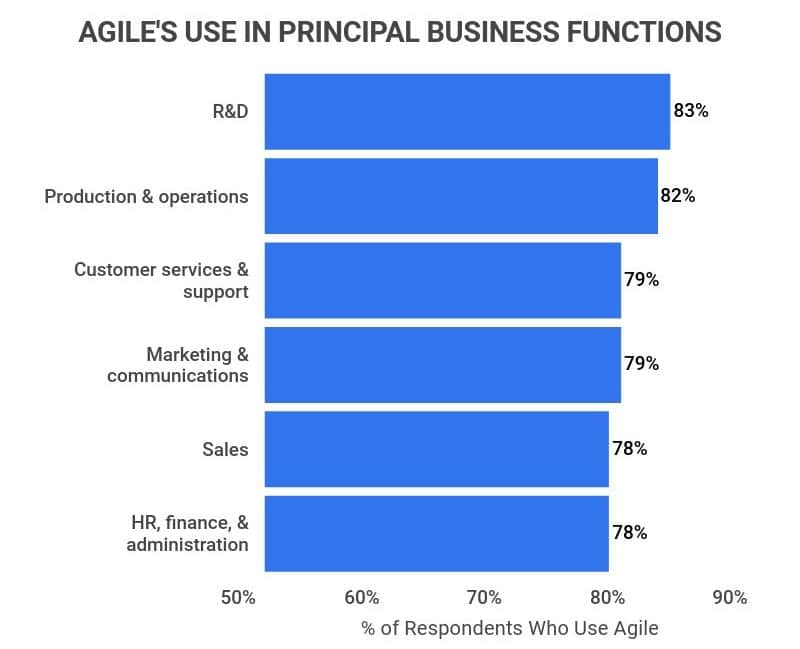
At least 75% of U.S. companies are currently utilizing Agile.
-
Agile projects boast a 70% success rate, significantly surpassing the waterfall methodology’s 50% success rate.
-
Consequently, Agile projects are nearly 1.4 times more successful than those using waterfall.
-
Post-Agile adoption, companies have reported an average 70% increase in revenue and profit.
-
Scrum remains the leading Agile framework, with 63% of respondents from 80 countries indicating its use.
-
For a deeper dive into the data, we categorized the findings as follows:
Adoption | Trends and Predictions | Industry
The Benefits of Agile Adoption
The benefits of adopting Agile methodologies are clear. In this section, we explore how Agile can transform your business operations. Here are the key insights from our research:
-
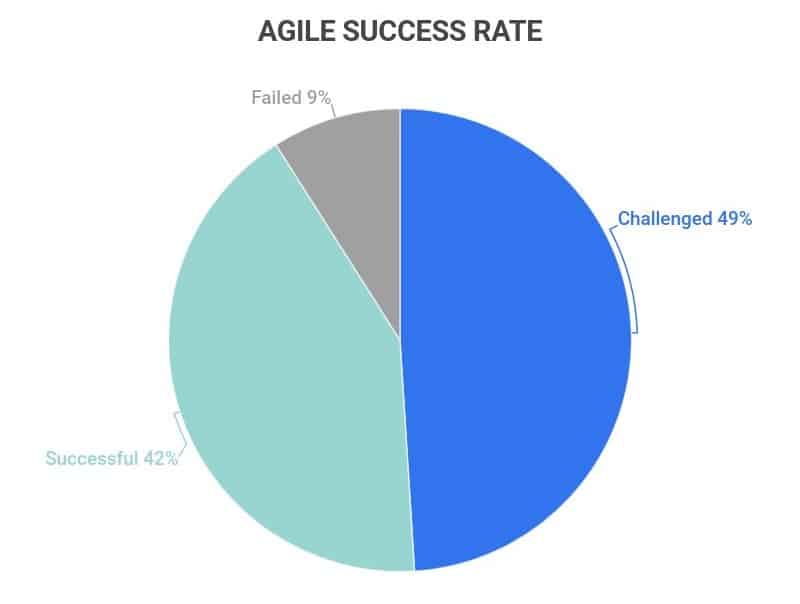
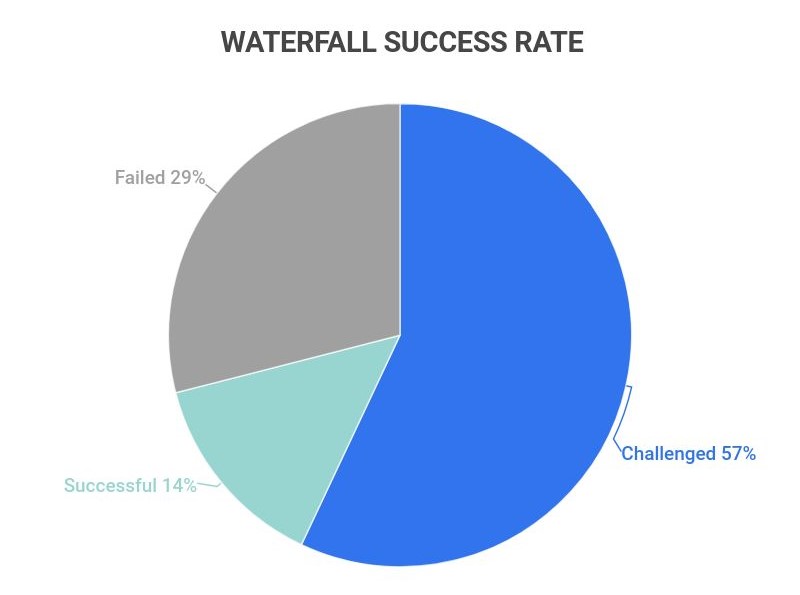
Only 8% of Agile projects fail.
This is a significant improvement compared to waterfall methodologies, which have a failure rate of 30%. Agile’s streamlined processes lead to far fewer failures.
-
Agile projects are approximately 1.4 times more successful than waterfall projects.
Success rates indicate that Agile projects achieve success 70% of the time, compared to just 50% for waterfall methodologies.
-
The implementation of Full Scrum can enhance product quality by up to 300%.
Teams employing Full Scrum significantly reduce defect density, with those using no estimates averaging over 15 defects, while Full Scrum users see less than five defects.
-
Agile teams demonstrate 30% higher productivity.
These teams are also 60% faster to market than their non-Agile counterparts, underscoring their effectiveness. Agile methodologies enhance focus and efficiency.
-
Agile has contributed to 95% of companies experiencing greater success.
It’s no wonder that 75% of organizations are implementing Agile, with many Fortune 500 companies leading the charge.
-
Agile Adoption Statistics
The advantages of Agile are prompting numerous companies to transition to this methodology. The benefits include increased growth, productivity, and quality. Here are some compelling facts:
-
Companies adopting Agile report an average 70% growth in revenue and profits.
However, of the 1,500 IT and business leaders surveyed globally, only a fraction could fully implement Agile to realize these benefits. Full adoption is essential for maximizing Agile’s advantages.
-
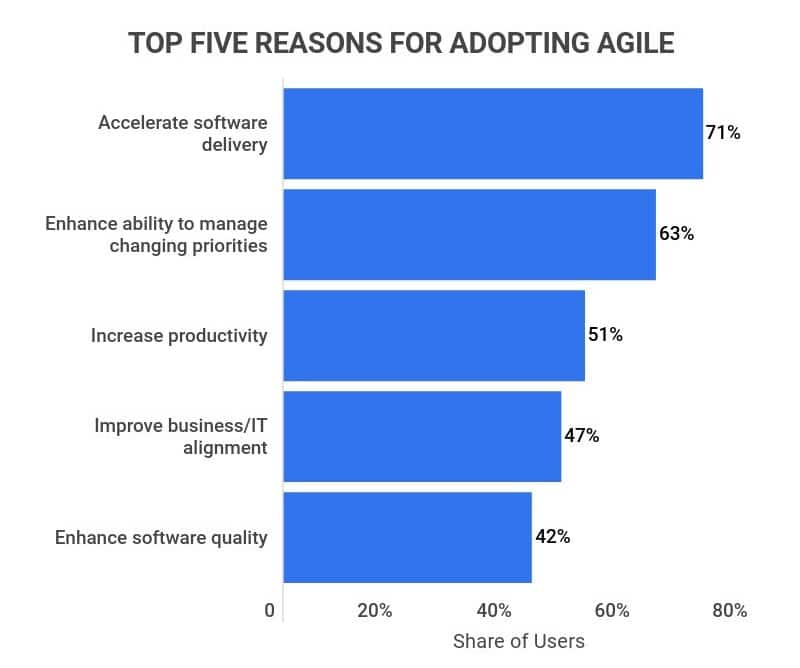
The top five reasons organizations switch to Agile are productivity, accountability, collaboration, prioritization, and feedback.
The latter four factors contribute significantly to enhanced productivity. Improved communication and team alignment lead to a 30% increase in Agile project productivity.
-
Approximately 85% of federal IT projects have adopted Agile.
This trend correlates with a shift towards shorter, more cost-effective IT initiatives. For example, between 2004 and 2020, the average duration of major federal IT projects has decreased from nine years to under two years.
-
A lack of experience with Agile methods is the primary reason for 44% of Agile project failures.
Other frequent causes include cultural misalignment (40%), insufficient management support (36%), and resistance to moving away from traditional practices like waterfall (35%). The consequences are significant, with the U.S. government losing an estimated $30 billion due to unsuccessful IT projects.
-
Agile Trends and Predictions
As Agile continues to grow in popularity, it’s essential to examine its trajectory. Our research indicates that:
-
The adoption of Agile has surged by up to 90% since 2002.
In 2002, Agile adoption was below 10%, but this figure has climbed to 80% in certain sectors, particularly in federal IT projects.
-
Agile adoption accelerated in 2021, with 45% of organizations reporting increased momentum over the previous 90 days.
This surge can be attributed to the rise of remote work, necessitating more efficient communication among distributed teams. In fact, 35% of organizations are leveraging Agile to better manage remote teams.
-
Scrum remains the leading Agile framework, utilized by 63% of respondents from 80 countries.
Scrum’s primary advantage is its ability to facilitate simultaneous team collaboration, rather than a sequential approach. Other notable Agile frameworks include Kanban, Extreme Programming, Lean, Dynamic Systems Development Method, Crystal, and Feature Driven Development.
-
JIRA software is the most widely used tool in Agile project management.
JIRA’s popularity stems from its robust features, which include issue tracking, boards, workflows, backlogs, roadmaps, and various types of reporting charts.
-
Agile by Industry Statistics
While Agile adoption is on the rise, its popularity varies across different industries. Here are some key statistics:
-
88% of international software developers utilize Agile.
This signifies a broad global commitment to Agile methodologies, with software development firms increasingly prioritizing Agile practices.
-
Only 30% of manufacturing companies fully embrace Agile.
This relatively low figure is largely due to incomplete implementation. Approximately 60% of manufacturing companies employ a hybrid of methodologies, including Agile.
-
90% of international professionals believe Agile enhances their quality of work life.
This finding, based on responses from 100 countries and 30 industries, underscores the positive impact of Agile on workplace satisfaction.
Agile Project Management FAQ
-
Which companies use Agile methodology?
Notable companies employing Agile methodology include Apple, IBM, Microsoft, and Procter & Gamble. Numerous other organizations also benefit from Agile practices. Here are a few examples:
-
Cisco: Reduced defects by 45% compared to waterfall.
-
Barclays: Achieved a 300% increase in throughput.
-
Panera Bread: Saw a 30% increase in sales.
-
PlayStation Network: Saved $40 million annually.
-
-
What is Agile project management?
Agile project management is an iterative approach to software development that prioritizes continuous delivery and customer feedback. This approach allows teams to build software incrementally throughout the project instead of delivering a final product only at the end. For instance, in game development, a beta version may be released to gather player feedback before the final launch.
-
Agile is utilized by at least 75% of U.S. companies. Furthermore, Scrum remains the most favored Agile framework, with 63% of respondents from 80 countries reporting its adoption.
Adoption rates continue to climb, with the number of companies embracing Agile increasing by up to 90% since 2002. This trend is particularly pronounced in federal IT projects, where approximately 85% have adopted Agile methodologies.
-
Agile metrics are standards that help monitor a software development team’s performance throughout a project. These metrics inform the team about productivity levels and allow for quality assessments, making them essential in the Agile development process.
-
Agile’s strength lies in its ability to facilitate effective critique, debugging, and improvement of software during development. The methodology’s focus on testing prototypes and engaging with customer feedback results in thoroughly vetted products. Additionally, Agile supports prioritization and teamwork, allowing teams to assign tasks based on feedback and metrics accurately.
-
What percentage of projects use Agile methodology?
80% of IT projects employ Agile methodology. This widespread adoption has significantly reduced the average development time for federal IT projects from nine years to approximately two years.
In the private sector, 75% of companies have adopted or are in the process of implementing Agile, including many Fortune 500 firms, with 88% of software developers globally using Agile practices. In 2021, as companies transitioned to remote work, 45% accelerated their Agile adoption efforts, with 35% citing the need for better management of remote teams.
-
How is success measured with Agile?
Success in Agile is often measured by whether a project is completed on time. This is the most prevalent metric, with 60% of survey respondents indicating its use. Timely delivery means not only meeting deadlines but also fulfilling expectations about the outcome.
The second most common measure of success is product quality, with 50% assessing success by quality outcomes. Other prevalent success indicators include customer satisfaction, productivity, and overall business value.
-
What is the most popular Agile methodology?
Scrum is the most utilized Agile methodology. 63% of survey respondents reported using it, making it the leading choice among Agile frameworks across 80 countries. This popularity stems from Scrum’s ability to enable simultaneous work by teams, improving coordination and efficiency, particularly in remote environments.
Other popular Agile frameworks include Kanban, Extreme Programming, Lean, Dynamic Systems Development Method, Crystal, and Feature Driven Development.
Conclusion
Agile project management has firmly established itself as a leading software development methodology, with a reported 75% of U.S. companies embracing it in 2026. Additionally, Scrum remains the preferred framework, with 63% of respondents from 80 countries actively using it.
The positive perception of Agile is further evidenced by the fact that 90% of international professionals believe it enhances their quality of work life. Since 2002, the adoption of Agile has risen dramatically by up to 90%, reflecting its growing prevalence across industries.
Looking ahead, Agile is expected to become increasingly integral to project management, thanks to its focus on customer collaboration and iterative development, solidifying its position as a cornerstone of modern software practices.
Sources:
-
Boldare. “The great dilemma. Agile or waterfall?” Accessed on October 27th, 2021.
-
Clearcode. “Agile vs Waterfall: Project Success and Failure Rates.” Accessed on October 27th, 2021.
-
CA Technologies. “The Impact of Agile. Quantified.” Accessed on October 27th, 2021.
-
Smartbear. “Why Agile Development Teams Are 25% More Productive.” Accessed on October 27th, 2021.
-
Techliance. “What Is Agile Software Development? Benefits of Agile.” Accessed on October 27th, 2021.
-
HBR. “Survey Data Shows That Many Companies Are Still Not Truly Agile.” Accessed on October 27th, 2021.
-
Deloitte. “Agile in Government.” Accessed on October 27th, 2021.
-
Agile Alliance. “8 Reasons Why Agile Projects Fail.” Accessed on October 27th, 2021.
-
Knowledge Hut. “Key Insights from the 2020 State of Agile Report.” Accessed on October 27th, 2021.
-
Ubuntu Pit. “The 10 Best Agile Frameworks: Choosing The Right Framework For You.” Accessed on October 27th, 2021.
-
Zepel. “11 Agile Tools for Project Management and Software Development.” Accessed on October 27th, 2021.
-
Hygger. “Why Agile is So Popular in Project Management World.” Accessed on October 28th, 2021.
-
Forbes. “Is Agile Really Worth It? Evidence Says Yes, If You Do These 4 Things.” Accessed on October 28th, 2021.
- Workplace Statistics
- Time Management Statistics
- Employee Wellness Statistics
- Employment Discrimination Statistics
- Employee Recognition Statistics
- Employee Referral Statistics
- Workplace Violence Statistics
- Gamification Statistics
- Employee Feedback Statistics
- Agile Statistics
- Productivity Statistics
- Meeting Statistics
- Cell Phones At Work Statistics
- Social Media At Work Statistics
- Workplace Injury Statistics
- Workplace Stress Statistics
- Leadership Statistics
- Workplace Collaboration Statistics
- Job Satisfaction Statistics
- Paid Holiday Statistics
- Communication In The Workplace Statistics
- Wasting Time At Work Statistics
- 4-day Workweek Statistics

Author

Jack Flynn is a writer for Zippia. In his professional career he’s written over 100 research papers, articles and blog posts. Some of his most popular published works include his writing about economic terms and research into job classifications. Jack received his BS from Hampshire College.