- Business Statistics
- Startup Statistics
- Cloud Adoption Statistics
- Customer Loyalty Statistics
- Nonprofit Statistics
- Affiliate Marketing Statistics
- Cart Abandonment Rate Statistics
- Ridesharing Statistics
- Call Center Statistics
- eLearning statistics
- Customer Service Statistics
- Customer Experience statistics
- Entrepreneur Statistics
- Outsourcing Statistics
- Gross Revenue for Marketing and Advertising
- Sales Statistics
- MBA Statistics
- Average Small Business Revenue + Profit Margin
- How Much Do Employee Benefits Cost?
30+ Invaluable Customer Loyalty Statistics [2026]: What Makes Customers Come Back?
Research Summary. Customer loyalty remains a cornerstone of business success in 2026. When customers develop trust in your brand, they are not only inclined to return but also to share their positive experiences with others. Our updated research reveals the current significance of customer loyalty:
-
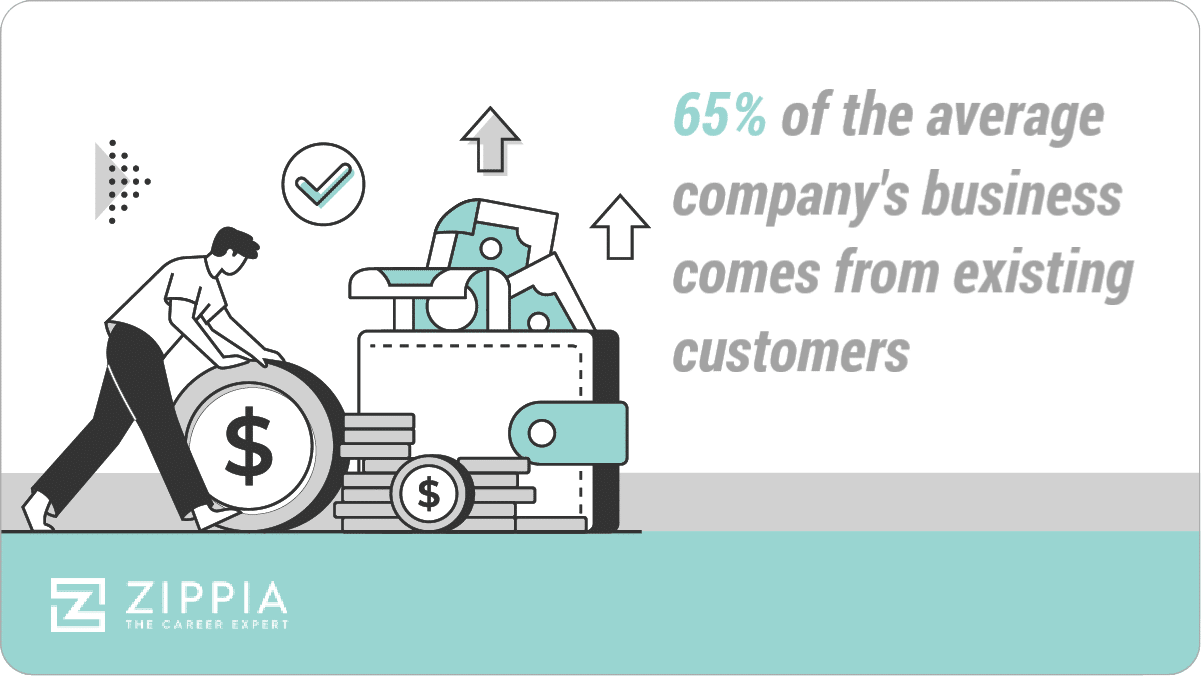
65% of the average company’s business stems from existing customers.
-
75% of consumers prefer brands that offer rewards.
-
Boosting customer retention by just 5% can increase profits by 25%-95%.
-
43% of consumers spend more at businesses they are loyal to.
-
90% of companies have implemented some form of a loyalty program.
-
57% of Gen Z Americans report lower customer loyalty compared to before 2020.
For further insights, we have categorized the data as follows:
Benefits | Opinions | Loyalty Programs | Customer Loss | Consumer Behavior | Customer Spending
Customer Loyalty Statistics by Company Benefits
There are numerous advantages associated with customer loyalty. From enhanced profitability to an expanded customer base, here are key insights on the benefits of fostering loyalty:
-
70% of companies acknowledge that retention is cheaper than acquisition.
Increasing customer retention can reduce costs by as much as 10%, allowing companies to achieve higher profits with less expenditure on advertising.
-
The likelihood of selling to an existing customer is up to 13X greater than selling to a new customer.
Returning customers have a purchase probability of 60-70%, compared to just 5-20% for new customers, significantly impacting overall sales.
-
Highly engaged customers make purchases 90% more frequently.
Moreover, these customers tend to spend 60% more per transaction. For instance, if a new customer typically spends $20, a highly engaged customer would spend around $32.
-
76% of businesses believe tracking customer lifetime value (CLV) is crucial.
Yet, only 42% can accurately measure it, despite 89% recognizing that CLV and an excellent customer experience are vital for brand loyalty.
Customer Loyalty Statistics by Consumer Opinions
Understanding what drives customer loyalty is essential. Fortunately, consumers are vocal about their preferences. Here are the findings:
-
56% of customers remain loyal to brands that resonate with them.
-
97% of American consumers are loyal to at least one brand.
-
Sadly, 96% of consumers believe loyalty programs need improvement.
-
75% of consumers would consider switching brands for a better loyalty program.
-
86% of loyal consumers will recommend a company to friends and family.
-
An overwhelming 92% of consumers trust personal recommendations over online reviews.
-
At least 40% of consumers cite product quality as a key driver of loyalty.
Customer Loyalty Statistics by Customer Loyalty Programs
Loyalty programs are a fundamental strategy for customer retention, though not all programs are equally effective. Here are some insights into their impact:
-
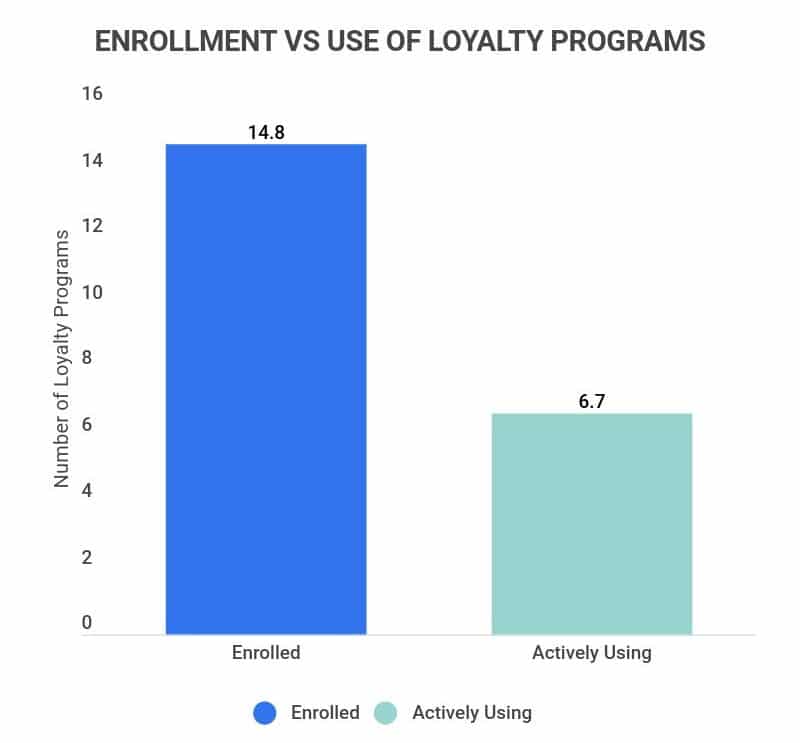
The average consumer is enrolled in 14.8 loyalty programs.
However, they only actively engage with about 6.7, indicating that many programs fail to maintain customer loyalty.
-
Participants in loyalty programs increase their spending by 20%.
Long-term rewards significantly influence consumer spending habits, with customers who aim for larger rewards typically spending the most.
-
83% of customers are more likely to remain loyal to brands with loyalty programs.
When customers perceive tangible benefits, such as discounts or free items, they are more inclined to return.
-
50% of consumers join loyalty programs primarily to earn rewards on everyday purchases.
These rewards often translate into valuable discounts, making them a crucial element of customer loyalty.
-
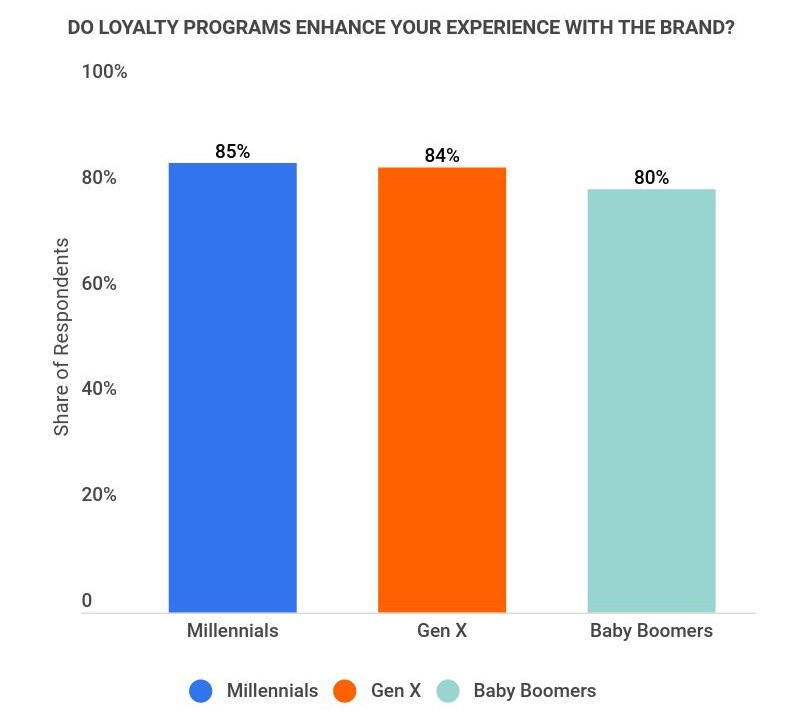
85% of Millennials believe loyalty programs enhance their experience with a brand.
This sentiment is echoed across generations, with 84% of Gen X and 80% of Baby Boomers feeling similarly.
-
58.7% of internet users find earning rewards and loyalty points valuable in the shopping experience.
As e-commerce continues to grow, with online sales comprising over 14.6% of total U.S. retail sales, tailored loyalty programs will be critical for businesses.
Customer Loyalty Statistics by Loss of Customers
Conversely, inadequate loyalty practices can lead to significant drawbacks. Here are some critical statistics regarding customer loss:
-
74% of loyal customers will switch brands if they feel dissatisfied.
-
80% of customers may switch brands after a single negative experience.
-
61% of retail companies identify retention as their primary challenge.
-
73% of customers will cease business with a brand after three or fewer poor service experiences.
-
The average company loses 23%-30% of customers annually due to insufficient loyalty.
Customer Loyalty Statistics by Consumer Behavior
Loyalty significantly influences consumer behavior, often in ways that customers may not recognize. Our research indicates:
-
60% of loyal customers will make more frequent purchases.
Brand loyalty, reinforced by positive experiences, drives repeat purchases, especially during peak shopping seasons, such as holidays.
-
20-30% of customers are likely to make a repeat purchase.
This statistic underscores the importance of loyalty programs and incentives in driving customer retention.
-
82% of customers with high emotional engagement will only buy from that brand.
These customers possess a 306% higher lifetime value and are likely to recommend the brand further.
-
77% of customers will recommend a brand after a single positive experience.
In fact, 94% of Americans will endorse a business they perceive as providing “very good” service.
Customer Loyalty Statistics by Loyal Customer Spending
The correlation between loyalty and increased spending is well-documented. Here are key statistics that illustrate this relationship:
-
On average, 80% of profits come from 20% of customers.
This is known as the 80/20 rule, where a mere 20% of loyal customers can generate more revenue than the remaining 80% combined. For instance, if a company earns $100,000 annually with 1,500 customers, $80,000 of that revenue would come from just 300 loyal customers.
-
Loyal customers spend 67% more than new customers.
For example, if new customers typically spend $50, loyal customers would average $83.50 per transaction.
-
Customers with an emotional connection to a brand have a 306% higher lifetime value.
Understanding CLV is crucial as it reflects the total worth a customer brings over their relationship with a business.
Customer Loyalty Statistics FAQ
-
Customer loyalty is an ongoing emotional connection between a customer and a business, leading to various benefits.
These benefits typically encompass increased engagement, higher purchase frequency, and consistent positive referrals. Loyal customers are invaluable, contributing to a significant portion of a company’s profits and serving as brand advocates.
-
How do you calculate customer loyalty?
There are five key metrics that help gauge customer loyalty. These metrics also provide insights into the overall health of your business:
-
Net Promoter Score (NPS). A straightforward tool that measures customer satisfaction by asking customers to rate the business on a scale of one to ten. Customers scoring nine or ten are considered “promoters.”
-
Repeat Purchase Rate (RPR). This metric indicates the percentage of customers who return to make multiple purchases. RPR is calculated by dividing the number of repeat customers by the total number of customers.
-
Customer Lifetime Value (CLV). This metric informs businesses about the overall profit they can expect from a customer during their relationship. CLV can be calculated by multiplying the average sale value, the average number of transactions, and the average retention period, then multiplying by the profit margin.
-
Customer Loyalty Index (CLI). This tool tracks customer loyalty over time and typically involves three questions regarding recommendations, repeat purchases, and interest in trying other products.
-
Customer Engagement Score (CES). This metric assesses customer engagement, assigning values based on activity, frequency of use, and key performance indicators on a scale of one to ten.
-
-
How effective are customer loyalty programs?
Approximately 69% of customer loyalty programs effectively influence consumer decisions. Well-designed loyalty programs can significantly enhance customer retention, while poorly executed programs may drive customers toward competitors.
For instance, 83% of customers are more likely to stay with brands offering loyalty programs, while 75% would switch for better options.
-
What are some different types of loyalty programs?
There are at least five common types of loyalty programs, alongside hybrid models.
These include:
-
Point Programs. The most prevalent type, allowing customers to earn points with purchases that can be redeemed for rewards.
-
Spend-Based Programs. These offer customers credits based on spending amounts, known to increase transaction amounts and reduce churn rates.
-
Tiered Programs. These incentivize loyalty by providing enhanced rewards as customers reach higher tiers, fostering increased purchases.
-
Paid Programs. VIP programs that require an annual or monthly fee for exclusive perks tend to be more successful.
-
Value-based Programs. These programs allow customers to align with brands that share their values, such as initiatives supporting charitable causes.
-
-
What are the metrics of customer loyalty and retention?
Several metrics can indicate customer loyalty and retention levels. Common examples include:
- Churn rates
- Customer experience
- Emotional engagement
- Customer retention rate
- Existing customer revenue growth rate
- Net incremental revenue
- Repeat purchase ratio
- Daily, weekly, and monthly active users
- Customer lifetime value
- Product return rate
- Net promoter score
- Loyal customer rate
-
What increases customer loyalty?
Five primary strategies can enhance customer loyalty:
-
Prioritize Customer Service. With 73% of customers likely to abandon a brand after a few negative experiences, quality customer service is essential for retention and positive reviews.
-
Reward Loyal Customers. Implement loyalty programs and incentives to encourage repeat business.
-
Embrace Constructive Criticism. Negative feedback can provide valuable insights for improvement, leading to enhanced customer engagement and loyalty.
-
Enhance Convenience. Streamlined processes (e.g., user-friendly websites, free shipping) improve customer experience and promote repeat business.
-
Increase Engagement. Businesses that actively connect with customers through social media and feedback channels see greater loyalty.
-
Conclusion
Given that the probability of selling to a returning customer is up to 13 times higher than to a new customer, it is evident that customer loyalty is vital. Notably, 80% of a company’s sales can often be attributed to just 20% of its most loyal customers.
Implementing strategies that foster customer loyalty is not only cost-effective but also essential for driving more frequent purchases, greater referrals, positive reviews, and increased sales. Therefore, enhancing customer loyalty presents a significant opportunity for businesses in 2026.
Sources:
-
Annex Cloud. “Customer Retention Analysis: The Indispensable Metrics You Need To Know.” Accessed on April 14th, 2022.
-
HubSpot. “Here’s Why Customer Retention is So Important for ROI, Customer Loyalty, and Growth.” Accessed on April 14th, 2022.
-
Investpcro. “Customer Acquisition Vs.Retention Costs [Infographic].” Accessed on April 14th, 2022.
-
LinkedIn. “The Four Drivers of Customer Engagement.” Accessed on April 14th, 2022.
-
Econsultancy. “Just 42% of companies are able to measure customer lifetime value.” Accessed on April 14th, 2022.
-
Freshlime. “56% of Customers Stay Loyal to Brands that Understand their Preferences.” Accessed on April 15th, 2022.
-
KPMG. “How do customers define loyalty?” Accessed on April 15th, 2022.
-
Statista. “Loyalty programs – statistics & facts.” Accessed on April 15th, 2022.
-
Clover. “Study Shows Loyalty Programs Increase Purchases by 20%.” Accessed on April 15th, 2022.
-
Access. “Millennial Loyalty Statistics: The Ultimate Collection.” Accessed on April 15th, 2022.
-
Retailist. “As Retailers Ramp Up Loyalty Programs Marketplaces Are Emerging as a Way to Add New Incentives in 2022.” Accessed on April 15th, 2022.
-
Qualtrics. “Research: 80% of customers said they have switched brands because of poor customer experience, and poor customer service experiences drove the most people to switch.” Accessed on April 15th, 2022.
-
RetailDive. “Report: Most consumers abandon a brand after 3 bad experiences.” Accessed on April 15th, 2022.
-
Business News Daily. “7 Tips on How to Build Customer Loyalty.” Accessed on April 15th, 2022.
-
Geckoboard. “Repeat Customer Rate.” Accessed on April 15th, 2022.
-
FierceRetail. “Emotional connection drives brand loyalty for 82% of consumers, survey finds.” Accessed on April 15th, 2022.
-
Forbes. “The Value Of Investing In Loyal Customers.” Accessed on April 15th, 2022.
-
Entrepreneur. “The 80/20 Rule of Sales: How to Find Your Best Customers.” Accessed on April 15th, 2022.
-
Business. “Returning Customers Spend 67% More Than New Customers – Keep Your Customers Coming Back with a Recurring Revenue Sales Model.” Accessed on April 15th, 2022.
- Business Statistics
- Startup Statistics
- Cloud Adoption Statistics
- Customer Loyalty Statistics
- Nonprofit Statistics
- Affiliate Marketing Statistics
- Cart Abandonment Rate Statistics
- Ridesharing Statistics
- Call Center Statistics
- eLearning statistics
- Customer Service Statistics
- Customer Experience statistics
- Entrepreneur Statistics
- Outsourcing Statistics
- Gross Revenue for Marketing and Advertising
- Sales Statistics
- MBA Statistics
- Average Small Business Revenue + Profit Margin
- How Much Do Employee Benefits Cost?

Author

Jack Flynn is a writer for Zippia. In his professional career he’s written over 100 research papers, articles and blog posts. Some of his most popular published works include his writing about economic terms and research into job classifications. Jack received his BS from Hampshire College.