Find a Job You Really Want In
Have you ever been dining out with friends and noticed that the waiter is overwhelmed with other tables, making it uncomfortable to ask for help in splitting the bill? With Venmo, those worries are a thing of the past.
But if it’s free to use, how does Venmo generate revenue? Continue reading to discover how Venmo profits, along with its benefits and limitations.
Key Takeaways
-
Venmo earns money through credit card fees and merchant fees.
-
As a subsidiary of PayPal, Venmo allows merchants using PayPal to accept Venmo payments seamlessly.
-
Users can link their bank accounts, debit cards, or credit cards to their Venmo accounts, and they can also maintain a balance within the app.
What is Venmo?
Venmo is a person-to-person mobile payment app designed for smartphones, featuring a user-friendly interface that simplifies transactions. Users can easily request or send money to others.
Founded in 2009 by Andrew Kortina and Iqram Magdon-Ismail, two college roommates at the University of Pennsylvania, Venmo was born out of a desire to simplify transactions. The concept sparked when they wanted to buy music from a jazz band via text message, and was solidified when Iqram visited Andrew and forgot his wallet, prompting the need for an easy way to settle debts.
Since its inception, Venmo has enjoyed remarkable growth. In 2012, it was acquired by Braintree for $26.2 million, which was later bought by PayPal in 2013 for $800 million.
Venmo is part of a broader trend in which smartphones are increasingly becoming payment wallets, making digital transactions more accessible. But this raises the question: At what cost?
How Does Venmo Make Money?
While creating an account and using the Venmo app is free, the company has developed a robust business model that generates revenue through several means.
The primary source of income comes from credit card fees. When users create a Venmo account, they can link a U.S. bank account or a debit/credit card for transactions. If users opt to pay using their Venmo balance or linked bank account, there are no transaction fees. However, payments made with credit cards incur a 3% fee on the transaction total.
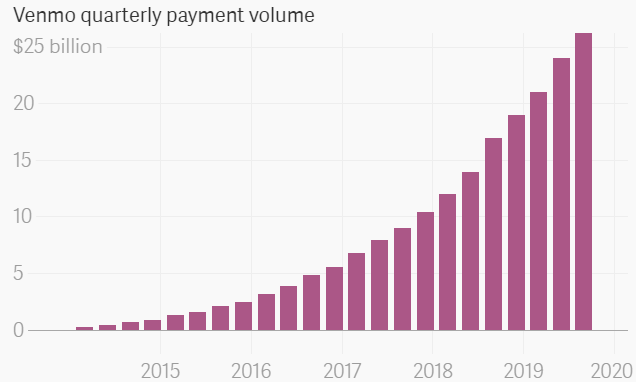
The second revenue stream comes from merchant fees. Venmo’s acquisition by PayPal has significantly bolstered its merchant partnerships. Any merchant accepting PayPal payments can also accept Venmo, and these merchants pay around 3% in fees similar to credit card transactions.
Who are Venmo’s Biggest Competitors?
Despite being the most popular payment app, Venmo faces competition from several other platforms. Here are some of its main rivals:
-
Google Wallet: Venmo’s primary competitor, offering similar features and is available in the U.K.
-
Apple Pay/Google Pay: While popular, these platforms serve more specific purposes compared to Venmo.
-
Popmoney: Similar to Venmo but charges a $0.95 fee for sending money from a debit card to a bank account.
-
SnapCash: A payment feature within Snapchat that has a weekly limit of $250 and might take longer for transactions to clear.
-
Square Cash: Founded by Twitter co-founder Jack Dorsey, it is favored by businesses but hasn’t made a significant impact in personal transactions.
-
Facebook: Recently launched a money transfer service through its Messenger app, allowing users to send money as easily as sending a message.
Does Venmo Have Any Limitations?
While Venmo is a convenient money-sharing tool, it does come with certain limitations.
The most significant limitation is that Venmo is only available for transactions within the U.S. International transactions are not supported.
Additionally, Venmo is primarily for personal use, and businesses cannot directly use the app for transactions, although individuals may use it for business-related purposes.
Lastly, there is a $3,000 weekly limit on spending and receiving money, which can restrict larger transactions, making it less ideal for landlords or similar arrangements.
Why is Venmo so Popular?
Venmo’s popularity can be attributed to its fun and engaging experience, which distinguishes it from other payment apps. Users can interact socially within the app, similar to social media platforms.
Emojis play a significant role in the app, helping to alleviate the discomfort that can come with requesting or sending money. Venmo spokesman Josh Criscoe notes that the app combines the social and financial elements, making it less awkward to discuss shared expenses.
Is the Venmo App Safe and Secure for Users?
As with any tech-driven service, Venmo faces security challenges. The app employs bank-level security and data encryption to protect transactions.
However, user concerns about security persist, especially with reports of hacking incidents that have raised doubts about the app’s safety. Many security issues stem from user error, such as sending money to the wrong person, which can be difficult to resolve.
Is Venmo Too Social?
Venmo has integrated social media-like features, allowing users to see each other’s transactions, which some find uncomfortable. Users can like and comment on transactions, similar to interactions on platforms like Facebook.
This level of exposure may deter some users from utilizing the app. For those feeling uneasy about privacy, traditional payment methods still exist and are a viable alternative.
Venmo FAQ
-
How much does Venmo make per transaction?
Venmo generates revenue from merchants by charging a 2.9% fee on each transaction. Personal transfers between users remain free.
Furthermore, users wishing to transfer funds from Venmo to a linked card incur a 1% fee.
-
What is the difference between Zelle and Venmo?
Zelle enables direct bank account transfers, while Venmo facilitates transfers between Venmo accounts, funded by users’ bank accounts, credit cards, or debit cards.
Zelle does not allow linking credit cards or maintaining a cash balance like Venmo does.
-
Will Venmo refund my money if I’m scammed?
Generally, Venmo does not refund users who fall victim to scams. The only exception is for transactions marked as “purchases” where issues arise with the received item or if the item was not delivered.
Otherwise, once a payment is sent, it cannot be canceled, and users must contact their bank for any disputes, as Venmo will not intervene.

Author

Chris Kolmar is a co-founder of Zippia and the editor-in-chief of the Zippia career advice blog. He has hired over 50 people in his career, been hired five times, and wants to help you land your next job. His research has been featured on the New York Times, Thrillist, VOX, The Atlantic, and a host of local news. More recently, he's been quoted on USA Today, BusinessInsider, and CNBC.