- Job Seeker Statistics
- Career Change statistics
- Internship Statistics
- Job Search Statistics
- Average Number Of Jobs Applied
- Average Salary Increase When Changing Jobs
- Part Time Job Statistics
- Age Discrimination Statistics
- Networking Statistics
- Interview Statistics
- Average Number of Jobs In A Lifetime
- Resume Statistics
- Side Hustle Statistics
- Teacher Statistics
Research Summary. Searching for a new job can be daunting, especially in today’s competitive landscape. While the internet has transformed job searching into a more accessible process than ever before, it has also increased competition among candidates. The following statistics reflect this evolving job market:
-
65% of currently employed individuals were seeking new job opportunities as of 2025.
-
The average time to find a job in 2026 is five months.
-
80% of all job searches are conducted online as of 2025.
-
85% of job placements occur through networking.
-
Approximately 50% of job applications originate from job boards.
For a deeper dive into the data, explore our breakdowns below:
Online | Social Media | Interviews
Networking Job Search Statistics
Networking remains a crucial element of any career journey. You can network through your current job, industry events, or online platforms like LinkedIn. This process not only helps you meet industry professionals but can also lead to future employment opportunities.
Effective networking provides insights into various industries and opens doors to numerous job opportunities, as highlighted by the following research:
-
70% of job vacancies are never publicly advertised.
These positions are often filled internally or created for candidates discovered through networking. Networking can significantly enhance your chances of securing a job by allowing you to ask insightful questions and gain tailored information before applying.
-
Job seekers who network achieve success rates with a match occurring within one to three months.
Furthermore, job offers obtained through networking are typically of higher quality, as connections are often well-established within the industry, resulting in referrals that come with better compensation and titles.

Online Job Search Statistics
The internet has transformed job searching, with a plethora of job search websites and online recruiters reshaping the hiring process. Many recruiters utilize applicant tracking systems (ATS) to streamline applications. However, online job searching presents unique challenges, as indicated by the following statistics:
-
75% of online applications are rejected by ATS due to formatting issues.
This occurs because 50% of online job applications fail to meet the specified criteria in job descriptions. Understanding common ATS errors can help candidates avoid disqualification before reaching the interview stage.
-
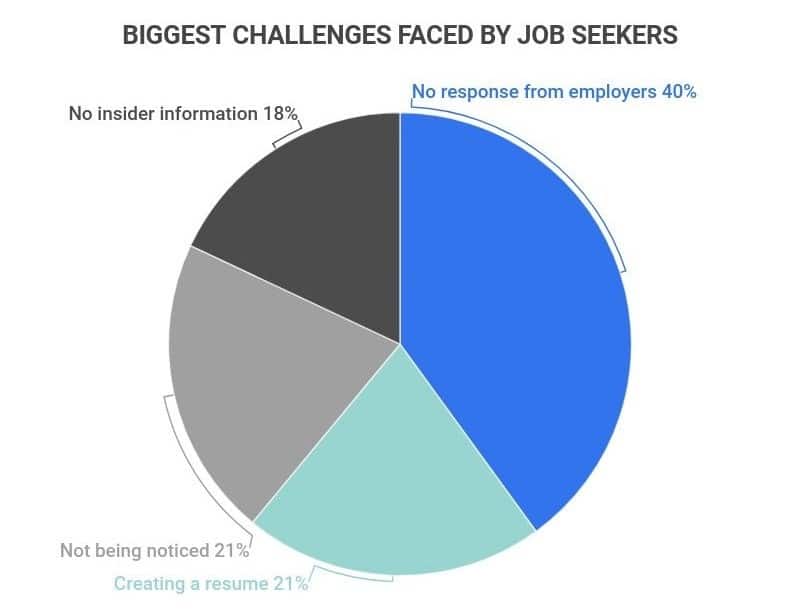
40% of job seekers cite lack of communication from recruiters as a major challenge.
21% struggle with resume crafting and visibility, while 18% find it difficult to gather insights about the companies they are applying to.
-
48% of job seekers find waiting for employer responses ‘highly frustrating.’
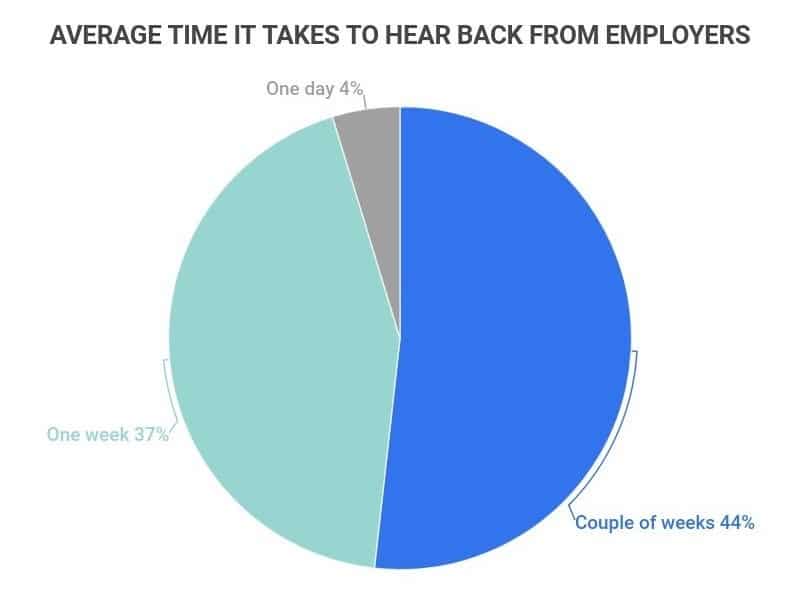
Response times vary widely; on average, 44% of job seekers hear back within two weeks, 37% within one week, and a mere 4% within one day.
Job Search on Social Media Statistics
Social media has dramatically changed the job search landscape, with many job seekers finding success through these platforms. The following statistics illustrate the extent of social media’s influence in job searching:
-
79% of job seekers leverage social media during their job search.
Moreover, over 84% of organizations utilize social media as a recruiting tool, with an additional 9% planning to adopt this strategy.
-
More than 90% of recruiters actively use LinkedIn to find candidates.
LinkedIn has become a vital platform for job seekers, with over 50 million companies represented. Additionally, 46 million students and recent graduates are active on the site, making it essential for job seekers to establish a presence there.
-
96% of companies acknowledge that their employer brand and reputation can significantly impact revenue, yet less than half actively monitor this effect.
Only 44% of companies track how their brand affects their hiring metrics.
Job Interview Statistics
The job market is vast, and many job seekers are pursuing remote work or transitioning to new careers. It’s common for candidates to apply for multiple jobs and not receive interview invites, which can be discouraging.
-
On average, companies interview between 6 to 10 candidates for each position.
Typically, candidates may face two to three rounds of interviews with the recruiter or hiring manager.
-
The average hiring manager invites 2-4 candidates for on-site interviews.
This number may vary based on the quality of applications received. If only one candidate meets the qualifications, that individual may be invited while the search for additional candidates continues.
-
Referrals have a 40% higher chance of securing a job interview compared to other candidates.
Referrals account for 30-50% of hires in the United States. Candidates who receive referrals are more likely to have their resumes reviewed, receive interview invites, and ultimately secure job offers.
Job Search FAQ
-
How many people are currently searching for jobs?
10.7 million Americans are actively looking for employment. Job openings currently exceed the number of seekers, with 11.5 million positions available as of March 2022.
-
What is the typical duration of a job search?
The average job search in 2026 spans about five months, typically ranging from eight weeks to six months. Even after securing an interview, 52% of recruiters indicate that the average time-to-hire post-interview is three weeks.
-
What is the most effective job search strategy?
Networking is the most effective method for securing a job. However, various effective job search strategies exist, including:
-
Networking
-
Referrals
-
Job Boards
-
Job Fairs
-
Company Websites
-
Recruiters
-
-
What percentage of applicants receive an interview?
Approximately 30% of applicants secure an interview. This percentage varies based on the volume of applications submitted.
For instance, 47.3% of those submitting up to ten applications receive at least one interview, while over 35% of those submitting fewer than ten applications do not receive any interviews. In contrast, this figure drops to just under 20% for candidates submitting between 21-80 applications.
-
What percentage of jobs are filled through networking?
Approximately 85% of jobs are filled through networking. Additionally, around 70% of job openings are never publicly advertised, indicating that most positions are discovered and filled through networking, referrals, and recruiters.
LinkedIn stands out as a leading networking platform for job seekers, with over 90% of recruiters using it to identify potential candidates. The platform hosts over 50 million companies, along with approximately 46 million students and recent graduates.
-
What percentage of jobs are found online?
80% of job opportunities are discovered online. These positions are primarily accessed through job boards, searches, and company websites.
However, while online job searching has become the predominant method, it can also pose challenges for both employers and applicants. Notably, 75% of online applications are rejected by ATS due to formatting errors, and 50% of online applications do not meet the criteria outlined in job postings.
-
What is the average wait time for job seekers to hear back from employers?
81% of applicants hear back from employers within one to two weeks. Specifically, 44% report waiting a couple of weeks, followed by 37% within one week and only 4% receiving feedback within a day.
The delay in employer responses can be frustrating, as expressed by 48% of applicants.
Conclusion
Job searching can be a daunting task. The journey can feel like a full-time job itself and may extend over several months. However, understanding the most effective strategies to search for and secure a job can significantly enhance your success in landing your dream position.
Engaging in research and reaching out to professionals in your field to start networking is crucial if you haven’t done so already.
Don’t feel overwhelmed by the statistics regarding the number of job seekers. Instead, focus your efforts on the career you desire and connect with individuals working in companies or sectors you admire. The job market is eager for qualified candidates; you just need to find the right opportunity for you.
References
-
CNBC. “How to get a job often comes down to one elite personal asset, and many people still don’t realize it.” Accessed in October 2023.
-
Economic Research. “How Does Networking Affect Your Job Search?” Accessed in October 2023.
-
Real Life Career Advice. “Applicant Tracking Systems: how to beat them in 2021.” Accessed in October 2023.
-
YourStory. “What are the biggest challenges job seekers face today? Here what 6900 professionals share with YourStory and Indeed.” Accessed in October 2023.
-
Indeed. “QA: How Long Should You Wait to Hear Back About a Job?” Accessed in October 2023.
-
Apollo Technical. “Surprising Social Media Recruiting Statistics (2021).” Accessed in October 2023.
-
CareerArc. “29 Surprising Stats on Employer Branding – Infographic.” Accessed in October 2023.
-
Career Sidekick. “How Many Interviews For One Job? (Stats from a Recruiter).” Accessed in October 2023.
-
Quartz. “Employers ignore almost everything on your application – except this.” Accessed in October 2023.
- Job Seeker Statistics
- Career Change statistics
- Internship Statistics
- Job Search Statistics
- Average Number Of Jobs Applied
- Average Salary Increase When Changing Jobs
- Part Time Job Statistics
- Age Discrimination Statistics
- Networking Statistics
- Interview Statistics
- Average Number of Jobs In A Lifetime
- Resume Statistics
- Side Hustle Statistics
- Teacher Statistics

Author

Chris Kolmar is a co-founder of Zippia and the editor-in-chief of the Zippia career advice blog. He has hired over 50 people in his career, been hired five times, and wants to help you land your next job. His research has been featured on the New York Times, Thrillist, VOX, The Atlantic, and a host of local news. More recently, he's been quoted on USA Today, BusinessInsider, and CNBC.