- HR Statistics
- Average Labor Cost Percent Of Sales
- Average Time to Reach Profitability At A Startup
- Office Space Per Employee
- Recruitment Statistics
- Employee Engagement Statistics
- Work-Life Balance Statistics
- BYOD Statistics
- Paternity Leave Statistics
- Onboarding Statistics
- Average Paid Maternity Leave In Us
- Average Cost Of A Bad Hire
- Employee Theft Statistics
- Paid Family Leave Statistics
- Cost Of Hiring Statistics
- Employee Turnover Statistics
- Average Cost Of Employer Sponsored Health Insurance Statistics
- Sexual Harassment In The Workplace Statistics
- HR Statistics
- PTO Statistics
- Social Media Recruitment Statistics
- Hiring Statistics
- Out Of Prison Employment Statistics
Research Summary. The need for paid family leave is more critical than ever, particularly as workers balance their professional responsibilities with personal and family health needs. Our updated research indicates that:
-
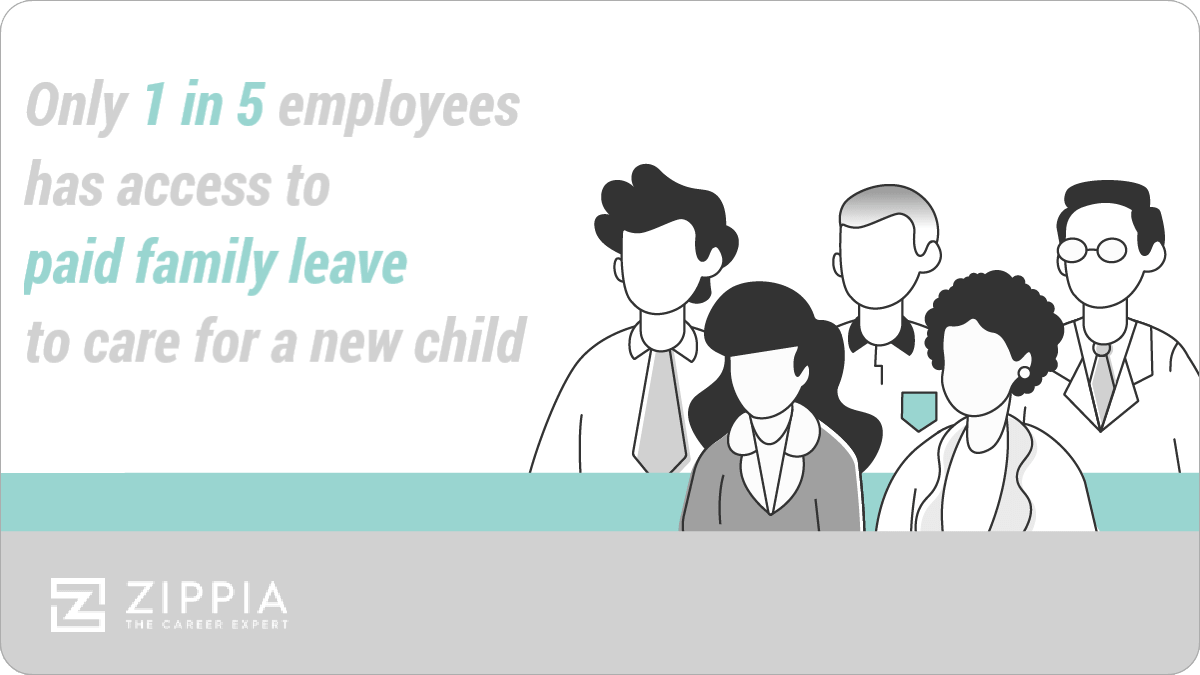
Only 23% of private-sector workers have access to paid family leave for caring for a new child or family member as of 2025.
-
42% of private-sector workers have access to short-term disability insurance for recovery from illness or injury.
-
12 states mandate paid family leave for employees.
-
77% of individuals taking paid family leave identify as white.
-
90% of businesses believe that paid family leave enhances productivity, while 99% find it boosts employee morale.
For further insights, we have categorized the data as follows:
State | Industry | Demographics | Public Opinion | Data
General Paid Family Leave Statistics
The need for paid family leave is essential for addressing serious health conditions, whether for oneself or family members. It can also support new parents, whether through birth or adoption. However, many U.S. workers still lack access to this vital benefit. Consider the following statistics:
-
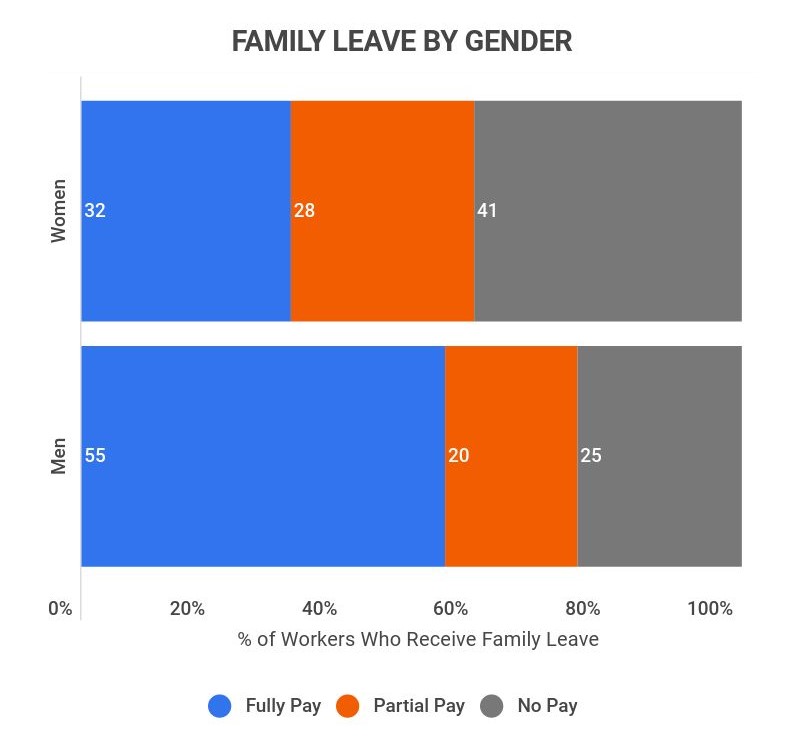
According to the latest data from the Family and Medical Leave Act (FMLA), 24% of women require leave compared to 17% of men.
This disparity may be influenced by traditional caregiver roles often assigned to mothers, affecting the actual leave taken, with 18% of women taking leave compared to just 14% of men.
-
In states with paid leave, individuals with access show a roughly 20% increase in labor force participation.
While comprehensive data is limited, the evidence suggests that paid leave strongly incentivizes workforce engagement.
-
In states with paid family leave, 20% fewer women exit the workforce within the first year after childbirth.
Retention rates climb to 50% over five years in these states, contrasting sharply with nearly 30% of women in states without such policies leaving the workforce within a year.
Paid Family Leave by State Statistics
As of early 2026, only twelve states in the U.S. mandate paid family leave, each with varying requirements. The specifics of leave may also depend on employer policies, salary, and state minimum wage standards.
-
As of January 2026, twelve states, including Washington D.C., have mandated paid family leave for employees.
These states comprise Rhode Island, California, New Jersey, New York, Washington, Washington, Massachusetts, Connecticut, Oregon, Colorado, and Delaware.
-
Oregon offers the most generous benefits, providing 100% of a worker’s average weekly wages up to an amount equal to 65% of the statewide average weekly wage.
Connecticut follows closely, covering 95% of a worker’s average weekly wage up to a specified cap.
-
New York provides 50% of a worker’s average weekly wage for health leave and 67% for family leave, making it one of the less generous states.
California and Rhode Island both offer around 60% of a worker’s average weekly wage.
Paid Family Leave by Industry Statistics
Access to paid family leave varies not only by state but also by industry and company size. Some sectors are more likely to provide this benefit than others. Consider the following insights:
-
Only 13% of small businesses with fewer than 50 employees offer employer-provided paid family leave.
In contrast, about 26% of businesses with 100 or more employees offer this benefit, while 31% of those with 500 or more employees do.
-
The technology sector leads in offering parental leave, with 30% of tech employees having access to paid family leave.
This is nearly three times the rate seen in other industries.
Industries such as finance are also stepping up, with major firms like Bank of America, Merrill Lynch, and Citi providing over 12 weeks of paid parental leave.
-
Conversely, traditional blue-collar jobs continue to lag, with less than 10% of workers in service, manufacturing, farming, or construction receiving paid family leave.
This figure has remained stagnant for many years.
Access to Paid Family Leave by Company Size
| Size of Company | % With Access to Paid Family Leave | % With Access to Unpaid Family Leave |
|---|---|---|
| 1 to 49 workers | 13% | 81% |
| 50 to 99 workers | 19% | 90% |
| 100 to 499 workers | 22% | 95% |
| 500 workers or more | 31% | 94% |
Access to Paid Family Leave by Industry
| Industry | % With Access to Paid Family Leave | % With Access to Unpaid Family Leave |
|---|---|---|
| Information | 47% | 92% |
| Finance & Insurance | 40% | 97% |
| Real Estate | 13% | 93% |
| Professional & Business Services | 23% | 86% |
| Professional & Technical Services | 33% | 90% |
| Administrative & Waste Services | 8% | 79% |
| Educational Services | 24% | 87% |
| Health Care & Social Assistance | 26% | 91% |
| Leisure & Hospitality | 9% | 80% |
Paid Family Leave Demographics
The necessity for paid family leave can differ based on demographic factors, such as age, parental status, and single-parent status. Examine the following statistics:
-
77% of all individuals taking paid family leave identify as white.
In contrast, just 13% of African Americans and 6% of Asian individuals benefit from this policy, highlighting significant disparities.
-
The average age of those taking paid family leave is 42 years.
This trend reflects the later age at which many individuals have children and the increasing need to assist aging parents.
-
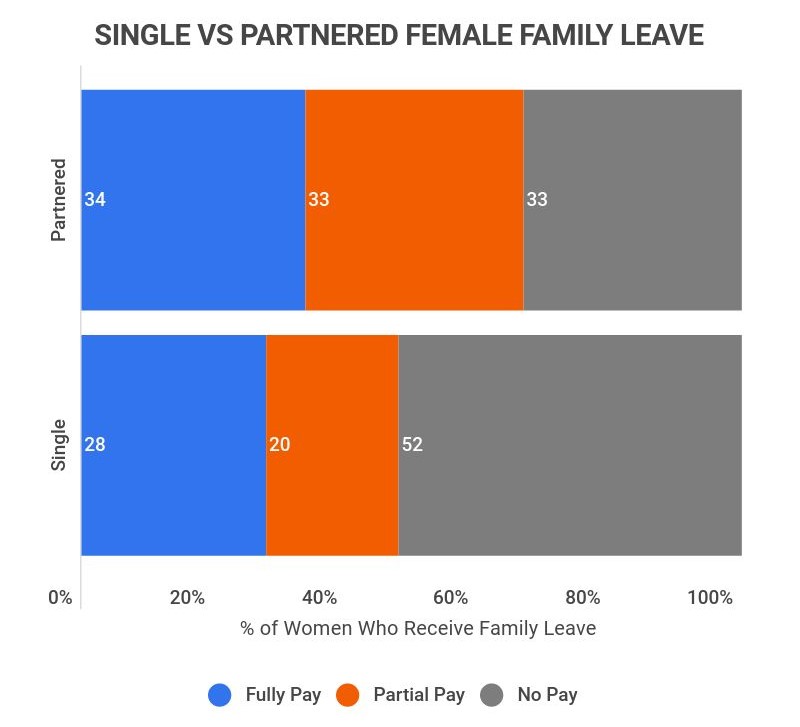
While similar percentages receive full pay, only 20% of single women receive partial pay compared to 33% of partnered women.
Additionally, 52% of single women receive no pay, contrasting with 33% of partnered women, largely due to extended leave periods exceeding 41 days.
-
Among single women receiving less than full pay, 50% report finding it “much more difficult” to meet financial obligations during leave, compared to 24% of partnered women.
Interestingly, 49% of partnered women indicate it’s “somewhat more difficult,” versus 26% of single women. Furthermore, only 31% of single women have savings set aside for leave, compared to 49% of partnered women.
Public Opinion on Paid Family Leave
Public sentiment regarding paid family leave is overwhelmingly supportive across political lines. Both employees and an increasing number of employers recognize the advantages of offering paid family leave.
-
Nearly 60% of small business owners express interest in providing paid family leave benefits.
Less than one-third of executives surveyed reported disinterest in offering family leave, with over 60% believing that providing paid leave would positively impact employee morale, retention, and recruitment.
-
After learning about the national FMLA and its provision of unpaid leave, 82% of voters felt it necessary to update the law to include paid leave.
A majority indicated they would favor candidates advocating for national paid family and medical leave policies.
-
A 2018 survey by the Cato Institute found that 54% of Americans would be willing to pay $200 annually in higher taxes for a 12-week federal paid leave program.
Furthermore, 40% of Americans would support a federal paid leave policy even at the cost of increasing the national deficit, while 70% indicated they’d be willing to contribute a penny on every dollar towards funding such a program.
Paid Family Leave Data
Paid family leave can provide numerous benefits, allowing workers to seek timely medical treatment or continue care for ongoing health issues. For instance:
-
59% of cancer patients, survivors, and their caregivers reported that having paid family leave positively impacted their ability to complete treatment.
Additionally, 56% found that paid leave facilitated attendance at medical appointments, and 50% noted that it helped manage symptoms or side effects.
Paid Family Leave FAQ
-
What is the Family and Medical Leave Act?
The Family and Medical Leave Act, or FMLA, is a federal benefit that allows eligible employees up to 12 weeks of unpaid, job-protected leave annually. During this period, an employee’s health benefits remain intact. Eligible employees can take leave for the following reasons:
-
The birth and care of a newborn child.
-
Placement of a child for adoption or foster care.
-
To care for an immediate family member with a serious health condition.
-
To take medical leave when unable to work due to a serious health issue.
-
-
What percentage of Americans support paid family leave?
82% of Americans support paid family leave. A similar percentage of voters believe the national FMLA should be updated to include paid family and medical leave, not solely unpaid leave. Additionally, over half would favor candidates advocating this change.
Surveys indicate that a majority of Americans are willing to accept higher taxes if it leads to a federal paid leave program, with 54% willing to pay $200 more annually. Moreover, 40% would support raising the national deficit to implement a national paid leave policy, and 70% would agree to contribute a penny for every dollar towards funding it.
-
What percentage of Americans have paid family leave?
23% of American private-sector workers have access to paid family leave. This means that just under one in four individuals in the U.S. private-sector workforce can take paid time off to care for a new child or an ill family member.
Federal law delegates this issue to states, and only Washington D.C. and twelve states mandate paid family leave. These include California, Colorado, Connecticut, Delaware, Massachusetts, New Jersey, New York, Oregon, Rhode Island, Washington, and Wisconsin.
Large companies are more likely to offer paid family leave; only 13% of businesses with fewer than 50 employees provide this benefit, while 31% of those with 500 or more employees do. In addition, 30% of technology companies provide paid family leave, the highest rate among all industries.
-
How many countries have paid family leave?
Over 120 countries have instituted paid family leave. These nations have laws mandating paid maternity leave and associated health benefits. Nearly all industrialized countries, with the exceptions of Australia, New Zealand, and the United States, feature such policies.
The Czech Republic offers the longest mandatory paid maternity leave at 28 weeks, with Hungary following at 24 weeks. Italy provides five months, Canada offers 17 weeks, and Spain and Romania each provide 16 weeks.
Paid maternity and family leave are essential for many women globally, who represent the primary earners in 30% of households and significantly contribute to their families’ incomes: in Europe, 59% of working women earn at least half of their household income.
In the U.S., the federal government mandates only 12 weeks of unpaid maternity leave, allowing women time to care for newborns without quitting their jobs. However, states may choose to implement their own paid leave laws, with only twelve doing so currently, including Washington D.C.
-
Is paid family leave paid by employers?
The payment structure for paid family leave varies by state. In states like California and Connecticut, employees fund the benefit through contributions from their paychecks. Conversely, some states such as Delaware and Colorado split the costs between employers and employees. In Washington, employees contribute a larger share at 26.78%, while employers cover 73.22%.
Conclusion
The United States remains the only industrialized nation without guaranteed paid leave for its workforce. With a significant majority of surveyed employees supporting paid family and medical leave, the nation must strive to align with the twelve leading states.
Paid family leave is a crucial benefit for both employees and employers, addressing the needs of American workers and their families.
References
-
Abt Associates. “Gender Differences in Needing and Taking Leave.” Accessed on August 23, 2021.
-
Washington Center for Equitable Growth. “Factsheet: What does the research say about the economics of paid leave?” Accessed on August 23, 2021.
-
The Standard. “How PFL Laws Help Women Stay in the Workforce.” Accessed on August 23, 2021.
-
A Better Balance. “Comparative Chart of Paid Family and Medical Leave Laws in the United States.” Accessed on August 24, 2021.
-
U.S. Department of Labor. “National Compensation Survey: Employee Benefits in the United States, March 2020.” Accessed on August 24, 2021.
-
Chicago Tribune. “Best and worst industries for paid family leave.” Accessed on August 24, 2021.
-
Bipartisan Policy Center. “Key Takeaways from BPC’s Survey of Small Business Views on Paid Family Leave.” Accessed August 24, 2021.
-
The Opportunity Agenda. “Public Opinion About Paid Family and Medical Leave.” Accessed August 24, 2021.
-
Public Opinion Strategies. “Key Findings – National Surveys of Cancer Patients, Survivors, and Caregivers.” Accessed August 24, 2021.
-
U.S. Department of Labor. “Family and Medical Leave (FMLA).” Accessed August 24, 2021.
- HR Statistics
- Average Labor Cost Percent Of Sales
- Average Time to Reach Profitability At A Startup
- Office Space Per Employee
- Recruitment Statistics
- Employee Engagement Statistics
- Work-Life Balance Statistics
- BYOD Statistics
- Paternity Leave Statistics
- Onboarding Statistics
- Average Paid Maternity Leave In Us
- Average Cost Of A Bad Hire
- Employee Theft Statistics
- Paid Family Leave Statistics
- Cost Of Hiring Statistics
- Employee Turnover Statistics
- Average Cost Of Employer Sponsored Health Insurance Statistics
- Sexual Harassment In The Workplace Statistics
- HR Statistics
- PTO Statistics
- Social Media Recruitment Statistics
- Hiring Statistics
- Out Of Prison Employment Statistics

Author

Chris Kolmar is a co-founder of Zippia and the editor-in-chief of the Zippia career advice blog. He has hired over 50 people in his career, been hired five times, and wants to help you land your next job. His research has been featured on the New York Times, Thrillist, VOX, The Atlantic, and a host of local news. More recently, he's been quoted on USA Today, BusinessInsider, and CNBC.