Explore jobs
Find specific jobs
Explore careers
Explore professions
Best companies
Explore companies
What is a process analyst and how to become one

A process analyst is someone who analyzes business processes to identify areas for improvement and increase efficiency. They use data analysis, workflow mapping, and stakeholder interviews to identify bottlenecks or inefficiencies in a process and recommend solutions. Process analysts work in various industries, such as healthcare, finance, and manufacturing, and collaborate with different teams to implement changes. The role requires strong analytical skills, attention to detail, and the ability to communicate complex information to stakeholders.
What general advice would you give to a process analyst?
Erik Johnson Ph.D.
Assistant Professor of Economics, Carthage College
Avg. Salary $73,233
Avg. Salary $59,228
Growth rate 11%
Growth rate 0.3%
American Indian and Alaska Native 0.17%
Asian 12.17%
Black or African American 8.20%
Hispanic or Latino 8.99%
Unknown 4.51%
White 65.96%
Genderfemale 49.22%
male 50.78%
Age - 43American Indian and Alaska Native 3.00%
Asian 7.00%
Black or African American 14.00%
Hispanic or Latino 19.00%
White 57.00%
Genderfemale 47.00%
male 53.00%
Age - 43Stress level is high
7.1 - high
Complexity level is advanced
7 - challenging
Work life balance is very poor
6.4 - fair
What are the pros and cons of being a process analyst?
Pros
Opportunity to work with cross-functional teams
Exposure to different industries and business processes
Chance to improve organizational efficiency and profitability
Develop skills in data analysis and process improvement methodologies
High demand for process analysts in various industries
Cons
Requires a strong attention to detail and analytical skills
Stressful when tight deadlines are involved
Frequent communication with various stakeholders can be time-consuming
Requires working with difficult or resistant team members
The need to constantly adapt to changing technologies and processes
Process analyst career paths
Key steps to become a process analyst
Explore process analyst education requirements
Start to develop specific process analyst skills
Skills Percentages Process Improvement 8.96% Project Management 7.09% Customer Service 6.29% Continuous Improvement 4.69% Sigma 4.16% Complete relevant process analyst training and internships
Accountants spend an average of 6-12 months on post-employment, on-the-job training. New process analysts learn the skills and techniques required for their job and employer during this time. The chart below shows how long it takes to gain competency as a process analyst based on U.S. Bureau of Labor Statistics data and data from real process analyst resumes.Research process analyst duties and responsibilities
- Lead the development and implementation of application and infrastructure solutions that are stable, operationally healthy, and supportable in production.
- Develop and manage department SharePoint site to use as a collaborative document management tool.
- Collaborate with project manager in tracking and managing project development process following RUP base SDLC methodologies.
- Used Visio for process mapping to review operational procedures when determining areas of improvement.
Prepare your process analyst resume
When your background is strong enough, you can start writing your process analyst resume.
You can use Zippia's AI resume builder to make the resume writing process easier while also making sure that you include key information that hiring managers expect to see on a process analyst resume. You'll find resume tips and examples of skills, responsibilities, and summaries, all provided by Zippi, your career sidekick.
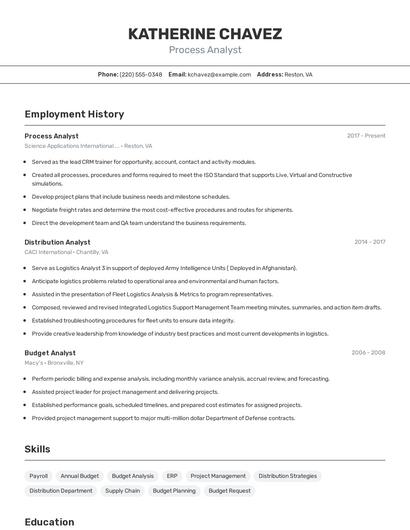
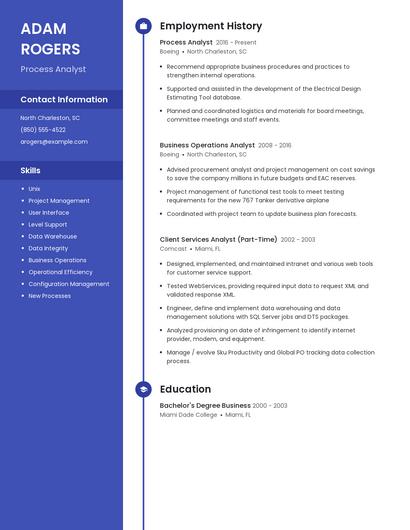
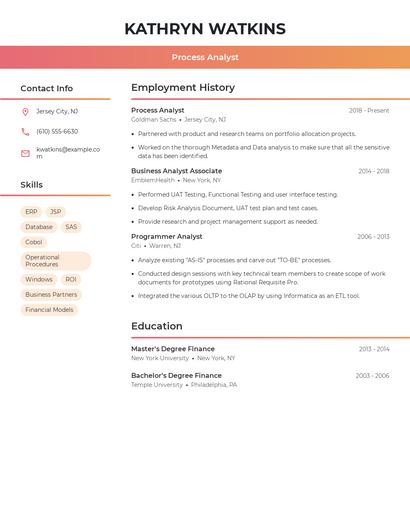
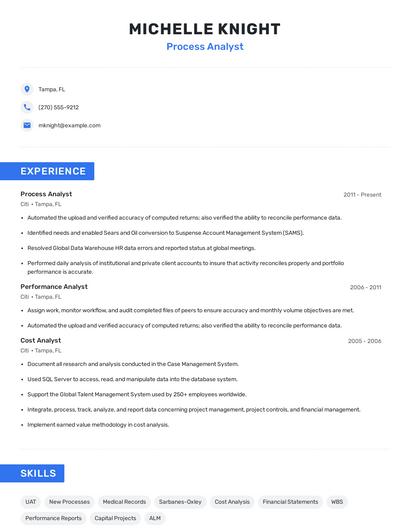
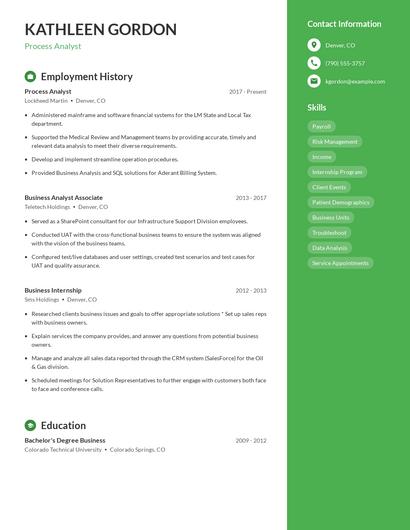
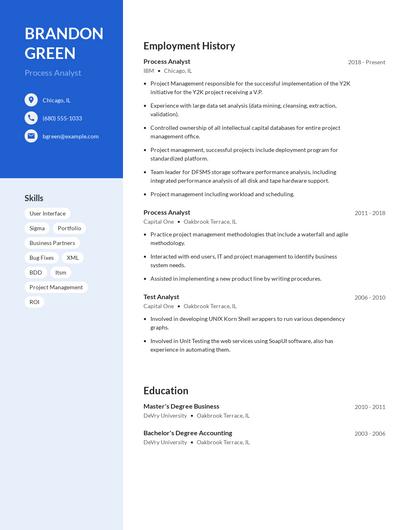
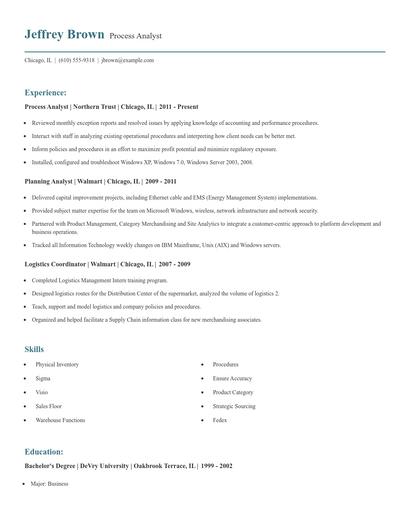
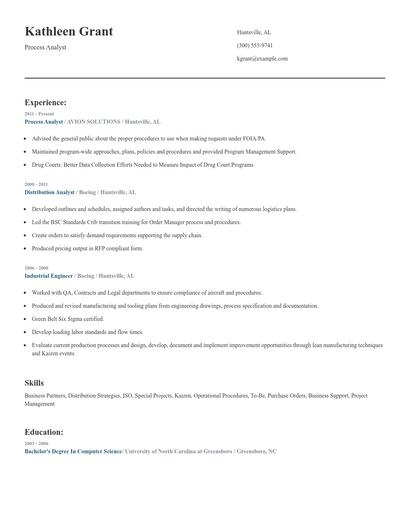
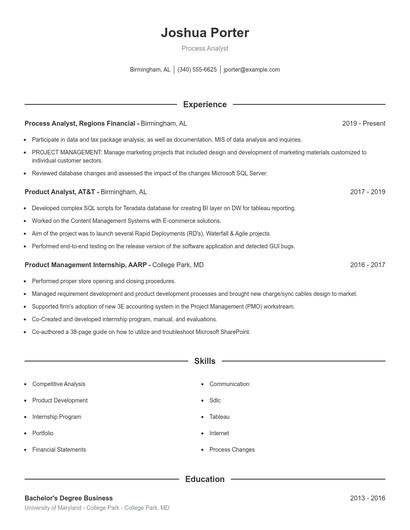
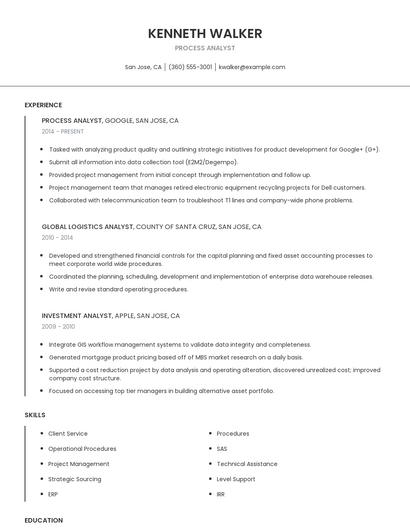
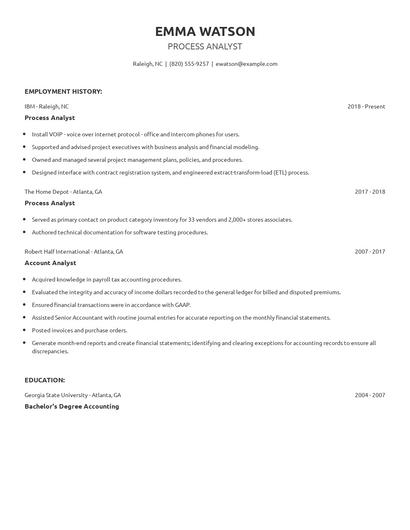
Choose from 10+ customizable process analyst resume templates
Build a professional process analyst resume in minutes. Browse through our resume examples to identify the best way to word your resume. Then choose from 10+ resume templates to create your process analyst resume.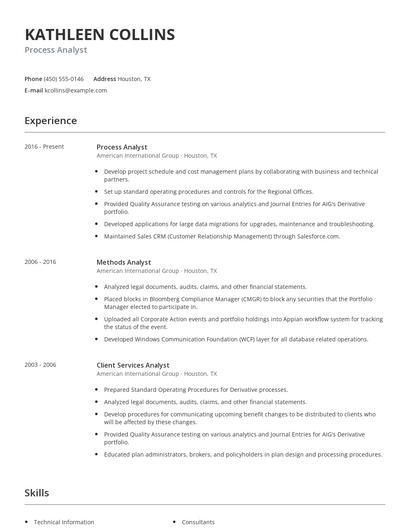
Apply for process analyst jobs
Now it's time to start searching for a process analyst job. Consider the tips below for a successful job search:
- Browse job boards for relevant postings
- Consult your professional network
- Reach out to companies you're interested in working for directly
- Watch out for job scams
How did you land your first process analyst job

Are you a process analyst?
Share your story for a free salary report.
Average process analyst salary
The average process analyst salary in the United States is $73,233 per year or $35 per hour. Process analyst salaries range between $49,000 and $108,000 per year.
What am I worth?

How do process analysts rate their job?
Process analyst reviews

Generating data and consulting. Using Microsoft excel and Google sheets.
Sitting for long periods of time.
Too much detail oriented
Process analyst FAQs
Search for process analyst jobs
Updated January 8, 2025
