Average Salary Increase Over 10 Years [2026]
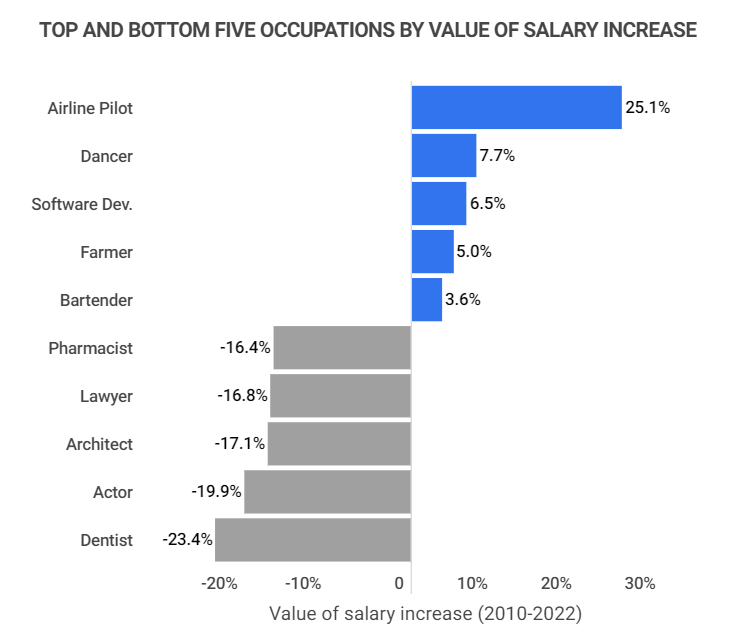
Average Salary Increase Research Summary: While nominal salaries have increased over the past decade, many American workers have found their earnings unable to keep pace with inflation. Below is a chart that analyzes salary increases across various occupations over the past ten years, adjusted for inflation.
Key Takeaways:
-
The Airline Pilot occupation has experienced the largest salary increase in the past decade, with an overall increase of 71.9% and a 25.1% rise when adjusted for inflation.
-
Only seven occupations have recorded a positive salary value change over the last ten years when adjusted for inflation.
-
The occupations with the most significant salary declines in the past decade include Dentists (-23.4%), Actors (-19.9%), and Architects (-17.1%).
For further analysis, we broke down the data in the following ways:
Trends | Value
| Occupation | Average Salary (2022) | Average Salary (2010; Adjusted for Inflation) | Percentage of Salary Increase | Value of Change (When Adjusted for Inflation) |
|---|---|---|---|---|
| Average Annual Salary | $58,260 | $61,016 | 31.2% | -4.5% |
| Surgeon | $294,520 | $309,668 | 30.7% | -4.9% |
| Airline Pilot | $198,190 | $158,413 | 71.9% | 25.1% |
| Dentist | $167,160 | $218,138 | 5.3% | -23.4% |
| Lawyer | $148,030 | $177,840 | 14.4% | -16.8% |
| Pharmacist | $125,690 | $150,280 | 14.9% | -16.4% |
| Software Developer | $120,990 | $113,562 | 46.4% | 6.5% |
| Economist | $120,830 | $136,499 | 21.6% | -11.5% |
| Physician Assistant | $119,460 | $119,724 | 37.1% | -0.2% |
| Veterinarian | $109,920 | $127,184 | 18.7% | -13.6% |
| Engineer | $107,644 | $121,765 | 21.5% | -11.6% |
| Financial Analyst | $106,340 | $118,212 | 23.6% | -10.0% |
| Computer Programmer | $96,650 | $102,907 | 29.0% | -6.1% |
| Physical Therapist | $92,920 | $107,152 | 19.1% | -13.3% |
| Architect | $89,400 | $107,894 | 13.8% | -17.1% |
| Musician | $86,237 | $86,361 | 37.2% | -0.1% |
| Nurse | $82,750 | $93,042 | 22.2% | -11.1% |
| Writer | $81,120 | $90,624 | 23.0% | -10.5% |
| Police Officer | $70,740 | $76,418 | 27.2% | -7.4% |
| High School Teacher | $69,490 | $76,926 | 24.1% | -9.7% |
| Actor | $65,125 | $81,275 | 10.1% | -19.9% |
| Plumber | $63,350 | $69,191 | 25.8% | -8.4% |
| Electrician | $63,310 | $71,183 | 22.2% | -11.1% |
| Interior Designer | $62,570 | $71,581 | 20.1% | -12.6% |
| Graphic Designer | $59,970 | $66,141 | 24.6% | -9.3% |
| Chef | $56,920 | $61,524 | 27.1% | -7.5% |
| Firefighter | $55,290 | $65,577 | 15.8% | -15.7% |
| Dancer | $50,939 | $47,296 | 48.0% | 7.7% |
| Photographer | $48,210 | $49,434 | 34.0% | -2.5% |
| Construction Worker | $44,130 | $46,150 | 31.4% | -4.4% |
| Truck Driver | $37,300 | $44,158 | 16.1% | -15.5% |
| Farmer | $31,795 | $30,281 | 44.3% | 5.0% |
| Bartender | $30,340 | $29,278 | 42.4% | 3.6% |
| Server | $29,010 | $28,564 | 39.5% | 1.6% |
| Fast Food Worker | $26,060 | $25,569 | 40.0% | 1.9% |
Average Salary Increase Trends
Over the past ten years, certain jobs have seen substantial salary increases, while others have struggled with stagnant growth. The average salary increase often does not account for inflation and reflects the popularity and demand for specific jobs. While the pandemic greatly influenced job growth and salaries, the labor market has continued to evolve.
For instance, Airline Pilots have seen the highest average salary increase at 71.9%. The airline industry experienced significant shifts post-pandemic, with many pilots retiring early or taking buyouts, resulting in a shortage of pilots and increased salaries to attract new talent.
Similarly, positions such as Servers (39.5%), Fast Food Workers (40%), and Bartenders (42.4%) have also experienced notable salary increases. This trend is largely driven by the hospitality sector’s efforts to rebuild their workforce and attract employees with competitive compensation following the pandemic.
In contrast, Dentists have seen a meager average salary increase of only 5.3%. This translates to a considerable loss in real income, with a dentist’s salary now valued at over $50,000 less than it was in 2010, even as the cost of dental education has escalated significantly—from over $131,000 in 2010 to over $210,000 in 2022.
Value of Average Salary Increases
The average salary increase over the past decade tells only part of the story, as the real value of these increases in relation to inflation plays a crucial role. Unfortunately, inflation has outpaced most salary increases, leading to negative growth in salary value for numerous occupations.
The average annual salary has decreased in value by -4.5%. Certain professions, like Pharmacists, have been particularly affected; those earning an average salary of just over $150,000 per year in 2010 now bring home only $125,690, reflecting a significant -16.4% decline in salary value.
However, seven occupations have achieved positive salary value changes, including:
-
Airline Pilot (25.1%)
-
Dancer (7.7%)
-
Software Developer (6.5%)
-
Farmer (5.0%)
-
Bartender (3.6%)
-
Fast Food Worker (1.9%)
-
Server (1.6%)
Average Salary Increase FAQ
-
What is the average yearly raise?
The average yearly raise typically hovers around 3%, but recent years have seen higher averages. For example, the average yearly raise in 2022 was 4.6%, reflecting the current labor market dynamics.
This increase can be attributed to various factors including the Great Resignation, shifts in employment following the pandemic, and the need for companies to offer more competitive salaries to attract talent.
-
How much should my salary increase with inflation?
To effectively counter inflation, your salary would ideally need to increase by about 10% per year. This gap illustrates why many jobs have failed to keep up with inflation, as average annual increases fall significantly below this benchmark.
Moreover, requesting a 10% raise can be perceived as risky, making it challenging for employees to keep pace with rising costs.
Conclusion
As Americans navigate ongoing inflationary pressures in 2026, it is clear that most salaries have not kept pace. A mere one-fifth of major occupations have seen net positive increases in salary value over the past decade, leaving many workers frustrated with their compensation.
Looking ahead, companies are beginning to respond to labor shortages and competitive pressures by offering higher salaries and improved benefits. However, whether these adjustments will result in substantial improvements in overall job satisfaction and economic stability remains to be seen.

Author

Jack Flynn is a writer for Zippia. In his professional career he’s written over 100 research papers, articles and blog posts. Some of his most popular published works include his writing about economic terms and research into job classifications. Jack received his BS from Hampshire College.