Here’s How Much It Takes To Be Middle Class In Each State (Most and Least Expensive States)
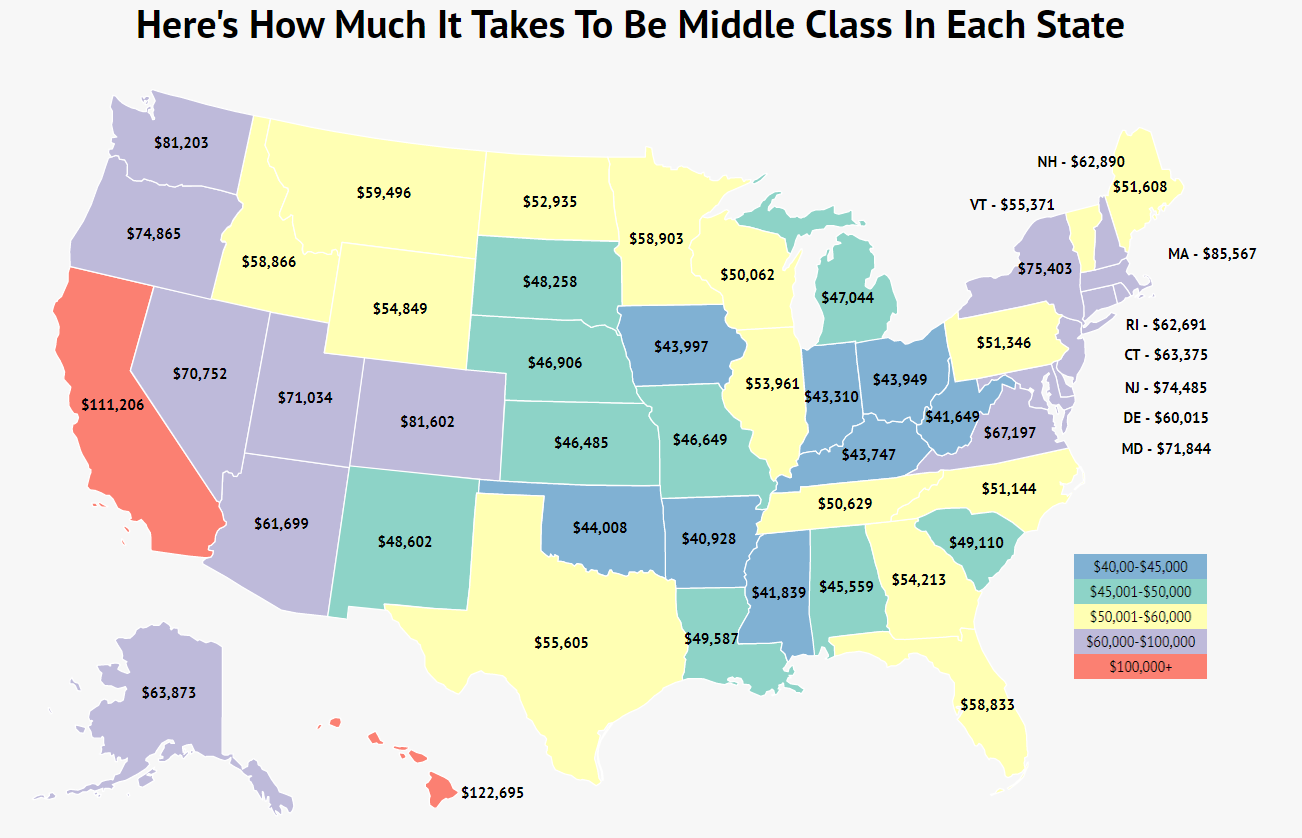
The state with the lowest barrier to entry for middle-class status is Arkansas, where an average annual income of $40,928 suffices.
Conversely, the state with the highest middle-class income requirement is Hawaii, where you must earn at least $122,695 annually to be considered middle class.
Nationally, the average income to be classified as middle class stands at $60,000.
For many, pursuing a career is fundamentally intertwined with the aspiration of achieving the American Dream. While personal fulfillment is essential, financial stability remains a primary motivator. The middle class is often defined as the segment of earners situated between the lower and upper classes, yet in some states, even the median income falls short of providing a comfortable lifestyle.
To better understand the financial landscape of middle-class living across the United States, we analyzed home prices and living expenses to determine the salary required to attain middle-class status in each state.
Below are the 10 states where the highest income is necessary to qualify as middle class:
States With The Highest Middle-Class Income
| Rank | State | Middle Class Income |
|---|---|---|
| 1 | Hawaii | $122,695 |
| 2 | California | $111,206 |
| 3 | Massachusetts | $85,567 |
| 4 | Colorado | $81,602 |
| 5 | Washington | $81,203 |
| 6 | New York | $75,403 |
| 7 | Oregon | $74,865 |
| 8 | New Jersey | $74,485 |
| 9 | Maryland | $71,844 |
| 10 | Utah | $71,034 |
Continue reading for a detailed breakdown of the costs in these states and insight into why Southern and Midwestern states tend to be more affordable.
1. Hawaii

Income needed to be middle class: $122,695
Hawaii is often seen as a tropical paradise, but this idyllic setting comes with a hefty price tag. The average home price in Hawaii is around $670,600, necessitating an annual income of $122,695 to maintain financial stability without excessive debt.
2. California

Income needed to be middle class: $111,206
In California, the median income is approximately $91,377. This figure is about $20,000 less than what is actually needed to live comfortably in this high-cost state.
3. Massachusetts

Income needed to be middle class: $85,567
Massachusetts is recognized as the most educated state in the U.S. However, the burden of student debt, with an average payment of $229, poses a significant challenge to achieving middle-class stability.
4. Colorado

Income needed to be middle class: $81,602
Known for its scenic beauty and outdoor lifestyle, Colorado also has a high cost of living. Average monthly expenses for car payments and student loans can quickly add up, making it essential for families to earn more to afford basic necessities.
5. Washington

Income needed to be middle class: $81,203
With a median income of $94,709, Washington sees a significant portion of its residents earning below the threshold needed for a middle-class lifestyle.
6. New York
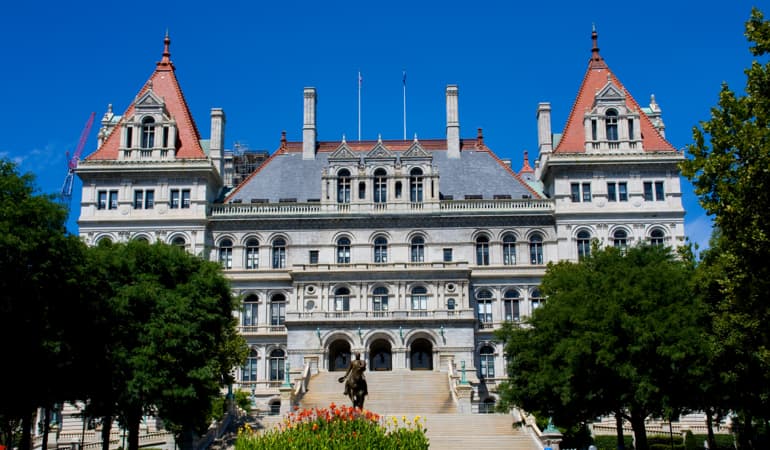
Income needed to be middle class: $75,403
While $75,403 may seem reasonable, in New York City it barely covers the essentials, let alone a decent lifestyle, highlighting the cost of living in urban areas.
7. Oregon

Income needed to be middle class: $74,865
In Oregon, earning $74,865 can allow for homeownership, but many residents still face the challenge of managing student loans and car payments.
8. New Jersey

Income needed to be middle class: $74,485
New Jersey remains an attractive option for those moving from high-cost areas like New York, yet it still presents a significant financial challenge for many residents.
9. Maryland

Income needed to be middle class: $71,844
In Maryland, the proximity to Washington D.C. drives up living costs, making it necessary for residents to earn a substantial income to maintain a middle-class lifestyle.
10. Utah

Income needed to be middle class: $71,034
Utah is one of the fastest-growing states in the U.S., but an influx of families from more expensive states can increase living costs for existing residents.
How We Determined This
To define middle class, we focused on financial stability rather than just social mobility, assessing the income required to cover living expenses and still save. Housing is typically the largest expense for most households, so we began with average mortgage costs based on home values from the U.S. Census.
While home prices can vary significantly within states, we used averages as a starting point. We calculated monthly mortgage payments using a standard 30-year mortgage with a 3.9% interest rate, excluding variables like PMI and taxes for consistency.
Additionally, we factored in average car payments and student loan debts, noting that nearly half of Americans carry either or both. Our data on student loans came from an analysis of Truebill users, while car payment data was sourced from Autoline.
Recognizing that some households may carry multiple debts, we applied a single average to keep our calculations aligned with national averages. Financial advisors recommend that total debt payments should not exceed 36% of income to maintain financial health.
Middle Class Living Isn’t Cheap
In several of these states, the median incomes fall below what is necessary for a comfortable middle-class lifestyle, impacting a significant percentage of the population. Lifestyle choices also play a critical role; families with higher debts may find the required middle-class income insufficient, while those living more frugally may manage with less.
For a comprehensive look at the average costs calculated, refer to the table below:
Income Needed To Be Middle Class In Each State
| State | Middle Class Income | Average Monthly Car Payment | Average Student Loans | Mortgage Needed For Average Home |
|---|---|---|---|---|
| Hawaii | $122,695 | $310 | $200 | $3,171 |
| California | $111,206 | $358 | $221 | $2,757 |
| Massachusetts | $85,567 | $328 | $229 | $2,010 |
| Colorado | $81,602 | $336 | $208 | $1,904 |
| Washington | $81,203 | $336 | $212 | $1,888 |
| New York | $75,403 | $333 | $223 | $1,706 |
| Oregon | $74,865 | $305 | $215 | $1,726 |
| New Jersey | $74,485 | $330 | $226 | $1,679 |
| Maryland | $71,844 | $330 | $216 | $1,609 |
| Utah | $71,034 | $334 | $202 | $1,595 |
| Nevada | $70,752 | $387 | $191 | $1,545 |
| Virginia | $67,197 | $320 | $216 | $1,480 |
| Alaska | $63,873 | $300 | $207 | $1,409 |
| Connecticut | $63,375 | $329 | $225 | $1,347 |
| New Hampshire | $62,890 | $301 | $213 | $1,373 |
| Rhode Island | $62,691 | $333 | $218 | $1,330 |
| Arizona | $61,699 | $354 | $200 | $1,297 |
| Delaware | $60,015 | $320 | $212 | $1,268 |
| Montana | $59,496 | $289 | $201 | $1,295 |
| Minnesota | $58,903 | $332 | $215 | $1,220 |
| Idaho | $58,866 | $327 | $177 | $1,262 |
| Florida | $58,833 | $333 | $196 | $1,236 |
| Texas | $55,605 | $375 | $204 | $1,089 |
| Vermont | $55,371 | $315 | $201 | $1,145 |
| Wyoming | $54,849 | $317 | $176 | $1,152 |
| Georgia | $54,213 | $374 | $200 | $1,052 |
| Illinois | $53,961 | $343 | $217 | $1,059 |
| North Dakota | $52,935 | $300 | $213 | $1,075 |
| Maine | $51,608 | $322 | $210 | $1,016 |
| Pennsylvania | $51,346 | $328 | $216 | $996 |
| North Carolina | $51,144 | $320 | $199 | $1,015 |
| Tennessee | $50,629 | $331 | $202 | $986 |
| Wisconsin | $50,062 | $327 | $205 | $970 |
| Louisiana | $49,587 | $394 | $193 | $901 |
| South Carolina | $49,110 | $309 | $201 | $963 |
| New Mexico | $48,602 | $316 | $214 | $928 |
| South Dakota | $48,258 | $310 | $192 | $946 |
| Michigan | $47,044 | $332 | $206 | $873 |
| Nebraska | $46,906 | $322 | $199 | $886 |
| Missouri | $46,649 | $338 | $208 | $853 |
| Kansas | $46,485 | $344 | $201 | $850 |
| Alabama | $45,559 | $367 | $204 | $796 |
| Oklahoma | $44,008 | $365 | $195 | $760 |
| Iowa | $43,997 | $323 | $205 | $792 |
| Ohio | $43,949 | $335 | $200 | $783 |
| Kentucky | $43,747 | $324 | $199 | $789 |
| Indiana | $43,310 | $327 | $199 | $773 |
| Mississippi | $41,839 | $323 | $198 | $734 |
| West Virginia | $41,649 | $320 | $199 | $730 |
| Arkansas | $40,928 | $305 | $201 | $722 |

Author

Kathy is the head of content at Zippia with a knack for engaging audiences. Prior to joining Zippia, Kathy worked at Gateway Blend growing audiences across diverse brands. She graduated from Troy University with a degree in Social Science Education.