- Interview Attire Styles
- Interview Attire For Women
- Interview Attire For Men
- Attire For Specific Locations
- Interview Attire Tips
Modern Dress Codes: Navigating Workplace Attire in 2026

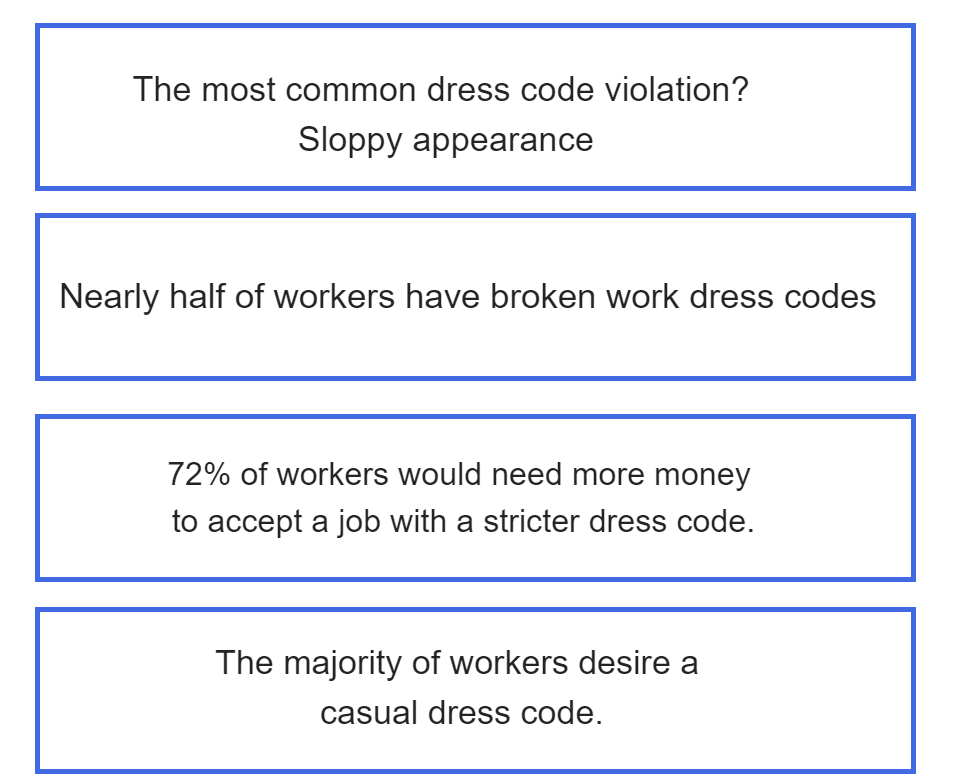
The most prevalent dress code violation remains showing too much skin, reported as the top issue in 29 states.
46% of employees believe jeans should always be acceptable at work, while another 51% feel they should be permitted occasionally.
23% of remote workers admit they do not adhere to any dress code.
Only 1% of employees advocate for a strictly business formal dress code.
When it comes to workplace attire, the rules have evolved significantly. Gone are the days when “dress to impress” meant a suit and tie for every occasion. Today, many employees opt for a more relaxed approach, often favoring comfort over formality.
While some professionals wear uniforms, others face the pressure of investing in expensive business professional attire. Meanwhile, many look forward to the beloved “jeans Friday” or struggle to conceal tattoos beneath their collared shirts.
To better understand current workplace trends, we surveyed over 2,000 American workers about their clothing choices, even when they might not be appropriate. The findings reveal a landscape where casual attire and individuality take precedence.
Quick Facts
Other Interesting Findings
-
Following a sloppy appearance, the most common dress code missteps include showing too much skin and dressing too casually.
-
27% of remote employees maintain a dress code for video calls, but only from the waist up.
-
13% of remote workers only dress appropriately when a supervisor or important client is present on a call.
-
Approximately 1-in-3 workers have felt uncomfortable due to a colleague’s choice of attire.
-
Most employees (a significant 87%) believe tattoos should be accepted in the workplace.
-
More than half of respondents view flip-flops and Crocs as inappropriate for work settings.
How Do Workers Want To Dress For Work?
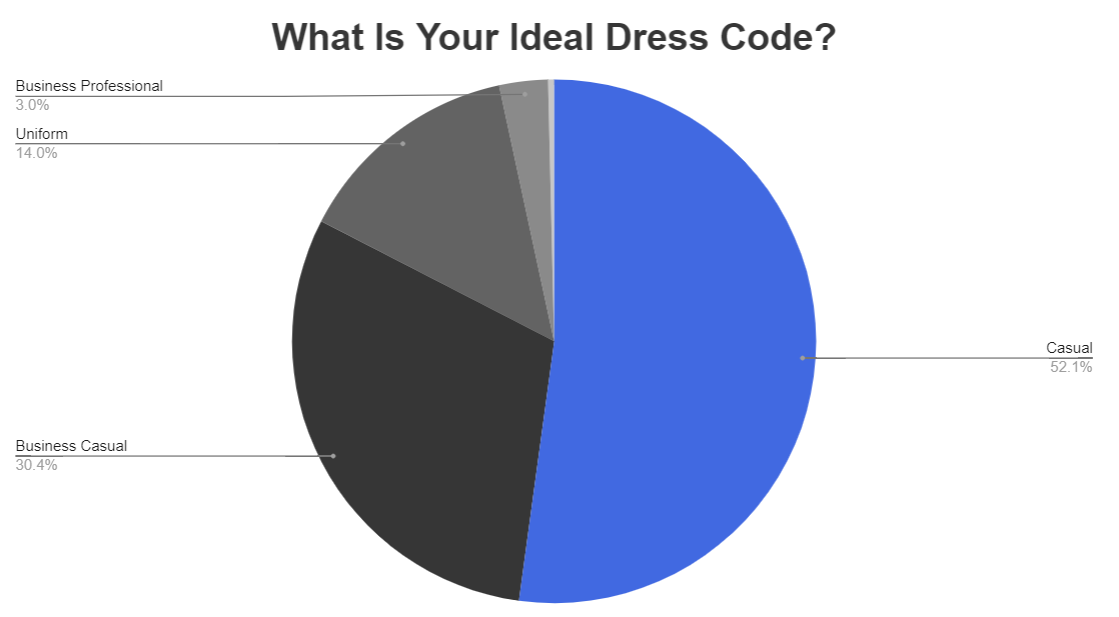
A majority of employees (52%) prefer a casual work environment. This inclination is hardly surprising given the enthusiastic support for jeans and tattoos in the office.
Close behind, 30% favor a business casual atmosphere, which often transforms jeans into khakis and graphic tees into polo shirts.
Another 14% appreciate wearing uniforms, which eliminate the daily outfit dilemma and can also help reduce clothing expenses.
While a small percentage of workers still prefer business professional or formal attire, it is clear that the majority seek a more relaxed dress code.
Most Common Dress Code Violations
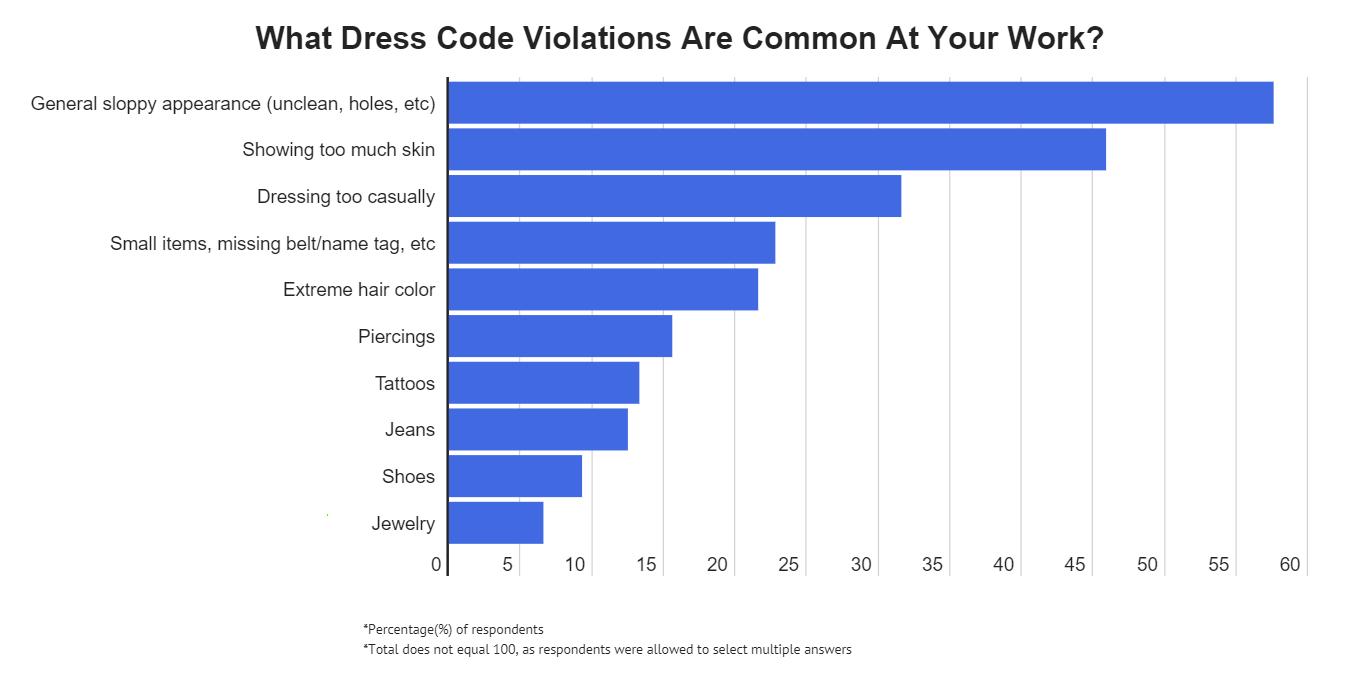
The three most frequent dress code violations include sloppy appearance, overly casual attire, and showing too much skin.
These categories may vary in interpretation—what’s considered casual to one person may differ for another. However, it’s evident that many employees are dissatisfied with their workplace dress guidelines.
In addition to the major offenses, workers often disregard dress codes through piercings, funky hairstyles, and unconventional footwear. Below are some other common violations.
Other Dress Code Violations
-
Inappropriate slogans on t-shirts
-
Political attire
-
Athleisure wear
Clearly, many individuals feel that dress codes are not worth following; 47% of respondents confessed to violating them.
To explore the reasons behind these violations, we asked participants about their grievances with dress codes. The responses were revealing.
Common Reasons Behind Dress Code Discontent
-
Uncomfortable clothing
-
High costs associated with maintaining an appropriate wardrobe
-
Incompatibility with job functions
-
Inappropriately strict rules regarding ethnic hairstyles
-
Discrepancies in standards for different genders
The majority of those who dislike their workplace dress codes cited the high costs, discomfort, and unnecessary nature of these requirements. Additionally, concerns were raised about racially insensitive regulations and gender-based discrepancies that lead to workplace tension.
People Have Very Strong Opinions On Footwear
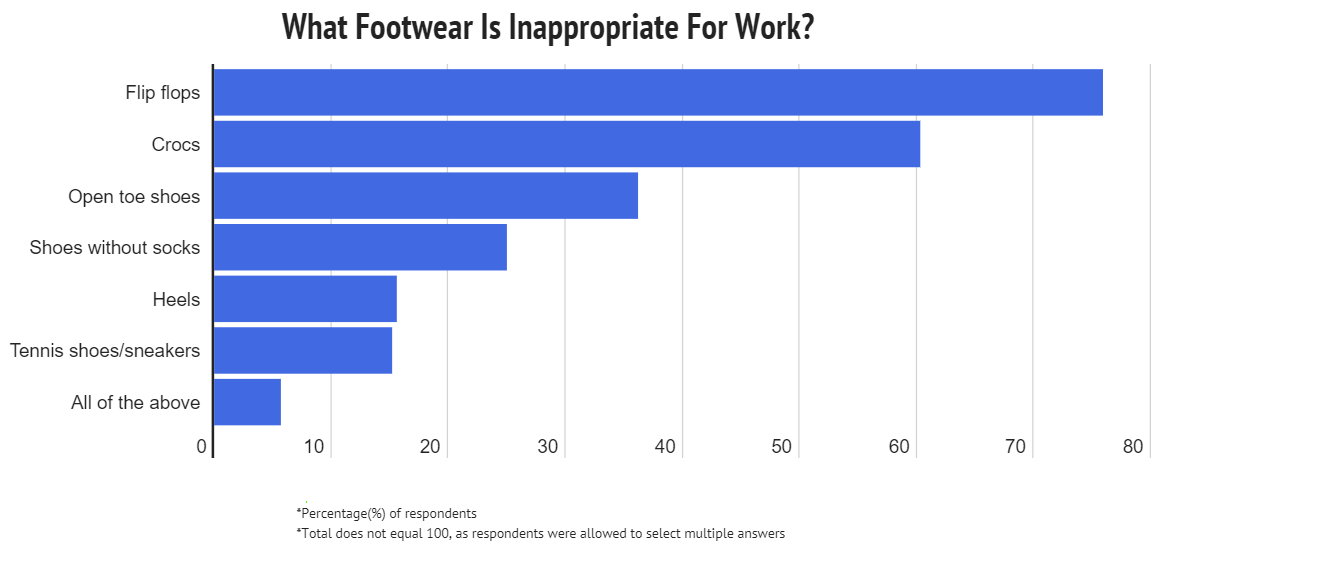
One notable finding from the survey is the strong opinions employees hold regarding footwear.
More than half of respondents deemed flip-flops and Crocs inappropriate for the workplace.
Others expressed discomfort with open-toed shoes and footwear worn without socks. The implications of these preferences are worth considering.
Ultimately, the appropriateness of footwear depends largely on one’s job role. For instance, it’s not ideal for an emergency room doctor to be running to a code in heels, nor would you want to see your investment banker sporting Crocs during a meeting.
METHODOLOGY
Zippia.com, a career resource platform, conducted a survey involving 2,165 workers across the U.S. regarding their work attire.
Each participant responded to questions about their current clothing choices and general sentiments about workplace dress codes. The state of Vermont was excluded due to insufficient sample size.
Dress Smart, Not Formal
It’s clear that the majority of employees are leaning towards a more casual work environment.
This shift embraces denim and tattoos, and it is likely to gain momentum as younger generations enter the workforce with their laid-back style. While this trend might not revive the struggling tie industry, it could lead to increased job satisfaction.
Nevertheless, even as “every day is casual Friday,” it’s essential to remember that you are still at work. While formal business attire may not be necessary in a relaxed environment, maintaining a neat and professional appearance is crucial.
This means wearing clean, unwrinkled clothing that doesn’t detract from your job performance. And for those working remotely, feel free to enjoy the comfort of your favorite loungewear.
How Each State Is Showing Up To Work
| State | Most Common Dress Code Violation |
|---|---|
| Oklahoma | Dressing too casually |
| Massachusetts | Dressing too casually |
| Ohio | Dressing too casually |
| Illinois | Dressing too casually |
| Maryland | Dressing too casually |
| New Mexico | Dressing too casually |
| Kansas | Dressing too casually |
| Rhode Island | Dressing too casually |
| Montana | Dressing too casually |
| Colorado | Dressing too casually |
| South Dakota | Dressing too casually |
| Hawaii | Dressing too casually |
| Maine | Dressing too casually |
| Alaska | General sloppy appearance (unclean, holes in clothing, etc) |
| Virginia | General sloppy appearance (unclean, holes in clothing, etc) |
| South Carolina | General sloppy appearance (unclean, holes in clothing, etc) |
| Pennsylvania | General sloppy appearance (unclean, holes in clothing, etc) |
| Kentucky | General sloppy appearance (unclean, holes in clothing, etc) |
| Iowa | General sloppy appearance (unclean, holes in clothing, etc) |
| Idaho | General sloppy appearance (unclean, holes in clothing, etc) |
| New Hampshire | General sloppy appearance (unclean, holes in clothing, etc) |
| Nebraska | General sloppy appearance (unclean, holes in clothing, etc) |
| New York | Showing too much skin |
| California | Showing too much skin |
| Georgia | Showing too much skin |
| Connecticut | Showing too much skin |
| Florida | Showing too much skin |
| Wisconsin | Showing too much skin |
| Michigan | Showing too much skin |
| Texas | Showing too much skin |
| Louisiana | Showing too much skin |
| North Carolina | Showing too much skin |
| New Jersey | Showing too much skin |
| Washington | Showing too much skin |
| Alabama | Showing too much skin |
| Nevada | Showing too much skin |
| Minnesota | Showing too much skin |
| Indiana | Showing too much skin |
| Arkansas | Showing too much skin |
| Tennessee | Showing too much skin |
| Missouri | Showing too much skin |
| Mississippi | Showing too much skin |
| Oregon | Showing too much skin |
| Utah | Showing too much skin |
| Delaware | Showing too much skin |
| Wyoming | Showing too much skin |
| West Virginia | Showing too much skin |
| Arizona | Showing too much skin |
| North Dakota | Showing too much skin |
- Interview Attire Styles
- Interview Attire For Women
- Interview Attire For Men
- Attire For Specific Locations
- Interview Attire Tips

Author

Kathy is the head of content at Zippia with a knack for engaging audiences. Prior to joining Zippia, Kathy worked at Gateway Blend growing audiences across diverse brands. She graduated from Troy University with a degree in Social Science Education.