Research Summary: As we advance into 2026, the federal minimum wage remains unchanged at $7.25, a rate that has been in effect since 2009. In response to the increasing cost of living, many states have taken the initiative to implement higher minimum wages. Currently, 31 states have established minimum wage laws that exceed the federal standard, addressing regional disparities in living costs.
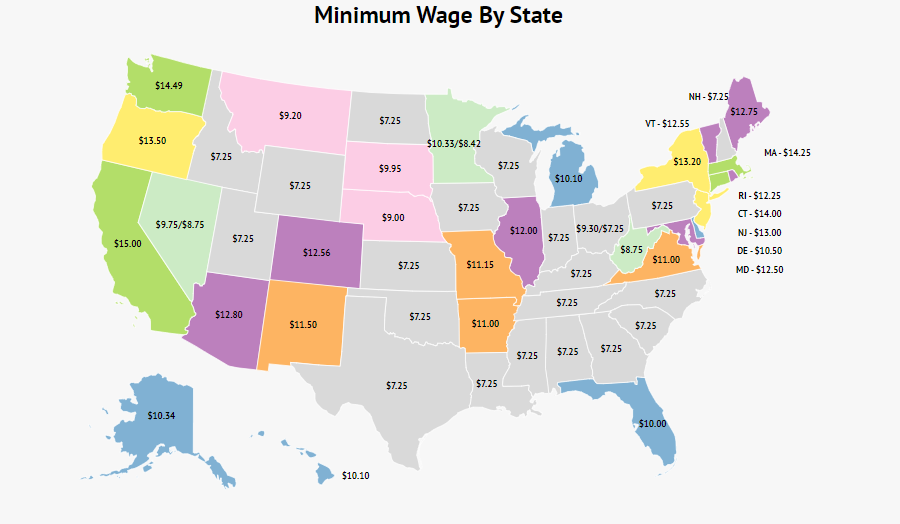
In this article, we delve into crucial details regarding minimum wage across the United States, presenting a comprehensive overview of state-specific minimum wage laws:
| State | Minimum Wage (2026) |
|---|---|
| Alabama | $7.25 |
| Alaska | $10.34 |
| Arizona | $12.80 |
| Arkansas | $11.00 |
| California | $15.00 |
| Colorado | $12.56 |
| Connecticut | $14.00 |
| Delaware | $10.50 |
| D.C. | $15.20 |
| Florida | $12.00 |
| Georgia | $7.25 |
| Hawaii | $10.10 |
| Idaho | $7.25 |
| Illinois | $13.00 |
| Indiana | $7.25 |
| Iowa | $7.25 |
| Kansas | $7.25 |
| Kentucky | $7.25 |
| Louisiana | $7.25 |
| Maine | $12.75 |
| Maryland | $12.50 |
| Massachusetts | $15.00 |
| Michigan | $10.10 |
| Minnesota | $10.33/$8.42 |
| Mississippi | $7.25 |
| Missouri | $12.00 |
| Montana | $9.20 |
| Nebraska | $9.00 |
| Nevada | $11.25/$9.75 |
| New Hampshire | $7.25 |
| New Jersey | $14.00 |
| New Mexico | $12.00 |
| New York | $14.20 |
| North Carolina | $7.25 |
| North Dakota | $7.25 |
| Ohio | $9.30/$7.25 |
| Oklahoma | $7.25 |
| Oregon | $13.50 |
| Pennsylvania | $7.25 |
| Rhode Island | $12.25 |
| South Carolina | $7.25 |
| South Dakota | $9.95 |
| Tennessee | $7.25 |
| Texas | $7.25 |
| Utah | $7.25 |
| Vermont | $12.55 |
| Virginia | $11.00 |
| Washington | $15.74 |
| West Virginia | $8.75 |
| Wisconsin | $7.25 |
| Wyoming | $7.25 |
Minimum Wage By State Trends
With the federal minimum wage stagnant, most states have taken the initiative to establish their own minimum wage rates. These changes are driven by numerous economic and social factors, with advocates arguing that a minimum wage of at least $15 per hour is essential to meet the rising cost of living and stimulate economic growth.
States That Will Increase Their Minimum Wage in 2026
In 2026, several states will implement increases to their minimum wage. These include:
-
Florida: From $12.00 to $15.00
-
Virginia: From $11.00 to $15.00
-
Illinois: From $13.00 to $15.00
-
Maryland: From $12.50 to $15.00
-
New Jersey: From $14.00 to $15.00
-
Connecticut: From $14.00 to $15.00
-
Delaware: From $10.50 to $15.00
-
Rhode Island: From $12.25 to $15.00
-
Massachusetts: From $15.00 to $15.50
Minimum Wage Increase Timeline
From 2017 onwards, an average of 18-21 states per year have been raising their minimum wages, reflecting a growing movement for $15 minimum wages initiated in 2012. This trend continued in 2026, with states like Massachusetts implementing gradual increases to reach $15 per hour.
Notably, states like New Jersey and Illinois have committed to phased increases, ensuring that wages keep pace with inflation and living costs.
Benefits of Minimum Wage Increases
Support for raising the minimum wage remains strong, with 62% of Americans backing an increase. The benefits of such changes are significant, providing economic stimulation and aiding low-income families. Here are some key advantages:
-
Raising the federal minimum wage to $15 an hour could increase the income of 27.3 million workers and lift 1.3 million families out of poverty.
-
59% of women (19 million) would benefit from a $15 minimum wage.
-
31% of Black workers and 26% of Hispanic workers would see wage increases under a $15 minimum wage.
-
Research indicates that even a $1 increase in minimum wage can boost consumer spending by an average of $2,080 per year.
Minimum Wage By State FAQ
-
Which states will increase to a $15 minimum wage?
As of 2026, nine states are on track to implement a $15 minimum wage:
-
Connecticut (2026)
-
Delaware (2026)
-
Florida (2026)
-
Illinois (2026)
-
Maryland (2026)
-
Massachusetts (2026)
-
New Jersey (2026)
-
Rhode Island (2026)
-
Virginia (2026)
-
-
What percentage of Americans make minimum wage?
Approximately 1.5% of American workers earn the federal minimum wage. While this number may seem small, it represents over a million workers. Notably, the percentage of minimum-wage workers has declined over recent years.
For instance, in 2015, about 2.5% of male workers earned minimum wage, while this figure was 4.1% for female workers. This trend indicates a significant decrease in the number of minimum wage workers over time.
-
What percentage of American workers make less than $15 an hour?
Over a third of American workers earn less than $15 per hour. This represents roughly 52 million workers, underscoring the need for ongoing discussions about wage increases, especially in high-cost living states.
Moreover, the support for raising the federal minimum wage to $15 per hour remains robust at 62% across the nation.
-
When was the minimum wage last raised in the United States?
The federal minimum wage was last raised in 2009. In the years leading up to that, it saw several incremental increases. While it has remained unchanged for over 13 years, many states are now independently increasing their minimum wages.
-
Which state has the highest minimum wage?
California maintains the highest minimum wage at $15 per hour. Following closely are Washington ($15.74) and Connecticut ($14), which will also raise their minimum wage soon.
-
Which state has the lowest minimum wage?
Georgia and Wyoming have the lowest minimum wage at $5.15 per hour; however, this is superseded by the federal minimum wage of $7.25. Therefore, these states effectively follow the federal minimum wage standard.
-
How does increasing the minimum wage affect employment?
Raising the minimum wage can create a more competitive employment landscape. While it increases hiring costs for low-wage positions, leading some companies to reduce hiring, it can also improve the standard of living for workers who retain their jobs.
Conclusion
As inflation continues to impact household budgets, the federal minimum wage remains static at $7.25 for over 13 years. The landscape is changing, with 31 states opting to exceed this federal threshold, reflecting a growing recognition of the need for higher wages. In 2026, several states will implement increases, trending towards the pivotal $15 per hour mark, supported by the majority of Americans.
Continued advocacy for wage increases suggests that the push for a living wage will remain a significant focus in the labor market, as many workers strive for financial stability and recognition of their contributions to the economy.

Author

Jack Flynn is a writer for Zippia. In his professional career he’s written over 100 research papers, articles and blog posts. Some of his most popular published works include his writing about economic terms and research into job classifications. Jack received his BS from Hampshire College.