- Office Etiquette
- Office Etiquette
- Dating A Coworker
- April Fools Pranks For Work
- How To Be A Good Employee
- Pet Peeves List
- How To Write A Project Proposal
- Qualities Of A Good Worker
- How To Get Along With Your Boss
- What Engaged Employees Do Differently
- What To Say Instead Of Sorry
- How To Send A Friendly Reminder Email
- How To End A Conversation
- Sorry For The Delay
- Tattoos In The Workplace
- Sorry For The Late Reply
- How To Respond To A Compliment
- New Employee
- How To Introduce Yourself Professionally
- Welcome New Employee Announcement
- Welcome Letter
- Thank You Note To Colleague
- 30/60/90 Plan
- Getting To Know You Questions
- Job Satisfaction
- Team Building Activities
- At Will Employment
- Company Culture
- Corporate Culture
- How To Succeed At Your New Remote Job
- How To Prepare For New Job Orientation
- How To Create An Employee Handbook
- Hostile Work Environment
- Hostile Work Environment
- How To Deal With A Difficult Coworker
- What Is Human Resource Development (HRD)?
- I Hate My Job
- Burnt Out At Work
- Condescending Coworker
- Sexual Harassment In The Workplace
- Work Environment
- My Job Sucks
- Favoritism At Work
- Respect In The Workplace
- Wagner Act
- Documentation In The Workplace
- Unconscious Bias
- Ageism
- What To Do When You Feel Unappreciated At Work
- How To Respond To A Warning At Work
- How To Deal With A Passive Aggressive Coworker
- What To Do When You're Unhappy At Work
- I Hate My Boss
- Gaslighting Boss
- Signs You're Underpaid
- Insubordination At Work
- Missing Work
- Communicating
- Send Retirement Wishes
- Write A Congratulations Email
- Professional Voicemail Greeting Examples
- Made A Mistake At Work
- Google Tricks
- Appeal Letter
- Employee Morale
- How To Write A Professional Email
- Out Of Office Message
- Small Group Icebreakers
- Memo Format
- Memo Examples
- Cell Phone At Work
- Meeting Minutes
- Communication Barriers
- How To Take Notes
- How To Brainstorm
- Ask For A Mental Health Day
- Transfer Request Letter And Email Examples
- How To Write A Business Proposal
- How To Deal With A Lazy Coworker
- How To Write A Rejection Letter
- How To Say No
- Scheduling
- Personal Goals
Find a Job You Really Want In
Feeling the need for a sick day? In today’s fast-paced work environment, many employees call in “sick” for a variety of reasons beyond just physical illness. From mental health days to job interviews, there are times when stepping away from work is essential for well-being.
In our latest survey of 2,000 American workers, we explored the most common reasons for calling in sick as well as the trends in how employees navigate these absences. Interestingly, the rates vary significantly across different states.
How Many Workers Are Calling in “Sick” in Each State?
Use the map below to discover the percentage of workers calling in “sick” in each state.
Additional Findings
- While most employees notify their boss less than six hours before their shift, a daring 3% inform their supervisors after they are already due at work.
- Following genuine illness, the most frequent reason for calling in sick is for mental health.
- A majority (53%) of workers opt to call in sick verbally, while only 25% text their employers.
- Workers in Wisconsin, Utah, and Minnesota are the least likely to call in under non-illness circumstances.
- Conversely, Connecticut, New Jersey, and New Hampshire see the highest rates of “sick” days being taken.
All the Reasons People Call in Sick
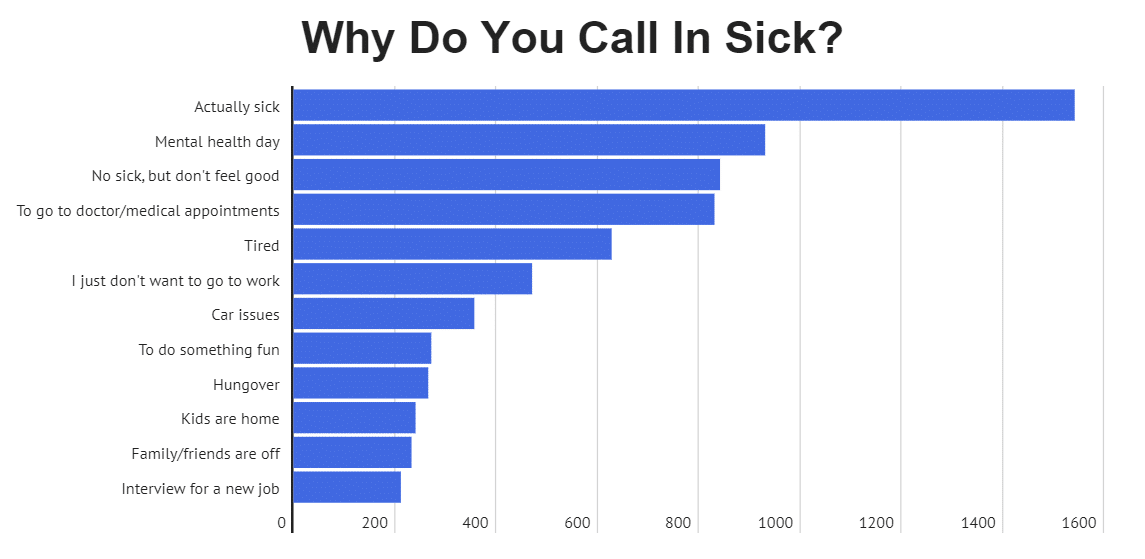
We invited workers to select all the reasons they call in sick, acknowledging that sick days can encompass a variety of situations—from genuine illness to needing a mental health break.
Our findings reveal that the majority of workers who call in sick do so because they are genuinely unwell. However, right behind that, many are utilizing sick days for mental health reasons. A notable number also cite tiredness or feeling unwell but not sick enough to warrant a day off. Additionally, some workers admit to taking a sick day to recover from a hangover or to engage in leisure activities. An interesting 11% have even used sick days to attend interviews for new job opportunities.
To ensure we captured the full picture, we asked respondents for “other” reasons for their sick days:
Other Reasons People Have Called In Sick
- Stolen vehicle
- Breakups
- Taking a holiday not recognized by company policy
- Chronic health conditions
- Feeling unprepared for the day
- Workplace stress
- Home maintenance issues
- Bed bug infestation
- Accidentally overslept
- Child-related issues (childcare, illness, etc.)
- Pursuing recreational activities
The top three “other” reasons provided included chronic health conditions, childcare issues, and personal crises such as breakups or funerals.
Interestingly, some respondents indicated that their need for sick days stemmed from a toxic work environment. One individual shared, “I called in sick to avoid working because my boss was abusive and the workplace was hostile. I genuinely feared going to work.” Many cited stress from management, workplace drama, and general anxiety as contributing factors for needing a break.
The silver lining? Employers can reduce absenteeism by fostering healthier work environments. The downside? Often, those in leadership roles are the very source of the stress prompting employees to take sick days. Awkward, indeed.
Methodology
This study was conducted by Zippia.com, a career resource platform, gathering insights from 2,000 workers across the United States about their reasons for calling in sick.
Go Ahead and Take a Sick Day, But Maybe Not Too Many
It’s important to note that most employees aren’t calling in sick for trivial reasons.
While some may not have a fever, they often need a mental health break or have pressing medical appointments. Others may find themselves homebound due to transportation issues or childcare responsibilities.
Indeed, 13% of workers admit to nursing a hangover, and around 14% utilize the day for leisure, but the majority are not simply enjoying a day off.
Employers should recognize the human side of their employees, understanding that personal issues can intersect with work obligations. Ideally, employees returning from a day off will feel rejuvenated and ready to tackle their responsibilities.
Employees shouldn’t feel guilty about taking time off when they reach their limits or when family emergencies arise. However, if you frequently call in sick to escape work-related stress, it may affect your professional reputation and job security. For the 24% of individuals who call in simply because they don’t want to work, it might be time to explore new job opportunities that align better with your career aspirations.
The States That Play Hooky the Most
| Rank | State | % |
|---|---|---|
| 1 | Connecticut | 70% |
| 2 | New Hampshire | 69% |
| 3 | New Jersey | 69% |
| 4 | Kansas | 65% |
| 5 | Kentucky | 64% |
| 5 | New Mexico | 64% |
| 7 | California | 60% |
| 8 | Indiana | 58% |
| 9 | New York | 58% |
| 10 | Missouri | 58% |
| 11 | Florida | 57% |
| 11 | Mississippi | 57% |
| 13 | Washington | 56% |
| 14 | Colorado | 56% |
| 14 | Arkansas | 56% |
| 16 | Illinois | 55% |
| 17 | Texas | 55% |
| 18 | Idaho | 55% |
| 18 | Vermont | 55% |
| 20 | Pennsylvania | 53% |
| 21 | Oklahoma | 52% |
| 22 | Arizona | 50% |
| 22 | Nebraska | 50% |
| 22 | Rhode Island | 50% |
| 22 | Hawaii | 50% |
| 22 | North Dakota | 50% |
| 22 | Alaska | 50% |
| 22 | South Dakota | 50% |
| 22 | Wyoming | 50% |
| 30 | Georgia | 49% |
| 31 | Ohio | 48% |
| 32 | Tennessee | 48% |
| 33 | South Carolina | 48% |
| 34 | Iowa | 47% |
| 35 | Louisiana | 45% |
| 35 | Montana | 45% |
| 37 | Delaware | 43% |
| 38 | Oregon | 42% |
| 39 | North Carolina | 41% |
| 40 | West Virginia | 40% |
| 40 | Nevada | 40% |
| 42 | Virginia | 36% |
| 43 | Alabama | 36% |
| 44 | Michigan | 35% |
| 45 | Massachusetts | 34% |
| 46 | Maine | 33% |
| 47 | Minnesota | 31% |
| 48 | Utah | 29% |
| 50 | Wisconsin | 21% |
- Office Etiquette
- Office Etiquette
- Dating A Coworker
- April Fools Pranks For Work
- How To Be A Good Employee
- Pet Peeves List
- How To Write A Project Proposal
- Qualities Of A Good Worker
- How To Get Along With Your Boss
- What Engaged Employees Do Differently
- What To Say Instead Of Sorry
- How To Send A Friendly Reminder Email
- How To End A Conversation
- Sorry For The Delay
- Tattoos In The Workplace
- Sorry For The Late Reply
- How To Respond To A Compliment
- New Employee
- How To Introduce Yourself Professionally
- Welcome New Employee Announcement
- Welcome Letter
- Thank You Note To Colleague
- 30/60/90 Plan
- Getting To Know You Questions
- Job Satisfaction
- Team Building Activities
- At Will Employment
- Company Culture
- Corporate Culture
- How To Succeed At Your New Remote Job
- How To Prepare For New Job Orientation
- How To Create An Employee Handbook
- Hostile Work Environment
- Hostile Work Environment
- How To Deal With A Difficult Coworker
- What Is Human Resource Development (HRD)?
- I Hate My Job
- Burnt Out At Work
- Condescending Coworker
- Sexual Harassment In The Workplace
- Work Environment
- My Job Sucks
- Favoritism At Work
- Respect In The Workplace
- Wagner Act
- Documentation In The Workplace
- Unconscious Bias
- Ageism
- What To Do When You Feel Unappreciated At Work
- How To Respond To A Warning At Work
- How To Deal With A Passive Aggressive Coworker
- What To Do When You're Unhappy At Work
- I Hate My Boss
- Gaslighting Boss
- Signs You're Underpaid
- Insubordination At Work
- Missing Work
- Communicating
- Send Retirement Wishes
- Write A Congratulations Email
- Professional Voicemail Greeting Examples
- Made A Mistake At Work
- Google Tricks
- Appeal Letter
- Employee Morale
- How To Write A Professional Email
- Out Of Office Message
- Small Group Icebreakers
- Memo Format
- Memo Examples
- Cell Phone At Work
- Meeting Minutes
- Communication Barriers
- How To Take Notes
- How To Brainstorm
- Ask For A Mental Health Day
- Transfer Request Letter And Email Examples
- How To Write A Business Proposal
- How To Deal With A Lazy Coworker
- How To Write A Rejection Letter
- How To Say No
- Scheduling
- Personal Goals

Author

Kathy is the head of content at Zippia with a knack for engaging audiences. Prior to joining Zippia, Kathy worked at Gateway Blend growing audiences across diverse brands. She graduated from Troy University with a degree in Social Science Education.