Find a Job You Really Want In
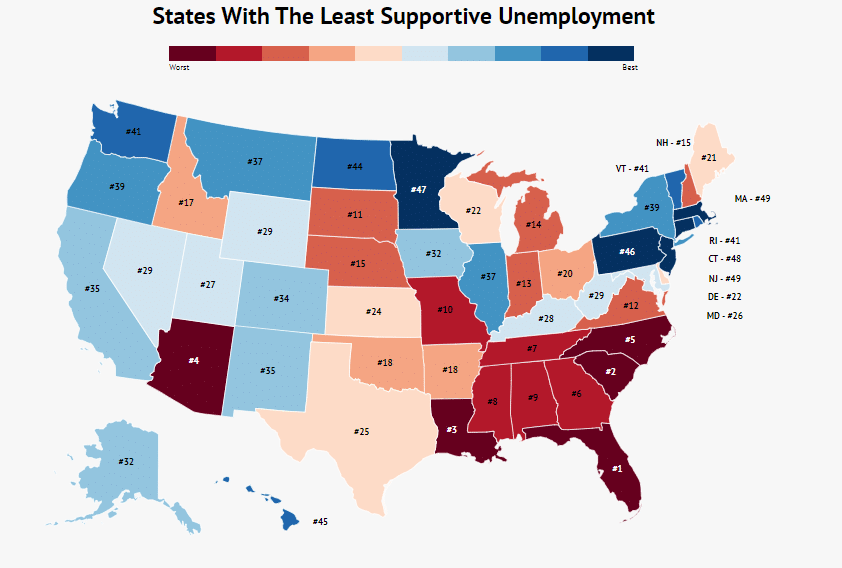
As of 2026, the landscape of unemployment benefits remains varied across the United States, highlighting significant disparities in support for unemployed workers. While federal initiatives have adjusted in response to evolving economic conditions, the core of unemployment assistance continues to rest predominantly at the state level. This means that the financial relief available to unemployed individuals varies dramatically based on geographic location.
Some states provide substantial support and extended timeframes for job seekers, while others leave residents struggling to make ends meet. Which states are offering the most assistance, and which are falling short? We analyzed unemployment systems in all 50 states to identify those where the unemployed face the greatest challenges.
States with the Least Supportive Unemployment Systems
- Florida
- South Carolina
- Louisiana
- Arizona
- North Carolina
- Georgia
- Tennessee
- Mississippi
- Alabama
- Missouri
Notably, many of the states listed are in the South, indicating a trend of limited unemployment support in this region. Continue reading to explore why these states are lacking in assistance, or jump to the end for a complete breakdown of state rankings.
How We Determined the States with the Least Supportive Unemployment
We evaluated each state’s unemployment system based on three key factors:
- Maximum weekly benefits
- Maximum duration of benefits
- Percentage of unemployed individuals actually receiving benefits
We gathered data on each state’s maximum weekly benefit and the maximum duration of unemployment eligibility from official state unemployment websites. Although federal programs have evolved, the rankings reflect the pre-existing structure of state systems.
We also referenced data to determine the percentage of unemployed individuals successfully receiving benefits in each state. While the amount and duration of benefits are crucial, access is equally important. The percentage of unemployed who receive benefits varies significantly, indicating the barriers some states impose on access to necessary support.
In light of recent trends, including increased digital access and the modernization of job application processes, it is evident that some states struggle with staffing and infrastructure to adequately support unemployed residents in claiming their rightful benefits.
Here are the states where unemployed individuals face the most significant obstacles in obtaining assistance.
1. Florida

Maximum weekly benefits: $275
Duration of benefits: 12 weeks
Percentage of unemployed receiving benefits: 18.70%
Florida ranks at the bottom with minimal unemployment support. Only 19% of the unemployed in Florida manage to secure benefits, which are capped at a meager $275 per week. This amount makes it challenging for middle-class individuals to cover essential expenses.
2. South Carolina

Maximum weekly benefits: $326
Duration of benefits: 20 weeks
Percentage of unemployed receiving benefits: 14.80%
South Carolina’s unemployment system is complicated, with only 14.8% of unemployed individuals able to navigate the process to receive benefits, leaving the majority to fend for themselves.
3. Louisiana

Maximum weekly benefits: $247
Duration of benefits: 26 weeks
Percentage of unemployed receiving benefits: 16.90%
Although Louisiana offers benefits for longer than Florida, the maximum payout is still low, and many unemployed individuals do not receive any financial assistance.
4. Arizona

Maximum weekly benefits: $240
Duration of benefits: 26 weeks
Percentage of unemployed receiving benefits: 19.70%
Arizona has a low weekly benefit cap and a complicated application process, making it difficult for unemployed residents to access necessary support.
5. North Carolina

Maximum weekly benefits: $350
Duration of benefits: 12 weeks
Percentage of unemployed receiving benefits: 20.50%
North Carolinians face a short 12-week benefit period, which can be insufficient given the lengthy hiring processes in today’s job market.
6. Georgia

Maximum weekly benefits: $365
Duration of benefits: 14 weeks
Percentage of unemployed receiving benefits: 18.80%
Despite having a higher weekly benefit cap than some states, only 18.8% of unemployed Georgians receive financial assistance, and the limited duration further complicates their situation.
7. Tennessee

Maximum weekly benefits: $275
Duration of benefits: 26 weeks
Percentage of unemployed receiving benefits: 19.90%
Tennessee’s low weekly cap means that even with a longer duration, residents often find it challenging to cover living expenses.
8. Mississippi

Maximum weekly benefits: $235
Duration of benefits: 26 weeks
Percentage of unemployed receiving benefits: 23.90%
Mississippi has the lowest maximum weekly benefit in the country, which severely limits support for those who are unemployed.
9. Alabama

Maximum weekly benefits: $275
Duration of benefits: 26 weeks
Percentage of unemployed receiving benefits: 23.90%
Alabama offers limited weekly benefits, with only around 23.9% of unemployed individuals able to access them.
10. Missouri

Maximum weekly benefits: $320
Duration of benefits: 20 weeks
Percentage of unemployed receiving benefits: 24.40%
Missouri’s unemployment system ranks poorly, with the maximum benefit being lower than many other states, which limits support for the unemployed.
Summary: States with the Most and Least Supportive Unemployment
For many individuals experiencing unemployment for the first time, navigating the complexities of state systems can be daunting. Long wait times and accessibility issues often exacerbate the challenges faced by unemployed residents. While states like New Jersey, Massachusetts, and Connecticut offer more robust support systems, the ten states listed here illustrate the struggles many individuals endure when seeking unemployment assistance.
State Unemployment, Ranked from Least Supportive to Most
| Rank | State | Max Benefit | Weeks | Unemployed Receiving |
|---|---|---|---|---|
| 1 | Florida | $275 | 12 | 19% |
| 2 | South Carolina | $326 | 20 | 15% |
| 3 | Louisiana | $247 | 26 | 17% |
| 4 | Arizona | $240 | 26 | 20% |
| 5 | North Carolina | $350 | 12 | 21% |
| 6 | Georgia | $365 | 14 | 19% |
| 7 | Tennessee | $275 | 26 | 20% |
| 8 | Mississippi | $235 | 26 | 24% |
| 9 | Alabama | $275 | 26 | 24% |
| 10 | Missouri | $320 | 20 | 24% |
| 11 | South Dakota | $414 | 26 | 15% |
| 12 | Virginia | $378 | 26 | 22% |
| 13 | Indiana | $390 | 26 | 23% |
| 14 | Michigan | $362 | 20 | 31% |
| 15 | Nebraska | $440 | 26 | 26% |
| 15 | New Hampshire | $427 | 26 | 27% |
| 17 | Idaho | $448 | 20 | 32% |
| 18 | Oklahoma | $539 | 26 | 23% |
| 18 | Arkansas | $451 | 26 | 30% |
| 20 | Ohio | $480 | 26 | 29% |
| 21 | Maine | $445 | 26 | 33% |
| 22 | Delaware | $400 | 26 | 40% |
| 22 | Wisconsin | $370 | 26 | 42% |
| 24 | Kansas | $488 | 16 | 33% |
| 25 | Texas | $521 | 26 | 27% |
| 26 | Maryland | $430 | 26 | 38% |
| 27 | Utah | $580 | 26 | 24% |
| 28 | Kentucky | $552 | 26 | 28% |
| 29 | Wyoming | $508 | 26 | 32% |
| 29 | Nevada | $469 | 26 | 37% |
| 29 | West Virginia | $424 | 26 | 42% |
| 32 | Iowa | $481 | 26 | 36% |
| 32 | Alaska | $370 | 26 | 52% |
| 34 | Colorado | $618 | 26 | 30% |
| 35 | New Mexico | $511 | 26 | 38% |
| 35 | California | $450 | 26 | 44% |
| 37 | Montana | $552 | 26 | 40% |
| 37 | Illinois | $484 | 26 | 45% |
| 39 | Oregon | $648 | 26 | 35% |
| 39 | New York | $504 | 26 | 47% |
| 41 | Washington | $790 | 26 | 34% |
| 41 | Rhode Island | $586 | 26 | 40% |
| 41 | Vermont | $513 | 26 | 47% |
| 44 | North Dakota | $618 | 26 | 40% |
| 45 | Hawaii | $648 | 26 | 43% |
| 46 | Pennsylvania | $572 | 26 | 55% |
| 47 | Minnesota | $640 | 26 | 49% |
| 48 | Connecticut | $649 | 26 | 62% |
| 49 | Massachusetts | $823 | 26 | 58% |
| 49 | New Jersey | $713 | 26 | 66% |

Author

Kathy is the head of content at Zippia with a knack for engaging audiences. Prior to joining Zippia, Kathy worked at Gateway Blend growing audiences across diverse brands. She graduated from Troy University with a degree in Social Science Education.