Survey: 33% of Workers Admit to Stealing Food from Coworkers
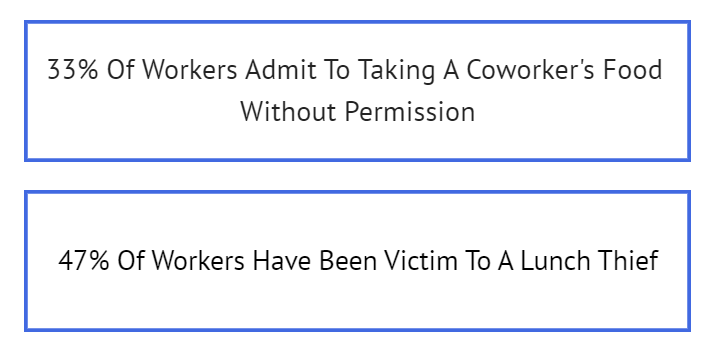
33% of workers confess to taking food from their coworkers.
47% of employees have experienced food theft at the hands of colleagues.
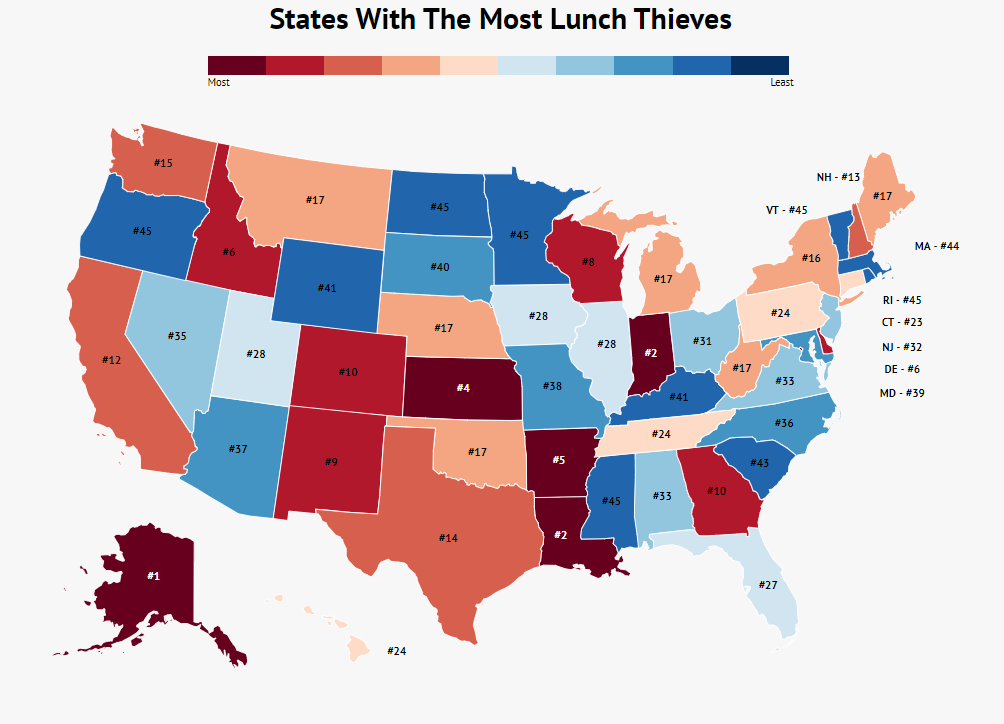
Alaska ranks highest in food theft, with 64.3% of workers admitting to stealing food.
Minnesota, Mississippi, North Dakota, Rhode Island, and Vermont report no instances of coworkers admitting to food theft.
There’s nothing quite as disheartening as discovering your lunch is missing from the work fridge. Whether it was a carefully prepared meal or just leftovers, that food was yours. Even labeling your lunch doesn’t always safeguard it from being taken.
What kind of person would brazenly take a colleague’s meal?
To investigate the phenomenon of stealing food in the workplace, we surveyed over 1,000 American employees. The findings suggest that your seemingly ordinary coworker might be more willing to swipe a bite from your lunch than you’d think.
Key Findings
Other Interesting Findings
-
Drinks are frequent targets: Respondents report that missing sodas, specialty coffees, energy drinks, and juices are often pilfered.
-
Be cautious about where you leave your food: Items on the counter and communal candy bowls are often viewed as fair game.
-
Protect your pizza: 16% of respondents feel that taking a slice of pizza doesn’t require permission.
-
A surprising 6% admit to taking food directly from a coworker’s lunchbox.
Employer-Provided Food: No Swiping Needed
Offering food in the workplace has become increasingly common, both as a perk and a strategy for enhancing employee engagement. Given the number of workers who are willing to take food without permission, it’s clear that workplace food is in high demand.
Below is a breakdown of the frequency of employer-provided food in the workplace and employee sentiments regarding food as a benefit.
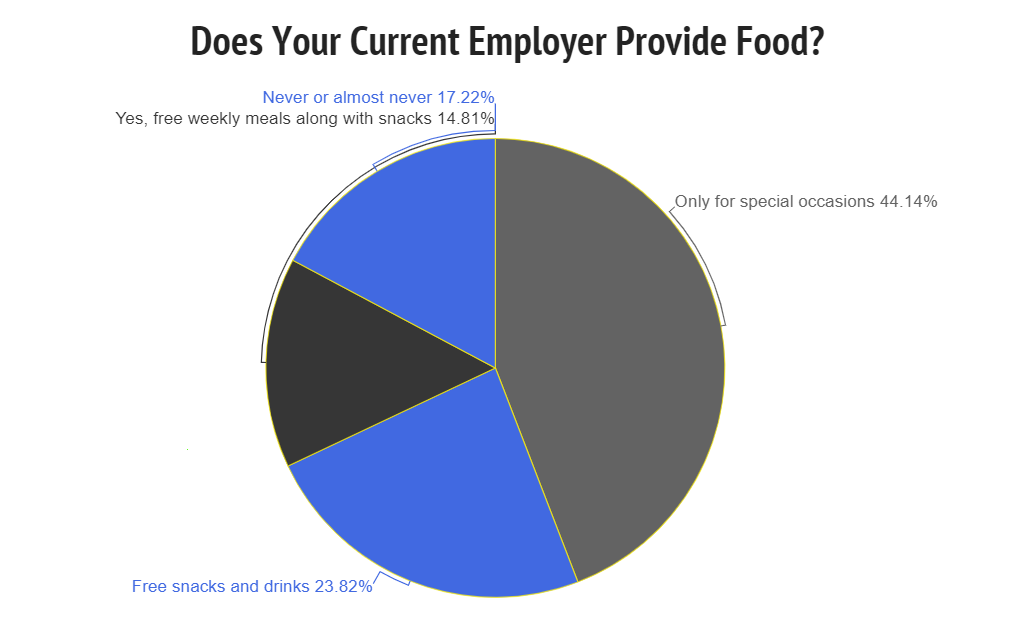
44% of workplaces provide food only during special occasions, such as holiday parties. Meanwhile, 17% of workplaces report that they never or “almost never” offer food.
Although many workplaces do not consistently provide food, 39% contribute meaningful food items regularly, including snacks, beverages, and occasional meals.
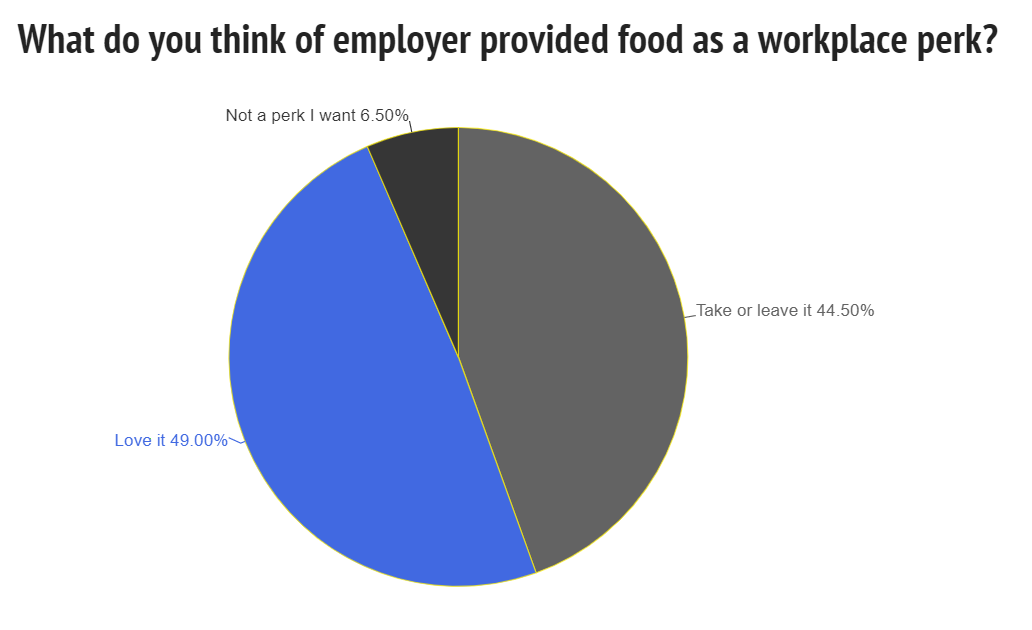
Just under half of all employees “love” the idea of employer-provided food, to the point where it influences their job decisions. An additional 45% appreciate food perks, even if they are not a deal-breaker.
Only 7% indicate that food is not a perk they desire in the workplace.
Methodology
The study was conducted by Zippia.com, a career resource platform, which surveyed 1,322 American workers to better understand food theft trends in the workplace, as well as their perspectives on food benefits. Participants were recruited through Amazon’s Mechanical Turk and were asked a series of demographic and related questions.
Someone at Your Work is Probably OK with Eating Your Lunch
Depending on the size of your organization, it’s likely that a lunch thief is lurking among your otherwise trustworthy colleagues.
So, be sure to label your lunch clearly; it might serve as a deterrent for a bold thief. If that doesn’t work, consider leaving a passive-aggressive note.
Of course, there’s also a chance that you’ve indulged in someone else’s forbidden snack. Be mindful that, even if you go unchallenged, your coworkers may suspect your pilfering—and harbor resentment.
Not only could you become the target of justified hanger, but you also risk disciplinary action that could harm your career trajectory.
Percent of Respondents Who Admitted to Taking Coworkers’ Food Without Permission, by State
| State | % Of Food Swipers |
|---|---|
| Alabama | 21.4% |
| Alaska | 64.3% |
| Arizona | 19.0% |
| Arkansas | 53.8% |
| California | 41.2% |
| Colorado | 43.2% |
| Connecticut | 31.8% |
| Delaware | 50.0% |
| Florida | 28.2% |
| Georgia | 43.2% |
| Hawaii | 28.6% |
| Idaho | 50.0% |
| Illinois | 25.0% |
| Indiana | 60.0% |
| Iowa | 25.0% |
| Kansas | 55.6% |
| Kentucky | 12.5% |
| Louisiana | 60.0% |
| Maine | 33.3% |
| Maryland | 17.9% |
| Massachusetts | 9.1% |
| Michigan | 33.3% |
| Minnesota | 0.0% |
| Mississippi | 0.0% |
| Missouri | 18.8% |
| Montana | 33.3% |
| Nebraska | 33.3% |
| Nevada | 20.0% |
| New Hampshire | 40.0% |
| New Jersey | 23.7% |
| New Mexico | 44.4% |
| New York | 35.7% |
| North Carolina | 19.1% |
| North Dakota | 0.0% |
| Ohio | 24.3% |
| Oklahoma | 33.3% |
| Oregon | 0.0% |
| Pennsylvania | 28.6% |
| Rhode Island | 0.0% |
| South Carolina | 10.5% |
| South Dakota | 16.7% |
| Tennessee | 28.6% |
| Texas | 38.1% |
| Utah | 25.0% |
| Vermont | 0.0% |
| Virginia | 21.4% |
| Washington | 36.6% |
| West Virginia | 33.3% |
| Wisconsin | 45.5% |
| Wyoming | 12.5% |

Author

Kathy is the head of content at Zippia with a knack for engaging audiences. Prior to joining Zippia, Kathy worked at Gateway Blend growing audiences across diverse brands. She graduated from Troy University with a degree in Social Science Education.