- Resume Format
- Resume Templates
- General Resume Examples
- Resume Builder
- Resume Format
- Resume Margins
- Resume Header
- Work Experience On Resume
- Irrelevant Work Experience
- Listing Languages On Resume
- Volunteer Work On Resume
- GPA On Resume
- Resume Title
- Summary Of Qualifications
- Resume Picture
- Python Project On Resume
- Google Docs Resume Template
- Professional Bio On Resume
- Multiple Positions At Same Company
- Relevant Coursework Resume
- Where And How To Put Internships On Your Resume
- Professional Resume Formats
Irrelevant Experience: Should I Include It On A Resume?
Searching for a job in 2026 presents unique challenges, even for those with the right qualifications. As you explore opportunities, you may encounter job postings that specify a required number of years of “relevant experience.”
However, you might possess the necessary work history, yet find that it isn’t classified as “relevant.” What should you do in this scenario?
In this article, discover how to leverage your seemingly irrelevant experience to your advantage.
Key Takeaways:
-
There are instances where including experience in your job description, even if not directly relevant, can be beneficial.
-
Your “irrelevant” experience may have transferable skills that apply to the role you seek.
-
Both hard and soft skills are vital and can be valuable across various positions and industries.
- Should I Include Irrelevant Work Experience On a Resume?
- Relevant vs. Irrelevant Work Experience
- Update Your Resume Now To Get Your Next Job Faster
- Is Your Work Experience Actually Irrelevant?
- Making Irrelevant Experience Relevant
- Soft Skills
- Irrelevant Hard Skills
- Final Thoughts
- Sign Up For More Advice and Jobs
Should I Include Irrelevant Work Experience On a Resume?
The answer depends on several factors. Here are some considerations to help you make an informed decision:
-
Does This Experience Add to My Value as an Employee? Before omitting any irrelevant experience from your resume, consider if it enhances your value as a candidate.
If you have experience cleaning houses, it may not resonate with employers seeking office workers. However, if you’ve undertaken a project learning to code, that could catch their interest. Companies appreciate well-rounded candidates, so if a skill could be beneficial, keep it on your resume. You never know what could set you apart from other applicants.
-
Do I Have the Space? If you’re pivoting career paths after years in the workforce, you likely have ample relevant skills to fill your resume.
However, if you’re short on space, prioritize experiences that demonstrate your fit for the job. Avoid leaving significant gaps in your work history; if necessary, list the position and dates even if detailed descriptions aren’t possible.
-
Do I Need to Fill Space? If you’re a recent graduate or transitioning from the military, including your irrelevant work experience can be crucial. Highlight its relevance to the job you’re applying for.
For instance, balancing a job while achieving a 3.8 GPA showcases responsibility. Similarly, your military background reflects discipline and accountability—qualities that employers value.
Relevant vs. Irrelevant Work Experience
Most employers prefer candidates with some relevant experience. They want to hire someone who can contribute effectively without needing extensive training.
Thus, job descriptions typically require a few years of relevant experience. Employers want assurance that you’re prepared for the role, even if your previous positions weren’t identical.
To enhance your resume, align your experiences with the qualifications listed in the job description. Highlight skills and expertise that match, but ensure you’re being truthful and avoid copying the job description verbatim.
If you find numerous qualifications you don’t meet, it might be worth exploring other opportunities. However, if only a few minor qualifications are missing, you may still secure an interview, especially if you’re lacking in direct experience.
Update Your Resume Now To Get Your Next Job Faster
Is Your Work Experience Actually Irrelevant?
Whether you’re a college student seeking your first job or a seasoned professional aiming for a career shift, your resume may include experiences that don’t directly align with your target role.
The good news is, you likely possess more relevant qualifications than you realize. For instance, if you’re applying for an interior design position, your experience as a restaurant franchise manager taught you valuable customer service skills that are applicable.
As a college student, even without a full-time office job, managing coursework alongside a part-time job demonstrates organization and work ethic—qualities that appeal to employers.
Additionally, don’t overlook extracurricular activities that may offer valuable experience. Before dismissing a job application due to a lack of specific qualifications, reassess your experiences and consider how they can be relevant. Ensure your resume effectively communicates this.
Making Irrelevant Experience Relevant
Demonstrating how your irrelevant experience applies to the position requires creativity and subtlety. While you want to present your strengths, avoid embellishing your resume.
Focus on showcasing aspects of your past work that will benefit the new role, rather than exaggerating the significance of previous positions.
Be specific about your contributions and outcomes. Instead of stating you “led a team,” provide tangible results that illustrate your capabilities.
Additionally, consider creating a new resume to increase your interview chances.
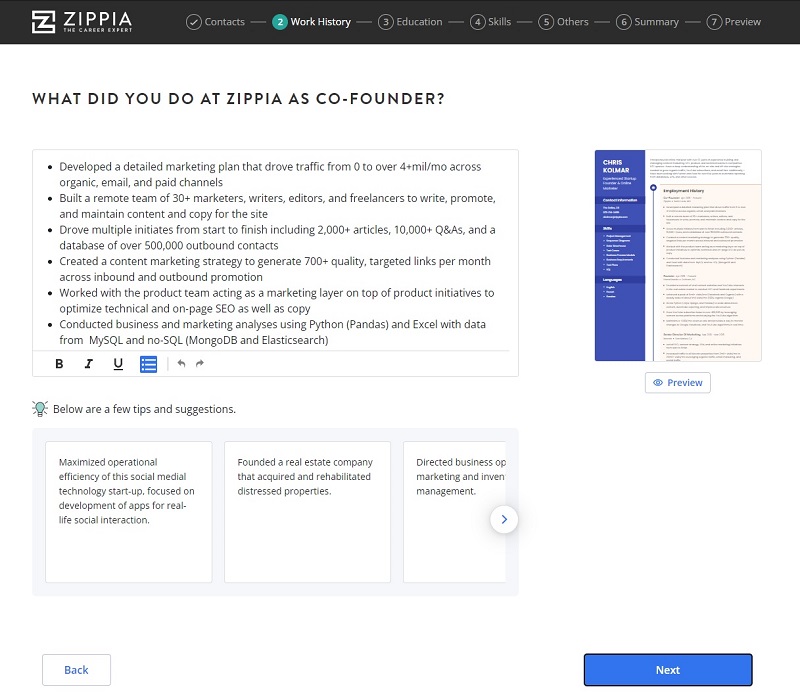
A well-crafted resume will give you an edge over other candidates. You can construct yours using our resume builder. Here’s a preview:
Soft Skills
Reviewing your irrelevant work experience may reveal the soft skills you’ve gained, such as customer service, time management, and leadership, which are highly sought after by employers.
For example, if you managed a shoe store but are applying to a different industry, you might highlight your achievements as follows:
Resolved over 1000 customer inquiries and complaints, ensuring satisfactory outcomes for all parties.
Boosted sales by 3% by analyzing customer behavior and optimizing inventory during peak times.
Coordinated 15 employee schedules, ensuring adequate staffing while accommodating employee needs and fostering effective teamwork.
These transferable soft skills should be prominently featured on your resume, especially if you’re transitioning to a new career. If you’ve received any professional awards, include those as well, as they further validate your abilities.
Irrelevant Hard Skills
While soft skills are generally transferable, demonstrating how your irrelevant experience provided you with the hard skills needed for a new position can be more challenging. However, it’s certainly achievable with creativity.
Begin by listing all technical skills relevant to the job posting and identify where you acquired them. For example, if you learned social media advertising and enhanced your Microsoft Office skills during an internship, include that experience even if it wasn’t your primary role.
If you worked as an administrative assistant in finance and are applying for a marketing position, your resume could look like this:
Analyzed email open rates to develop effective practices for corporate communications, resulting in a 5% increase in engagement.
Managed and curated the company Facebook page, posting consistently and engaging with 15+ customer inquiries daily.
Utilized advanced Microsoft Word skills to compose and edit weekly company updates.
Ensure you naturally incorporate the same keywords found in the job description, while remaining honest about your competencies.
Final Thoughts
Always strive to align your application closely with the job’s stated requirements. If you lack several of the listed skills, don’t be discouraged from applying.
Examine your experiences from various perspectives to highlight their relevance to the role. Pay special attention to soft skills acquired, as they often translate well across different industries.
- Resume Format
- Resume Templates
- General Resume Examples
- Resume Builder
- Resume Format
- Resume Margins
- Resume Header
- Work Experience On Resume
- Irrelevant Work Experience
- Listing Languages On Resume
- Volunteer Work On Resume
- GPA On Resume
- Resume Title
- Summary Of Qualifications
- Resume Picture
- Python Project On Resume
- Google Docs Resume Template
- Professional Bio On Resume
- Multiple Positions At Same Company
- Relevant Coursework Resume
- Where And How To Put Internships On Your Resume
- Professional Resume Formats

Author

Abby is a writer who is passionate about the power of story. Whether it’s communicating complicated topics in a clear way or helping readers connect with another person or place from the comfort of their couch. Abby attended Oral Roberts University in Tulsa, Oklahoma, where she earned a degree in writing with concentrations in journalism and business.
Expert
Don Pippin is an executive and HR leader for Fortune 50 and 500 companies and startups. In 2008, Don launched area|Talent with a focus on helping clients identify their brand. As a Certified Professional Resume Writer, Certified Digital Career Strategist, and Certified Personal Branding Strategist, Don guides clients through career transitions.