Voting During Work Hours: Time Off to Vote Laws by State
As of 2026, there are no federal laws mandating that employers provide time off for employees to vote. Consequently, whether you have a legal right to take time off during work hours to cast your ballot depends on the state you reside in.
Furthermore, in states where voting during work hours is legally protected, there may be specific exceptions that affect your eligibility to take time off.
Below is a comprehensive overview of voting rights in each state, including expected voting durations and answers to frequently asked questions.
Are Employers Required By Law To Allow Workers To Vote During Work Hours?
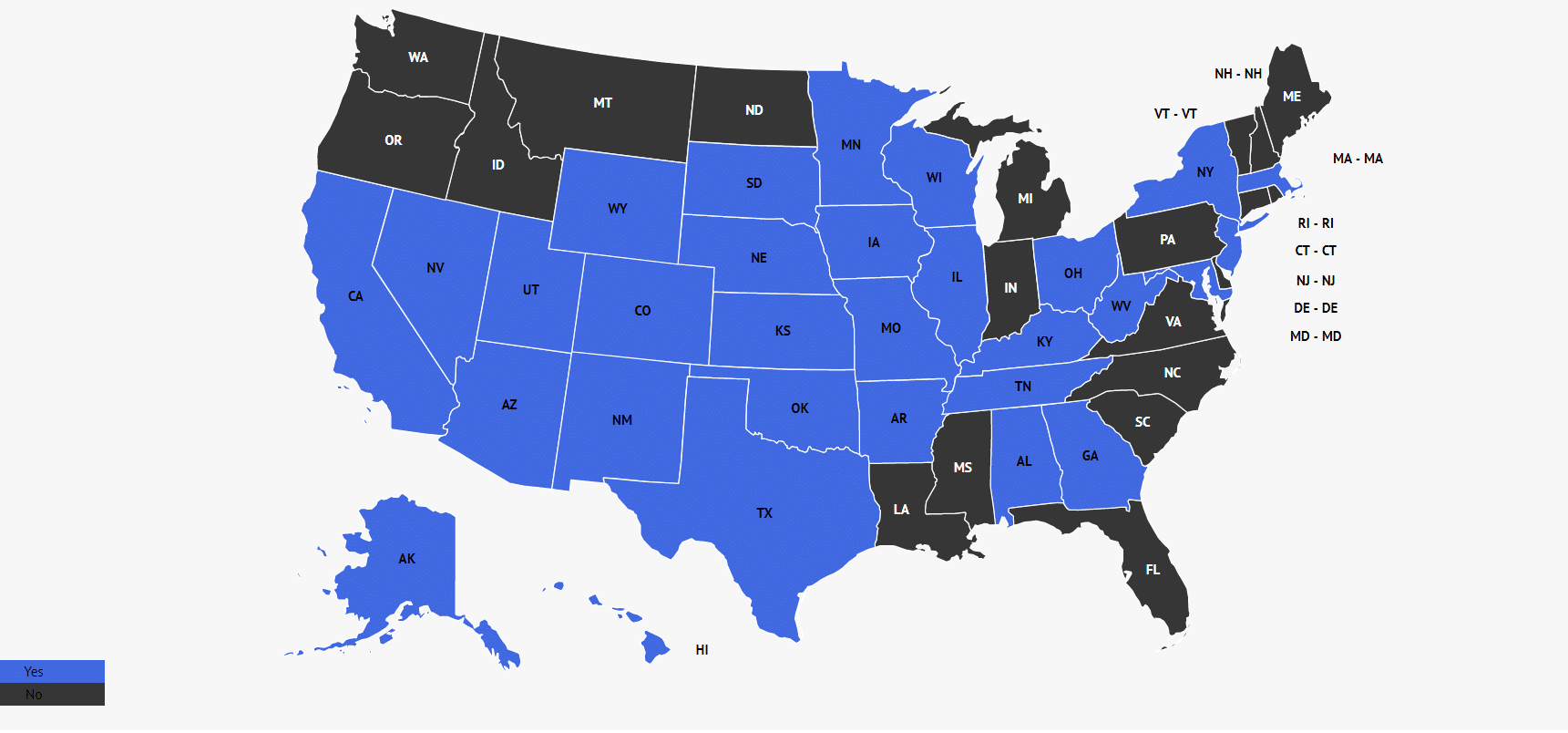
A majority of states, specifically 29, require employers to allow employees to take time off during work hours to vote. However, 22 of these states include specific exceptions, typically stating that employees are only entitled to time off if they lack “sufficient time” to vote outside of work hours. The definition of “sufficient time” varies across states.
You can find any exceptions related to voting during work hours in your state here.
Paid Time Off To Vote: Is Voting Leave Paid Or Unpaid In Your State?
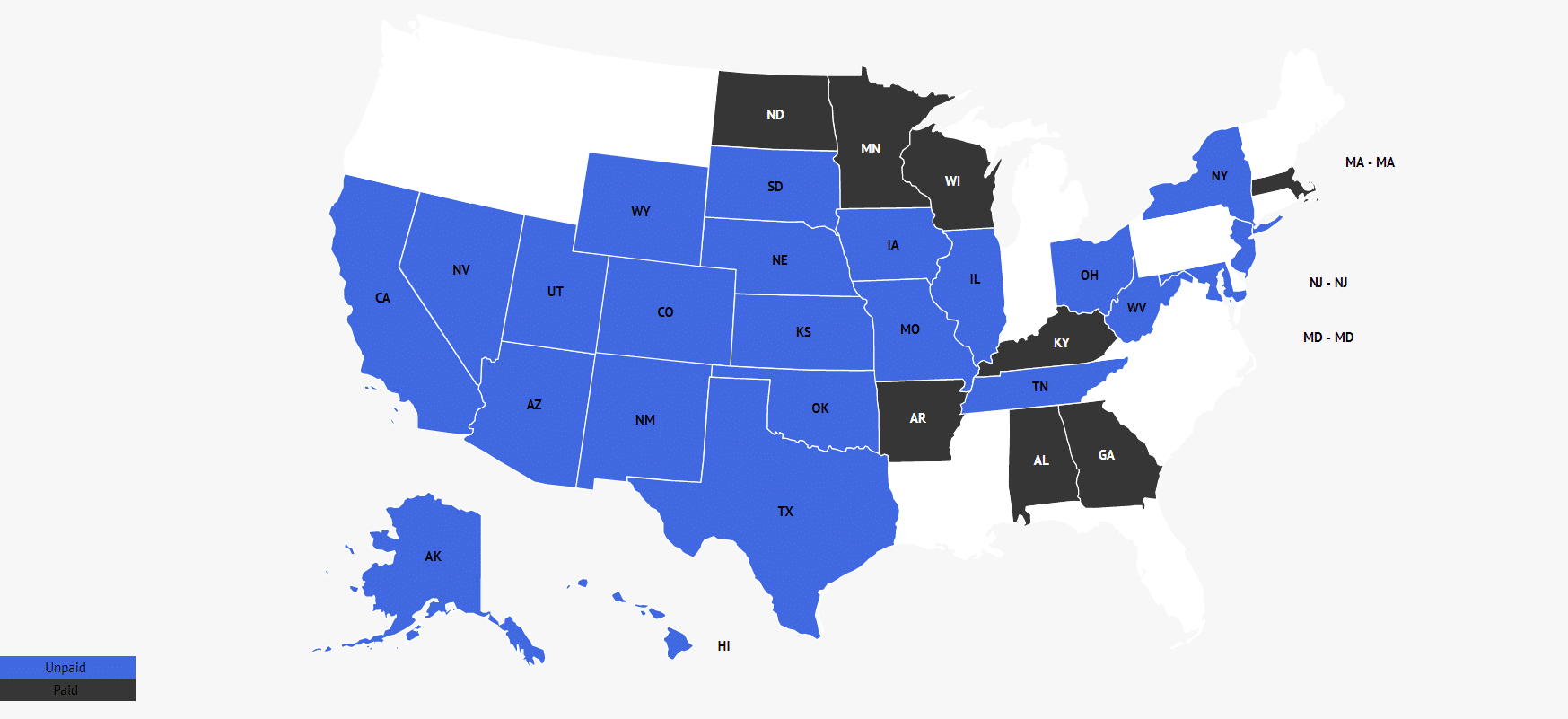
Of the 29 states that grant legal rights for workers to vote during work hours, 22 mandate that this time off be paid. Typically, the paid time off is limited to a few hours, reflecting the estimated time needed to vote. Therefore, do not assume that having paid time off guarantees a full day off. Additionally, only those who are legally entitled to vote during work hours qualify for paid time off.
For more information about paid time off for voting in your state, click here.
How Long Will It Take To Vote?
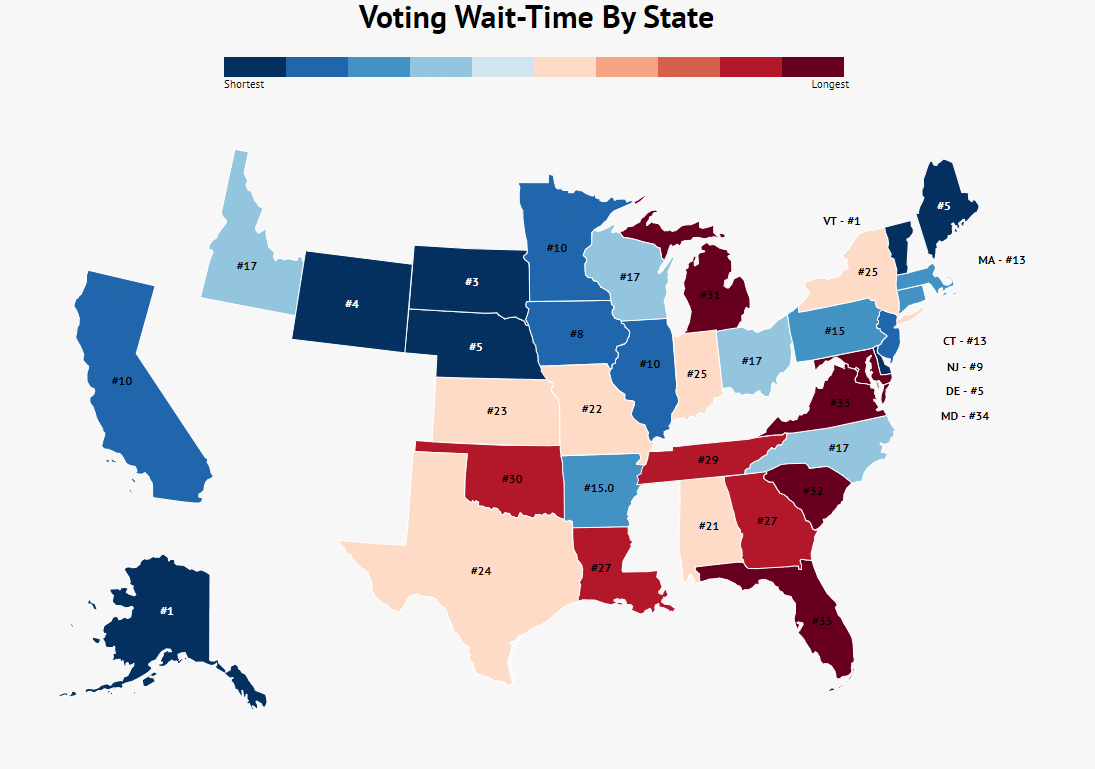
The time it takes to vote can vary widely based on factors such as your state, the location of your polling place, and the time of day you vote. The map above illustrates whether your state experiences above or below-average wait times. Note that these times only account for the duration spent waiting for your ballot and do not include the time needed for travel to and from polling places.
Most state laws estimate that voting will take approximately 2 hours. To ensure you have enough time, it’s advisable to block off at least two hours on Election Day.
A recent survey indicated that wait times tend to increase as the day progresses, with mornings generally being the fastest time to vote, often taking under 10 minutes.
If time is a concern, consider voting early in the morning, which can also help reduce your overall commute time.
FAQs
I’m scheduled to work on Election Day. Do I have a right to take time off from work to vote?
While there are no federal laws requiring time off to vote, the majority of states offer some form of legal protection for workers to vote during work hours, albeit with exceptions. To see your state’s specific regulations, check here.
How do I take advantage of the law in my state to vote during work hours on Election Day?
The first step is to understand the law in your state. Even in states that guarantee time off to vote, there may be certain qualifications to meet.
Do I have to give advanced notice to my employer I plan to vote during work hours?
While it’s generally polite to inform your employer that you’ll be arriving late or taking a longer lunch break, in some states, providing advance notice is legally required.
I want to volunteer or work at the polls on Election Day. Can my employer stop me from doing that?
Although many companies are increasingly accommodating employees who wish to work at the polls, there is no federal or state mandate requiring employers to permit this. If your workplace offers volunteer time off, consider requesting to use that time for poll work, otherwise, you may need to follow company leave policies and utilize PTO.
How do I ask my employer about voting during work hours?
Even if your state does not mandate time off, you can still inquire about your company’s policy on voting during work hours. Many organizations go beyond state requirements to facilitate voting for their employees. If there is no formal policy, explain your situation and the reasons you need time to vote, such as long commutes or scheduling conflicts, while maintaining your privacy regarding personal details.
Consider proposing alternatives, such as remote work arrangements closer to polling locations or adjusting your work hours to accommodate voting times.
My state specifies a time of day for voting that is inconvenient or undesirable for me. Do I have to vote during this time?
You are not obligated to vote at the specified times. However, if your state does not provide time off outside of these hours, you may need to work around your schedule. If the designated time is problematic, communicate with your supervisor to explore possible accommodations.
What happens if I am denied the right to vote because my employer broke the law?
Employers are legally obligated to adhere to voting laws, failing which they could face penalties. The primary goal is to ensure that employees can vote without needing to resort to legal action. Discuss voting arrangements with your employer ahead of Election Day for a smoother process.
Voting During Work Hours Laws For Each State
| State | Time Off? | Exceptions? | Paid or Unpaid? | Advance Notice? |
|---|---|---|---|---|
| Alabama | Yes. 1 hour. | If the hours of work of the employee commence at least two hours after the opening of the polls or end at least one hour prior to the closing of the polls. | Unpaid. | Yes; “reasonable notice.” |
| Alaska | Yes. Not specified | Not required if employee has two consecutive hours available while polls are open at beginning or end of shift | Paid | No |
| Arizona | Yes; up to 3 hours off between work and non-work time. | Not required if employee has three consecutive hours available while polls are open at beginning or end of shift | Paid | Yes; at least one day before the election |
| Arkansas | Yes; employer must schedule work hours so employee has time to vote | Unpaid | No | |
| California | Yes; up to 2 hours at beginning or end of shift. | Yes (up to 2 hours) | Yes; 2 working days before election | |
| Colorado | Yes; up to 2 hours. | Not required if employee has three non-work hours available while polls are open | Paid, up to 2 hours. | No |
| Connecticut | No laws require companies to give workers time off to vote. | |||
| Delaware | No laws require companies to give workers time off to vote. Employee who has accrued vacation time and is not in a “critical need” position may serve as an election officer without reprisal by the employer. | |||
| Florida | No laws require companies to give workers time off to vote. But workers can’t be disciplined or fired based on how they vote. | |||
| Georgia | Yes; as much as necessary, up to 2 hours | Unpaid | Employee must provide reasonable notice. | |
| Hawaii | Yes; 2 consecutive hours. Employer cannot change employee’s regular work schedule. | Not required if employee has 2 consecutive non-work hours available while polls are open. | Paid | No |
| Idaho | No laws require companies to give workers time off to vote. | |||
| Illinois | Yes; 2 hours. | Employer may decide when hours are taken except that employer must permit a 2-hour absence during working hours if employee’s working hours begin less than 2 hours after opening of polls and end less than 2 hours before closing of polls. | Paid | Yes, one day in advance for general or state election. |
| Indiana | No laws require companies to give workers time off to vote. | |||
| Iowa | Yes; as much time as will add up to 3 hours, when combined with non-work time | Not required if employee has three consecutive non-work hours available while polls are open. | Paid | Yes, in writing prior to the election |
| Kansas | Yes; 2 hours or as much time as will add up to 2 hours, when combined with non-work time | Not required if employee has 2 consecutive non-work hours available while polls are open. | Paid | No |
| Kentucky | Yes; “reasonable time,” but not more than 4 hours | Unpaid | 1 day notice | |
| Louisiana | No laws require companies to give workers time off to vote. But employers of 20 or more employees can’t interfere with their employees’ “political activities or affiliations.” | |||
| Maine | No laws require companies to give workers time off to vote. | |||
| Maryland | Yes; 2 hours | Not required if employee has 2 consecutive non-work hours available while polls are open. | Paid | Yes |
| Massachusetts | Yes, first 2 hours that polls are open | Unpaid | Employee must apply for leave of absence (no time specified). | |
| Michigan | No laws require companies to give workers time off to vote. | |||
| Minnesota | May be absent during the morning of election day | No | No | |
| Mississippi | No specific laws regarding time off to vote | |||
| Missouri | Yes, 3 hours | Not required if employee has 3 consecutive non-work hours available while polls are open. | Paid, but employee must vote | Yes, “prior to the day of election” |
| Montana | No laws require companies to give workers time off to vote. | |||
| Nebraska | Yes, as much time as will add up to 2 hours, when combined with non-work time | Not required if employee has two consecutive non-work hours available while polls are open. | Paid | Yes, prior to or on election day |
| Nevada | If it is not practical to vote before or after work, employee may take time off based on distance from polling place | Not required if sufficient time during non-work hours available while polls are open. | Paid | Yes, prior to election day |
| New Hampshire | No laws require companies to give workers time off to vote. But employers cannot influence or intimidate employees to vote for or against a particular candidate. | |||
| New Jersey | Yes; 2 hours | Not required if employee’s workday begins more than 2 hours after polls open or ends more than 3 hours before polls close. | Paid | No |
| New Mexico | Yes; 2 hours | Not required if employee’s workday begins more than 2 hours after polls open or ends more than 3 hours before polls close. | Paid | No |
| New York | Yes; as much time at beginning or end of shift as will give employee time to vote, when combined with non-work time | Not required if employee has 4 consecutive non-work hours available at beginning or end of shift while polls are open. | Paid, up to 2 hours | Yes, not more than 10 or less than 2 working days before the election. |
| North Carolina | No laws require companies to give workers time off to vote. But employers cannot discharge or threaten workers based on how they vote or don’t vote. | |||
| North Dakota | Employers encouraged to give employees time off to vote when regular work schedule conflicts with times polls are open | Unpaid | No | |
| Ohio | Yes; “reasonable time” | Paid only for salaried employees | No | |
| Oklahoma | Yes; 2 hours, unless employee lives so far from polling place that more time is needed. | Not required if employee’s workday begins more than 3 hours after polls open or ends more than 3 hours before polls close. | Paid | Orally or in writing one day before the election |
| Oregon | No laws require companies to give workers time off to vote. | |||
| Pennsylvania | No laws require companies to give workers time off to vote. But employers cannot threaten or intimidate employees to influence their political opinions or actions. | |||
| Rhode Island | No laws require companies to give workers time off to vote. But employers cannot put information in pay envelopes or post information designed to influence employees’ political actions. | |||
| South Carolina | No laws require companies to give workers time off to vote. But employers cannot discharge a worker because of political opinions or the exercise of political rights and privileges. | |||
| South Dakota | Yes; 2 consecutive hours | Not required if employee has two consecutive non-work hours available while polls are open. | Paid | No |
| Tennessee | Yes; reasonable time up to 3 hours | Not required if employee’s workday begins more than 3 hours after polls open or ends more than 3 hours before polls close. | Paid | Yes, before noon on Election Day |
| Texas | Employer may not refuse to allow employee to take time off, but no time limit specified | Not required if employee has 2 consecutive non-work hours available while polls are open. | Paid | No |
| Utah | Yes; 2 hours at beginning or end of shift. | Not required if employee has at least 3 non-work hours available while polls are open. | Paid | Yes, before Election Day |
| Vermont | No laws require companies to give workers time off to vote. | |||
| Virginia | No laws require companies to give workers time off to vote. But employees working and commuting for 11 hours of the 13 hours polls are open may vote by absentee ballot. | |||
| Washington | No laws require employers to give workers time off to vote. However, no person, including an employer, can attempt to influence any person to withhold his or her vote. | |||
| West Virginia | Yes; up to 3 hours | Not required if employee has at least 3 non-work hours available while polls are open. | Paid (if employee votes) | Written request at least three days before election |
| Wisconsin | Yes; up to 3 consecutive hours. | Unpaid | Yes, before Election Day | |
| Wyoming | Yes; 1 hour, other than a meal break | Not required if employee has at least 3 consecutive non-work hours available while polls are open. | Paid (if employee votes) | No |

Author

Kathy is the head of content at Zippia with a knack for engaging audiences. Prior to joining Zippia, Kathy worked at Gateway Blend growing audiences across diverse brands. She graduated from Troy University with a degree in Social Science Education.