- Cover Letter Examples
- Cover Letter Examples
- Best Cover Letters
- Cover Letter For Internship
- General Cover Letter Templates
- Career Change Cover Letter
- Promotion Cover Letter
- College Student Cover Letter
- Entry Level Cover Letter
- Legal Cover Letter
- Creative Cover Letter
- Cover Letter For Government Job
- Cover Letter With No Experience
- Short Cover Letter Examples
- How To Send An Email Cover Letter
- How To Write A Cover Letter For A Job With No Experience In That Field
Find a Job You Really Want In
Summary. To craft an effective cover letter for an internship, begin with a professional header and greeting. Your opening paragraph should capture the reader’s attention, showcasing your interest and qualifications. Subsequent paragraphs will narrate your relevant experiences, illustrating the unique value you bring to the role.
Applying for an internship is an excellent way to launch your career. Each application process can vary significantly, and as you embark on your job search, writing a compelling cover letter is essential to stand out to potential employers.
Taking the time to articulate your experiences, skills, and education, while explaining how they align with the internship role, will significantly enhance your chances of early success with your prospective employer.
Key Takeaways:
-
A well-crafted cover letter increases your likelihood of securing an internship.
-
Internship cover letters closely resemble traditional cover letters in structure and style.
-
Incorporate keywords from the job description into your cover letter to ensure your application passes through applicant tracking systems (ATS). Approximately 75% of applications never reach a hiring manager or recruiter.
-
Customize your cover letter for each specific internship opportunity.
-
Highlight your educational background and relevant extracurricular activities, especially if professional experience is limited.
- How to Write an Internship Cover Letter
- Cover Letter For An Internship: Header
- Cover Letter For An Internship: Greeting and Opening Paragraph
- Cover Letter For An Internship: Middle Paragraph Of Relevant Qualifications
- Cover Letter For An Internship: Closing Paragraph
- Cover Letter for Internship Example
- Cover Letter for Internship Tips
- Cover Letter for an Internship FAQ
- References
- Sign Up For More Advice and Jobs
How to Write an Internship Cover Letter
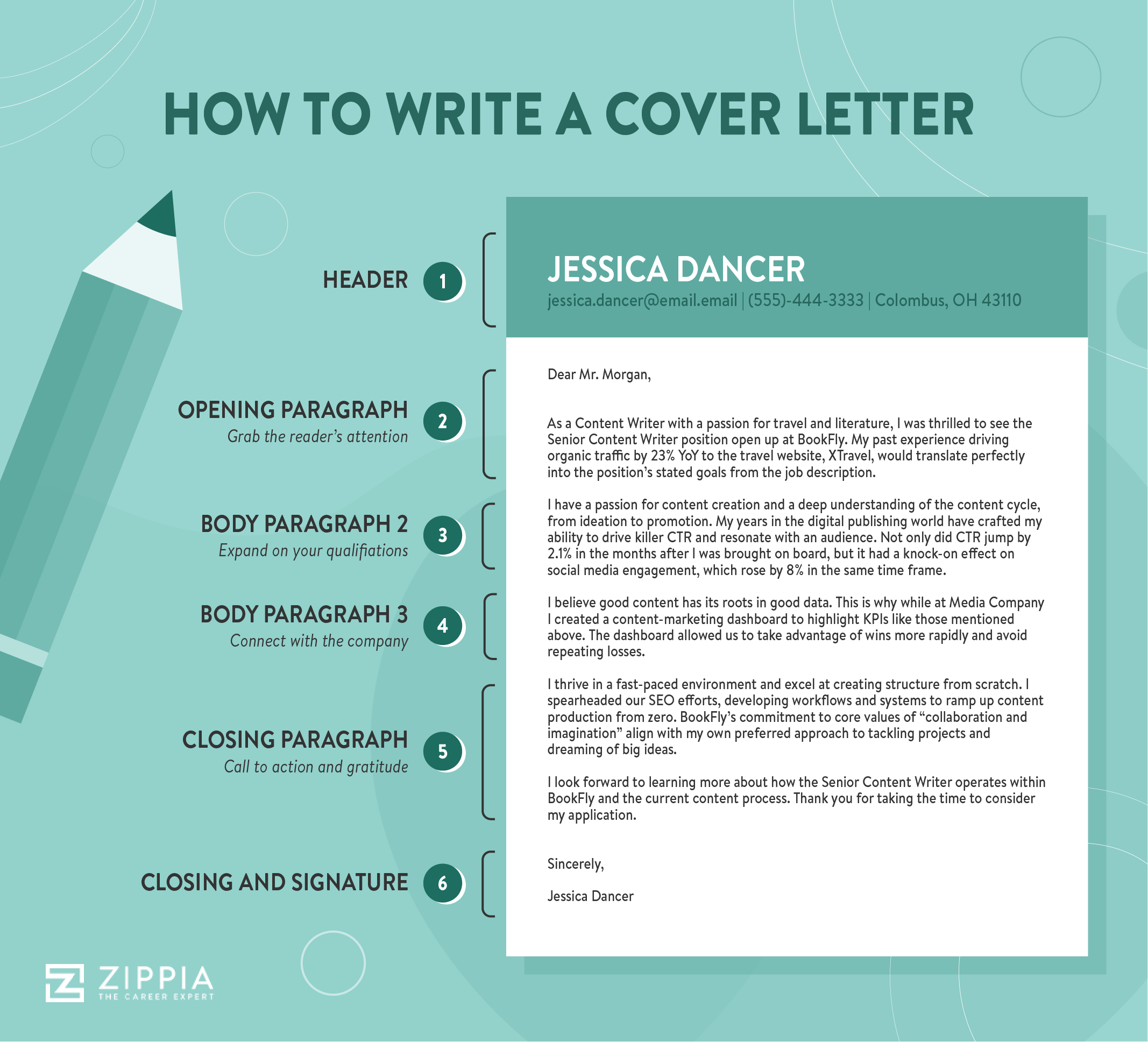
Most cover letters adhere to a standard format, and internship cover letters are no exception. Here’s an overview of the typical structure:
-
A header. Your header should include the date and your contact information.
-
A professional greeting. Address the letter to a specific person if possible.
-
An opening paragraph. This section should engage the reader and clearly express your interest and qualifications for the internship.
-
A middle paragraph. This paragraph should tell a compelling story that highlights one or two key qualifications.
-
A closing paragraph. This should summarize your value and include a call-to-action.
-
A sign-off. Conclude with your full name.
Cover Letter For An Internship: Header
Creating a header for your cover letter is straightforward. List your full name followed by your contact details, similar to a resume format. This helps employers identify you quickly and contact you easily.
Maria Smith
612 East Street
New York, NY, 10002
maria.smith@gmail.com
Cover Letter For An Internship: Greeting and Opening Paragraph
Begin with a professional greeting. If you know the hiring manager’s name, use it.
To find the hiring manager’s name, check the job posting for any direct references or email addresses indicating a name (e.g., jon.smith@mail.com). If the name isn’t available, explore the company’s careers page or LinkedIn.
If you cannot find a name, consider calling the company to inquire about the appropriate contact for the internship application. Address your cover letter to the person’s full name, or use “Dear Mr./Ms. [Last Name].” It’s advisable to avoid “Mrs.” as marital status can be unclear.
While aiming to find a specific name is encouraged, if it’s not feasible, you can opt for alternatives such as “Dear Hiring Manager.”
Dear Ms. Candleson,
Dear Jon Brown,
Dear Hiring Manager,
Your opening paragraph should include key elements that make you stand out.
Ensure your opening contains the exact job title you’re applying for, demonstrating your interest in the position. These details can impress the hiring manager and show your attention to detail.
This also assists human resources departments that may receive numerous applications for various roles.
I am excited to apply for the Content Marketing internship at ABC Company.
Next, analyze the internship description for standout keywords. Notate or highlight them to integrate into your cover letter.
For instance, if the job description emphasizes ‘strong writing skills,’ ‘impeccable editing skills,’ and ‘effective communication,’ weave these attributes into your narrative.
Addressing the qualifications outlined in the job posting can capture the hiring manager’s attention, a detail many applicants frequently overlook.
Throughout my four years at Penn State University, I have honed strong writing and editing skills that effectively communicate key messages in various written works.
Consider these options for writing an impactful cover letter opening. You can choose one or blend several elements—brevity is essential, especially at the beginning.
-
Express your enthusiasm for the organization. Given the volume of applicants for internships, standing out is crucial. Conduct research and apply your findings in your cover letter, discussing what attracted you to the company based on its values, mission, or other aspects.
-
Demonstrate your passion. Convey your dedication and enthusiasm for the field. While you may be new to the industry, focus on your passion and the fresh perspective you can offer.
-
Tell a story. Storytelling is an effective way to engage the reader early on. If you have a significant accomplishment from school or another job, share it in your opening.
Including quantitative data (numbers) can help hiring managers gauge the true impact of your contributions.
-
Make a connection to the company. If you have a personal connection to the company—whether through being a consumer of their products or knowing a current employee—mentioning this can be advantageous.
Cover Letter For An Internship: Middle Paragraph Of Relevant Qualifications
In your middle paragraphs, emphasize relevant skills. Since you may not have prior work history, focusing on your skills can help you navigate this challenge.
Various experiences can bolster your qualifications. Reflect on any clubs, groups, or volunteer work you’ve participated in. Highlight practical skills such as time management, multitasking, or experience collaborating in teams.
Whenever possible, support your statements with concrete examples.
I have a passion for creating impactful content. Over the summer, I volunteered at a local library, focusing on their social media marketing initiatives across platforms such as Facebook, Twitter, and email newsletters. My attention to detail and crafted prose reached 50,000 members monthly, contributing to a 12% increase in library membership during my tenure.
Include details about relevant coursework, particularly if your work history is limited.
Discussing your academic studies allows employers to gauge the skills you’ve acquired and identify areas they may need to nurture. Don’t forget to mention any notable achievements during your time in school.
I am currently a senior at PSU, pursuing a degree in Marketing. I have completed three courses in Persuasive Writing and an Email and Social Media Marketing course, enhancing my skills in crafting content that resonates and converts. Additionally, I was selected as a finalist in the PSU Short Story competition for my submission ‘A Life Beyond,’ featured in the PSU Student Writers Literary Magazine: 2020 Spring Edition.
Cover Letter For An Internship: Closing Paragraph
Conclude with a value proposition, similar to a sales pitch. In your closing paragraph, explain how your experiences and skills will benefit the organization.
Align your qualifications with those mentioned in the job posting, prioritizing relevant skills. This isn’t about embellishing your experience but rather adapting your narrative to highlight your strengths.
As a writer experienced in narrative, persuasive, and business writing, I possess the skills and passion necessary to create compelling marketing copy with clarity.
or
As a marketing-focused student, I believe my skills and enthusiasm can elevate ABC Company’s marketing content.
Then, articulate why you’re a good fit for the role—this could relate to shared values, excitement about ongoing projects, or your eagerness to gain experience in a specific area. Be authentic! Employers may reference your cover letter in initial interviews.
I am deeply committed to providing valuable and engaging content to readers eager to learn. I would be an excellent addition to ABC Company’s marketing team.
Finally, wrap up your cover letter with a polite closing followed by your name. You can opt for a standard closing or a more personalized note.
Sincerely,
Maria Smith
or
Thank you for your consideration,
Maria Smith
Your work isn’t finished yet. Next, compose a thoughtful email in which you’ll attach your resume and cover letter. This email should be concise, as the employer will review your qualifications in both documents.
Afterward, allocate time for proofreading. Utilize tools like Grammarly or Microsoft Word to catch any spelling or grammatical errors. Ensuring attention to detail in your cover letter is crucial to maintaining professionalism.
Cover Letter for Internship Example
Maria Smith
612 East Street
New York, NY, 10002
maria.smith@gmail.comDear Ms. Felton,
I am excited to apply for the Content Marketing internship at ABC Company. Over the past four years at Penn State University, I have developed strong writing and editing skills that effectively communicate key details in written works.
My passion for creating persuasive content grew during my summer volunteering at a local library, where I focused on social media marketing, reaching 50,000 members monthly and contributing to a 12% increase in membership. I am currently a senior at PSU, pursuing a Marketing degree. I have taken multiple courses in Persuasive Writing and Social Media Marketing, enhancing my ability to create compelling content. I was also a finalist in the PSU Short Story competition for my piece ‘A Life Beyond,’ featured in the PSU Student Writers Literary Magazine: 2020 Spring Edition.
As a writer with diverse experience in narrative, persuasive, and business writing, I have the skills and passion needed to produce effective marketing copy. I am enthusiastic about providing valuable content to engaged readers. I would be a strong addition to ABC Company’s marketing team.
Sincerely,
Maria Smith
Once your cover letter is complete, remember to send a professional email. Keep it brief and focused. Use the example below for inspiration.
Dear Ms. Felton,
Attached, please find my resume and cover letter for the Content Marketing internship at ABC Company.
Thank you for your consideration,
Maria Smith
Cover Letter for Internship Tips
To ensure your cover letter for an internship is well-received, follow these tips:
-
Incorporate keywords. In today’s job market, optimizing your application with relevant keywords is crucial. Many companies utilize applicant tracking systems (ATS) to filter applications. Consequently, around 75% of applications may be discarded by software before reaching a hiring manager or recruiter.
To mitigate this, ensure your resume and cover letter contain keywords found in the job description. Identify frequently mentioned or emphasized terms, and honestly integrate them into your narrative.
-
Personalize each cover letter. Although time-consuming, customizing each cover letter for the specific company and internship opportunity is recommended. Hiring managers can easily identify generic cover letters, and internships are often highly competitive.
To stand out and secure a great internship opportunity, invest the time to tailor your cover letter based on the job description.
-
Highlight your college activities. For most job seekers, a cover letter doesn’t focus heavily on education, but for internships, your academic accomplishments are your most relevant and compelling assets. Emphasize successful group projects, as real-world jobs often require collaboration.
If you have relevant professional experience from college, whether through a formal job or volunteering, include this in your cover letter. Active participation in college clubs or extracurricular activities can also make you stand out, provided you connect those experiences to the job you’re applying for.
-
Adhere to proper cover letter length. Cover letters should range from 200-400 words, typically 3-4 paragraphs. Aim for around 300 words. Hiring managers often skim cover letters, so make yours easy to read and include only pertinent information.
-
Avoid complexity. New graduates sometimes believe using sophisticated vocabulary will impress hiring managers, but clarity is preferred. Use simple, straightforward sentences and commonly used words. Overcomplicating your writing can appear insincere and off-putting.
Cover Letter for an Internship FAQ
-
Do I need a cover letter for an internship?
Yes, a cover letter is essential for an internship. Since you likely don’t have extensive relevant work experience, it’s crucial to highlight the connections between your existing skills and the internship requirements. A cover letter is the most effective way to do this.
Beyond showcasing your skills, a cover letter allows you to express your genuine passion for the work involved in the position. Discussing your motivations for entering the industry, the specific company, and the role can significantly influence hiring managers to interview you, especially when you explain how your enthusiasm aligns with the organization’s goals.
While writing a cover letter is generally beneficial, exceptions exist, such as if the employer explicitly requests not to include one or does not provide an option to submit it. Additionally, if you cannot ensure grammatical accuracy or tailor your letter to the specific position, it’s better not to submit one.
-
How do I write a cover letter for a competitive internship?
To write a cover letter for a competitive internship, focus on your qualifications that closely match the internship requirements. These may encompass your work experience, technical skills, soft skills, interests, and goals.
Structure your cover letter with three body paragraphs. The first paragraph should introduce the internship you’re applying for and engage the reader with a story, a connection to the company, or a summary of your impressive qualifications.
Your next paragraph should detail why you would be a strong fit for the internship, emphasizing what distinguishes you from other candidates. Illustrate how your skills, experiences, goals, and interests align with the position.
Reference the internship job description to ensure you incorporate relevant keywords listed in the requirements.
Avoid exaggerating; if the posting states “strong communication skills,” use that terminology rather than vague descriptors like “excellent speaker and writer.”
This approach will help both human and electronic screeners identify the qualifications they seek in your application, increasing your chances of progressing through the hiring process.
Conclude with a summary of what you would contribute to the team, department, or company if selected as an intern, along with a call to action. This could be a request for an interview or a subtle note expressing your desire to discuss the position further. Always thank the reader for their time.
-
How can I secure an internship with no experience?
You can secure an internship without prior experience by demonstrating how your skills and experiences apply to the internship.
Internships are designed for candidates with minimal relevant professional experience, so don’t be discouraged if you haven’t worked in the field before. Instead, focus on creating a compelling cover letter that illustrates your qualifications for the role.
Review the internship description and identify qualifications you meet, drawing from classroom experiences, volunteer work, or any other professional or semi-professional opportunities.
For example, you might have developed communication and conflict management skills through group projects in college or enhanced your customer service abilities while volunteering or working part-time. All these experiences are valuable and respected by employers.
Your goal should be to help the reader connect your experiences and skills to the internship requirements. Additionally, convey your enthusiasm for the industry and eagerness to participate in the internship. Enthusiasm is a key asset in interns, as those who are genuinely excited to join an organization tend to learn quickly and work diligently.
-
What typically qualifies you for an internship?
Generally, having applicable professional or educational experience, soft skills, and enthusiasm qualifies you for an internship. Specific requirements vary by industry, company, and position, but these are the foundational qualifications sought.
Most internships do not expect candidates to have extensive industry experience, but rather look for students or recent graduates who have completed sufficient coursework to possess fundamental technical skills: strong soft skills like communication and time management, and a genuine enthusiasm for learning and working hard.
Since your qualifying skills may stem from varied experiences, your cover letter plays a crucial role in bridging your resume and the internship. Carefully examine the job requirements and identify the qualifications you meet, then incorporate those into your cover letter.
By making these connections clear for hiring managers, you enable them to see what you bring to the table and why you would be a valuable intern.
References
- Cover Letter Examples
- Cover Letter Examples
- Best Cover Letters
- Cover Letter For Internship
- General Cover Letter Templates
- Career Change Cover Letter
- Promotion Cover Letter
- College Student Cover Letter
- Entry Level Cover Letter
- Legal Cover Letter
- Creative Cover Letter
- Cover Letter For Government Job
- Cover Letter With No Experience
- Short Cover Letter Examples
- How To Send An Email Cover Letter
- How To Write A Cover Letter For A Job With No Experience In That Field

Author

Caitlin Mazur is a freelance writer at Zippia. Caitlin is passionate about helping Zippia’s readers land the jobs of their dreams by offering content that discusses job-seeking advice based on experience and extensive research. Caitlin holds a degree in English from Saint Joseph’s University in Philadelphia, PA.
Expert
Matt Warzel a President of a resume writing firm (MJW Careers, LLC) with 15+ years of recruitment, outplacement, career coaching and resume writing experience. Matt is also a Certified Professional Resume Writer (CPRW) and Certified Internet Recruiter (CIR) with a Bachelor of Science in Business Administration (Marketing Focus) from John Carroll University.