Explore jobs
Find specific jobs
Explore careers
Explore professions
Best companies
Explore companies
This question is about air force pilot jobs.
How hard is it to become an air force pilot?
It is very difficult to become an Air Force Pilot. You need not only a high-grade point average, but also you must be physically and mentally fit, complete several educational and training scenarios, and be between the ages of 22 and 28.
In fact, for every 1,000 applicants who apply, only 3 become air force pilots. In recent years, however, a shortage of pilots has resulted in more relaxed training procedures.
Becoming a fighter pilot in the US Air Force has traditionally been difficult.You have to meet a long list of requirements, ranging from health and medical requirements to educational and background checks.It can also be a very time-consuming process.
Basic Requirements
Age: At the time of the selection board, an applicant must be no older than 32.
Height: An applicant must be between 64 and 77 inches in standing height (5'3 to 6'4) and between 34 and 40 inches when sitting.
Weight: Candidates, both men and women, must weigh between 103 lbs and 245 lbs for all aircraft except the T-38, which has a maximum weight capacity of 240 lbs.
Education: Candidates must either already have or be within 365 days of receiving a BA or BS undergraduate degree in any major with a minimum GPA of 2.5.
Vision: Candidates must have normal color vision. Both eyes must also be corrected to 20/20 or better, and having had corrective eye surgery may be a disqualifying factor.
Citizenship: Candidates must either need to be a native-born or naturalized United States citizen.
You also need the following qualifications to be eligible to become a fighter pilot in the Air Force.
ASVAB: High school graduates must have a standard ASVAB score of 31 to enter the Air Force. Officers take the AFOQT instead of the ASVAB.
AFOQT: The AFOQT is a five-hour exam covering 12 different areas. Your AFQAT's results form part of your Pilot Candidate Selection Method Score. To qualify as a pilot, you need to score 25 in the pilot and 10 in the navigator sections, and have a combined pilot-navigator score of 50.
Medical Requirements: You cannot have had any incidents of allergies, hay fever, or asthma after 12 years old.
You also need to have passed a Flying Class I Physical to enter Medical Flight Screening (MFS). Rated officers need to pass additional medical checks after MFS.
Background checks: You must pass a Single Scope Background Investigation (SSBI), which verifies your date of birth, American citizenship, and employment history.
Education: You must complete one of the following:
Officer Training School (OTS): A 9.5 week-long course taught at Maxwell Air Force base in Montgomery that teaches leadership and other skills.
Air Force Academy (AFA): A highly-selective four-year program taught in Colorado Springs.
Air Force Reserve Officer Training Corps (AFROTC): A program for those who want to enter the Air Force's reserve component.
The first step to becoming an Air Force pilot is to earn a commission as an officer in the United States Air Force. The United States Air Force Academy (USAFA) in Colorado Springs, Colorado is the primary commissioning source for the Air Force officer corps.
There are several other sources for earning a commission, to include Air Force Reserve Officer Training Corps (AFROTC), Officer Training School (OTS), other service academies (West Point, Annapolis and the Merchant Marine Academy), in addition to training programs in the Air National Guard (ANG) and the Air Force Reserves (AFR).
Vision only needs to be correctable to 20/20 with glasses or corrective surgery (LASIK or photo-refractive keratectomy) performed by an Air Force ophthalmologist. One word of caution though - any corrective surgery not performed by an Air Force ophthalmologist will result in an automatic physical disqualification.
During the 40 days of ISF, candidates fly 25 hours in the Diamond Aircraft DA-20. The training culminates in a check-ride requiring the candidate to demonstrate proficiency in approximately 20 basic flight maneuvers.
On average, the Air Force trains 800-1,000 new pilots each year. As an example, the USAFA Class of 2013 graduated 1,035 new Second Lieutenants, of which 432 went to SUPT. The balance of those 800-1,000 SUPT slots were filled with graduates from AFROTC, OTS, officers "cross commissioning" from other service academies, and the ANG/AFR. The ANG and AFR have a slightly different and separate process for awarding their SUPT training slots, which will be covered later.
Once selected, student pilots attend SUPT at one of five pilot training bases: Columbus AFB, MS; Laughlin AFB, TX; Vance AFB, OK; Sheppard AFB, TX and NAS Whiting Field, FL. SUPT is approximately 12 months long and consists of three phases:
Phase 1: Academics
Phase 2: Primary Aircraft Training
Phase 1 Academics is six weeks of classroom study covering everything from aircraft systems to basic instrument flying procedures. Following Academics, student pilots move to the flight line and start Phase 2. Over the next 22 weeks, student pilots fly a total of 90 hours in a Beechcraft T-6 Texan II while learning basic flight maneuvers/aerobatics (contact), basic instrument flying and basic 2-ship formation flying.
The good news is that it has never been easier to become an Air Force pilot, thanks to a rather large staffing issue. As of 2020, the Air Force is short 2,000 pilots needed to make their quota of 21,000 pilots. To help mitigate this shortage, the Air Force earlier this year began a program called Accelerated Path to Wings, which aims to graduate new pilots after about nine or 10 months, quicker than the traditional yearly time frame.

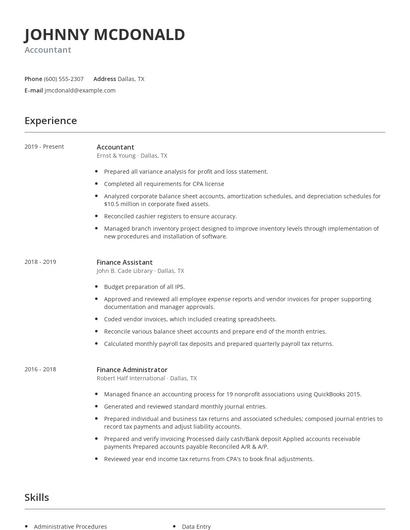
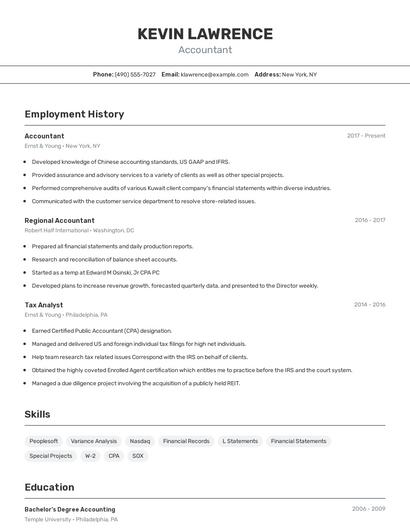
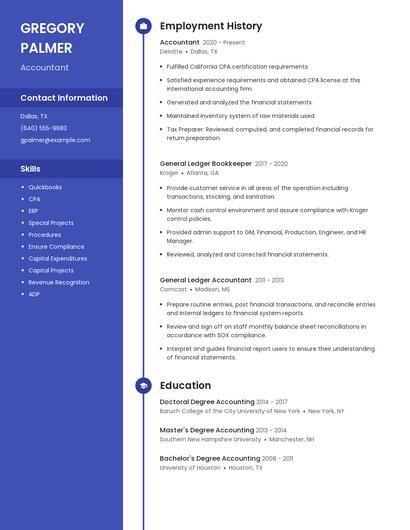
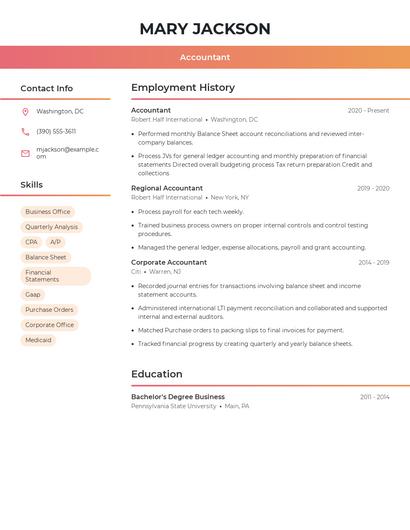
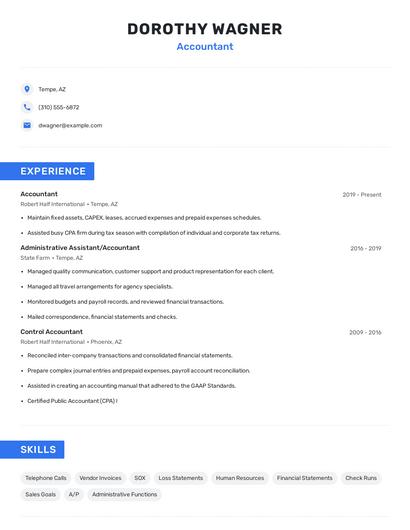
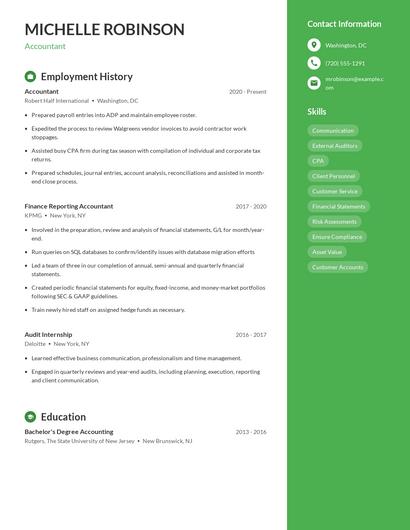
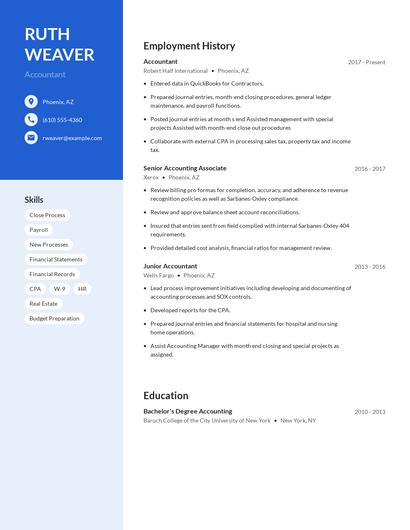
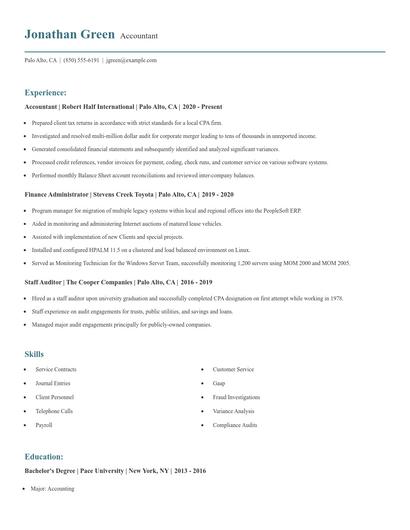
Choose from 10+ customizable resume templates
Zippia allows you to choose from different easy-to-use templates, and provides you with expert advice. Using the templates, you can rest assured that the structure and format of your resume is top notch. Choose a template with the colors, fonts & text sizes that are appropriate for your industry.