Explore jobs
Find specific jobs
Explore careers
Explore professions
Best companies
Explore companies
This question is about what a sonographer does.
What are the pros and cons of being a sonographer?
The pros and cons of being a sonographer are related to job demand, salary, and responsibility. Here are the pros and cons of being a sonographer:
Pros:
Job demand. There is a really high demand for ultrasound technicians in the medical field. More and more babies are born every year, meaning that more and more sonographers are needed to keep up with birth rates.
The Bureau of Labor Statistics predicts this profession to grow by at least 24% in the years leading up to 2030. This is extremely higher than the average growth of all professions combined.
Salary. Most sonographers make decent salaries. The average pay for an ultrasound technician in the United States is above $70,000 per year. In addition, there is a growing number of sonographers needed to become managers as well. Meaning opportunities for career growth and higher pay come with this role.
Being a sonographer is not too physically demanding. Compared with some medical roles, being a sonographer is not too hard on the professional's body. The only physical demands relate to being able to stand for sometimes long periods of time.
Most sonographers, however, remain in one location and do not have to do too much walking throughout their daily work shifts. Also, the standing that is required keeps you from being sedentary all day.
Variety of workdays. While a sonographer performs most of the same duties during their work days, they do get to meet a lot of interesting people, like their patients and other medical professionals.
The work itself can be varied at times as well, depending on the patients you see. The medical field is also constantly finding new ways to utilize sonography technology, meaning ultrasound technicians get to expand their skills and experience.
Job security. The government legally requires hospitals to use sonography equipment, meaning that you are always going to be needed as a sonographer. This technology has a long life span, so you don't have to worry about your job becoming obsolete.
Ultrasound scans provide a diagnosis of pain and swelling inside the body. This is useful for aging populations in addition to expectant mothers. The profession offers a sense of stability and security, knowing that you will always have a place in the medical industry.
Opportunities for career growth. The medical field is in a constant state of evolution and technical advancement, so that means as a sonographer, you have the chance to be promoted and advance in your career. This makes being a sonographer a worthy lifelong profession.
Variety of medical environments. Sonographers can work in many different medical environments, such as hospitals, emergency rooms, urgent care facilities, physicians' offices, medical clinics, and other medical facilities.
You get to do work that matters. Many sonographers provide lifesaving information to their patients. The diagnostic duties of a sonographer help to inform other medical professionals, such as specialized doctors, and give them the means to understand the medical issue of a patient and determine a treatment.
This sort of work can be extremely gratifying, and many patients also express their appreciation for their sonographer's services. Being a sonographer is a career filled with purpose and satisfaction.
Sonographers' education is not too long. Compared with many other medical professionals, the educational requirements to become a sonographer are not long at all. Sonography does not take seven to ten years or even more, as it does with doctors.
Most can obtain an adequate education with around two years of study and training. Certain programs may require additional training, but this is still much shorter compared to many other medical professions.
Cons:
Challenging patients. While most patients are very grateful for the work that sonographers perform, some can be less appreciative and make the job stressful. Patients that are in excessive amounts of pain are often very difficult to deal with, and some may not react well to the process of an ultrasound.
Dealing with upset patients on a daily basis can take an emotional and psychological toll on some sonographers. In addition, some sonographers have to witness very uncomfortable medical issues and have to deal with family members of patients that may be grieving.
Babies that have deformities are a particularly tough issue for sonographers. These professionals are sometimes the first ones to notify a prospective parent of a deformity or, even worse, a stillbirth.
Standing for long periods. While the physical demands of the role are not that bad, it is likely you will have to stand for long periods of time. If you have leg, feet, or back issues, this can be more of a con than if not.
Certification. In addition to school, you must become certified to practice in the field. Requirements may vary from state to state, but most have to pass a formal exam to gain certification.
Long hours. Many sonographers have to work long hours on their feet, pulling shifts that range from eight to 12 hours. Sometimes a sonographer's schedule can make personal time with family, friends, or recreational activities difficult.
Working odd hours and holidays. Many sonographers have to work nights. These can be from midnight or onward until the dawn of the next day. Many also have to work weekends and holidays.
A lot of responsibility. Sonographers have a lot of responsibility for their jobs, as they are often the first line of diagnosis when it comes to patients' medical issues. This can also add to the sonographer's emotional toll if they are diagnosing untreatable conditions or medical issues that have low survival rates after treatment.
Sonographers need to be well-organized and detail-oriented, as the diagnosis and status of someone's health are in your hands. Giving a misdiagnosis can be detrimental to the patient and the medical facility that they work at.
There is a lot of paperwork. Sonographers must fill out a lot of paperwork during their daily work lives. This process can be tedious, repetitive, and time-consuming.
Repetitive duties. Many sonographers can experience burnout due to the repetitive nature of the job. Having to do the same tasks over and over again can lead to boredom and lack of focus for some sonographers.
You need to be tech-savvy and work well under pressure. All sonographers need to be well-versed in the technology in their field, as well as keep up with any advancements that are made.
This can be overwhelming for some in the profession. Being a good sonographer also means the ability to work well under pressure and make quick decisions that can be of some consequence in terms of a patient.

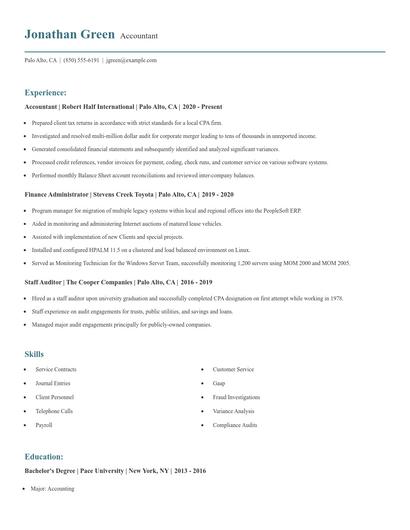
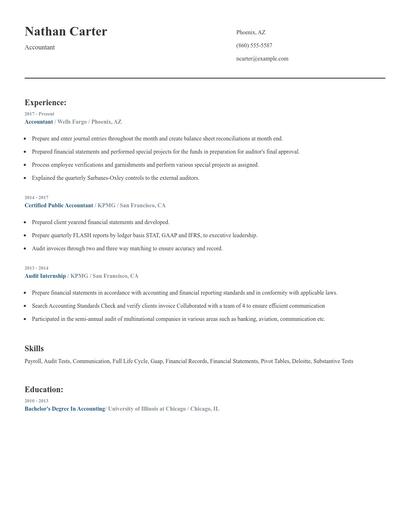
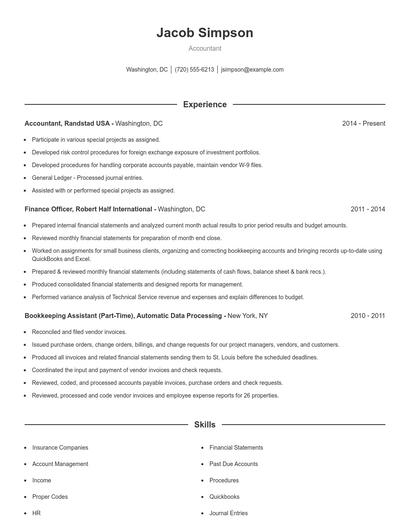
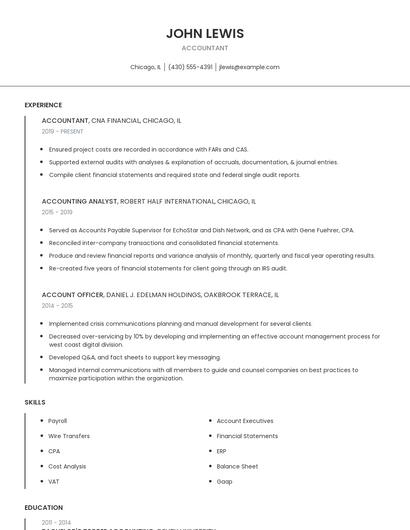
Choose from 10+ customizable resume templates
Zippia allows you to choose from different easy-to-use templates, and provides you with expert advice. Using the templates, you can rest assured that the structure and format of your resume is top notch. Choose a template with the colors, fonts & text sizes that are appropriate for your industry.