Explore jobs
Find specific jobs
Explore careers
Explore professions
Best companies
Explore companies
This question is about drug enforcement agent certifications.
What are the qualifications of a DEA agent?
The qualifications of a DEA agent are specific education, training and experience, and particular skills. Here are some details on the qualifications of a DEA agent:
Education
Aspiring DEA agents must meet certain education requirements. This includes obtaining a bachelor's degree in criminal justice, criminology, or another related field.
Specific education and skills in areas like mechanics, aviation, information systems, and foreign languages can assist applicants in qualifying for certain DEA roles or more advanced careers in the department.
Education requirements partially depend on the level of the position you are trying to obtain at the DEA. GS-7 DEA applicants who do not have related professional experience require one of the following items:
A relevant bachelor's degree with a minimum 2.95 GPA
A master's degree in a related area, such as criminal justice, criminology, forensic science, or another relevant field
A Juris Doctor (JD) degree
The DEA prefers candidates with criminal justice-related degrees. Degrees in foreign languages, economics, finance, or accounting are also sometimes acceptable for specialized roles in the department.
For the most part, GS-9 candidates need to meet GS-7 requirements and finish an advanced degree program at an accredited educational institution. Certain specialized skills, like foreign language fluency, can sometimes qualify those who have only obtained a bachelor's degree for GS-9 roles in the DEA.
GS-7 candidates with professional experience and demonstrable skills in criminal justice-related investigations, this includes experience with testimony, research, and reporting, may qualify for GS-7 roles without an academic degree.
Individuals seeking to become DEA agents without a criminal justice degree can qualify for DEA positions through documented professional experience involving investigating, reporting, and researching crimes. Professional experience that also may qualify them includes data collection and analysis, participation in briefings and conferences, and assistance in legal cases.
Some other relevant areas of experience or education are engineering, telecommunications, foreign language, and mechanical or technical fields.
Candidates that apply with advanced college class standing, a 2.95 overall GPA in their last 60 hours of coursework, or a minimum 3.5 GPA in criminal justice or related major courses may qualify for superior education achievement provision. This allows the applicant to substitute education for professional experience requirements.
Requirements
In addition to education, there are specific requirements that an applicant must meet and assessments they must pass before they can begin training as a DEA agent.
Here is a list of these requirements and steps to becoming a DEA agent:
These requirements and assessments are applied to all DEA roles. You must meet these requirements and pass these tests to qualify to work in the DEA.
Training
Every new DEA agent must complete 16 weeks of on-the-job training. All training is completed at the DEA facility located in Quantico, Virginia.
Here prospective DEA agents will be trained on how to properly use firearms and the safety protocols that come with firearms. They will also participate in tactical exercises, such as mock raids and other tactical DEA strategies.
Training also covers a number of different principles and ethics involved with being a DEA agent. Learning about the proper attainment, analysis, and use of DEA intelligence is another facet.
Qualifying skills for DEA agents
Qualified DEA agents need both general and specialized skills. General skills like teamwork and problem-solving are useful for most DEA agent positions and assignments. While more specialized skills, such as ones in aviation, foreign language fluency, and engineering, serve DEA agents in specialized divisions or may be useful on specific assignments.
Here are some common and essential skills for DEA agents:
Attention to detail. DEA agents often have to pay close attention in a variety of ways when performing their job. They need to be able to analyze and document evidence, as well as report evidence.
This is critical to solving and prosecuting crimes that fall under the DEA's jurisdiction. DEA agents must also track details closely and tediously record, evaluate, and report their findings to help in criminal investigations and prosecutions.
Law enforcement. Most DEA roles experience significant overlap with other law enforcement professionals. They must be skilled in the area of surveillance, making arrests, and confiscating illegal materials. DEA agents also need skills and abilities concerning tactical strategies and firearms.
Communication skills. DEA agents must be able to communicate clearly, concisely, and in a confident tone. This goes for interactions with the public or other members of the law enforcement community. Delivering accurate and clear information is essential to a DEA agent's work.
Judgment and problem-solving. DEA agents often work in high-stress situations, and they must always be able to keep their cool and engage in good judgment. Decision-making skills are also essential in many DEA agent scenarios.
Investigating drug-related crimes often put DEA agents into dangerous and high-risk scenarios that require decisions to be made quickly and decisively. Calm and rational, but also fast, decision-making abilities are essential to the work they perform.
They must be able to reason, weigh the consequences, and consider alternatives before deciding on the most logical course of action. Without sound judgment, rationalization, and composure, situations can escalate and cost lives.
An understanding of laws and ethics. All DEA agents are well educated on the laws that apply to their job. DEA agent training also provides education on ethics. Those who have good morale and a sense of ethics that can also be balanced with the law will have the greatest success as DEA agents.
Integrity. All DEA agents must perform their roles with integrity. They often have to deal with sensitive, or even classified, government information. They need to avoid any aspect of corruption and report it when it occurs within the department. They must do this domestically and abroad.
Flexibility. The role of a DEA agent requires flexibility. Objectives and priorities can shift on a dime in the daily work life of a DEA agent. They also may have to remain flexible when it comes to relocating for certain assignments or posts. DEA agents often spend a great deal of time traveling and being stationed away from home.
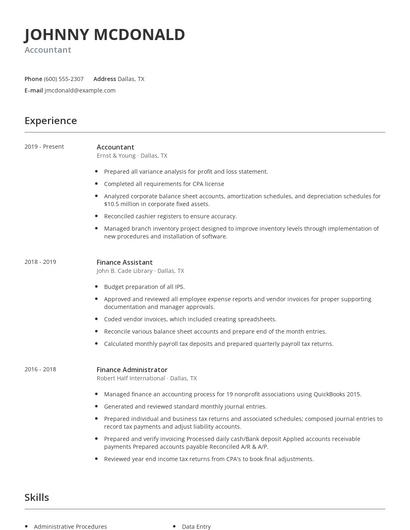
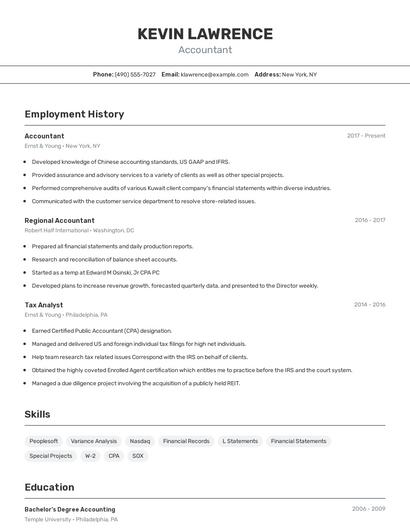
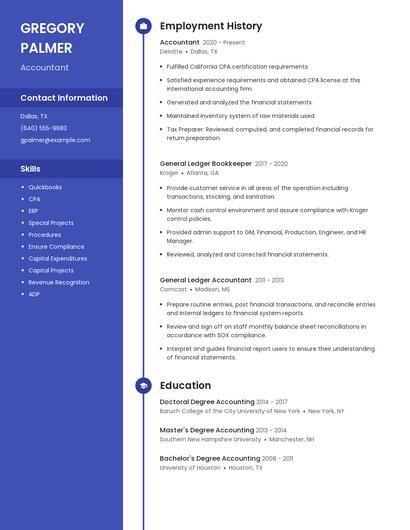
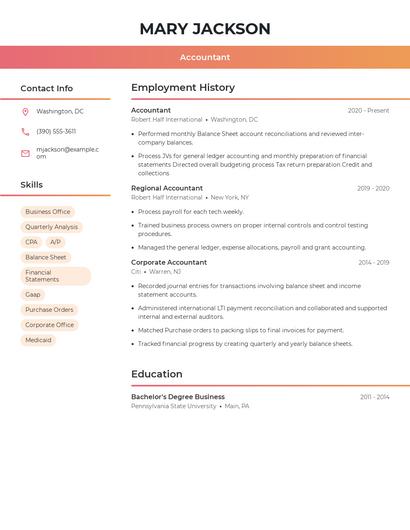
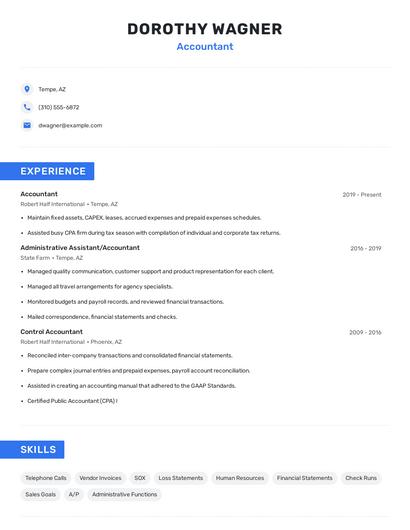
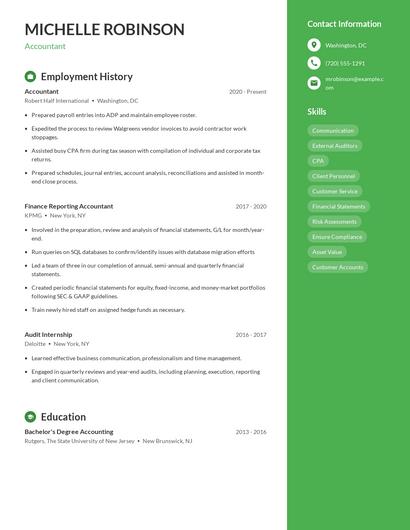
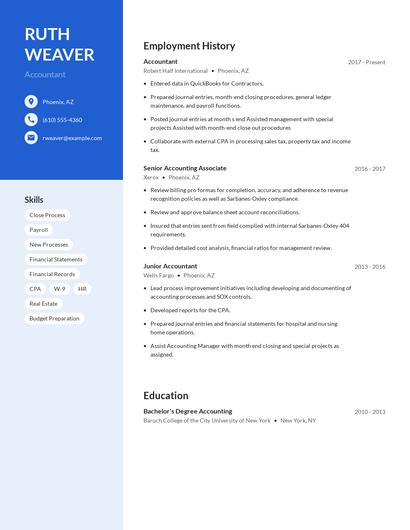
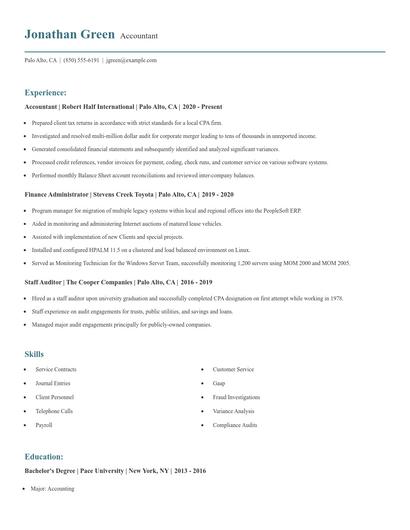
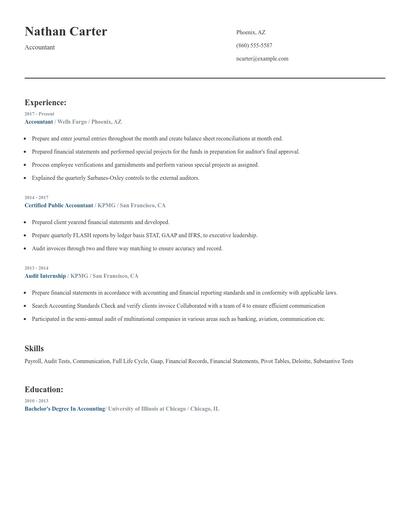
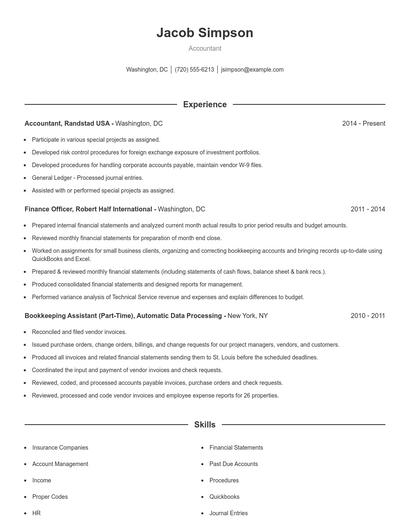
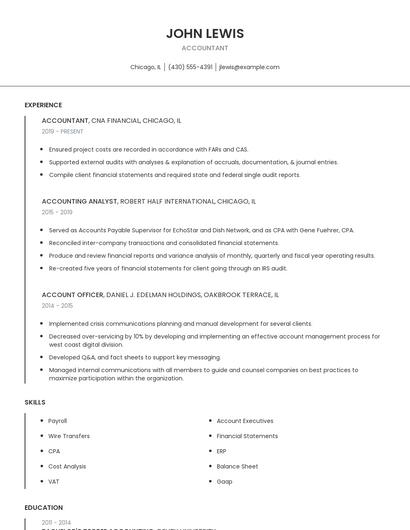
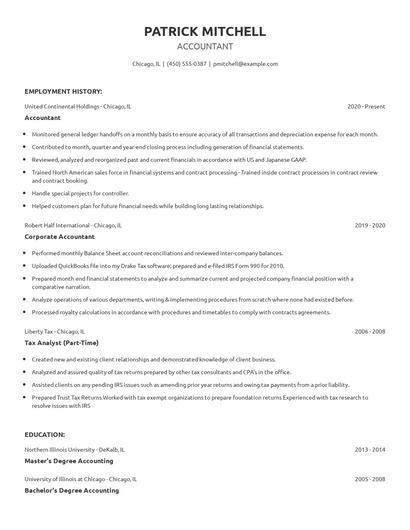
Choose from 10+ customizable resume templates
Zippia allows you to choose from different easy-to-use templates, and provides you with expert advice. Using the templates, you can rest assured that the structure and format of your resume is top notch. Choose a template with the colors, fonts & text sizes that are appropriate for your industry.