Explore jobs
Find specific jobs
Explore careers
Explore professions
Best companies
Explore companies
This question is about jobs.
Best aviation jobs
The best aviation jobs include flight instructors, pilots, and aircraft mechanics. Working in the aviation industry requires knowledge of planes and other aircraft, as well as regulations and laws regarding safety and operations. Most aviation careers will be with the major airlines, but it is possible to work for the government or a private company and still work in aviation. If you're thinking of pursuing a career in aviation, then here are the ten best jobs:
A Flight Instructor is responsible for teaching students how to fly aircrafts. They prepare lesson plans and evaluate and monitor students performance.
Average Salary: $83,128
A pilot is a professional who works in the aviation industry to operate aircraft and transport passengers and cargos from one location to another. Pilots can fly and navigate different types of aircrafts such as helicopters, large commercial aircraft, or cargo planes. They must perform pre-flight inspections and check flight logs to secure safety for all crews and passengers who are on board. Pilots can also decide to work as flight instructors or establish an aviation school when they have gained enough experience in the aviation industry.
Average Salary: $60,496
An aircraft mechanic is responsible for regularly checking and maintaining aircraft systems to ensure its safety and stability during operations. Aircraft mechanics should have extensive knowledge of troubleshooting and detecting system malfunctions. They are also required to adhere strictly with the standard protocols and regulations of the company, guaranteeing smooth procedures and efficient solutions. Aircraft mechanics must possess excellent decision-making and critical-thinking skills to perform diagnosis and inspection under minimal supervision. An aircraft mechanic should be able to utilize aviation tools and equipment, document resources, and report findings for safety concerns.
Average Salary: $100,401
An aerospace engineer specializes in designing, maintaining, and repairing aircraft and spacecraft. Their responsibilities revolve around conducting tests and procedures to identify faults and inconsistencies, lead production processes, performing repairs and improvements, designing systems, and ensuring that all equipment complies with the safety regulations and standards. They are also responsible for producing technical materials such as reports, proposals, and manuals. Furthermore, there are instances where they must set the policies and standards on the equipment they are developing while utilizing their expertise in mathematics, engineering, and sciences.
Average Salary: $95,470
Avionics Engineers are responsible for the design and development of avionics systems. They are involved in implementing economic and innovative techniques for avionic systems manufacturing, testing all parts and systems, rectifying faulty parts, and scheduling maintenance and inspection. They also prepare progress reports to update stakeholders involved, assist in proposals and bid preparation, and develop training programs for their junior engineering staff. Avionics Engineers must always comply with government regulations and industry best practices.
Average Salary: $34,395
Aircraft fuelers' primary role is to ensure the proper refueling of aircraft before and after a flight. The position is essential, as proper refueling determines the safety of an aircraft. An aircraft fueler manages refueling equipment, transports fuel, and ensures adherence to safety protocols. They are also responsible for monitoring the functionality of all equipment and ordering repairs. This position requires a high level of safety-consciousness.
Average Salary: $33,607
A flight attendant is known as a steward or stewardess, an air host or hostess, and works majority in airlines, some in private business jets, or a few other aircraft. Also commonly referred to as a cabin crew, flight attendants act as an ambassador between the airline they work with and the passengers by primarily taking charge of their safety and comfort during the entire flight. They do more than serving meals, refreshments, and drinks to passengers as they must also check the supplies and emergency equipment, secure sufficiency, and make sure everything is in order. They greet the travelers, help in their luggage being stowed properly, and ensure they are in their correct and assigned seats.
Average Salary: $50,261
Flight Paramedics are responsible for providing emergency medical care to patients while in transport to a medical facility. Their duties include carrying out pre-hospital life support medical care, managing patient care documentation, participate in clinical experiences, conduct equipment maintenance, reporting failure of equipment, and maintaining supplies. They are responsible for healthcare referrals, outreach education activities, pre-mission checklists, and employee orientation. Flight Paramedics also contribute to the departmental quality by undertaking research and ensure operations comply with safety standards.
Average Salary: $36,573
Average Salary: $51,538

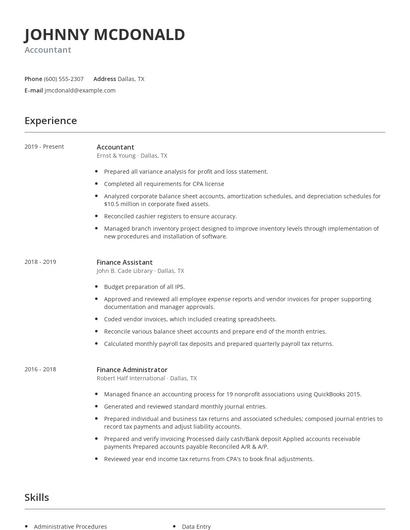
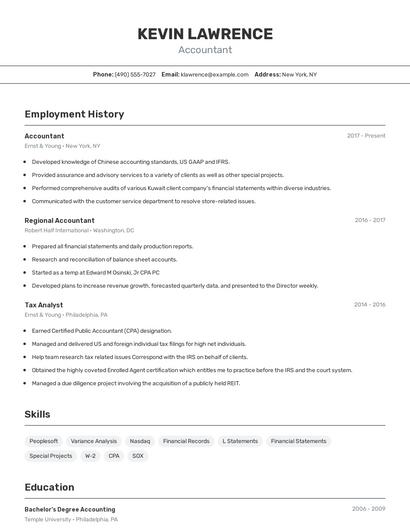
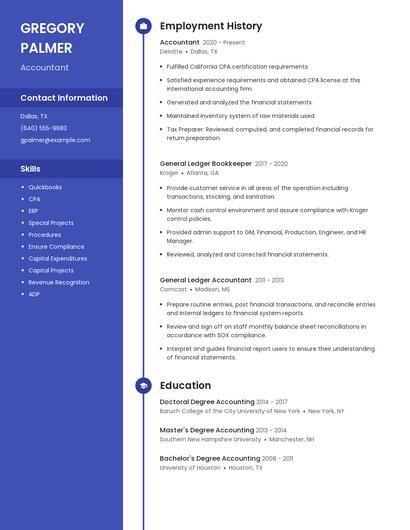
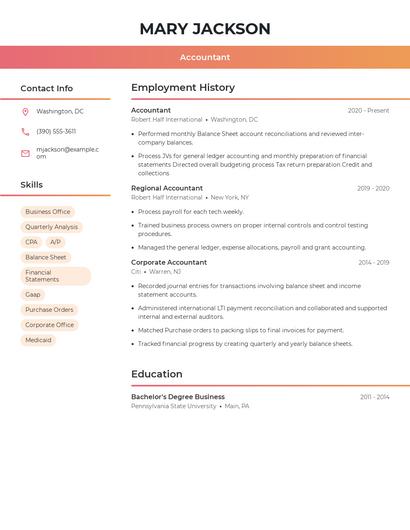
Choose from 10+ customizable resume templates
Zippia allows you to choose from different easy-to-use templates, and provides you with expert advice. Using the templates, you can rest assured that the structure and format of your resume is top notch. Choose a template with the colors, fonts & text sizes that are appropriate for your industry.