Explore jobs
Find specific jobs
Explore careers
Explore professions
Best companies
Explore companies
This question is about nurse practitioner resumes.
How do you write an exceptional nursing resume as a new grad?
You write an exceptional nursing resume as a new grad by following a few simple guidelines. Now that you've made it through exams and your RN license is shiny, new, and ready for duty, it's time to showcase your skills with a new grad nurse resume.
What to include in your nursing resume after graduation:
Resume header: your name and contact information.
Introduction: a briefing of the most relevant parts of your new grad nurse's resume.
License: your RN license and related certifications
Education: your nursing school, completion date, and successes.
Clinical experience: your time and achievements while working in patient care facilities.
Skills: a short list of your most job-fitting abilities.
Extra sections: publications, volunteer work, additional activities, and certification.
The profile objective is your first introduction to the hiring manager, and as such, it should be concise and compelling enough to want them to continue reading.
We recommend starting with your RN licensure and number of years of clinical experience. Next, state your objective for the job and where you're applying. Finally, share 1 to 2 of your top achievements.
For example, "Licensed RN with two years of clinical experience. Seeking to become a top nurse at Company XYZ. As a student nurse at University XYZ, I achieved 20% higher-than-average patient satisfaction scores and 97% favorable preceptor evaluations."
Next, provide information on your license(s) and any certifications you may have. The hiring manager will want to know right away what your credentials are. In this section, list your RN, CNA, LPN, or APRN license first in its own section. Add your state and license number, plus additional certifications (e.g., Phlebotomy certified).
Without work experience, the education section is your time to shine. It's not enough to list your degrees. Rather, you want to provide examples of academic accomplishments and achievements.
For example, "Maintained a 4.0 GPA in anatomy, microbiology, and nursing assessment."
Next, you are going to want to talk about your clinical experience. This is not always an easy thing to do. First, every candidate will have clinical experience, so you're going to want to look for ways to stand out. Second, unlike an internship, clinical experience can be quite nuanced and more difficult to describe on a resume.
When writing clinical experience, it will look a lot like the resume's work experience section. Start with your latest clinical role and job title. Write the patient care facility's name, location, and the dates you worked there. Add a two-line job description and provide 3 to 6 bullet points detailing your finest student nurse achievements.
For example, "Assessed and helped create a care plan for up to 10 patients per shift. Consistently evaluated by the preceptor at 93% for wound dressing."
Finally, you're going to want to summarize your talents with a dedicated skills section that showcases not only your top skills as a nurse but also one that aligns with the skills described in the job description.

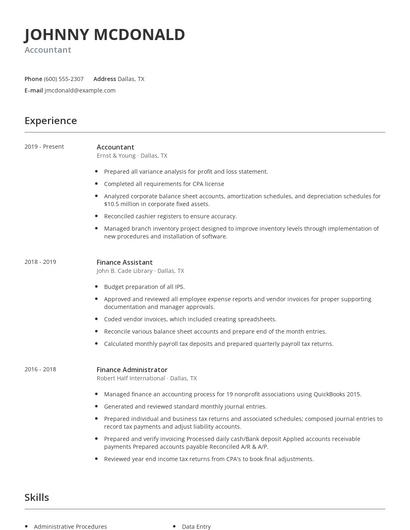
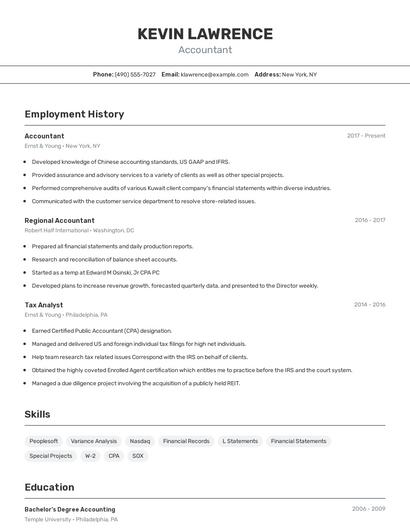
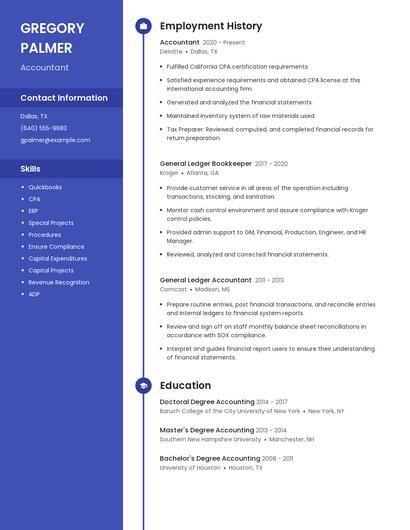
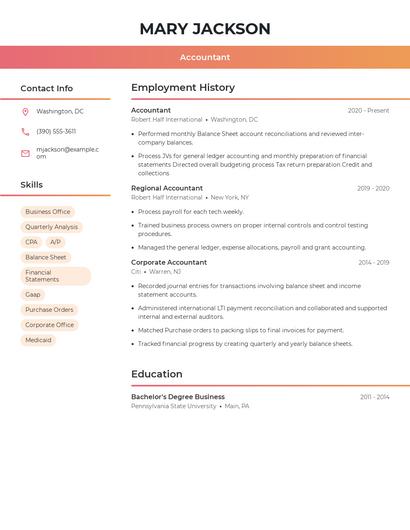
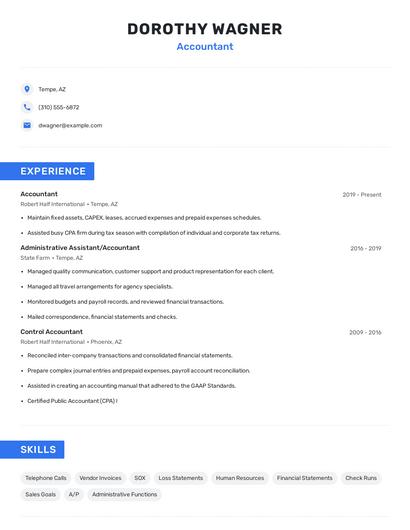
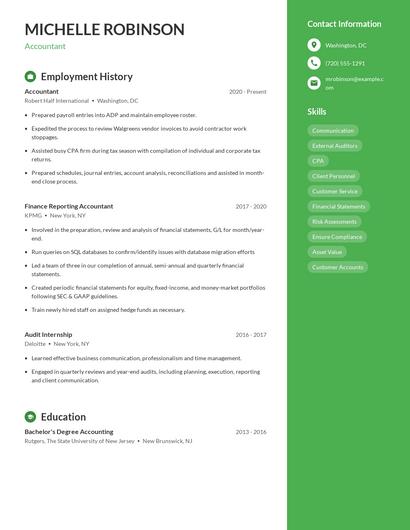
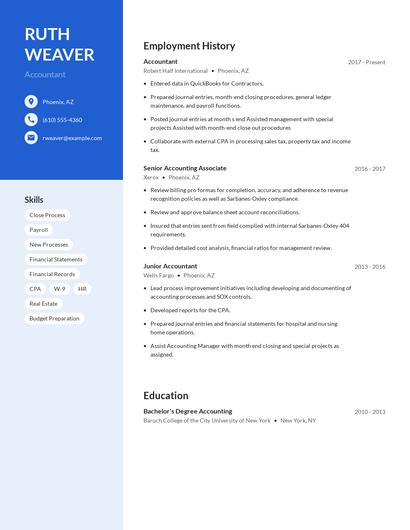
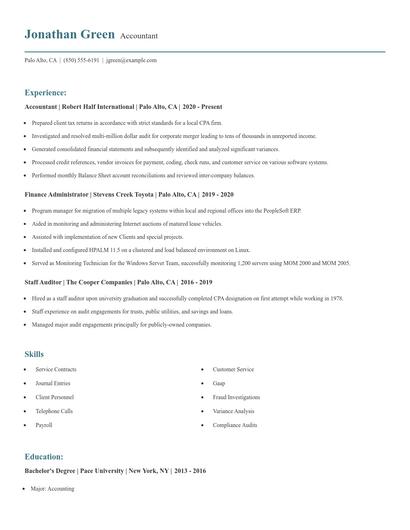
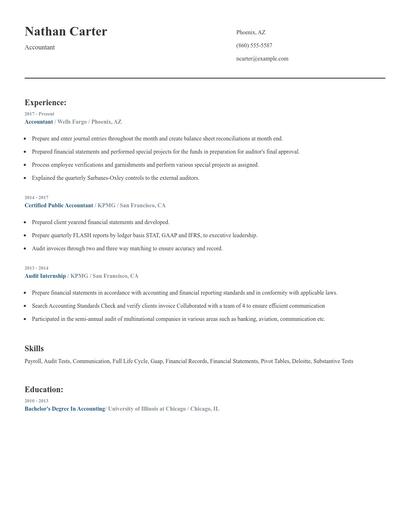
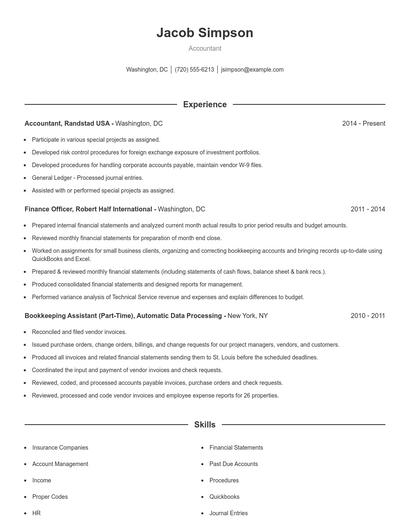
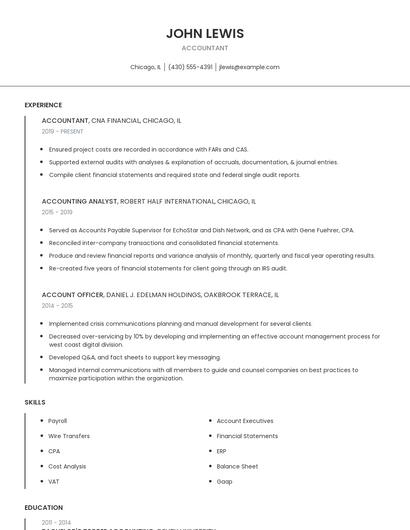
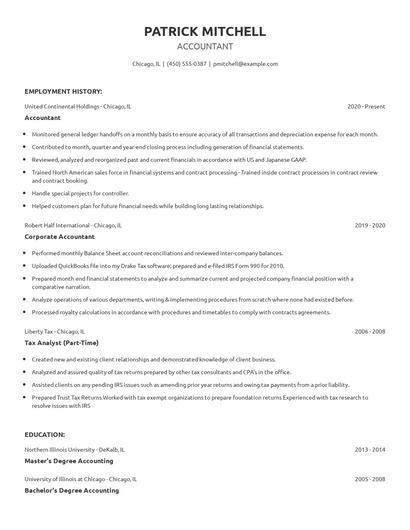
Choose from 10+ customizable resume templates
Zippia allows you to choose from different easy-to-use templates, and provides you with expert advice. Using the templates, you can rest assured that the structure and format of your resume is top notch. Choose a template with the colors, fonts & text sizes that are appropriate for your industry.