Explore jobs
Find specific jobs
Explore careers
Explore professions
Best companies
Explore companies
This question is about what an attorney does.
What are career paths in law?
There are many career paths in law, including being a prosecutor, becoming a judge, or being a paralegal. Here is a more detailed look at each of these career paths and others in law:
Prosecutor
Prosecutors are lawyers who investigate, charge and prosecute individuals who they think have perpetrated a crime. Prosecuting in a strict sense is the act of taking these criminally charged individuals to court and trying to convince a jury or judge of their guilt. Prosecutors do this through their use of witness testimony and exhibits (materials, documents, etc.) specific to the crime in question or a crime scene.
Judge
Judges are the top authority in criminal and non-criminal proceedings in courtrooms. They preside over hearings and listen to the arguments of opposing parties, a defendant's lawyers, and prosecutors.
Judges apply the law by overseeing the legal process in courts. They also conduct pretrial hearings, resolve administrative disputes, facilitate negotiations between opposing parties, and issue legal decisions.
The highest judges in the United States are Supreme Court Justices. Closely behind them in the judge hierarchy are the court of appeals judges and district court judges. All of these judges are appointed by the President of the United States and are confirmed by the United States Senate.
Paralegal
Paralegals have an important role in the realm of law. They do a wide range of tasks for lawyers, including assisting them with research for specific cases, and other administrative tasks.
Some common duties of a paralegal are investigating the facts of a case, collecting documents from several different sources, researching legal cases, writing reports and other legal documents, drafting pleadings and motions to be filed in court, and assisting attorneys during trials.
Paralegals also may prepare civil documents, such as wills, contracts, mortgages, and separation agreements. Often they must interview witnesses, and clients, and maintain communication with them.
The unique aspect of paralegals relative to most other professions in law is that you only need to obtain an associate's or bachelor's degree in paralegal studies to practice as a professional.
Lawyers at law firms
Many people on the legal career path choose to try to find work in law firms. There are many law firms of all sizes and these firms generally pay the lawyers working within them very well. There are three main types of positions at a law firm: associates, law firm partners, and managing partners.
Associates are mostly young lawyers at a firm that are hoping to one day become a partner. Large-scale law firms generally have two tiers of associates: junior associates and senior associates.
These titles are given depending on the individual merit and experience level of the lawyer. Most associates work, as such, for six to nine years before becoming a partner. Factors that partners weigh when considering if an associate should make partner include the associate's legal knowledge and skills, the size of their client base, and how well they fit into the company's culture.
Law firm partners are professionals within a law firm that may also be referred to as shareholders, in that they are joint owners and operators of the firm. The types and structures of law firm partnerships can vary.
Managing partners of a law firm are the highest officials of the firm. These consist of senior-level lawyers or founders of the firm. This is the position most lawyers are gunning for when they take a job at a law firm. However, it typically takes many years of hard work and dedication to obtain it.
Managing partners are usually part of an executive committee composed of senior-level lawyers of the firm. They have the top authority in the firm and creative objectives and strategic visions for the company. Managing partners also play kingmaker in the sense that they, in a democratic effort, can make lower-level lawyers partners of the firm.
Requirements and qualifications for these career paths
For all of these career paths in law, with the exception of a paralegal, you need to have a stellar academic record and pass the Law School Admission Test (LSAT).
This is an infamously difficult exam that acts as the gatekeeper to law school. It is designed to test skills that undergraduate students may have not yet fully developed, such as the reasoning skills in the logic games section.
Courses in law school include constitutional law, ethics, property law, criminal law, lawyer-client relationship, and civil procedure. If you make it through law school you then must pass the Bar exam which is even harder than the LSAT.
The Bar exam requires an immense amount of critical thinking when answering the written questions. Philosophy, ethics, and many other esoteric topics may come into play when answering questions on the Bar exam. Not to mention you need to know your laws. The exam differs from state to state, but usually takes two days to complete.
And make sure that you take the Bar exam in the state in which you want to become a lawyer, otherwise you'll likely have to take it again. The Bar exam is notoriously known to be difficult, with many law students needing to take it multiple times to pass.
Once you pass the Bar exam, you can seek work in one of the many career paths of a lawyer.

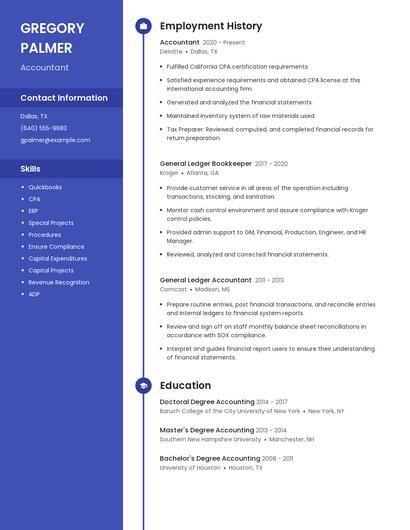
Choose from 10+ customizable resume templates
Zippia allows you to choose from different easy-to-use templates, and provides you with expert advice. Using the templates, you can rest assured that the structure and format of your resume is top notch. Choose a template with the colors, fonts & text sizes that are appropriate for your industry.